
Earth – Water – Fire
(*text în română mai jos)
During my Geology studies at Babes Bolyai University in Cluj Napoca, I had the opportunity to learn about various geological processes. I knew about mud volcanoes, but I only managed to visit this place in 2019.
Mud Volcanoes
They are not what they seem!
Text and photographs by Lucian Muntean, September 21, 2019
The mud volcanoes in Buzău County, Romania, are part of a nature reserve and represent a unique tourist destination that attracts thousands of visitors every year.
The natural area known as “The Mud Volcanoes of Pâclele Mari and Pâclele Mici”, in Buzău County, Romania, is a nature reserve where a geological phenomenon occurs which, in fact, has nothing to do with volcanism.
The specific geological context of this area is characterized by the presence of a particular, highly fractured tectonic structure, as well as a hydrocarbon deposit. The associated natural gases, which are under pressure, migrate toward the surface, passing successively through the groundwater table and then through sedimentary formations consisting of alternating layers of clay and marl.
The pressurized gases rise through cracks, carrying water with them. The water softens the clay and marl, transforming them into a fluid, muddy state. The gases rising together with the mud reach the surface through bubbling, creating interesting eruptions. Since these gases originate from the hydrocarbon deposit, they may be flammable.
***
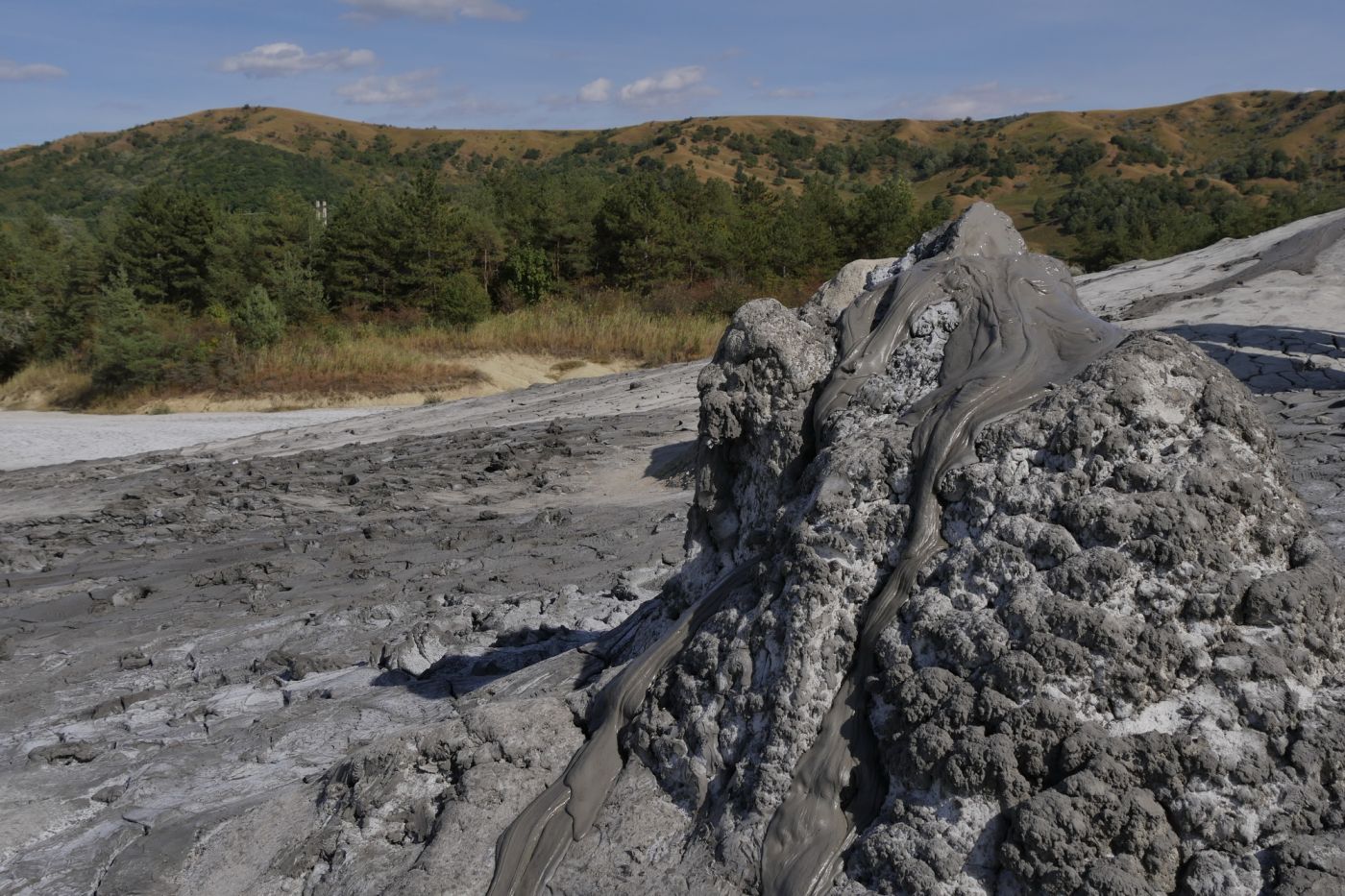
Cones – Craters
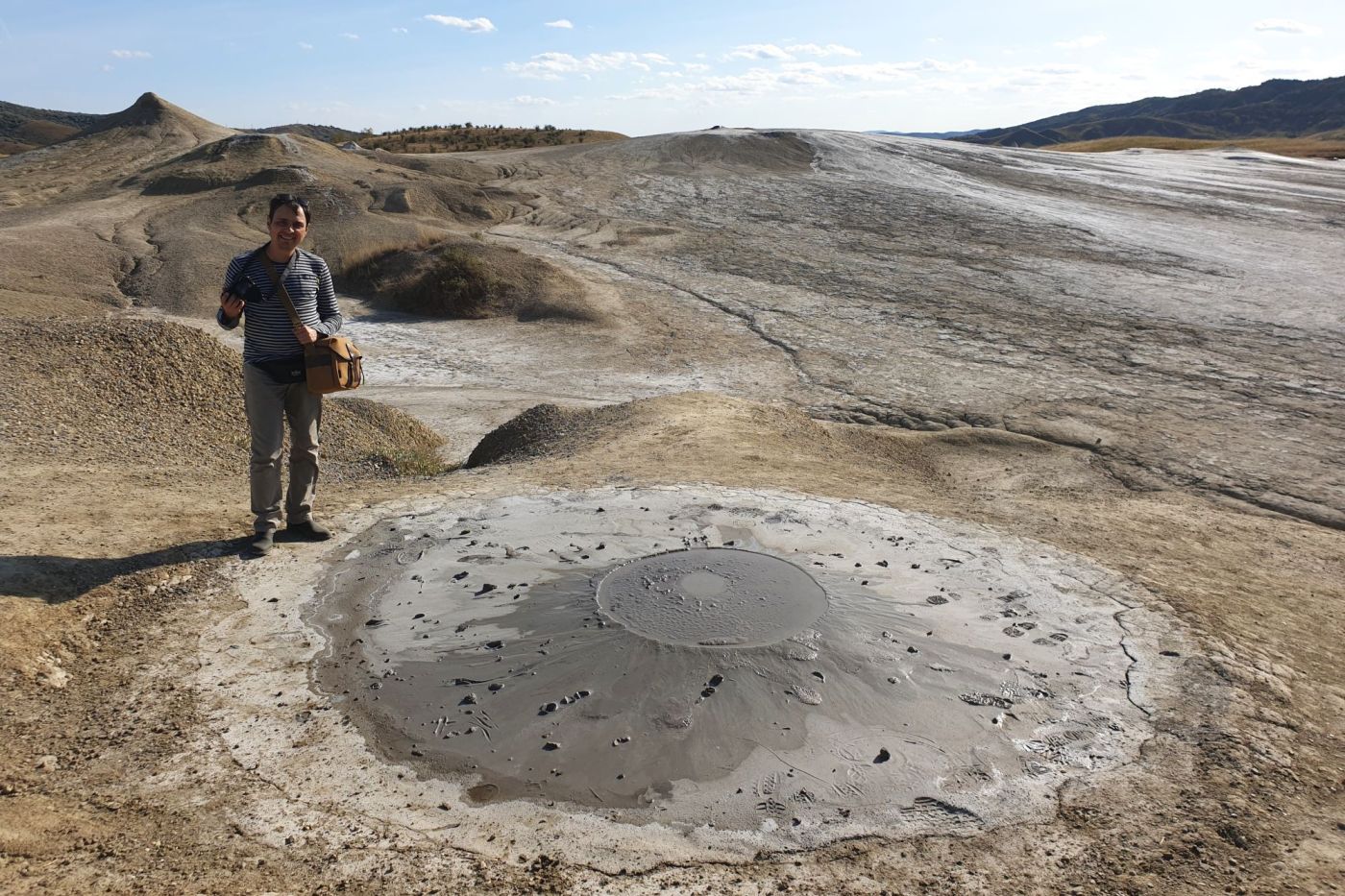
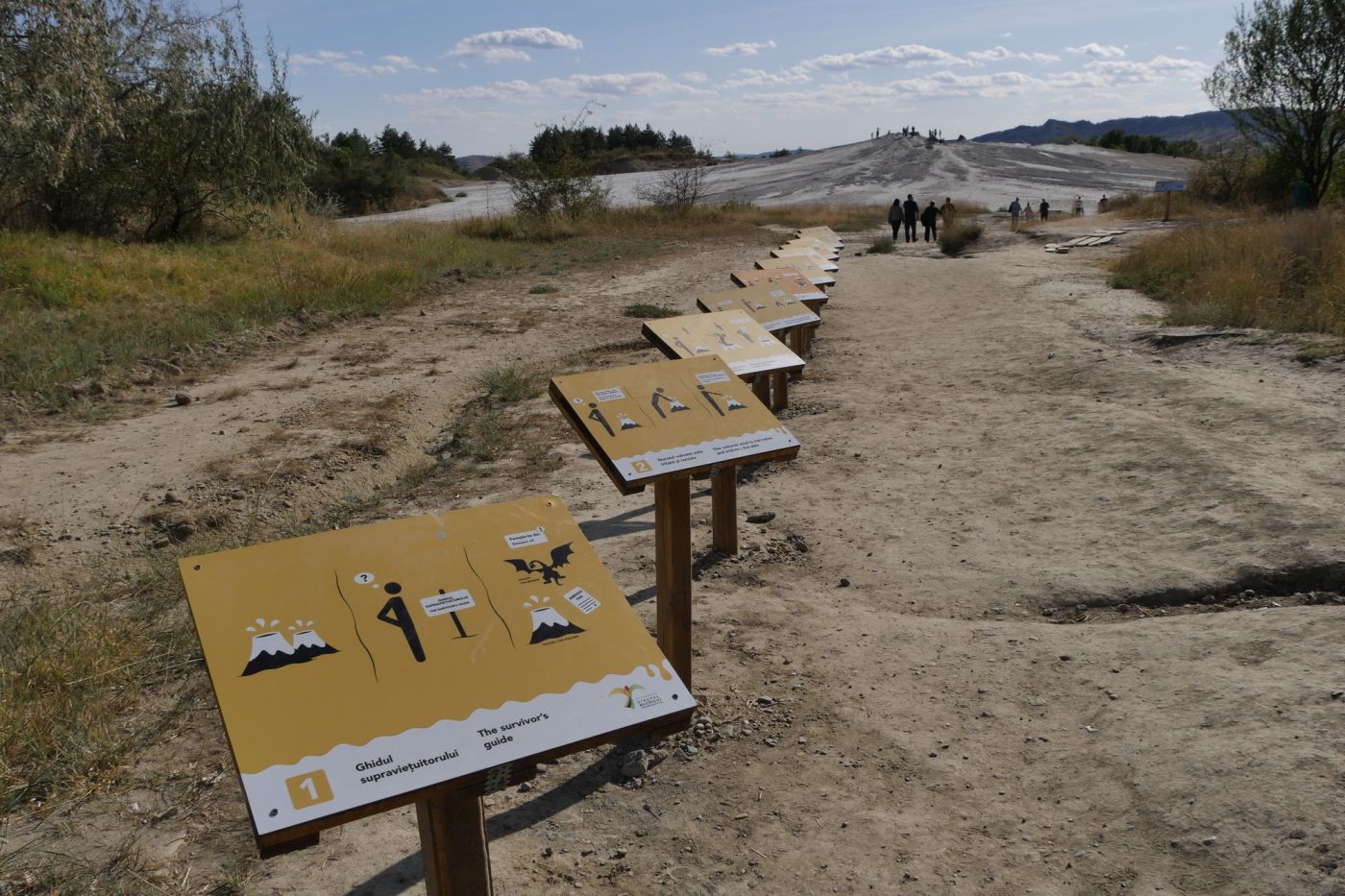
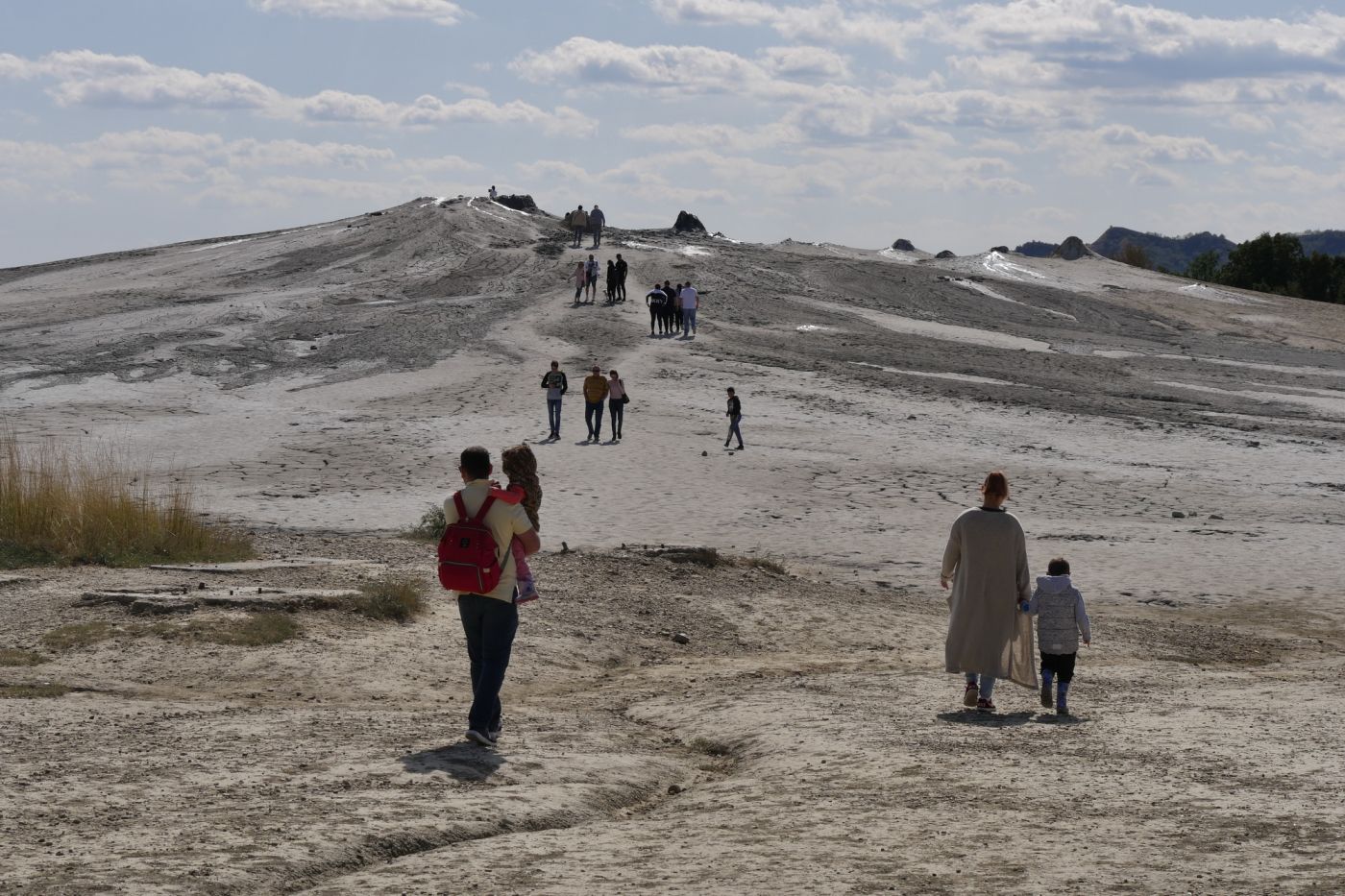
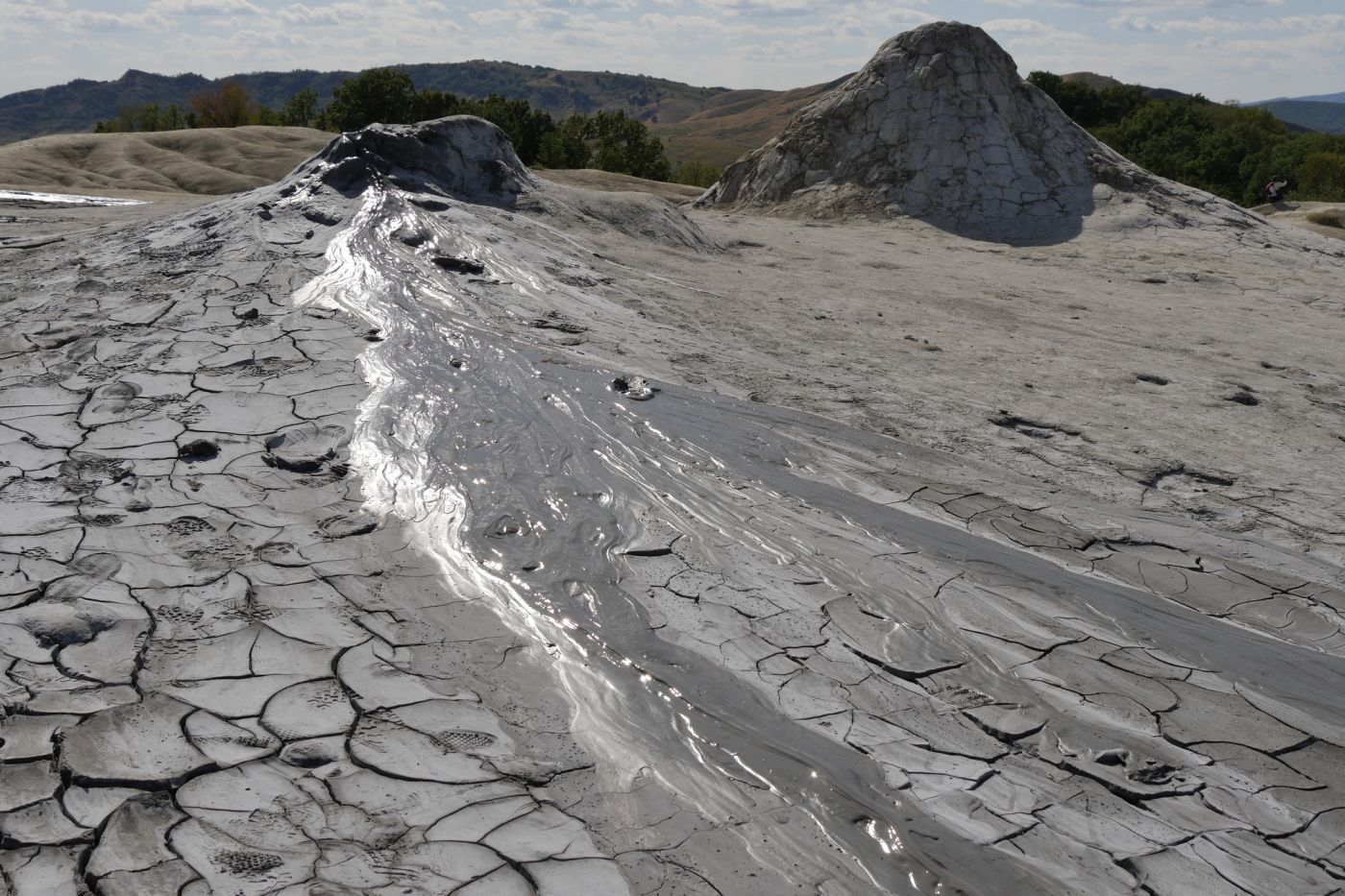
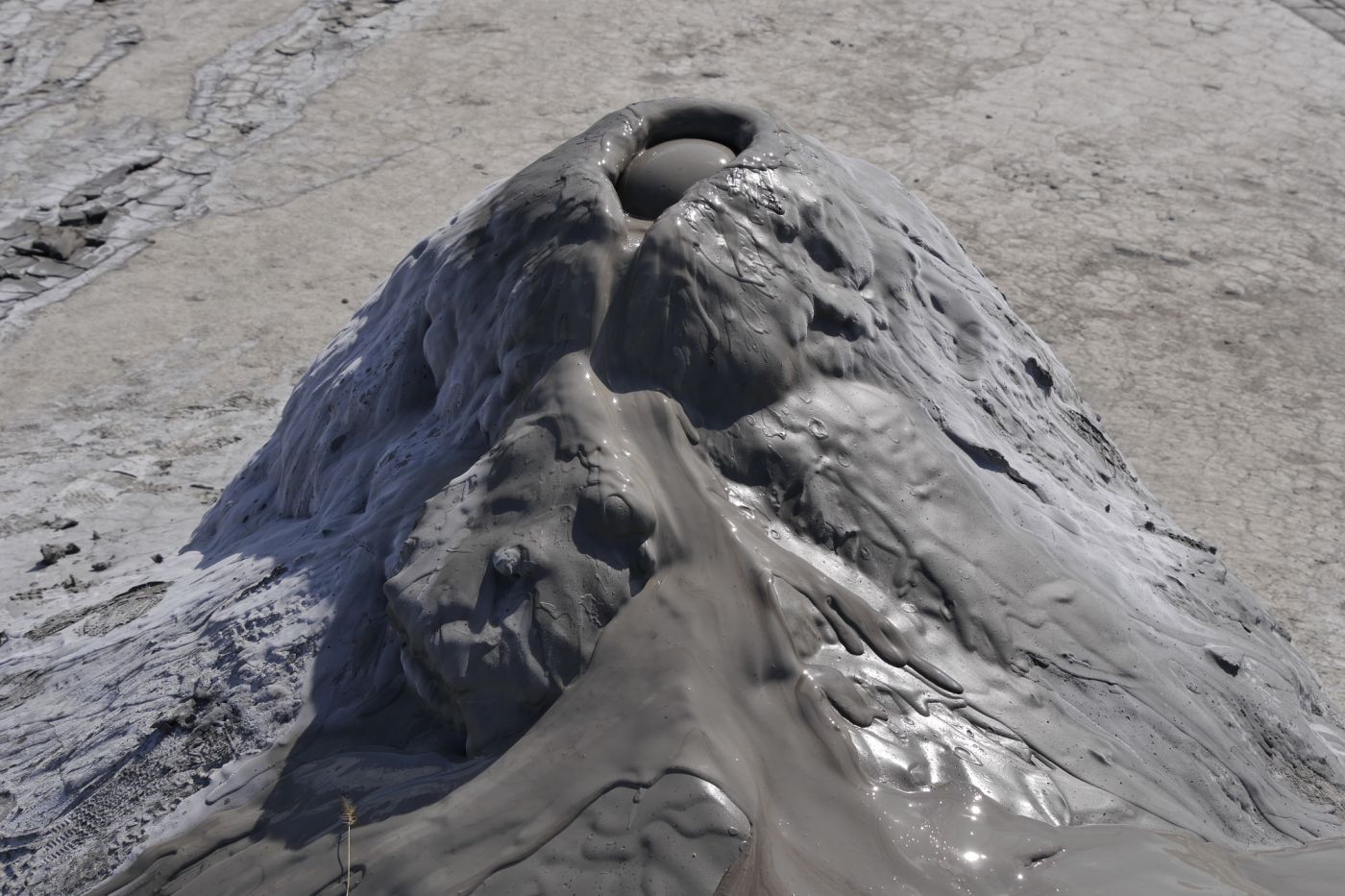
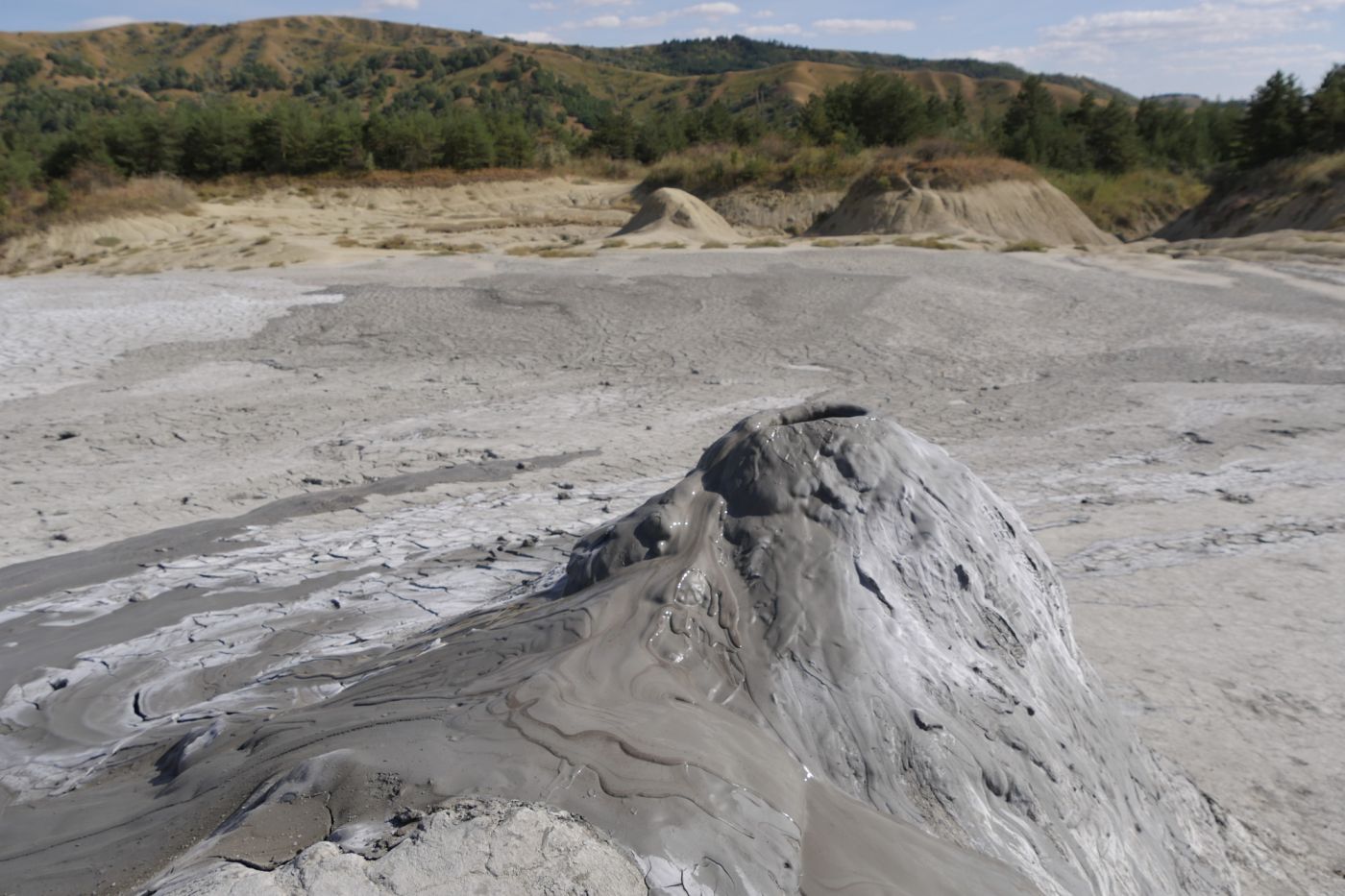
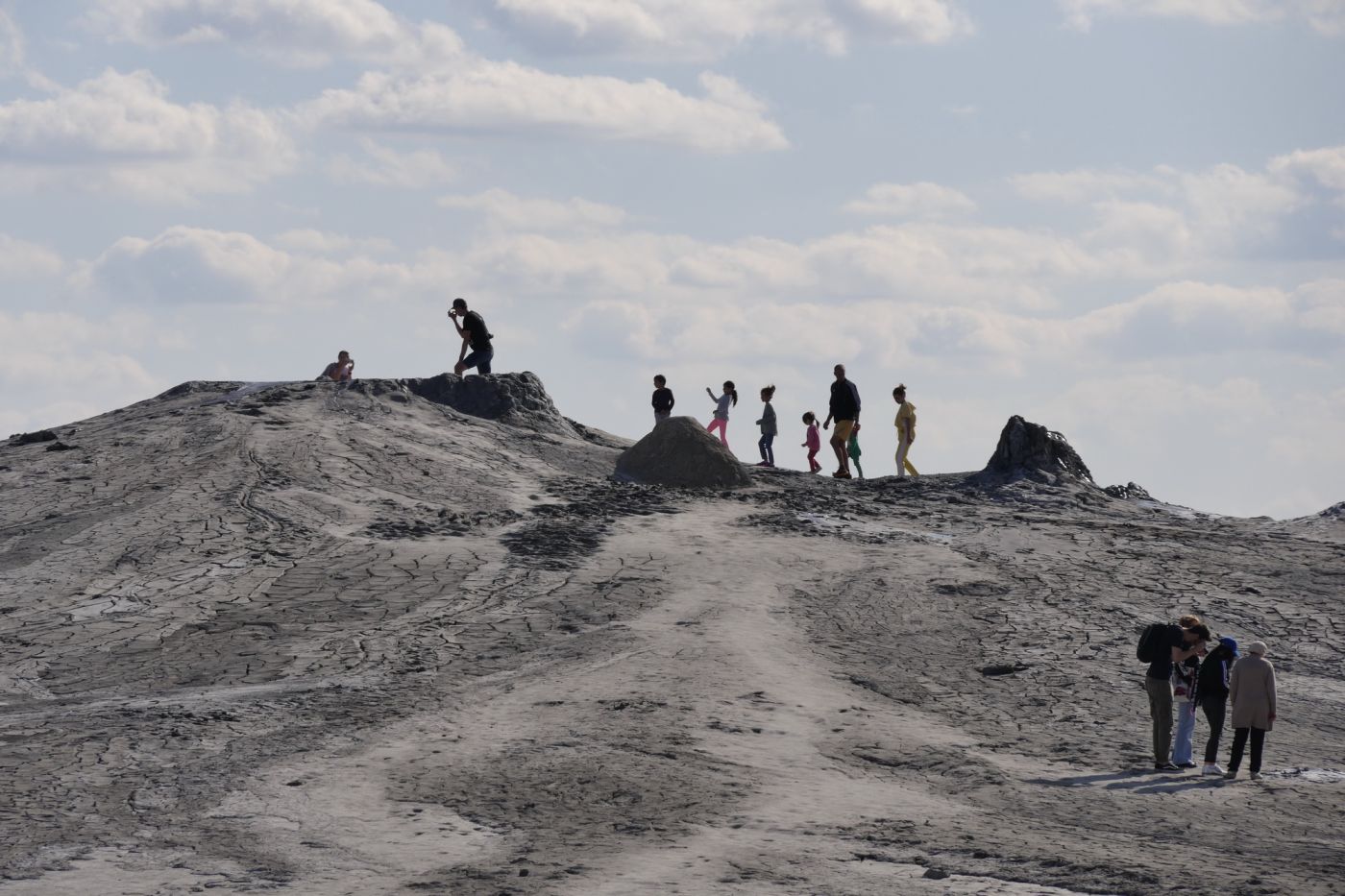
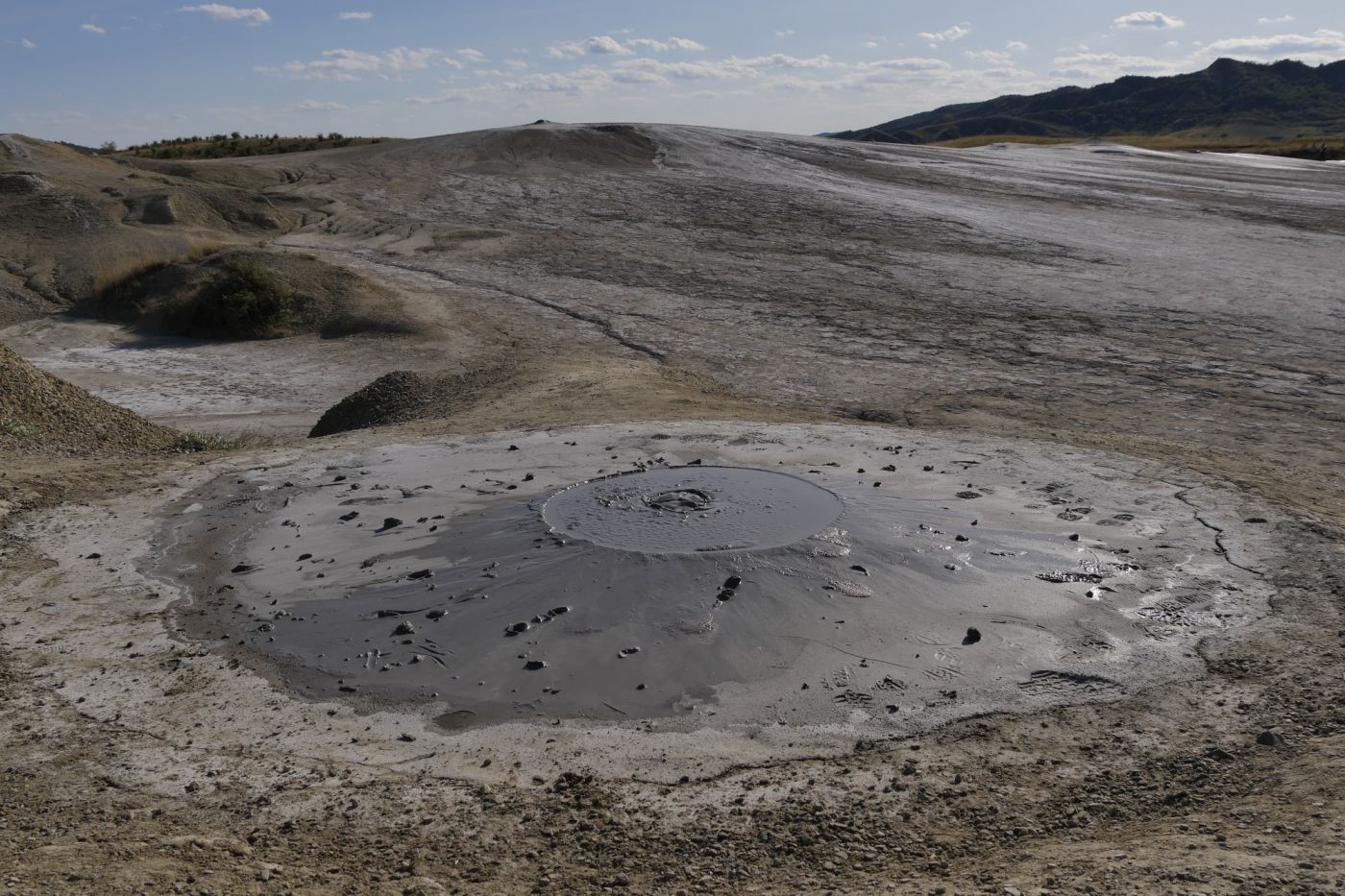
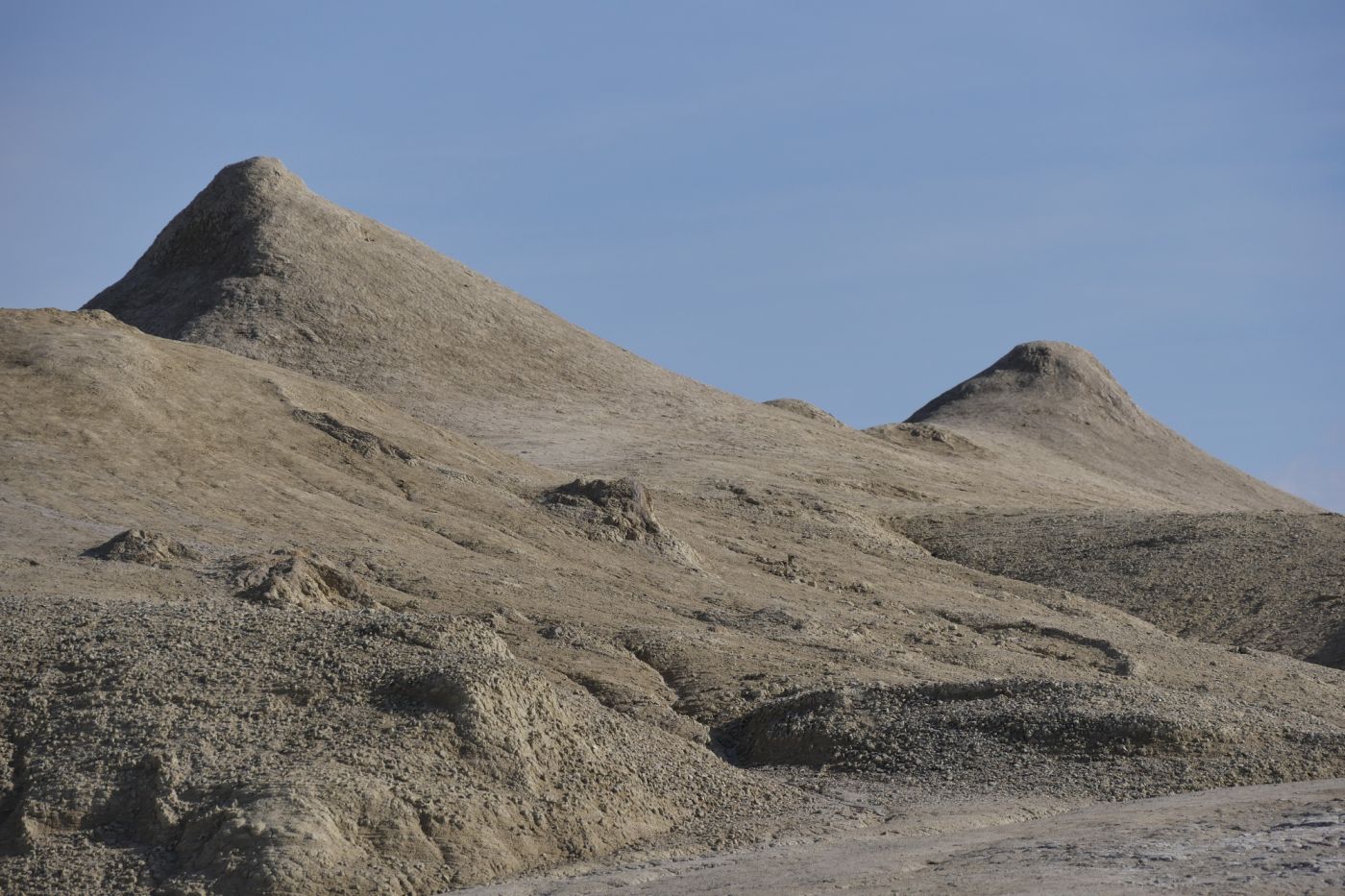
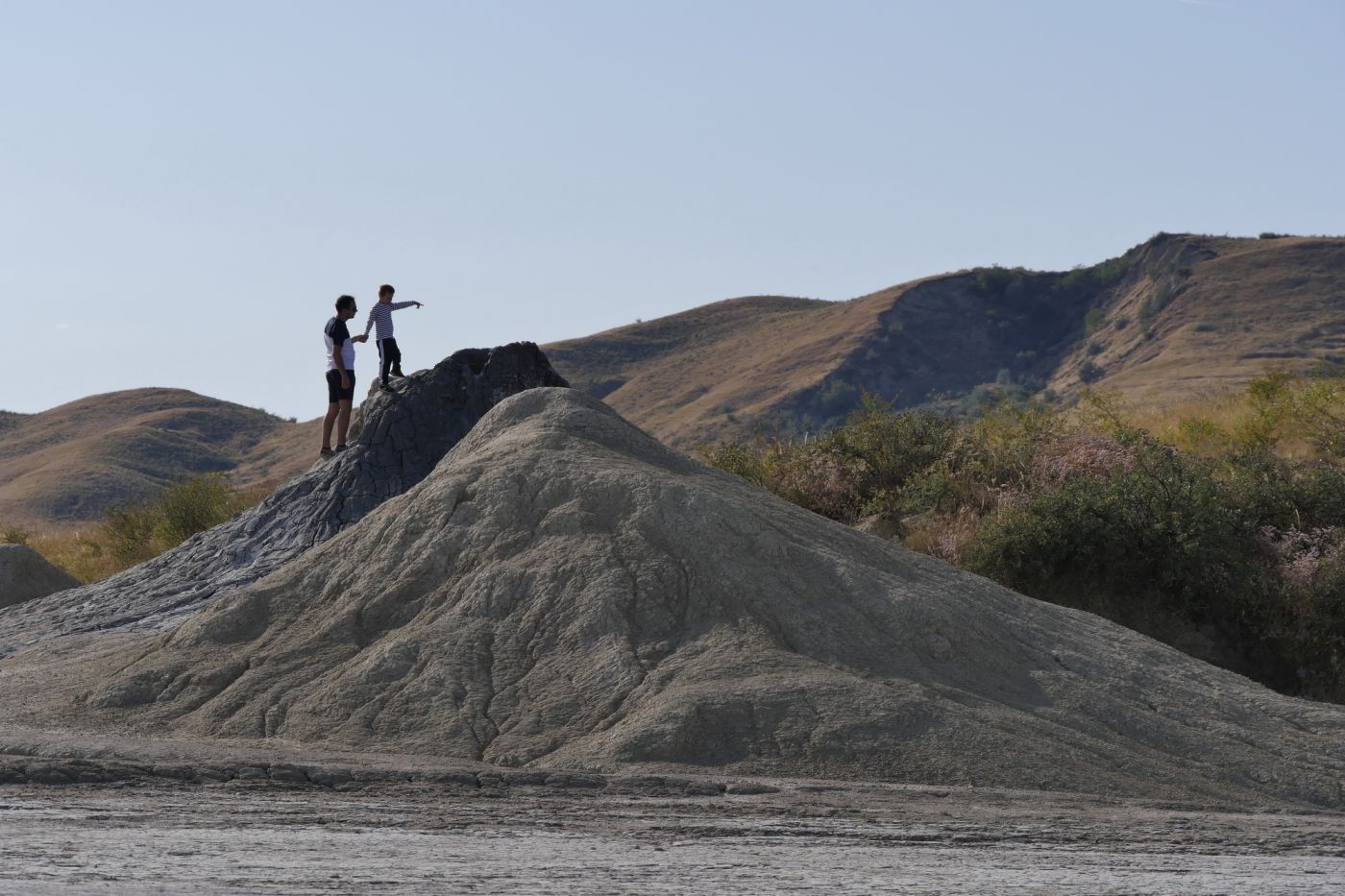
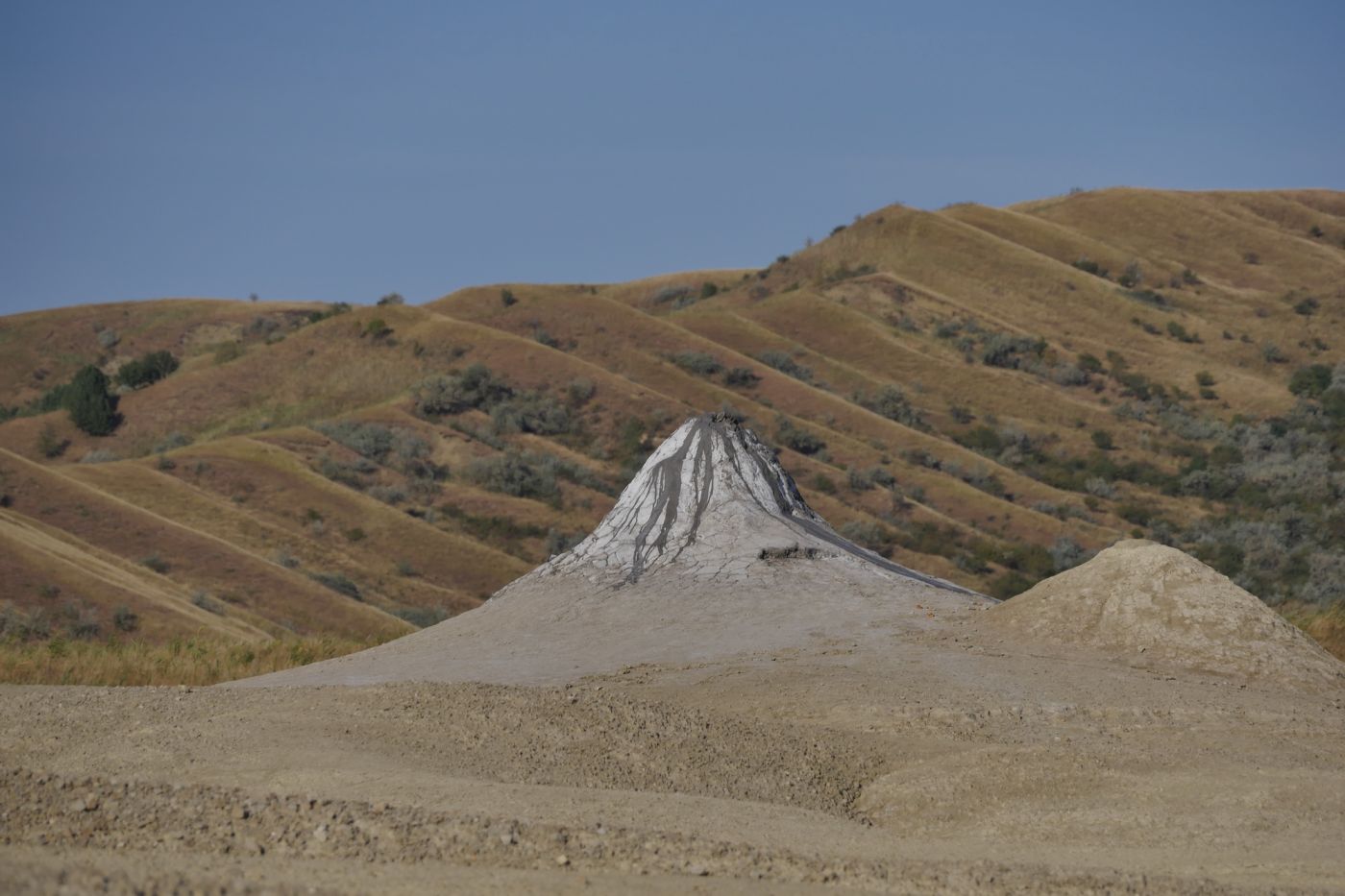
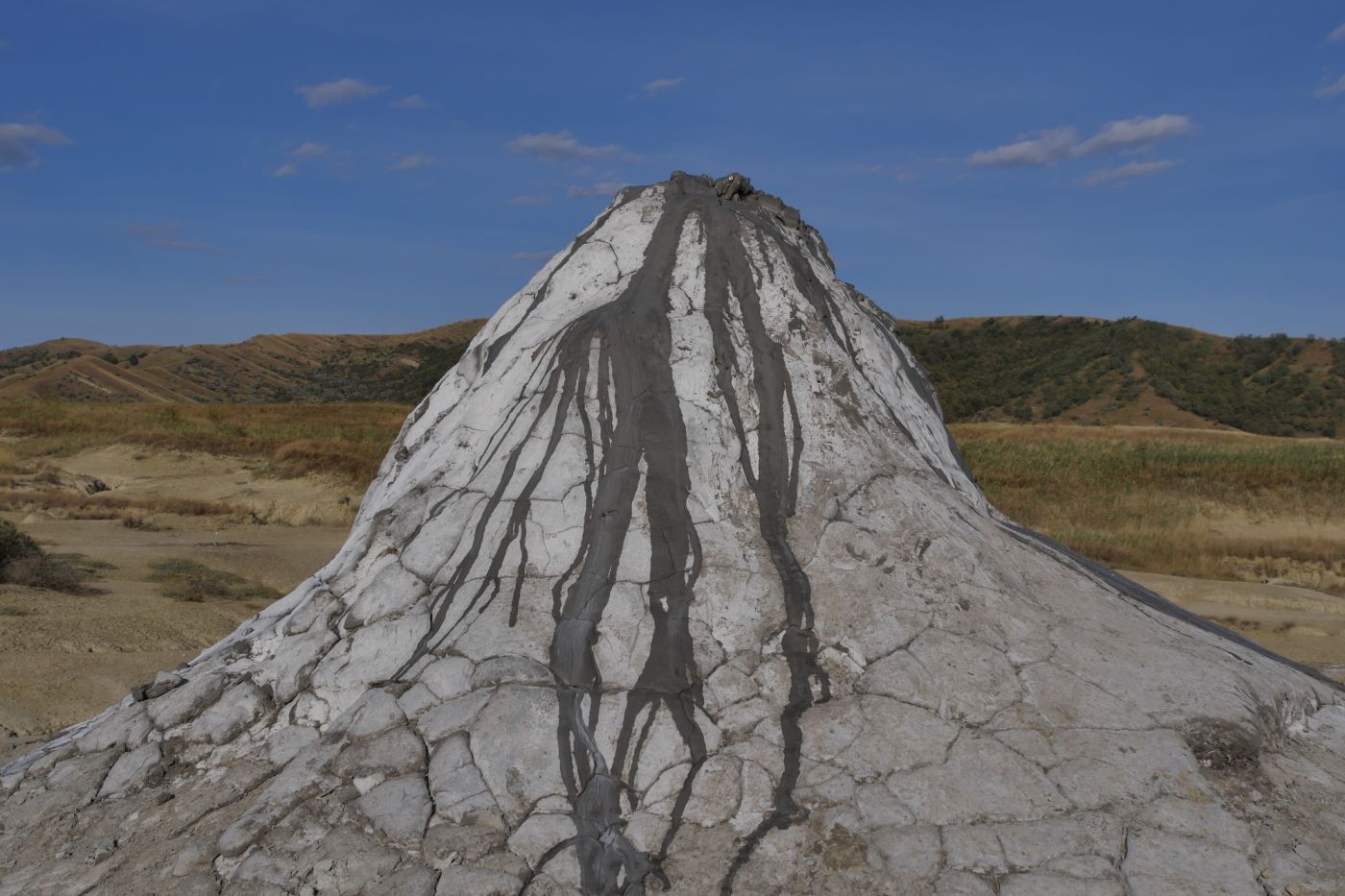
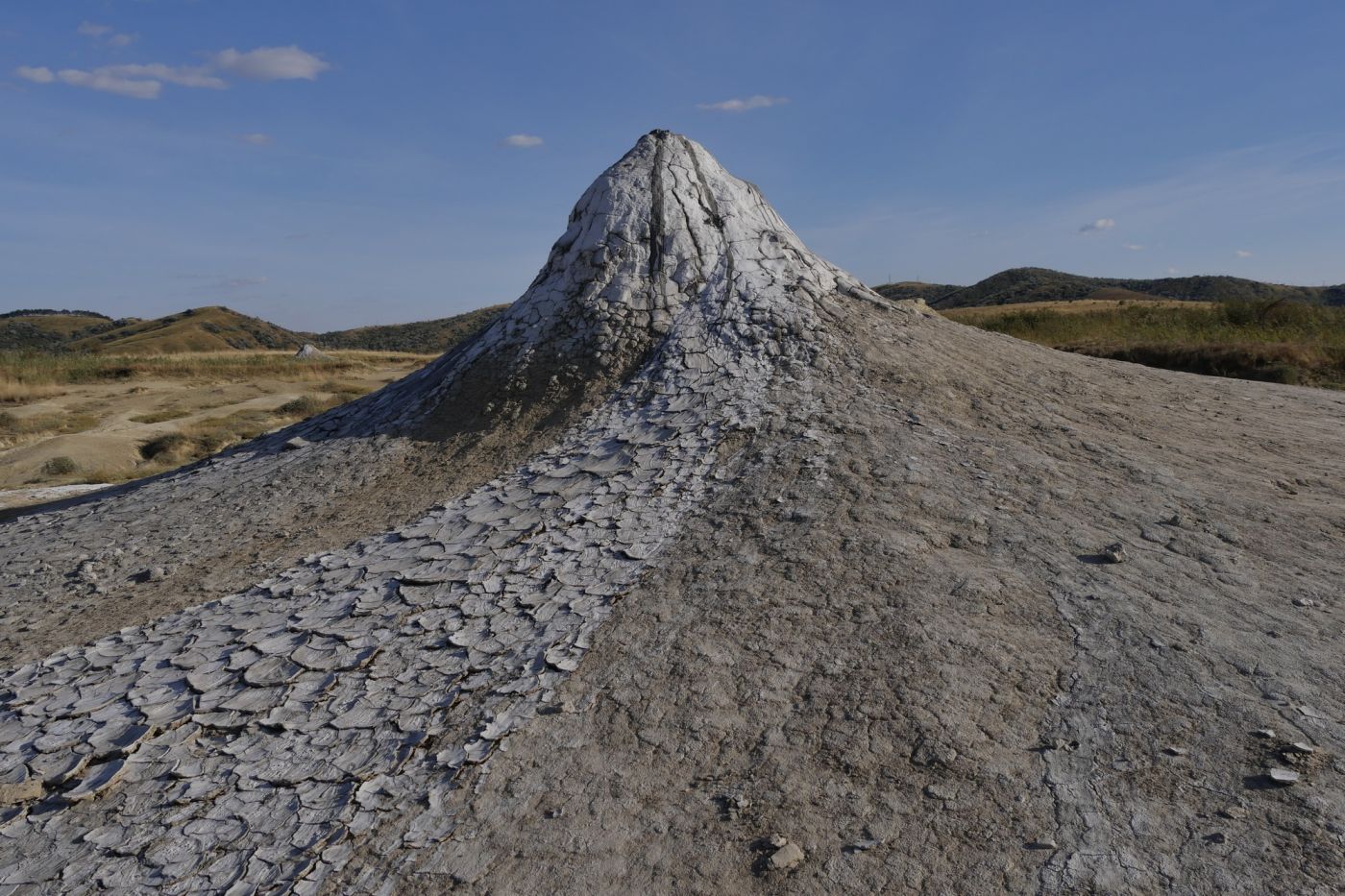
As the mud that “erupts” from the mud volcanoes dries, it forms deposits that can become conical in shape, similar to volcanic cones. These cones have craters whose diameter can range from a few centimeters to more than 2 meters.
Cones and Craters of mud volcanoes – photo gallery
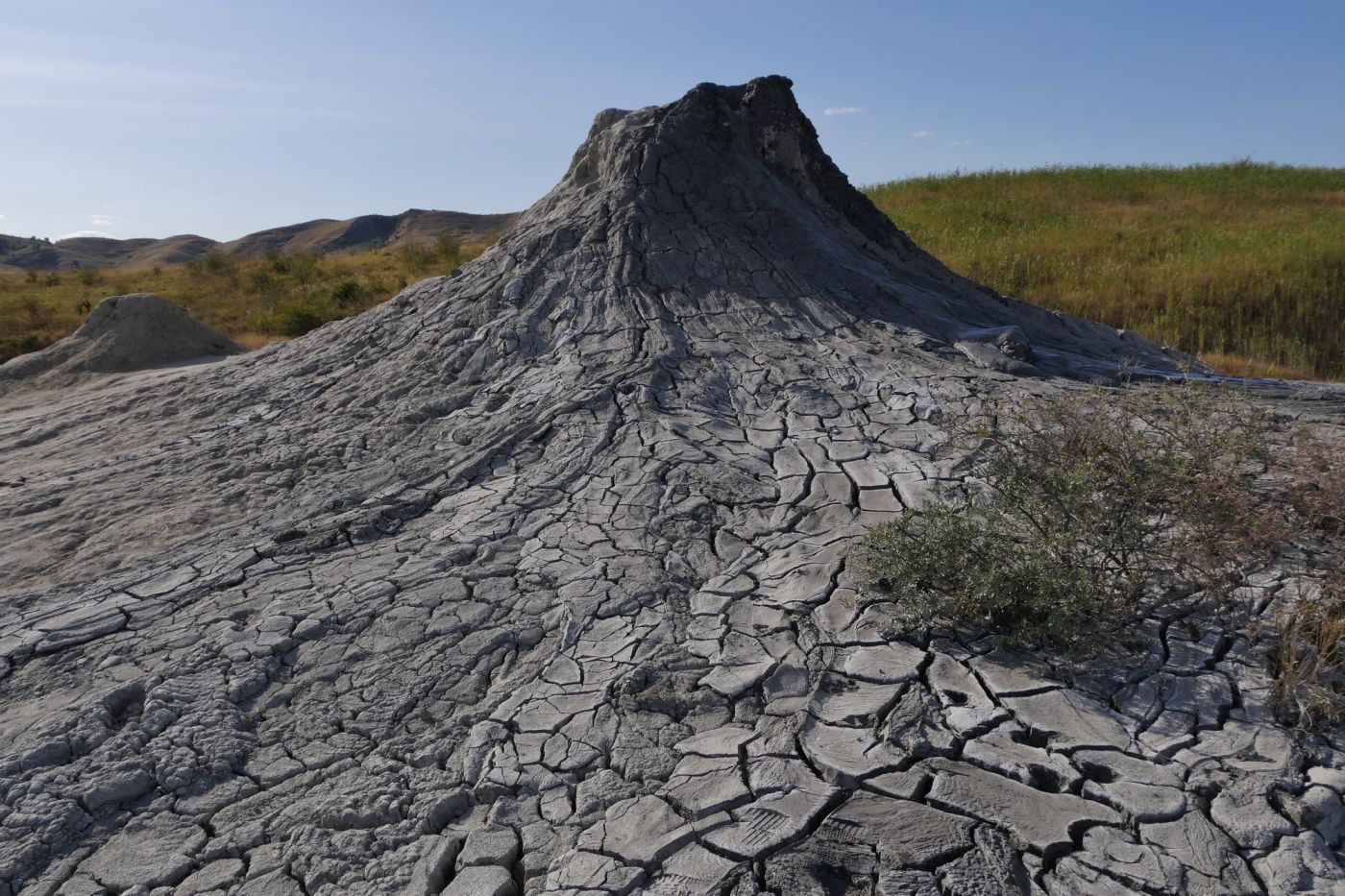
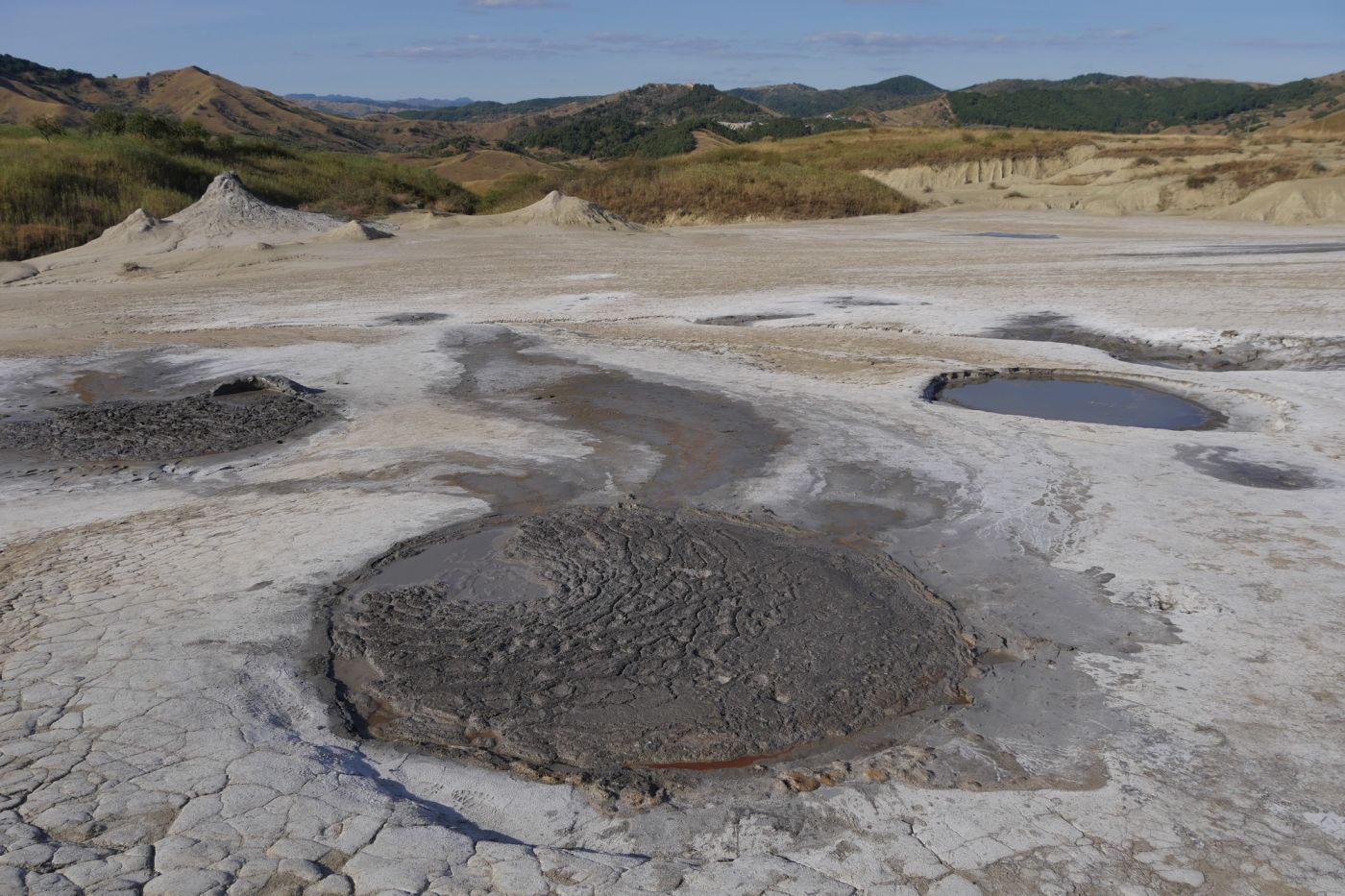
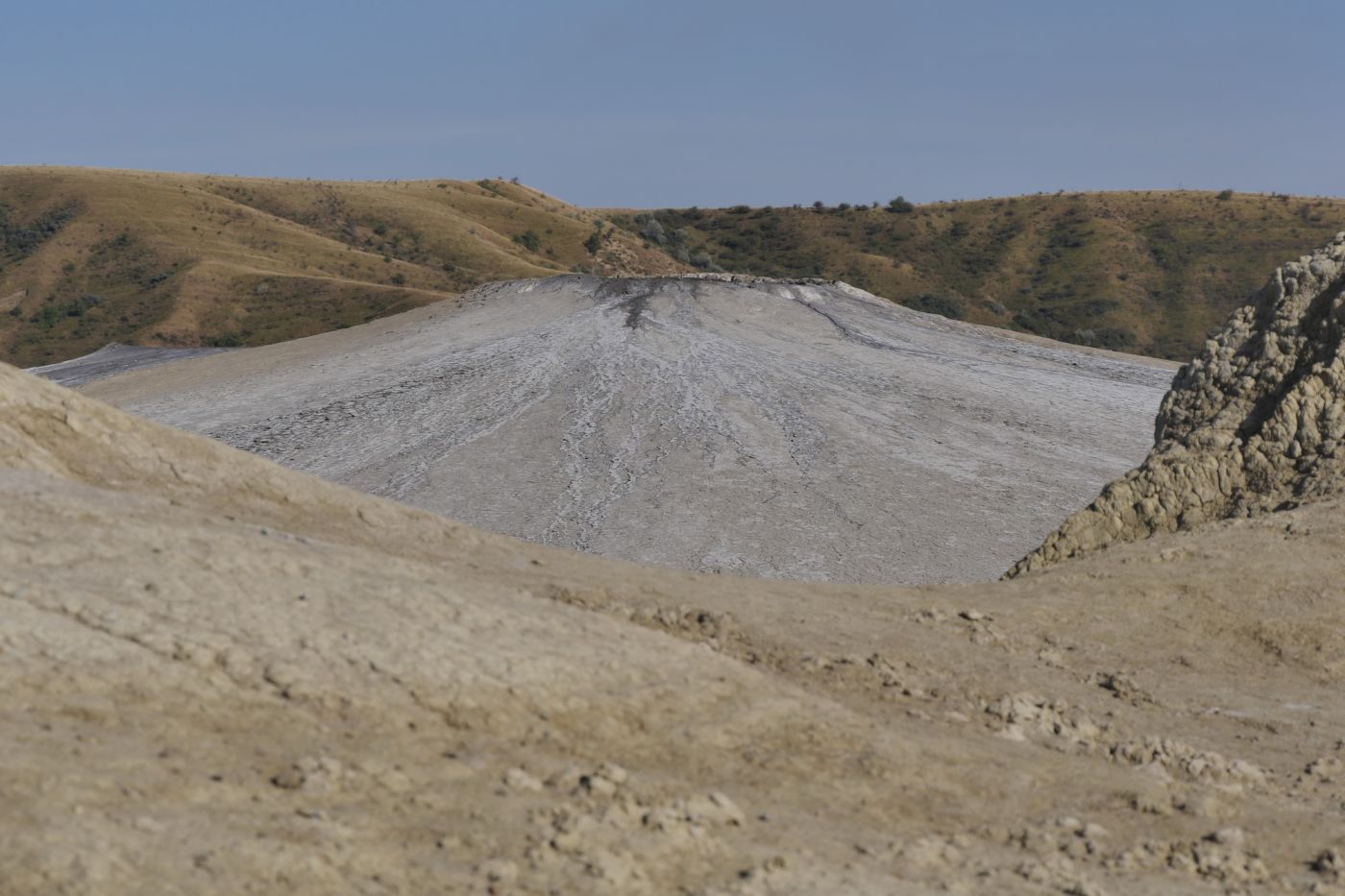
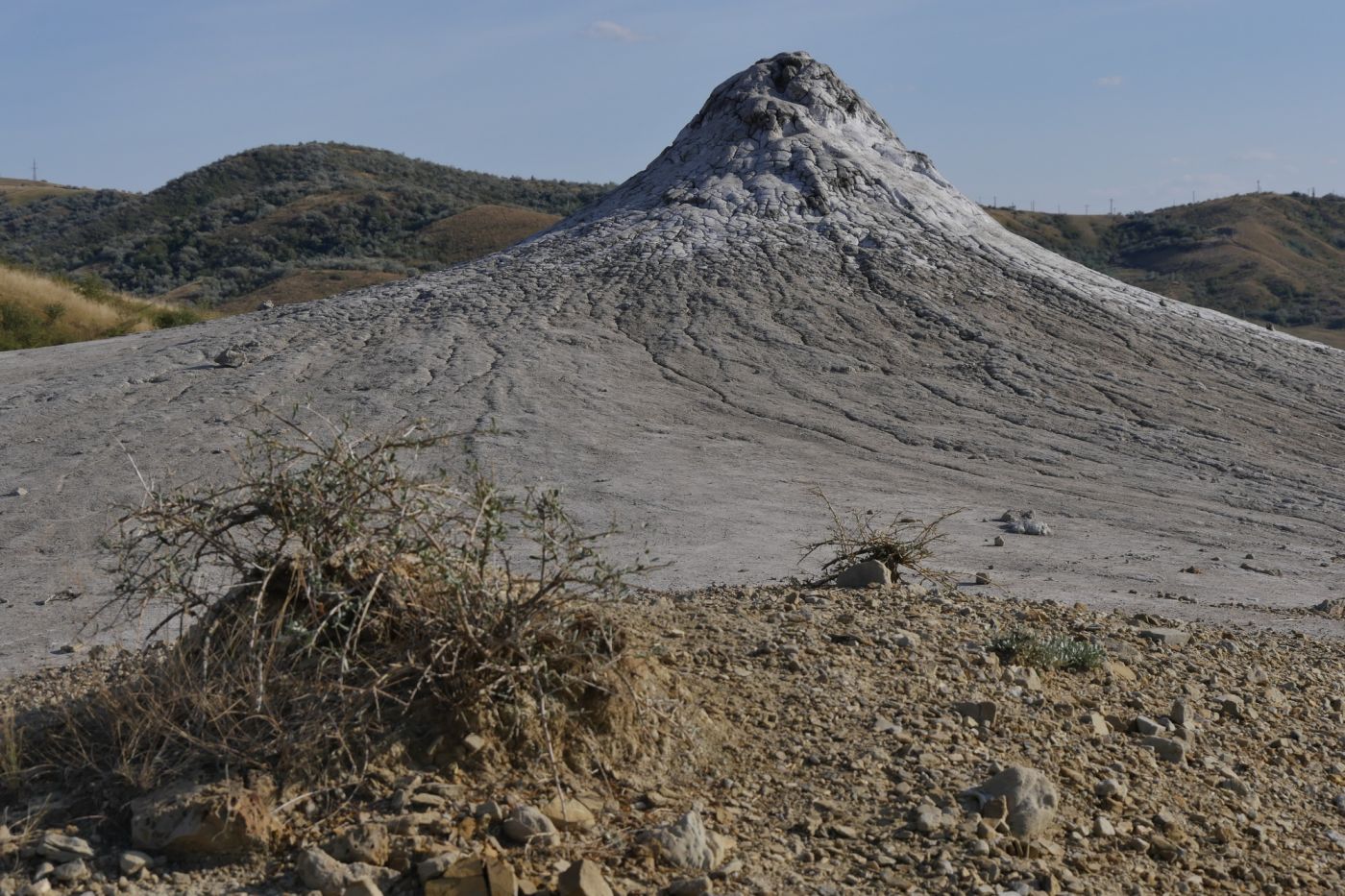
***
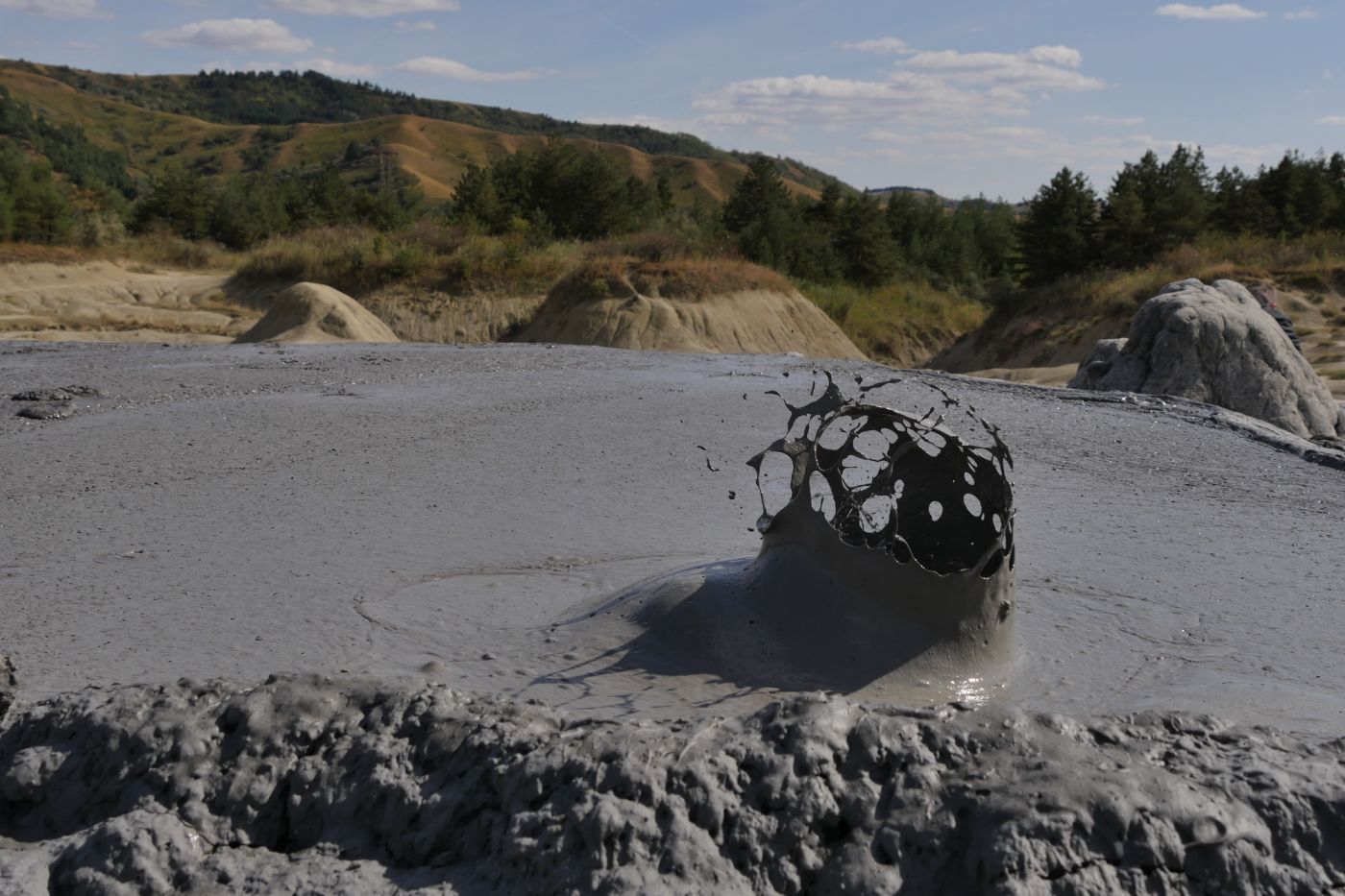
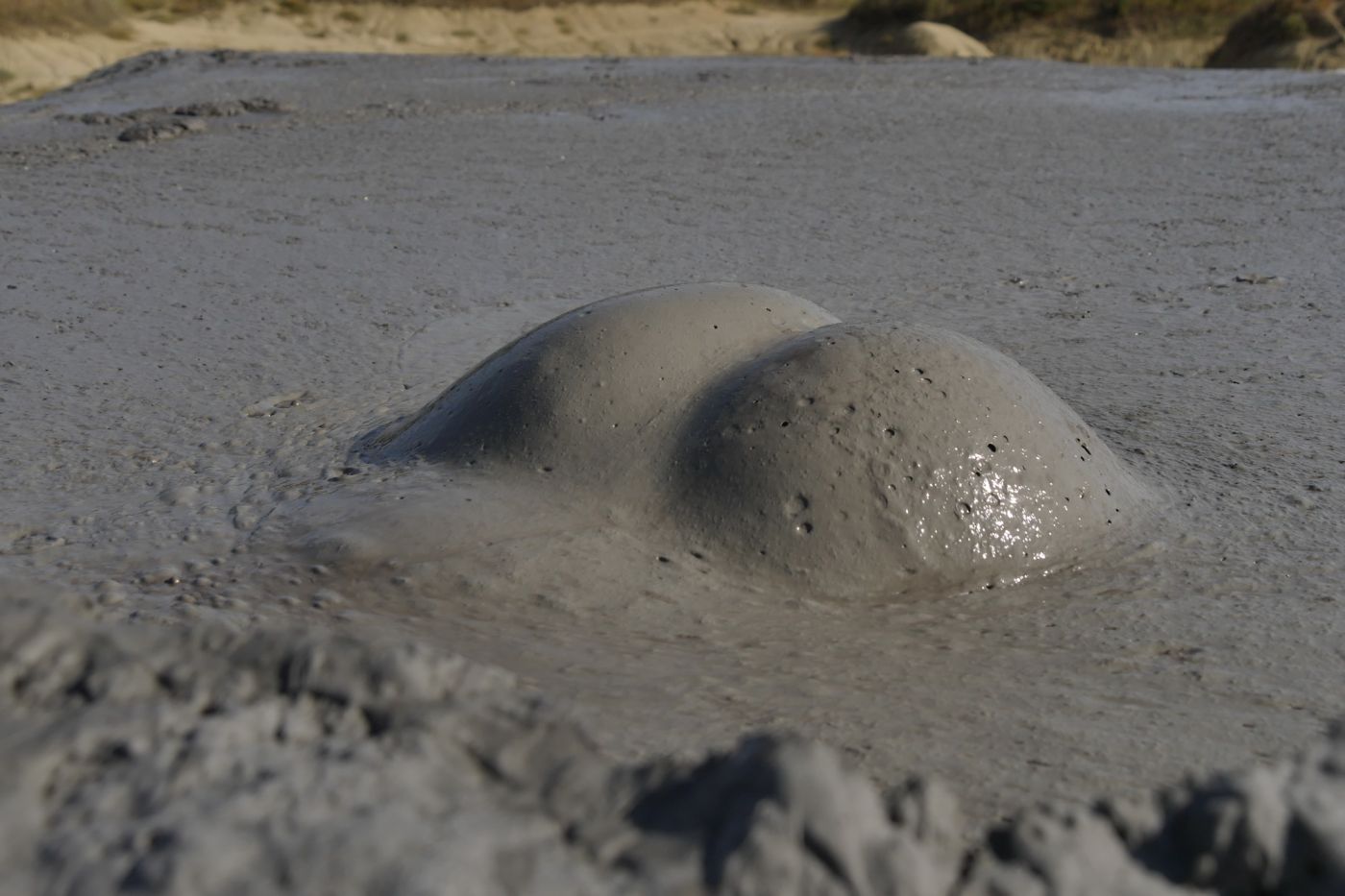
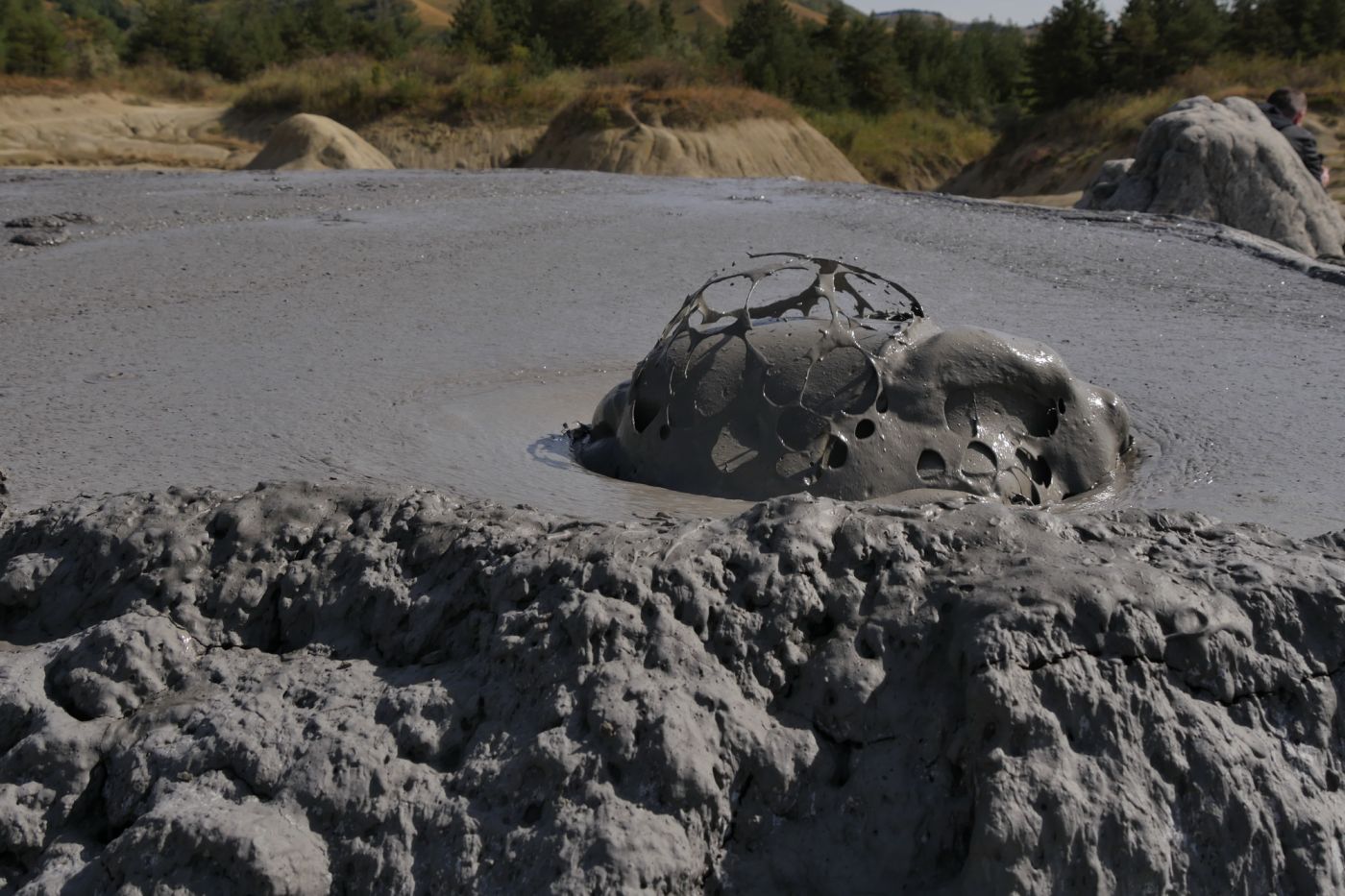
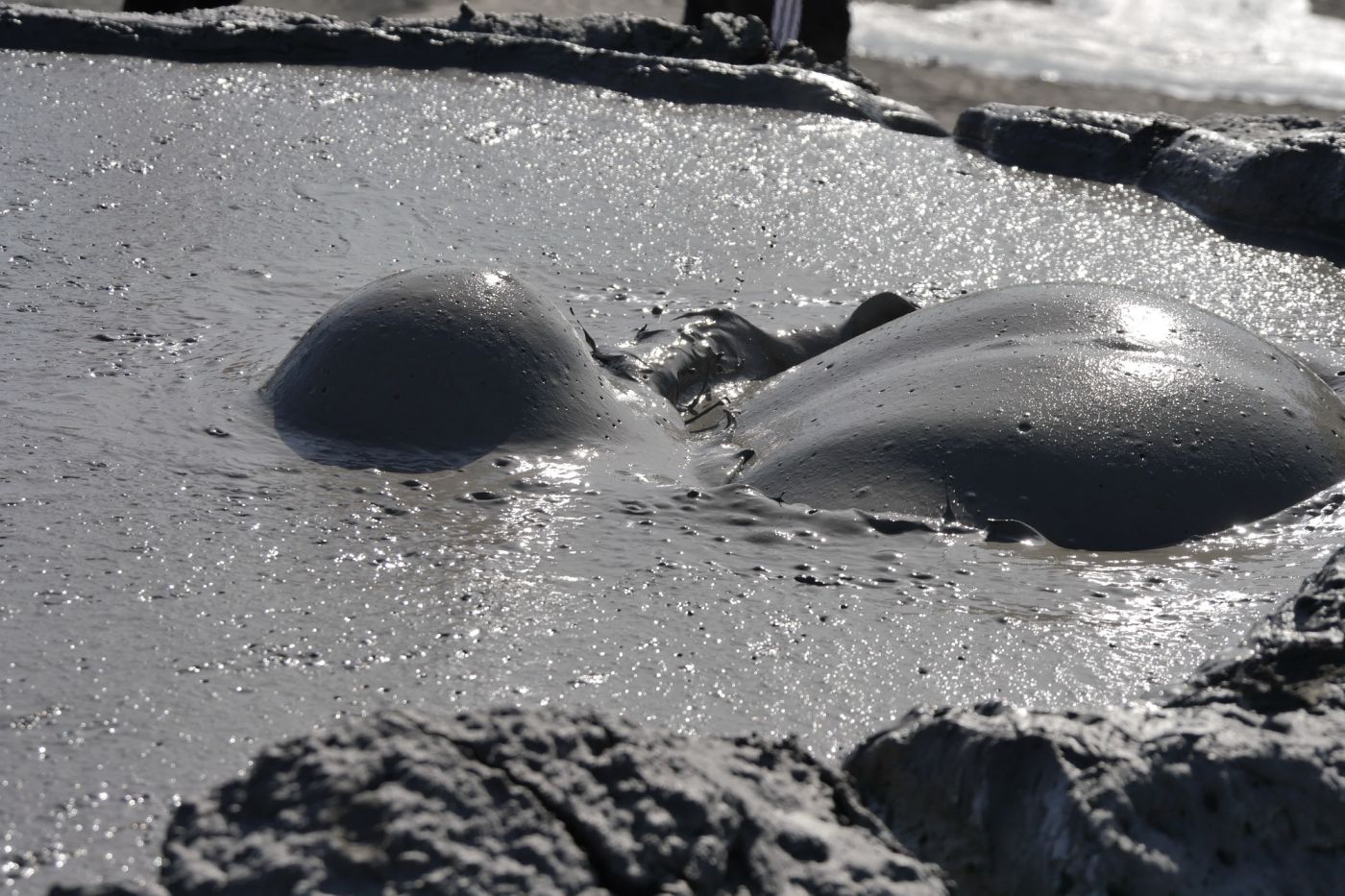
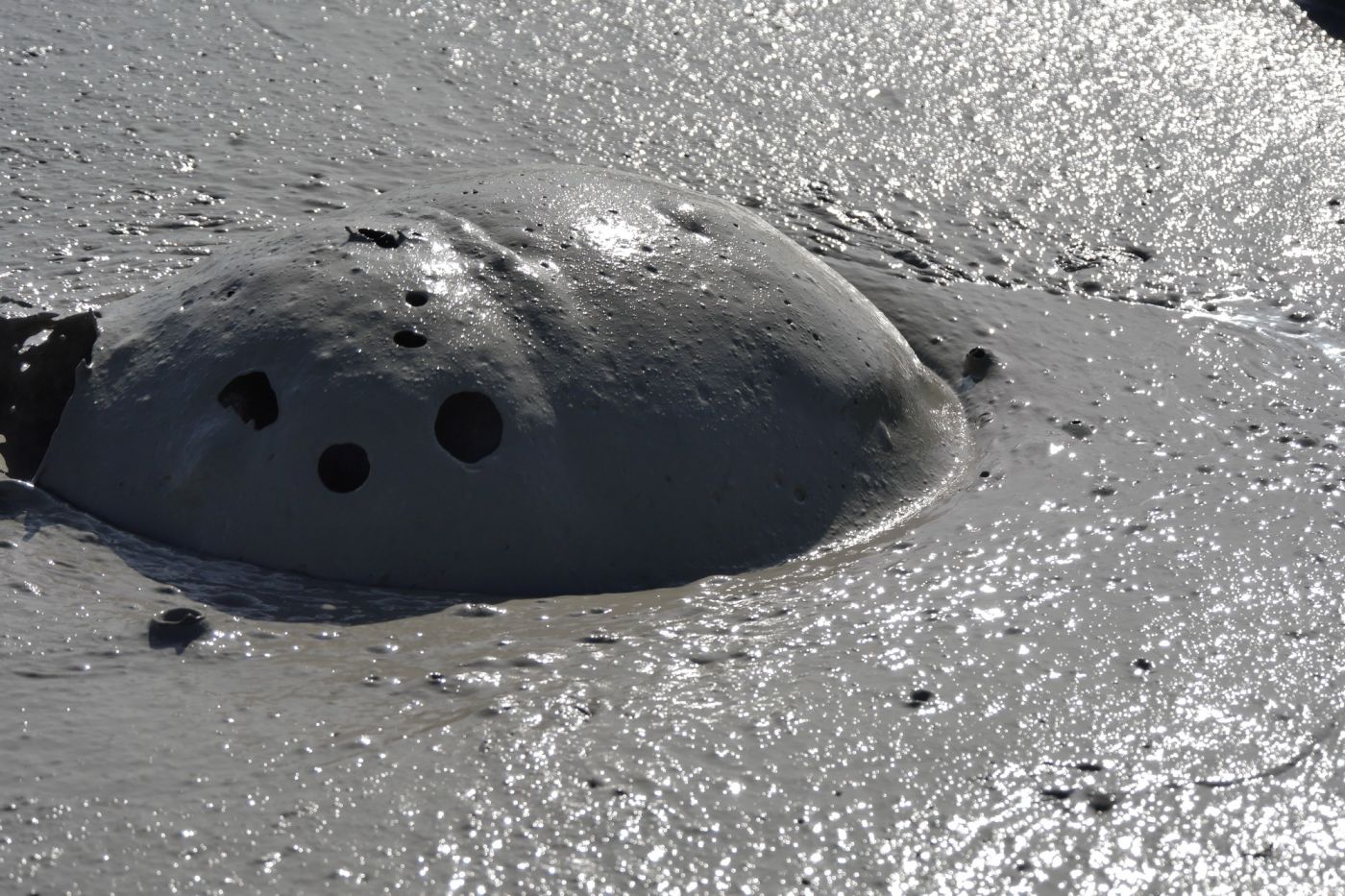
Gas and Mud Eruptions
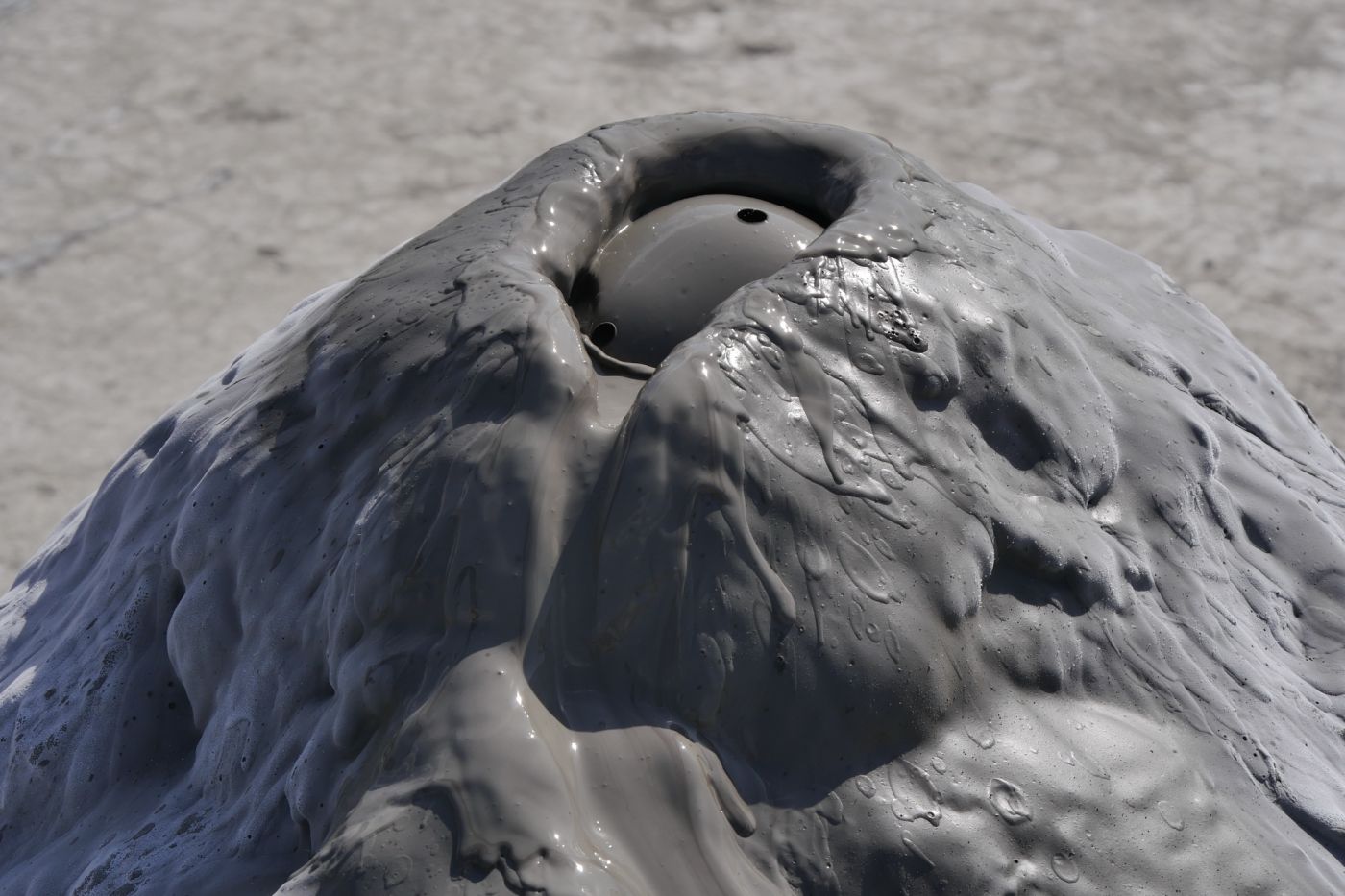
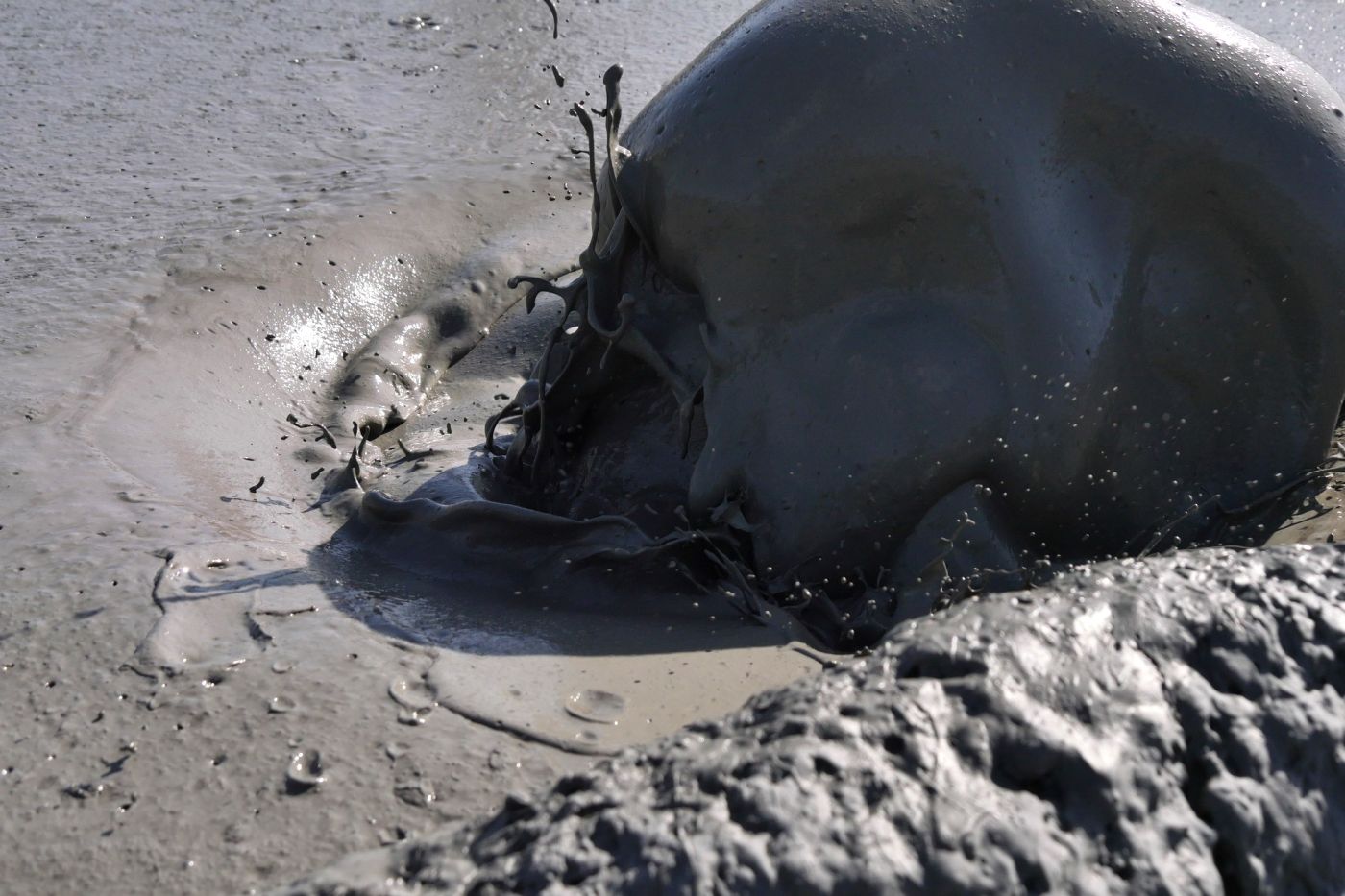
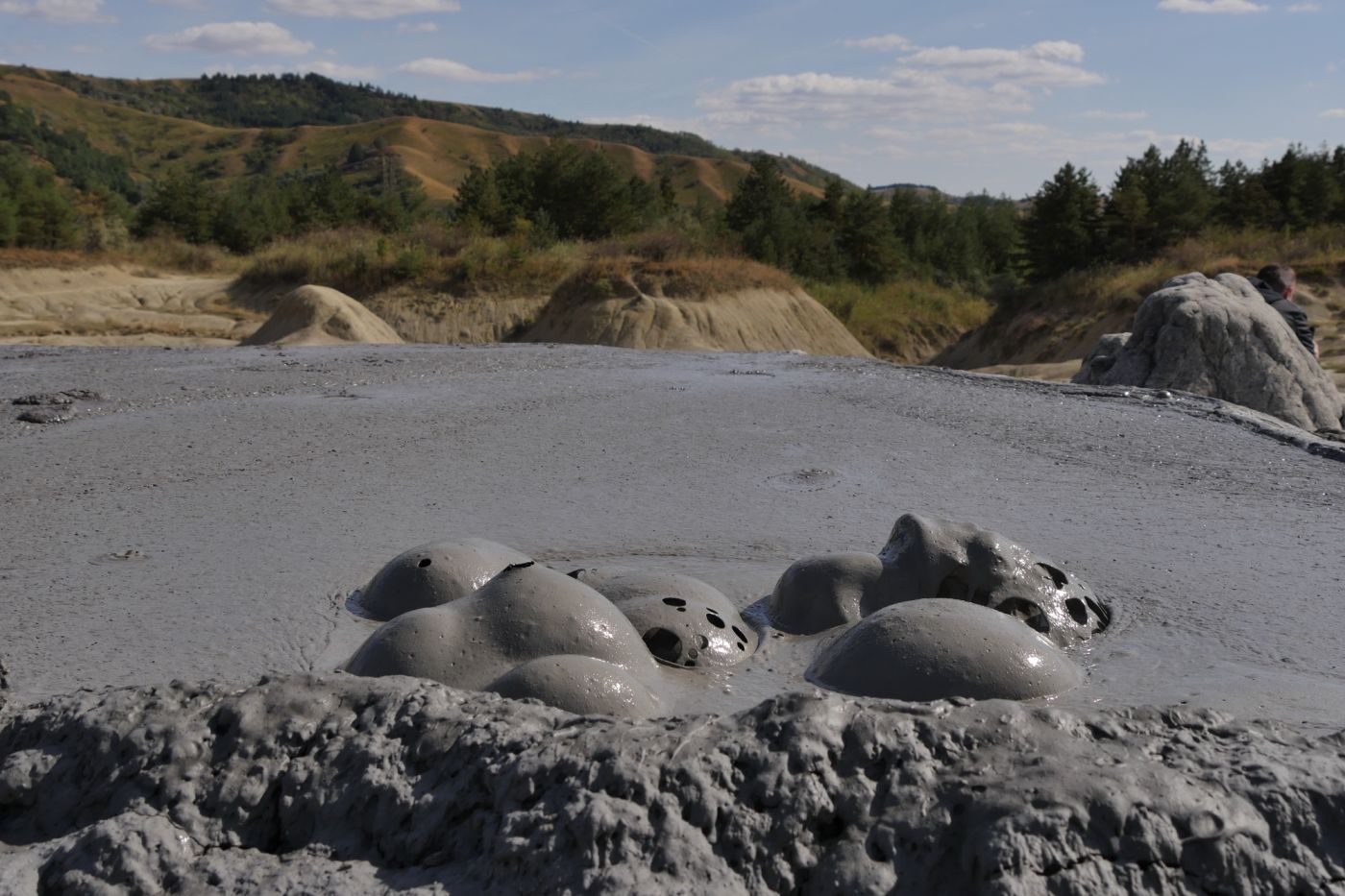
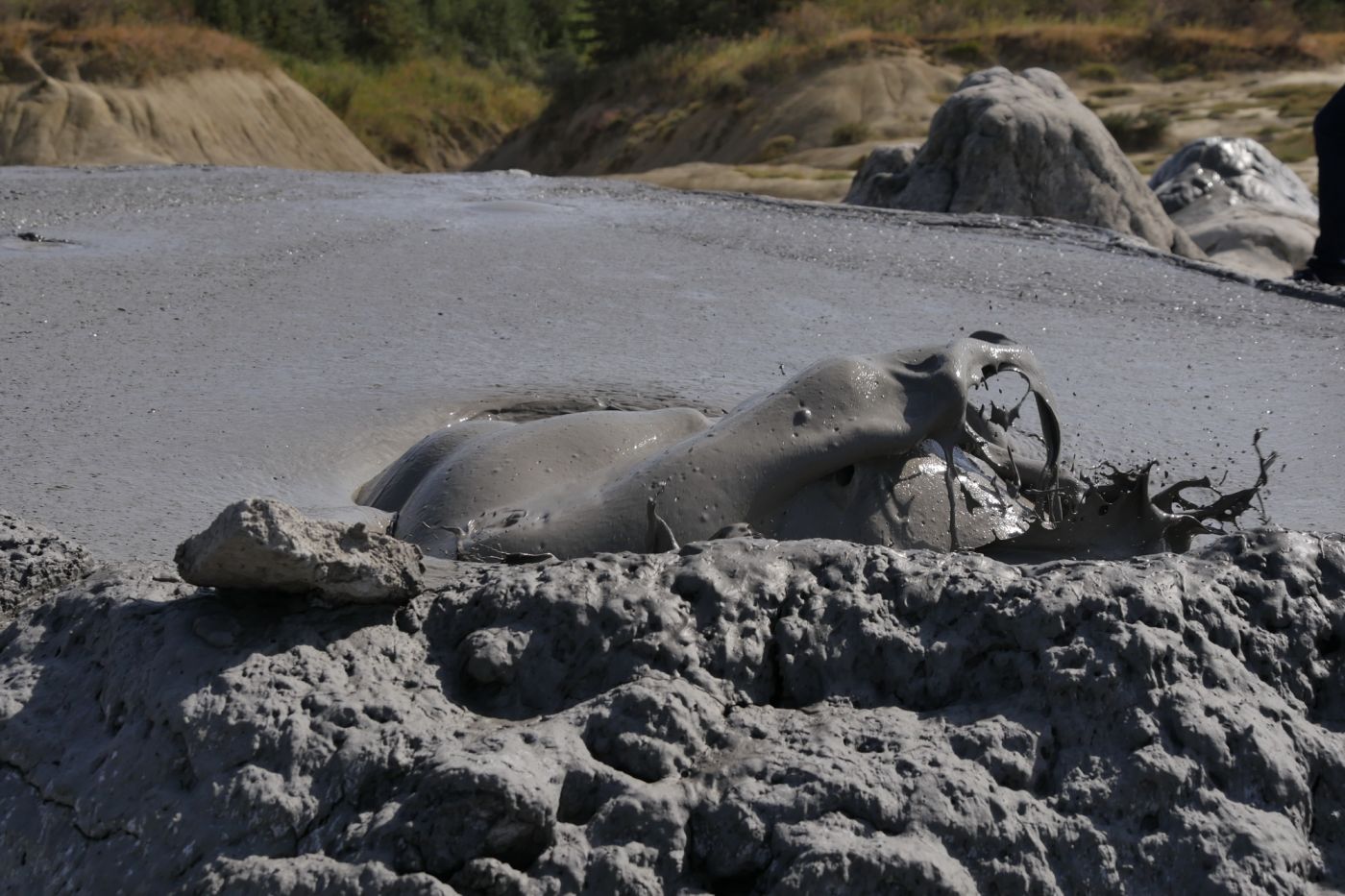
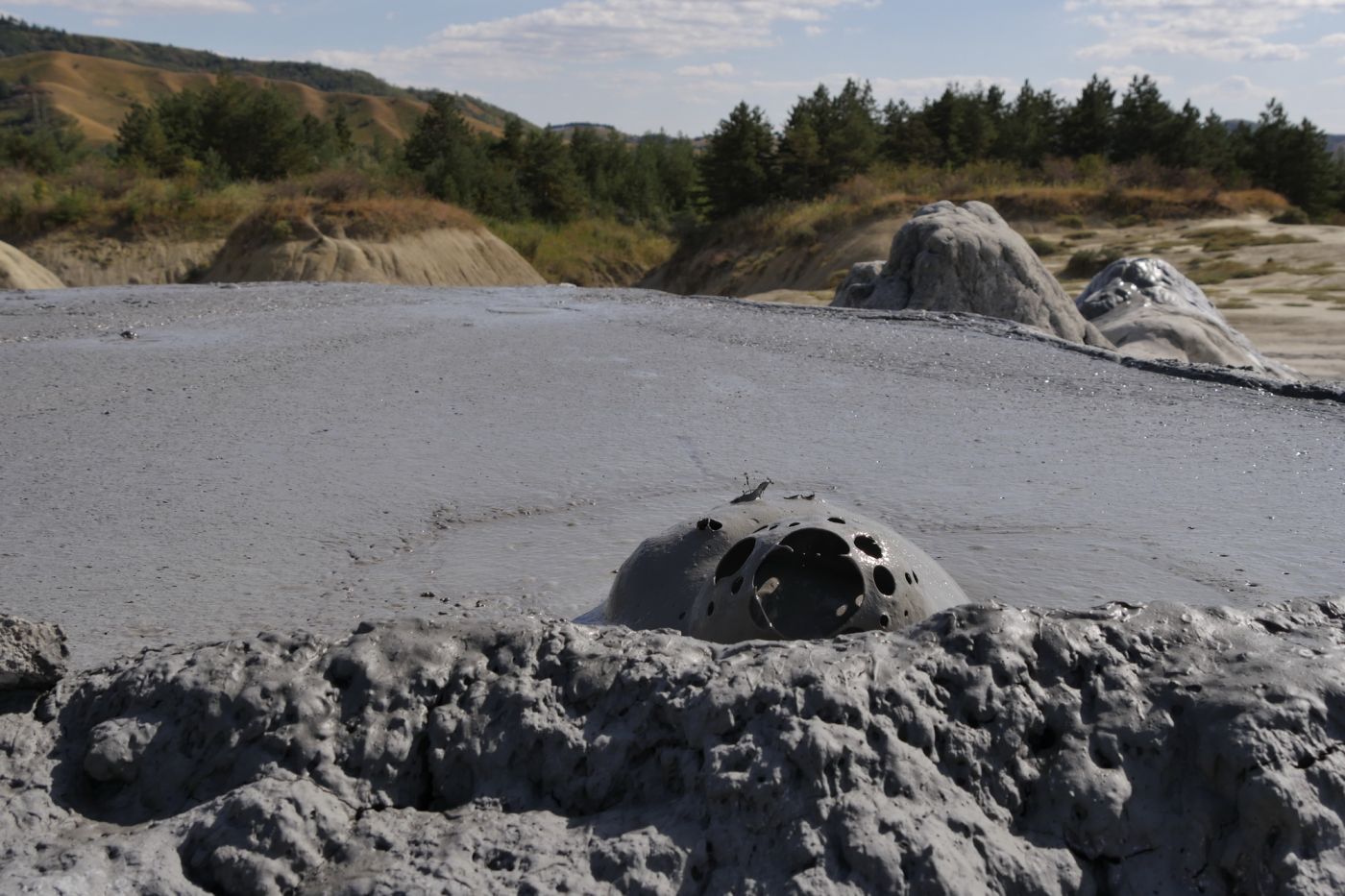
The mud is propelled by these small, repetitive eruptions, occurring at intervals of a few seconds or minutes, after which it flows downhill under the force of gravity. The amount of mud reaching the surface is influenced by rainy periods, when a greater amount of water infiltrates the sediments. In general, during spring or summer, following heavy rainfall, the activity of the mud volcanoes becomes more intense.
Gas and Mud Eruptions – photo gallery
***
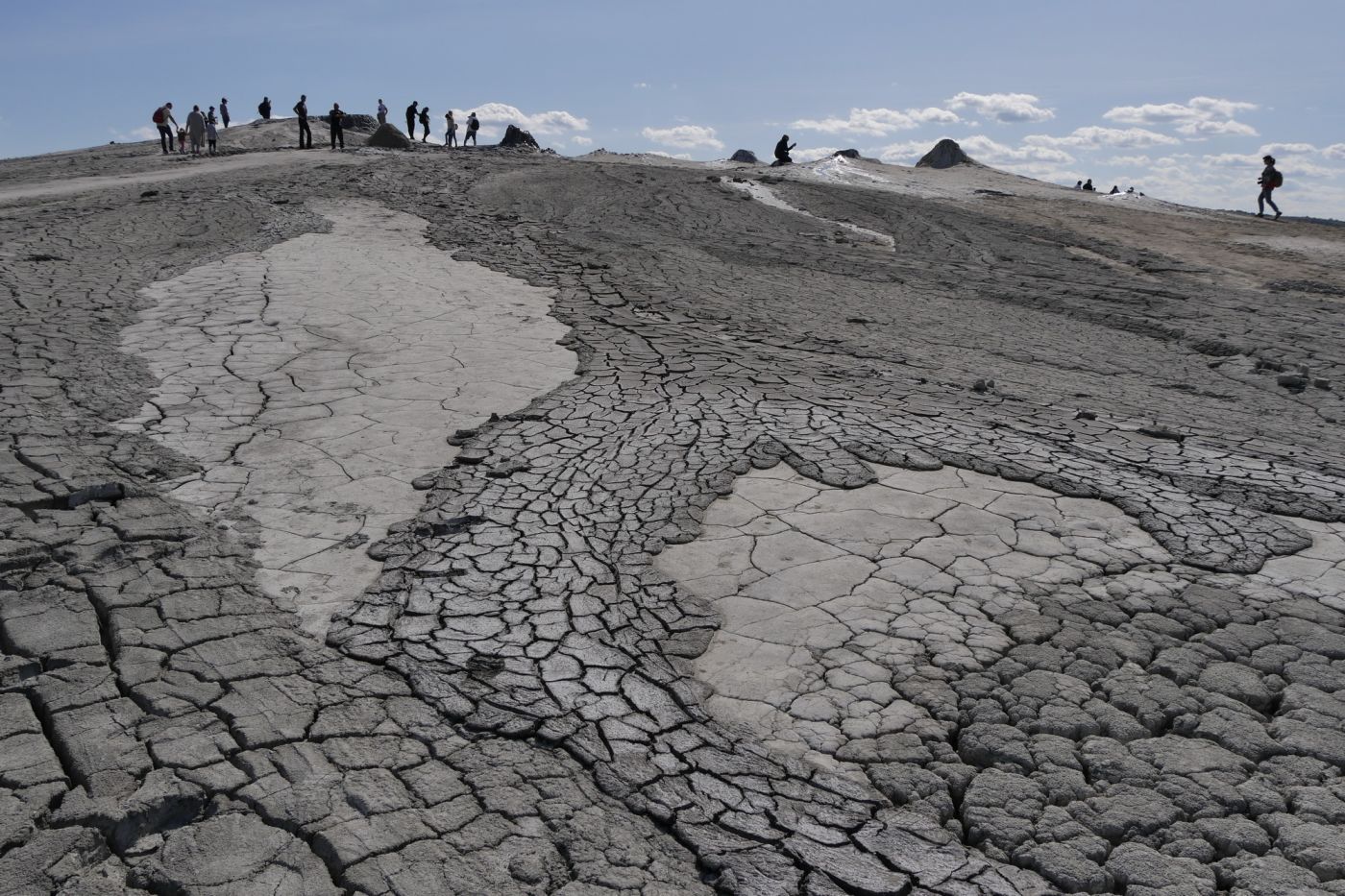
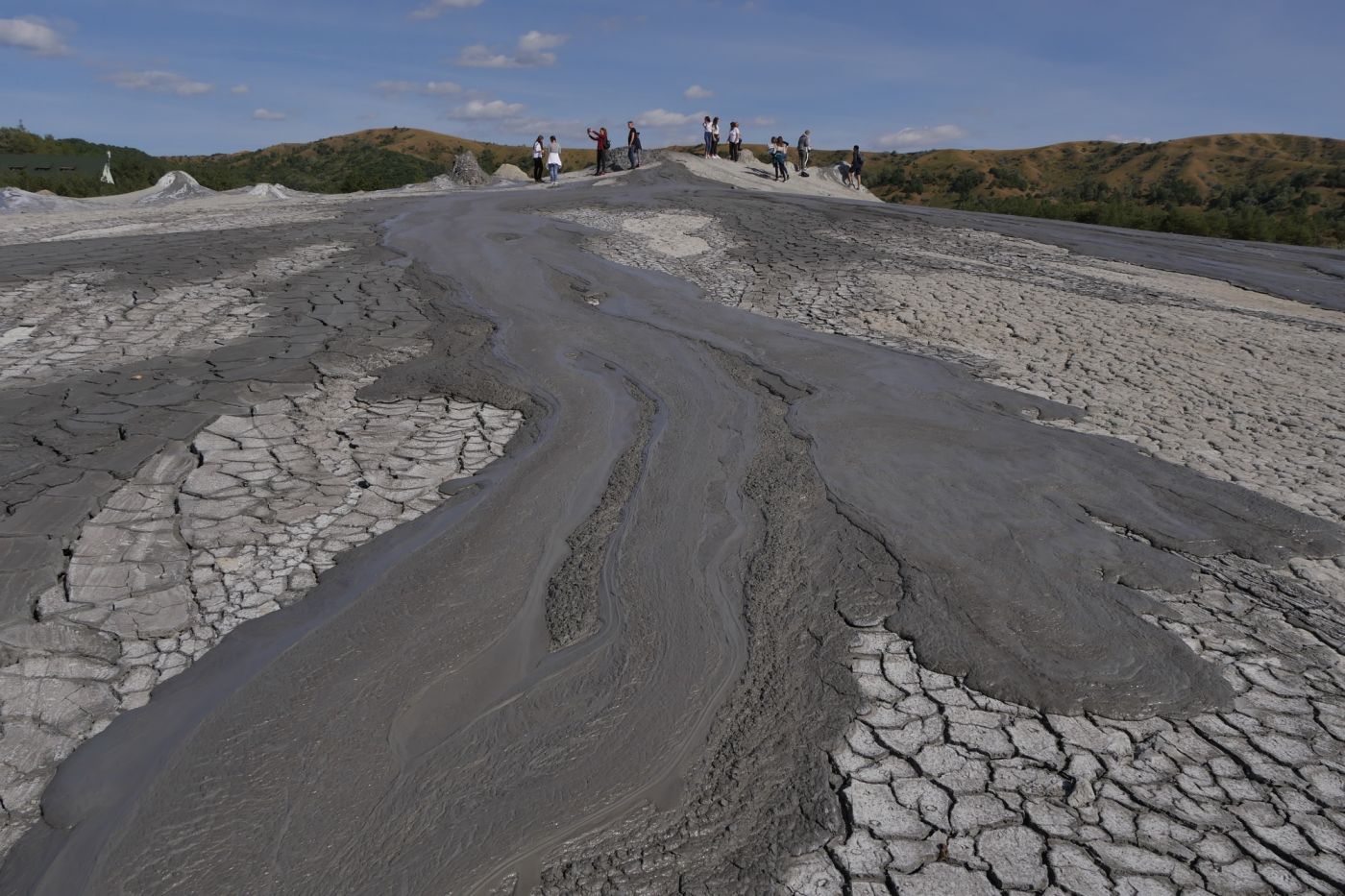
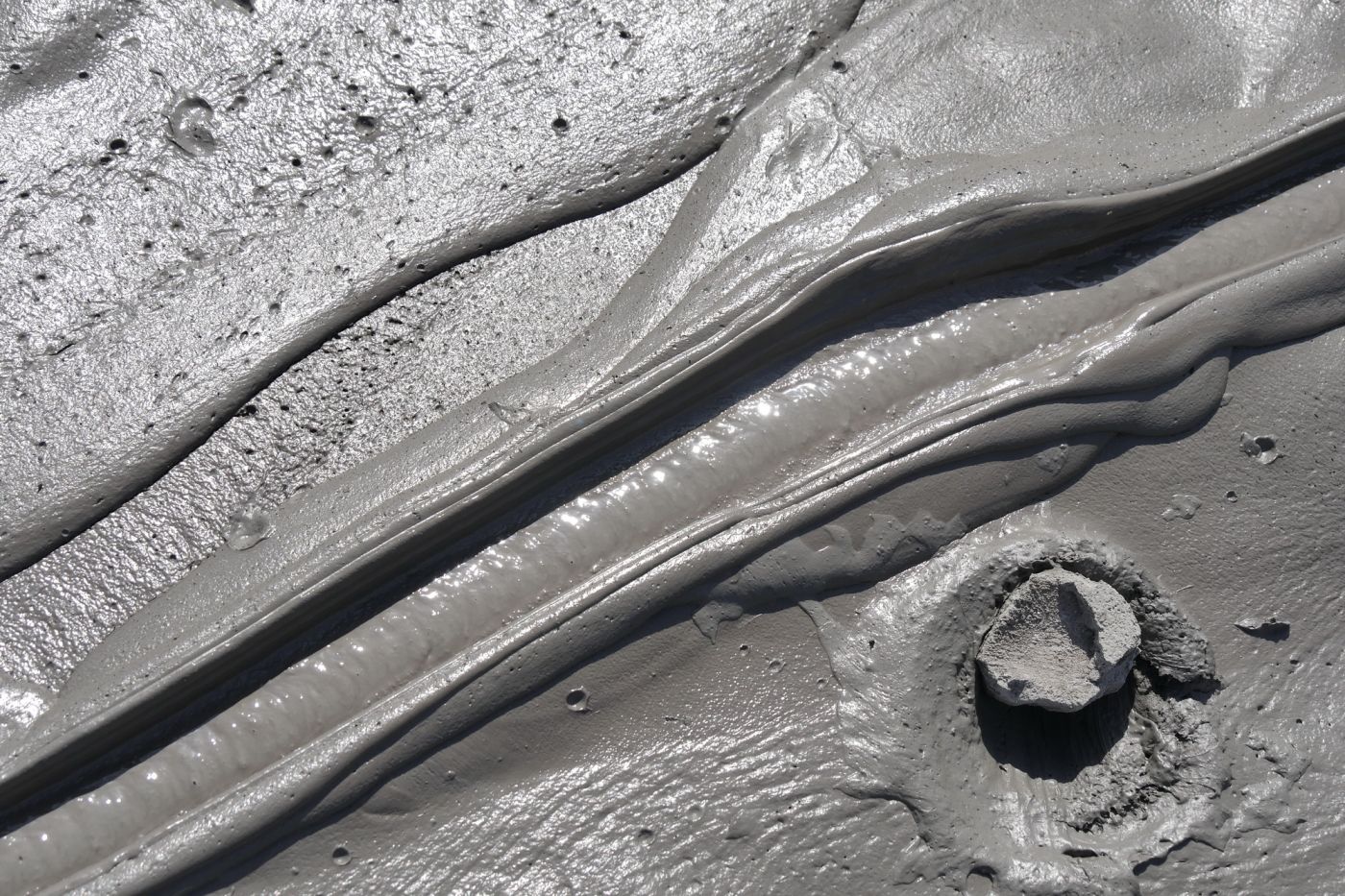
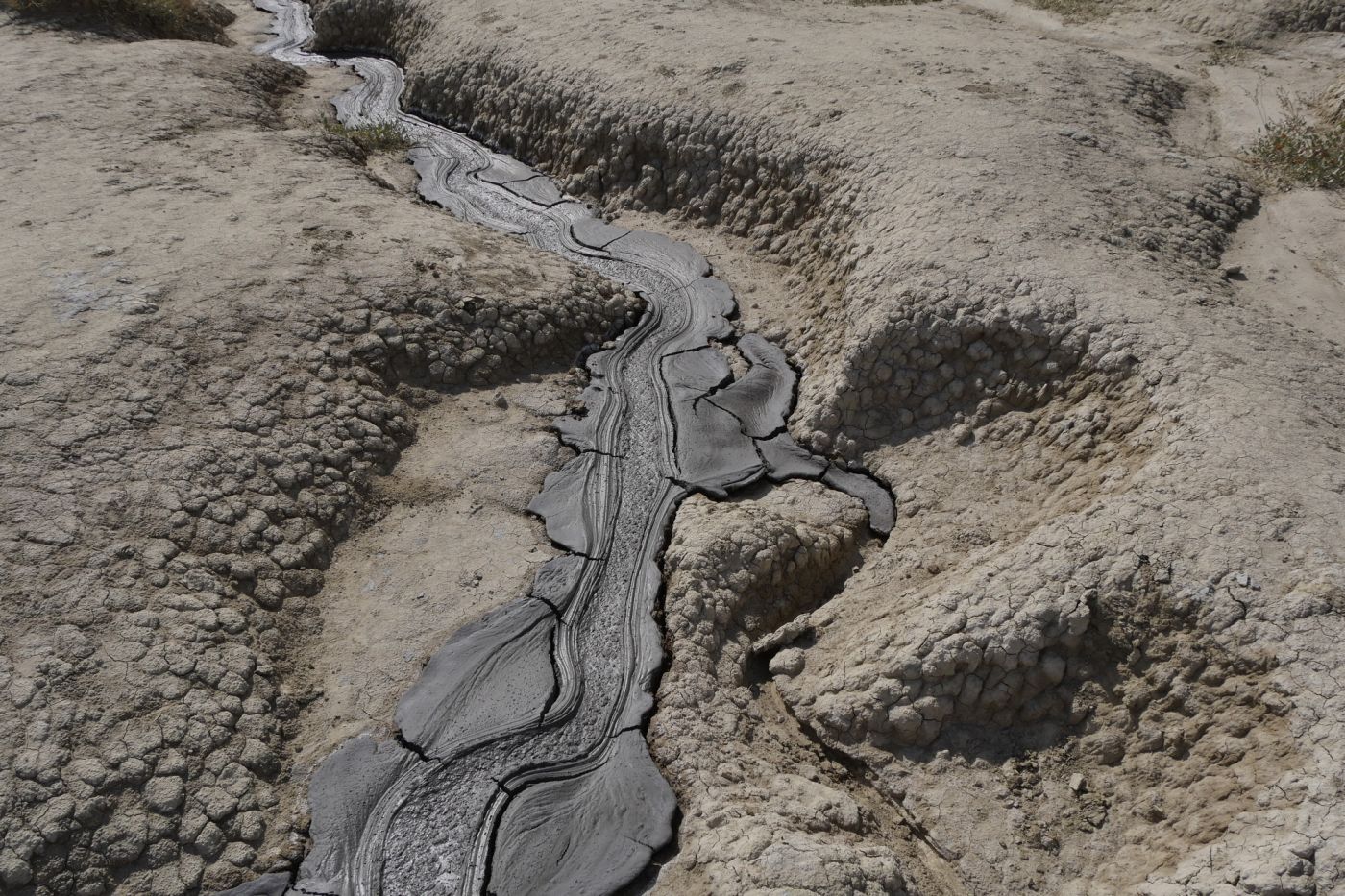
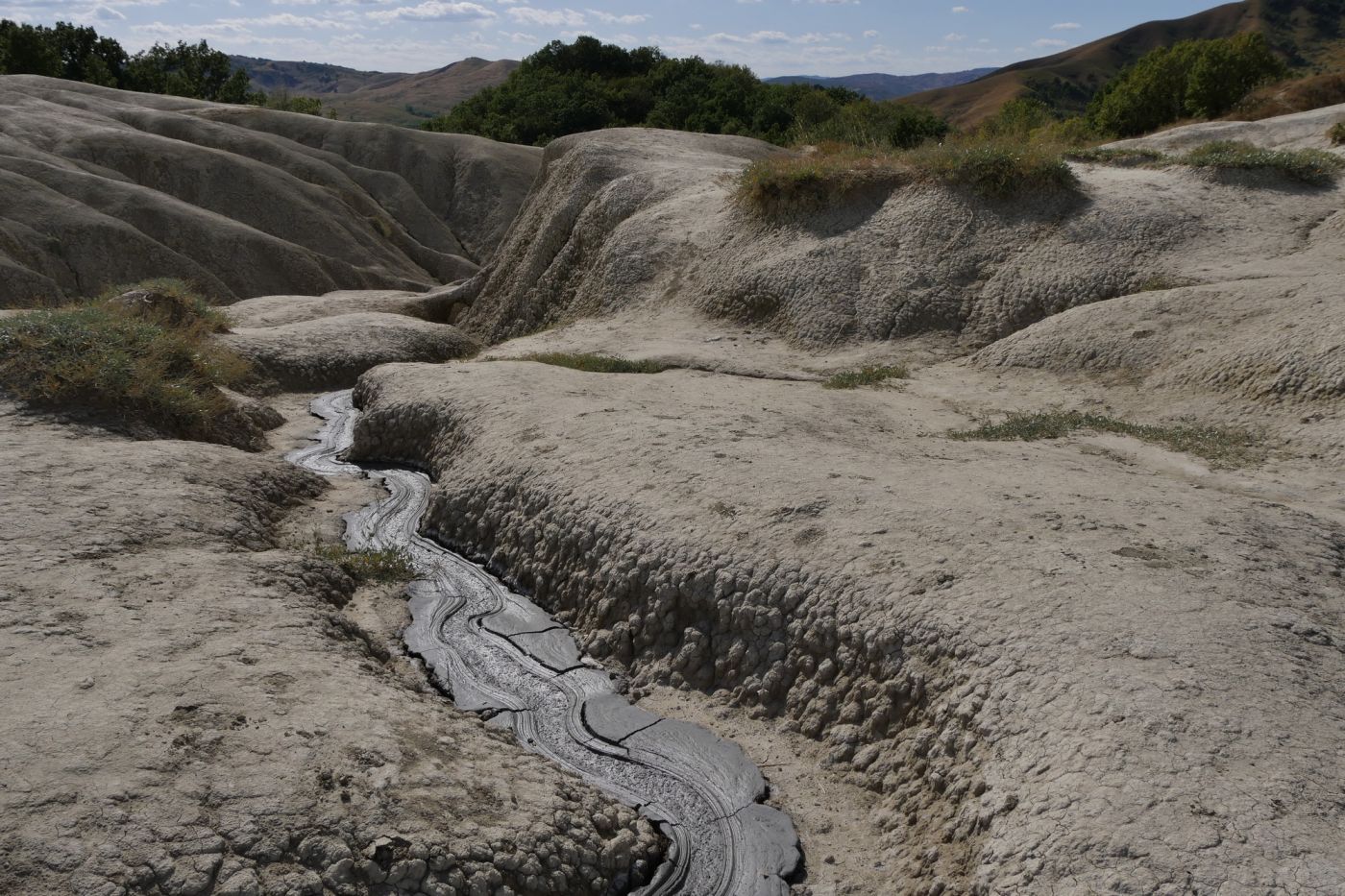
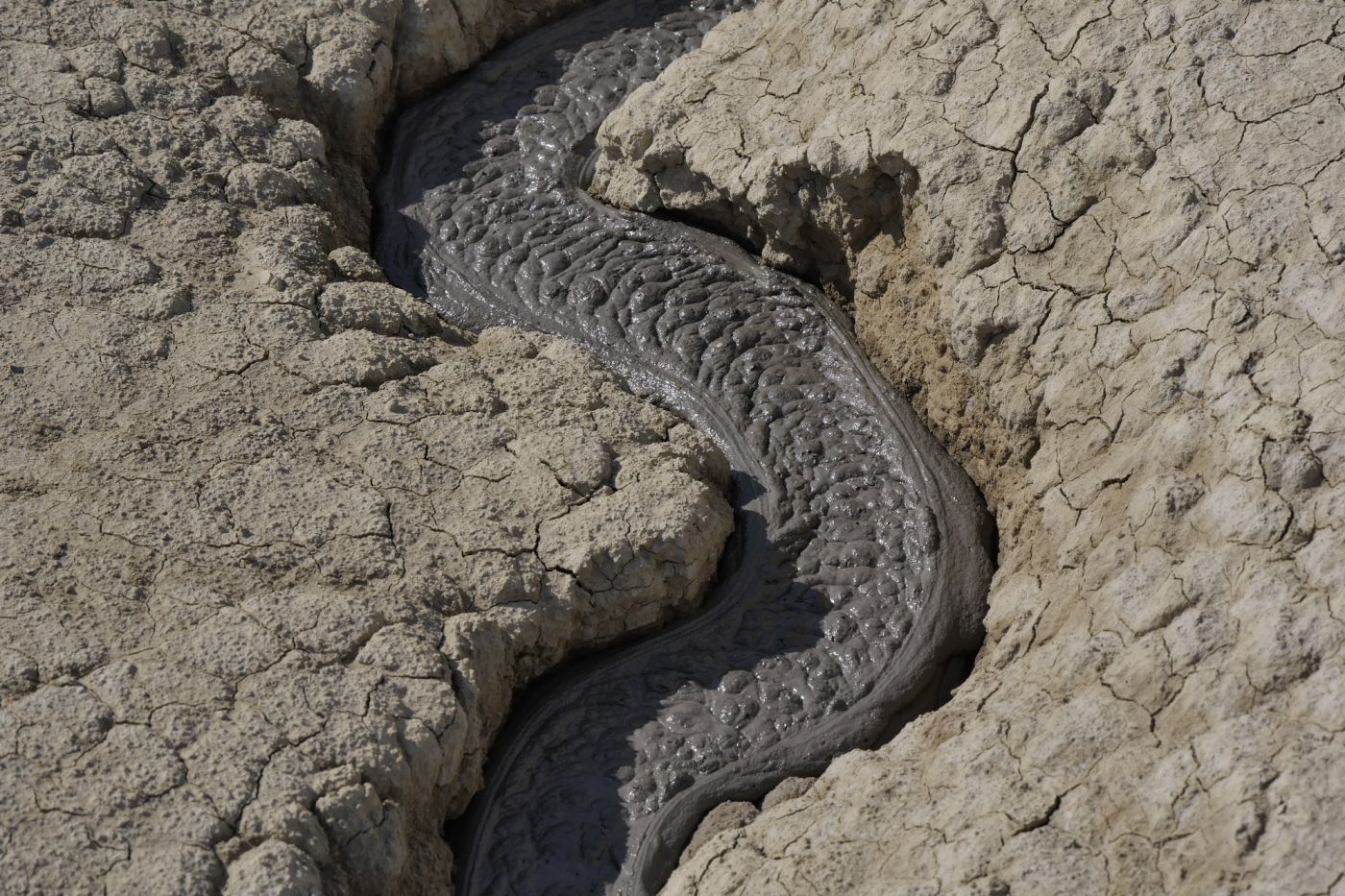
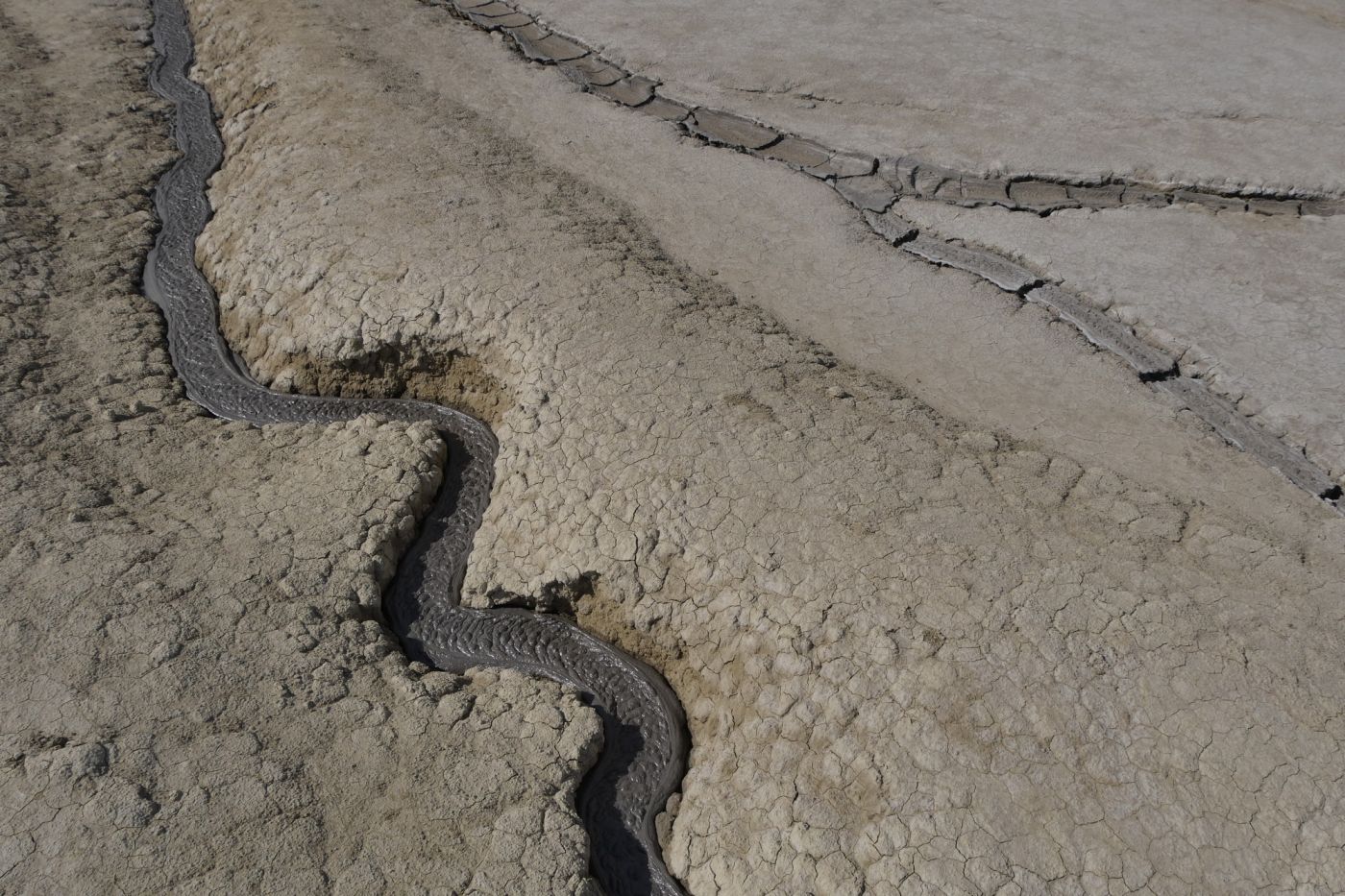
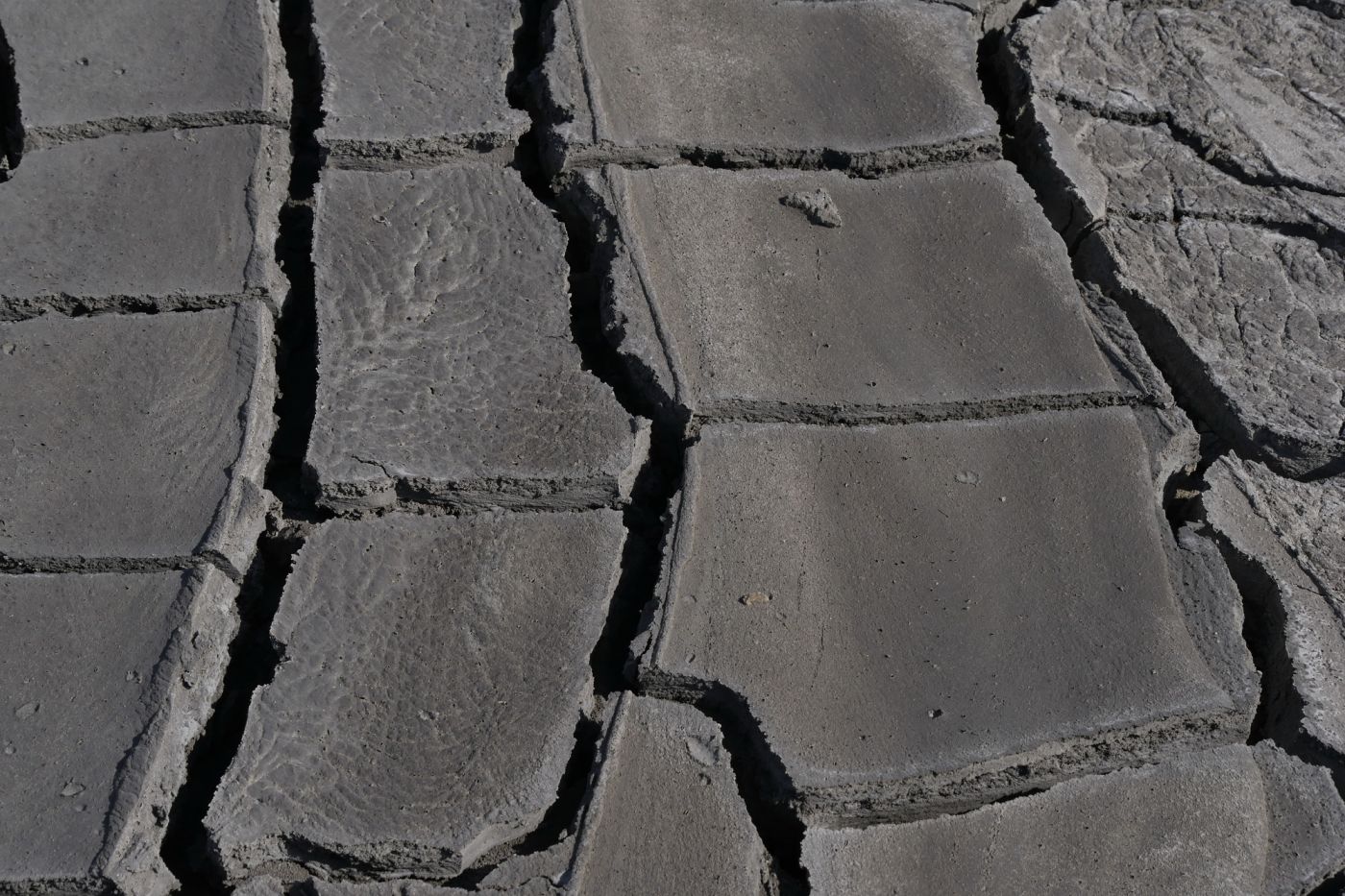
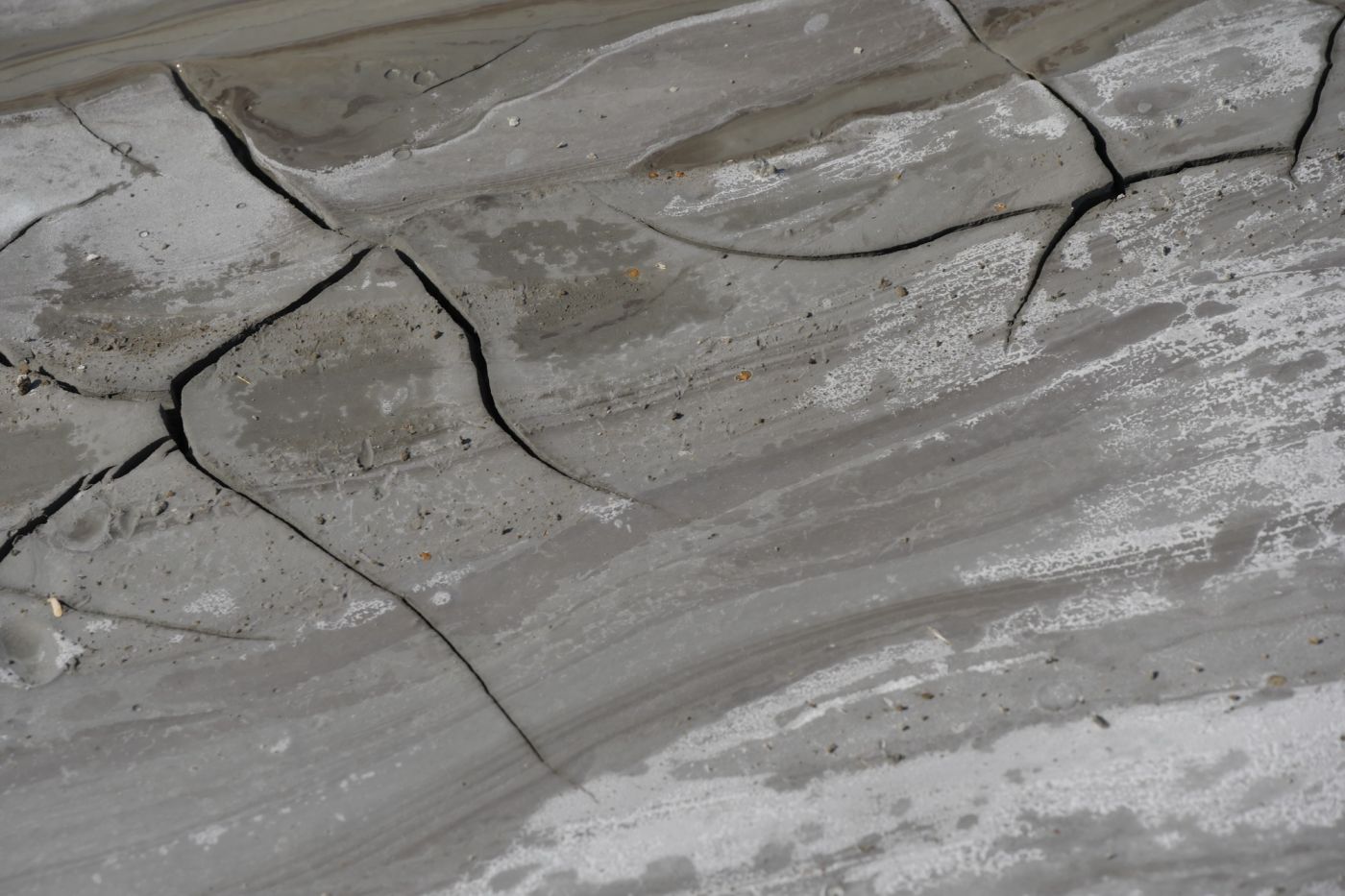
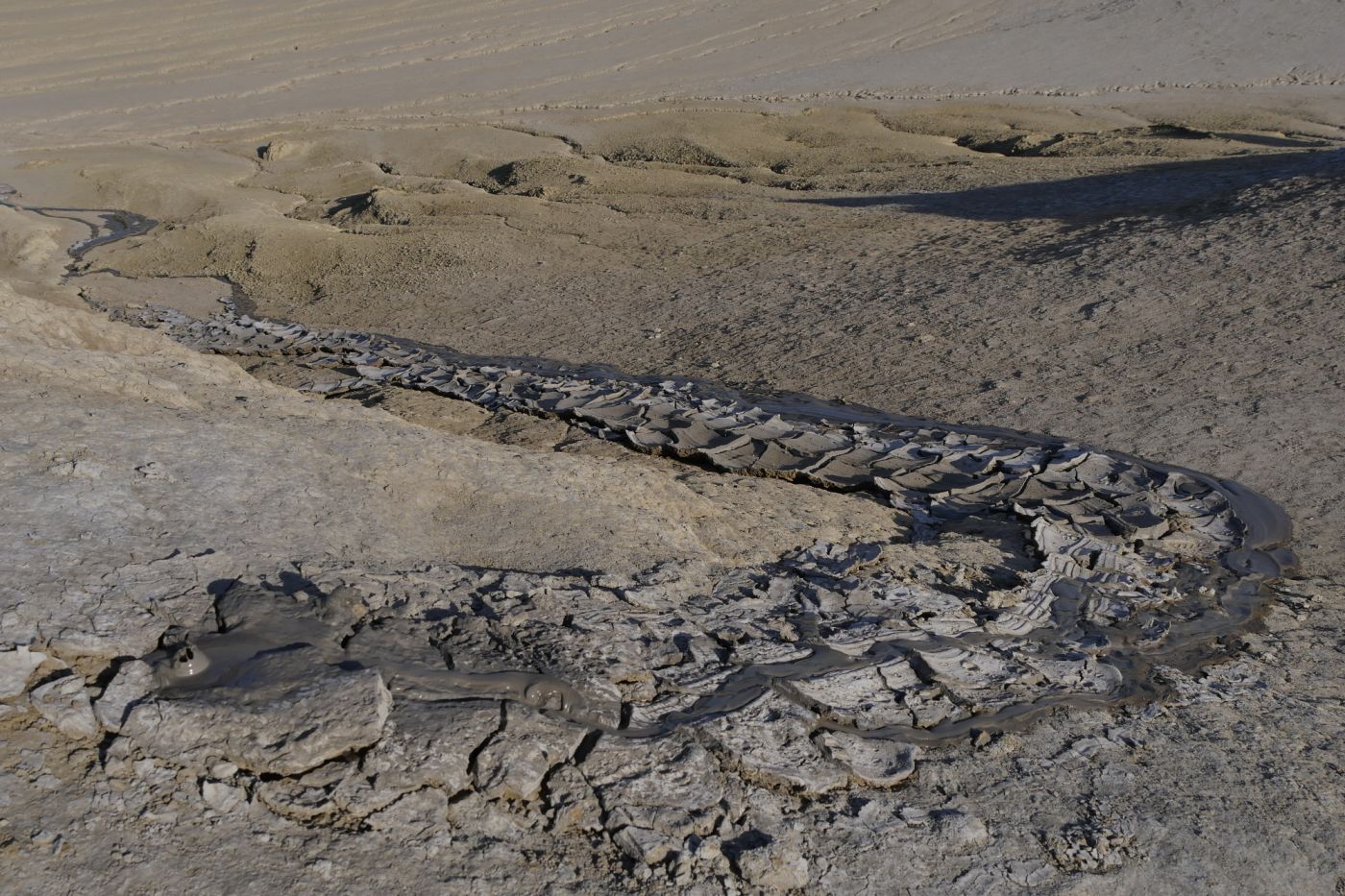
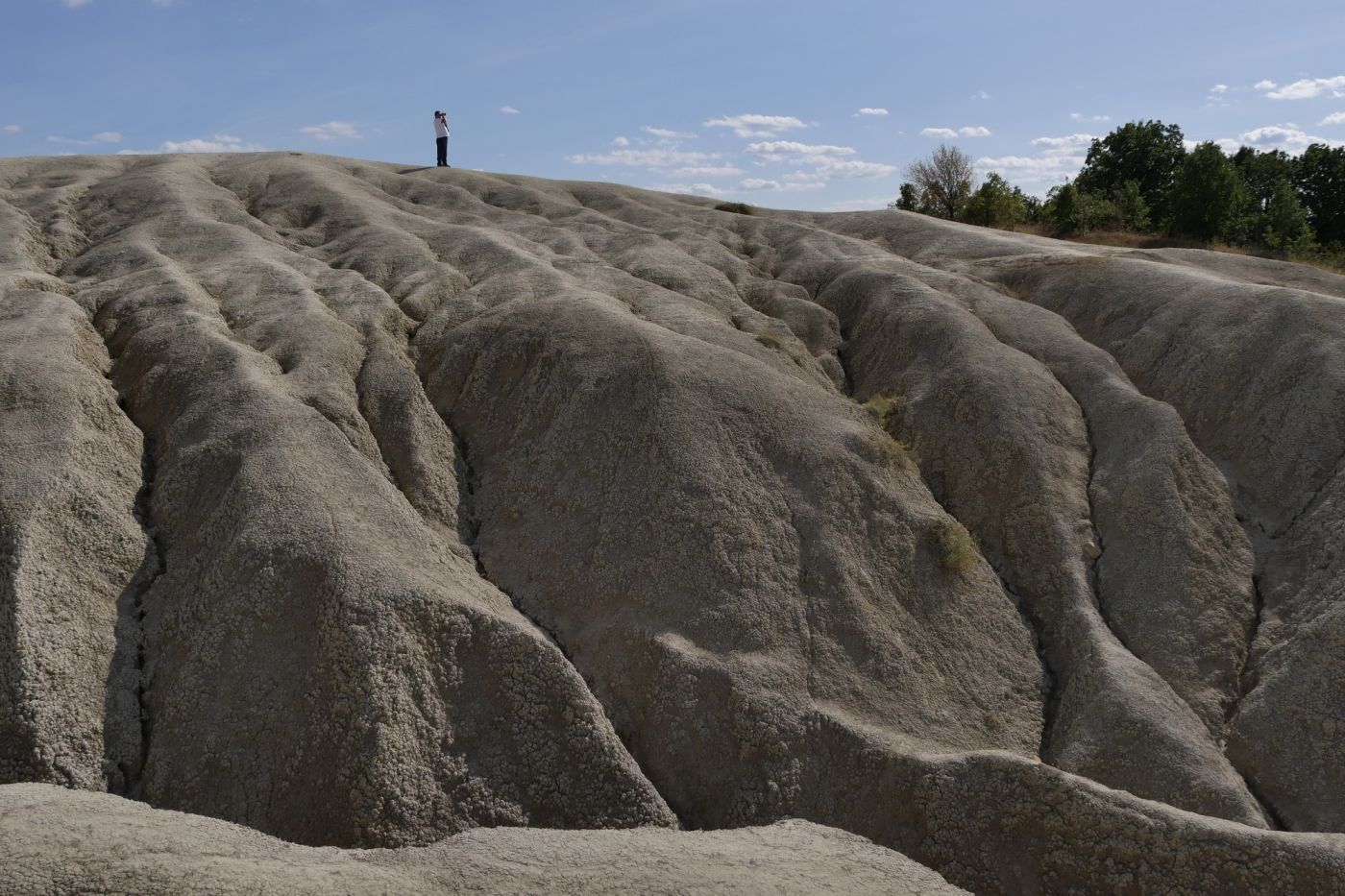
Mudflows, drying crusts and erosion forms
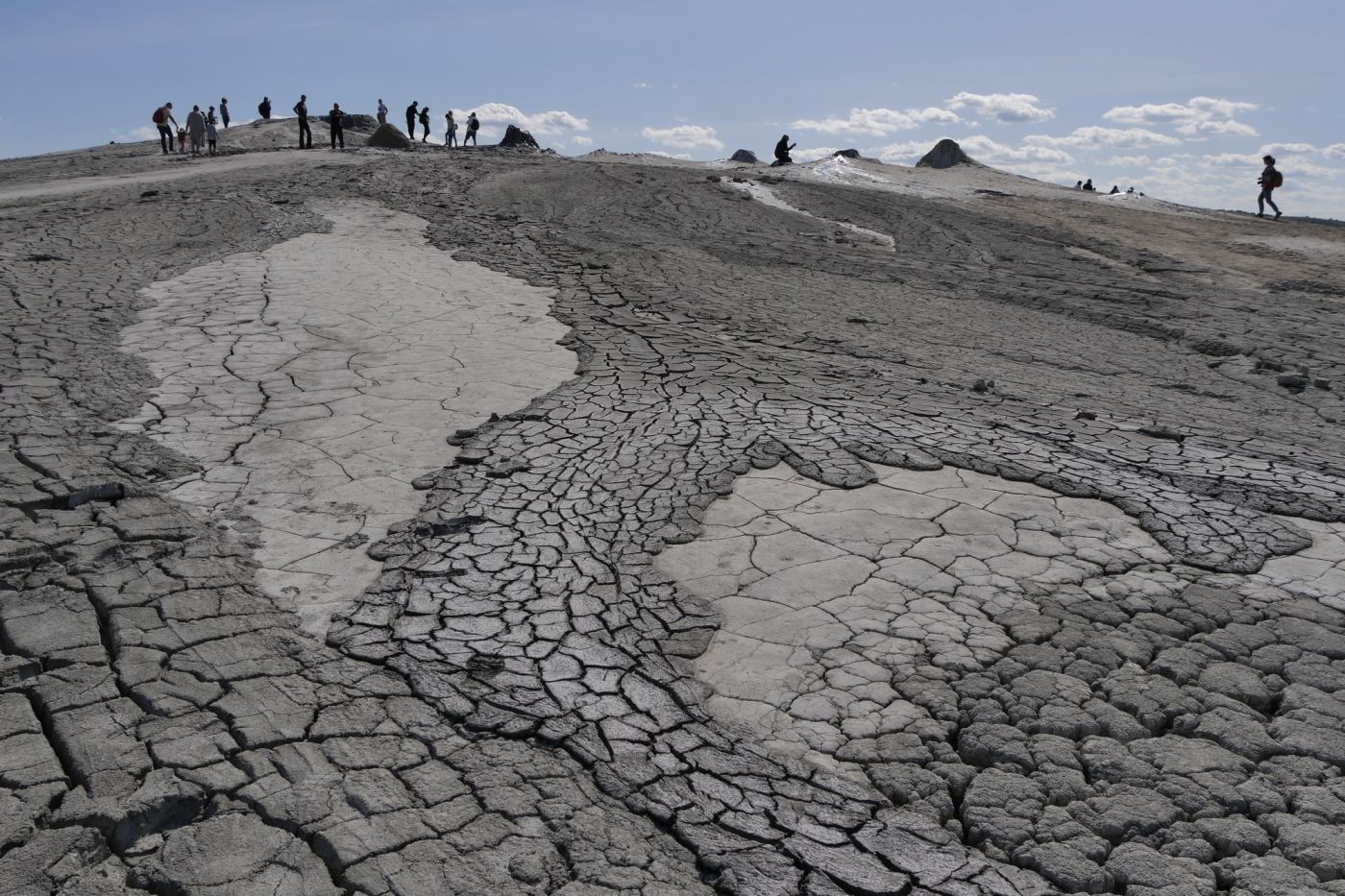
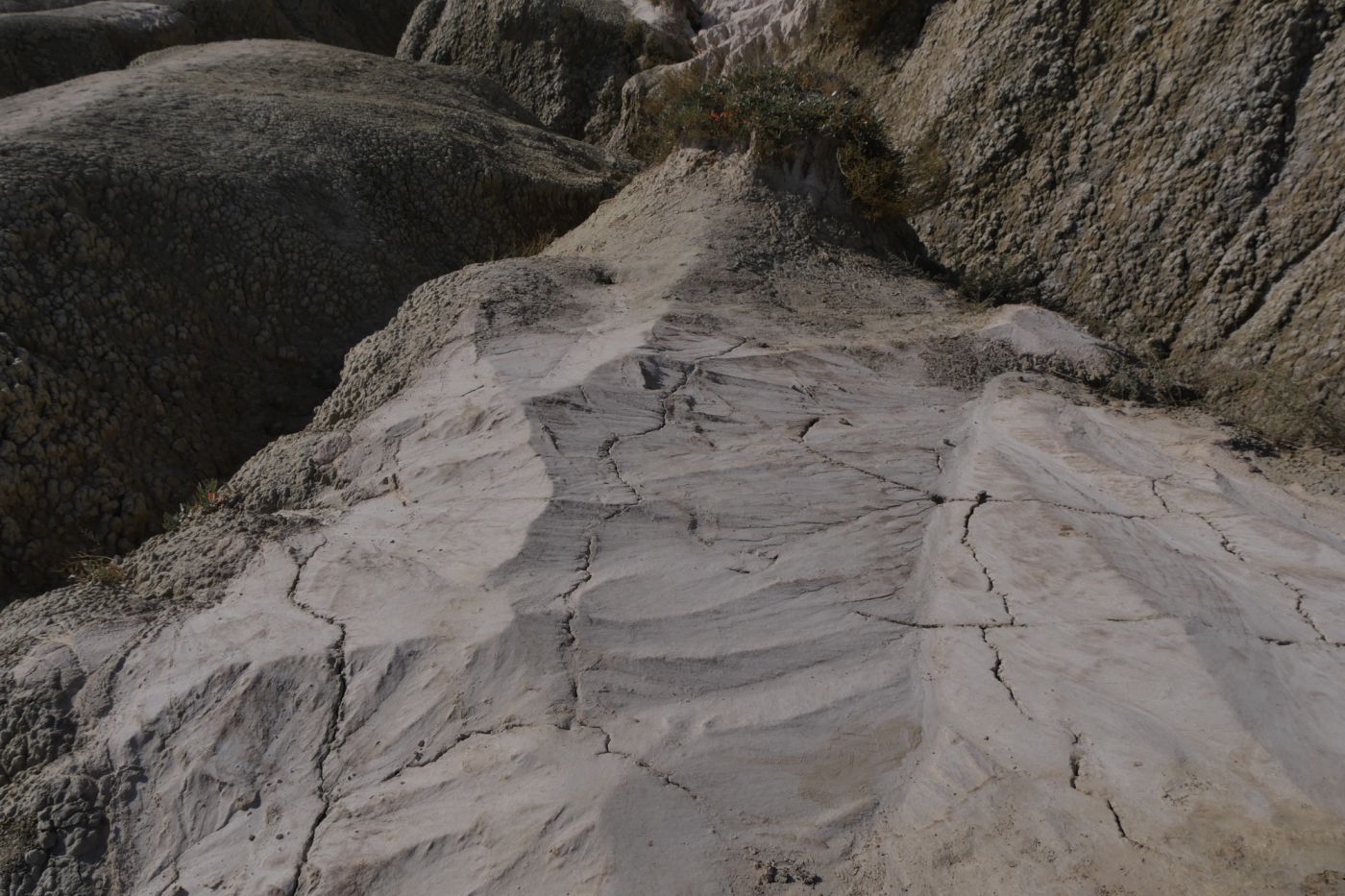
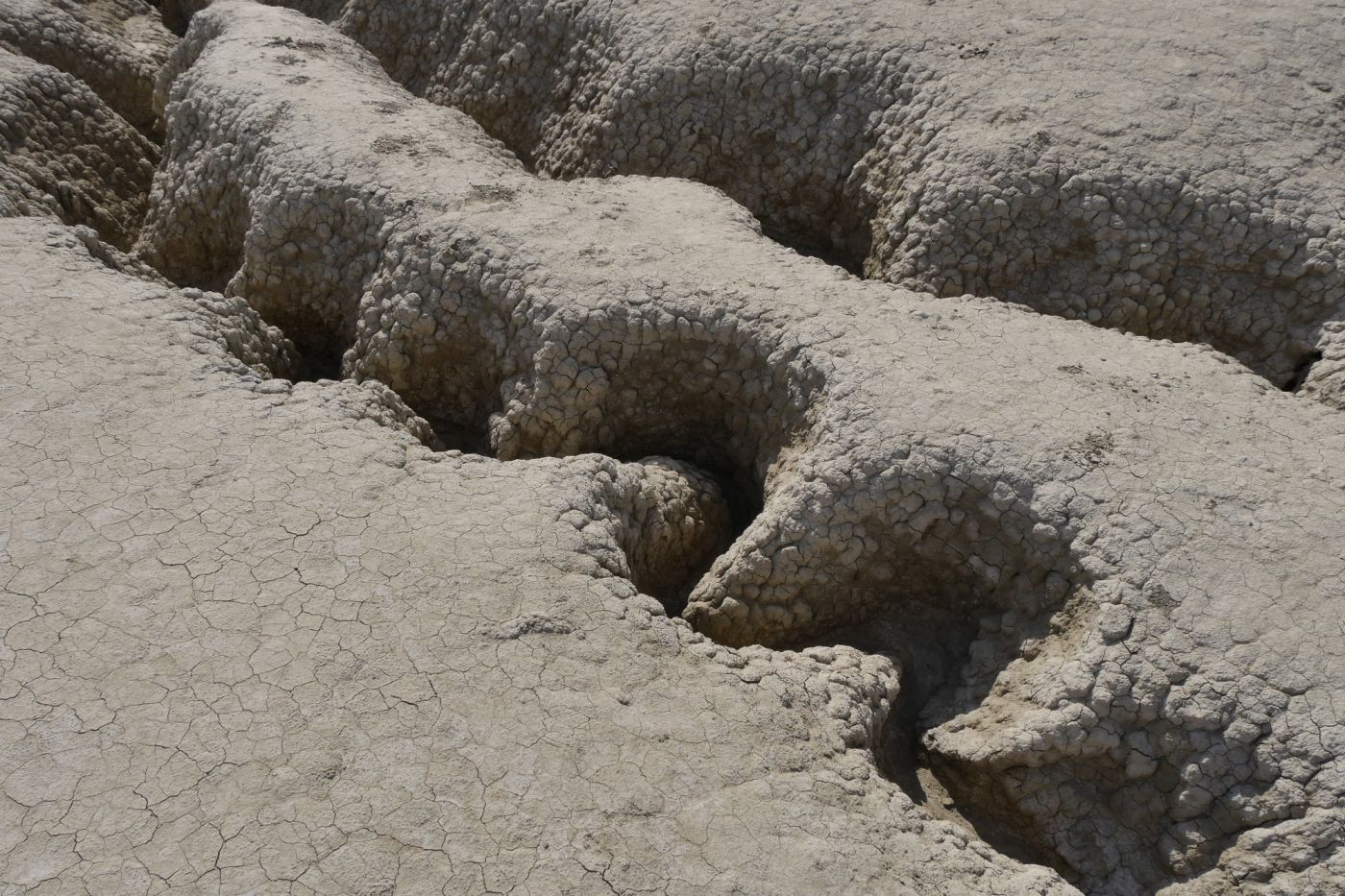
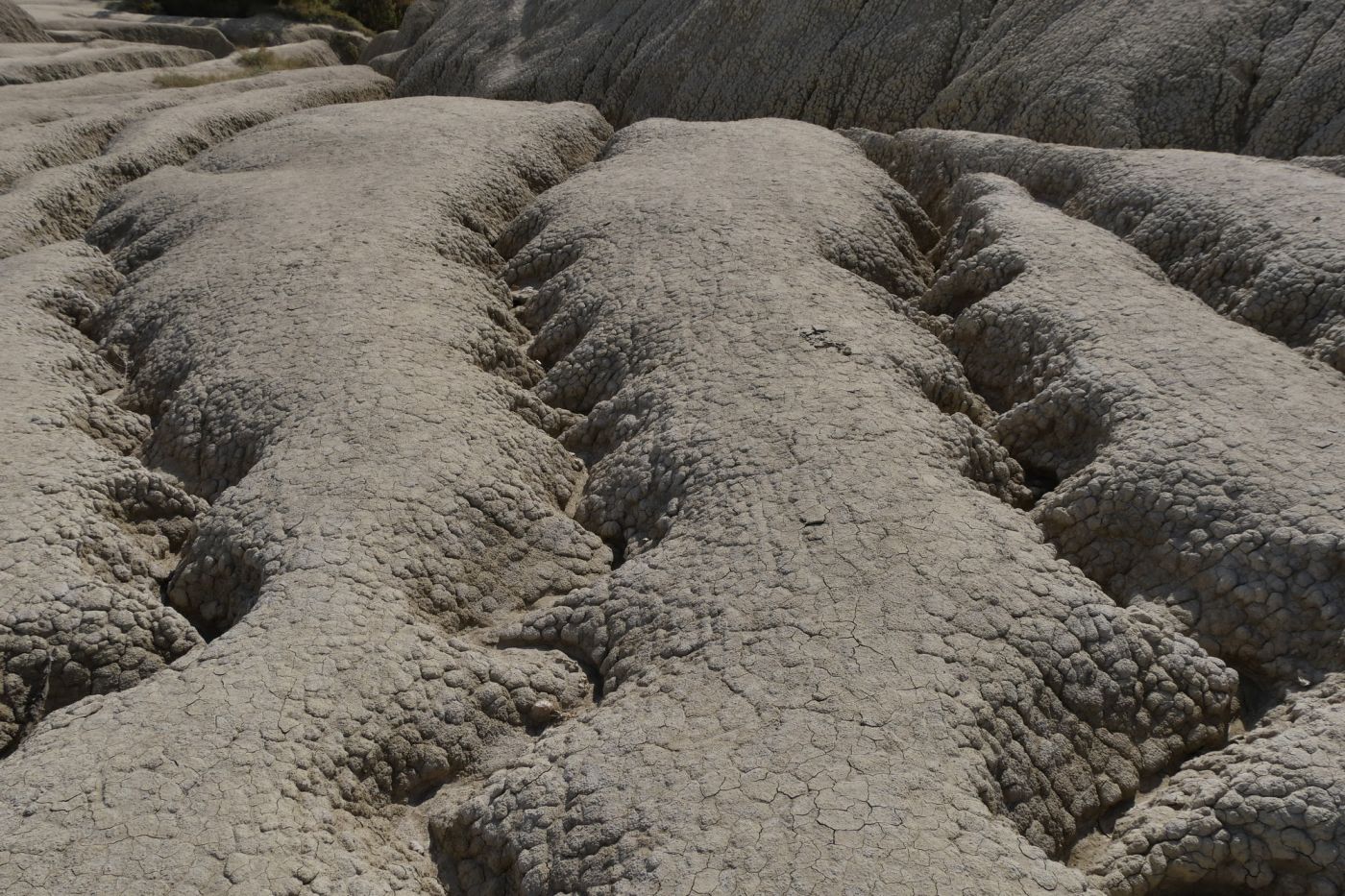
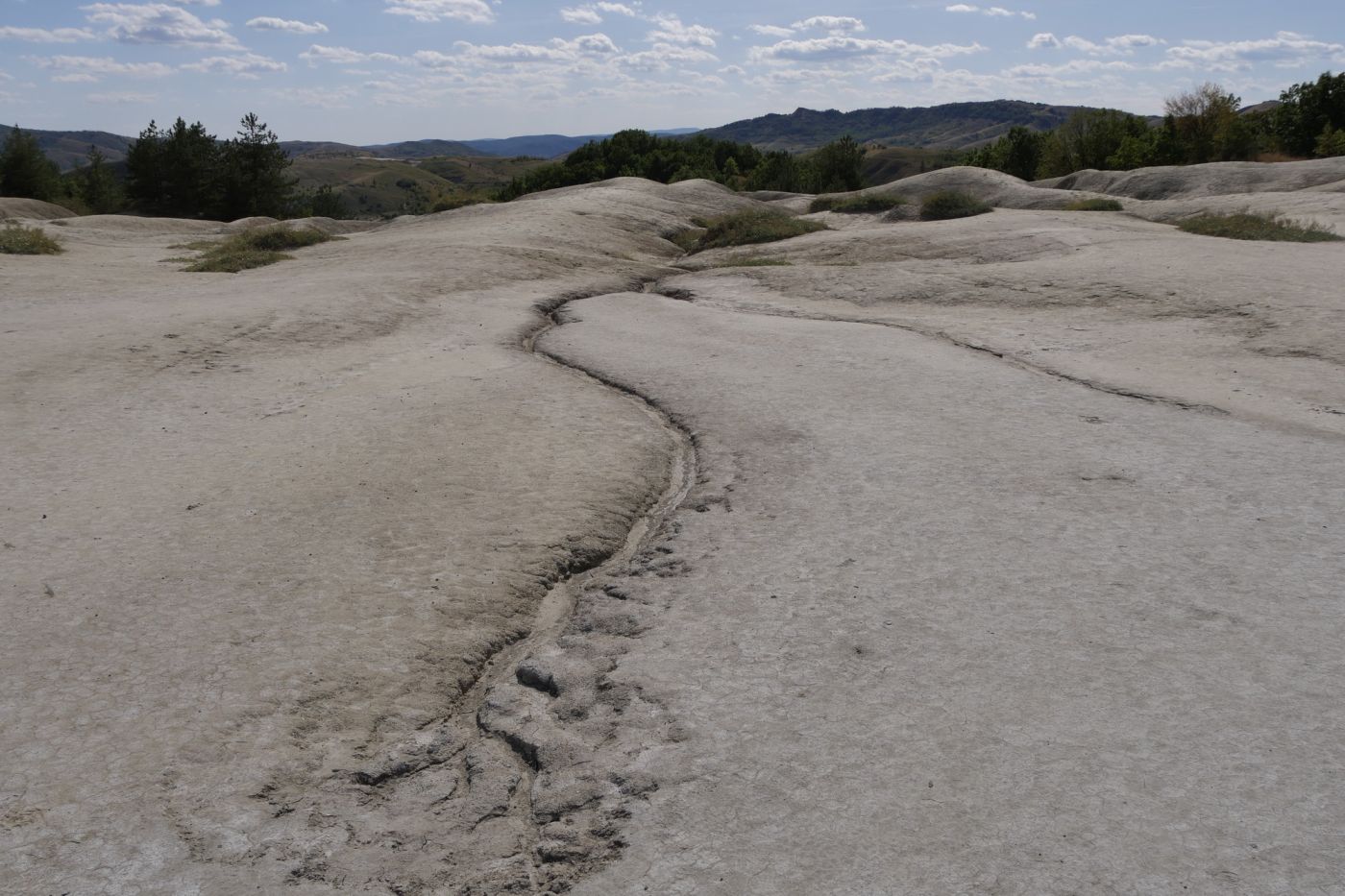
During the flows, as the water evaporates, the mud becomes increasingly viscous and eventually solidifies. This results in the formation of drying polygons and, sometimes, salt deposits produced through precipitation.
This newly formed microrelief is highly unstable. The sediments are rapidly eroded by rainwater, creating rills and gullies that give the landscape an unusual appearance. During dry periods, the landscape takes on an arid aspect.
Few plant species can grow on this substrate, which has a high salt and sulfur content—mainly halophytic species, which are adapted to saline environments.
Visiting this nature reserve, which is home to some of the largest mud volcanoes in Europe, can be an excellent lesson in geology.
Mudflows, drying crusts and erosion forms – photo gallery
***
Ro
Pământ – Foc – Apă
În timpul studiilor de Geologie, pe care le-am făcut la Universitatea Babes Bolyai din Cluj Napoca, am avut ocazia să învăț despre diverse procese geologice. Știam despre vulcanii noroioși, dar am reușit să vizitez acest loc abia în 2019.
Vulcanii noroioși
Text și fotografii de Lucian Muntean, 21 septembrie 2019
Nu sunt ce par a fi!
Vulcanii noroioși din județul Buzău, România, fac parte dintr-o rezervație naturală, care este o destinație turistică inedită ce atrage mii de vizitatori anual.
Aria naturală „Vulcanii Noroioși de la Pâclele Mari și Pâclele Mici” din județul Buzău, România, este o rezervație natural în care se manifestă un fenomen geologic, care, defapt, nu au nicio legătură cu vulcanismul.
Contextului geologic specific acestei zone este caracterizat de existența unei structuri tectonice particulare, intens fragmentată și de cea a unui zăcământ de hidrocarburi, din care gazele naturale asociate, aflate sub presiune, migrează spre suprafață, trecând succesiv prin pânza freatică și apoi prin formațiunile sedimentare alcătuite din alternanțe de argile și marne.
Gazele sub presiune urcă pe fisuri, antrenează apa care înmoaie argilele și marnele transformându-le în stare fluidă – nămoloasă. Gazele care urcă odată cu nămolul ies la suprafață prin bolborosire, formând niște erupții interesante. Aceste gaze fiind formate în zăcământul de hidrocarburi pot fi inflamabile.
Conuri – cratere
Prin uscarea nămolului care “erupe” din vulcanii noroioș se formează niște depuneri, care pot fi conice, similare conurilor vulcanice. Aceste conuri au cratere a căror diametru poate avea dimensiunea de la câțiva centimetri până la peste 2 metri.
Erupții de gaze și nămol
Nămolul este antrenat de aceste mici erupții repetitive, la interval ce câteva secunde sau minute, după care se revarsă gravitational. Cantitatea de nămol care ajunge la suprafață este influențată de perioadele ploioase, când are loc un aport mai mare de apă ce se infiltrează în sedimente. În general primăvara sau vara, după ploi abundente, activitatea vulcanilor noroioși este mai intensă.
Scurgeri de nămol
În timpul scurgerilor datorită evaporației apei, nămolul devine tot mai vâscos și se solidifică. Astfel se formează poligoane de uscare și uneori depuneri de săruri prin precipitare. Acest micr-relief nou format este foarte instabil. Sedimentele sunt erodate rapid de către apa provenită din precipitații. Se formează astfel șiroiri și ravene, care dau un aspect inedit peisajului din zonă. În perioadele secetoase peisajul capătă un aspect arid. Pe acest substrat, cu un conținut ridicat de săruri și sulf, cresc puține specii de plante, doar cele halofile, iubitoare de sare.
Vizitarea acestei rezervații naturale, care include cei mai mari vulcani noroioși din Europa, poate fi o bună lecție de geologie.