
The Forest, or what’s left of it…
The new series of paintings brings to attention the fate of the forest, the way we relate to nature (…) This aspect is becoming extremely relevant today; it is important that in the future we can admire the Forest, the majesty of a tree, and not just a memory of something we have lost…
Of all the trees, birches are my favorites. I’ve always been fascinated by birch forests, with their slender white trunks and golden autumn foliage that stands out beautifully against the blue sky.
I can say that I love birches not only for their aesthetic charm, but also from a geobotanical point of view. More precisely, some plants can be used as geochemical markers (bioindicators) for certain minerals or chemical elements in the soil — a discipline known as geobotany or biogeochemistry. These plants accumulate unusually large amounts of specific elements in their tissues, reflecting the chemical composition of the geological substrate.
Birches also have a lesser-known property: under certain conditions, they can be considered weak to moderate geochemical indicators of gold (Au).
The birch tree has a deep root system and a metabolism that allows it to absorb traces of metals from the soil and transport them to its leaves and bark. Studies conducted in Siberia, Scandinavia, Australia and Romania have shown that near gold deposits, microparticles of gold can be absorbed from soil solutions and deposited in its tissues. The leaves and bark of Betula pendula (silver birch) can contain elevated concentrations of gold — on the order of tens of ppb (parts per billion).
However, the birch does not directly indicate the deposit (as some hyperaccumulators of Ni or Cu do), but it can signal gold anomalies through chemical analysis of its leaves and bark.
So, when you see birches in nature or even in city parks, I recommend simply admiring their beauty. A moment of contemplation can be truly precious — there’s no need to dig for gold!
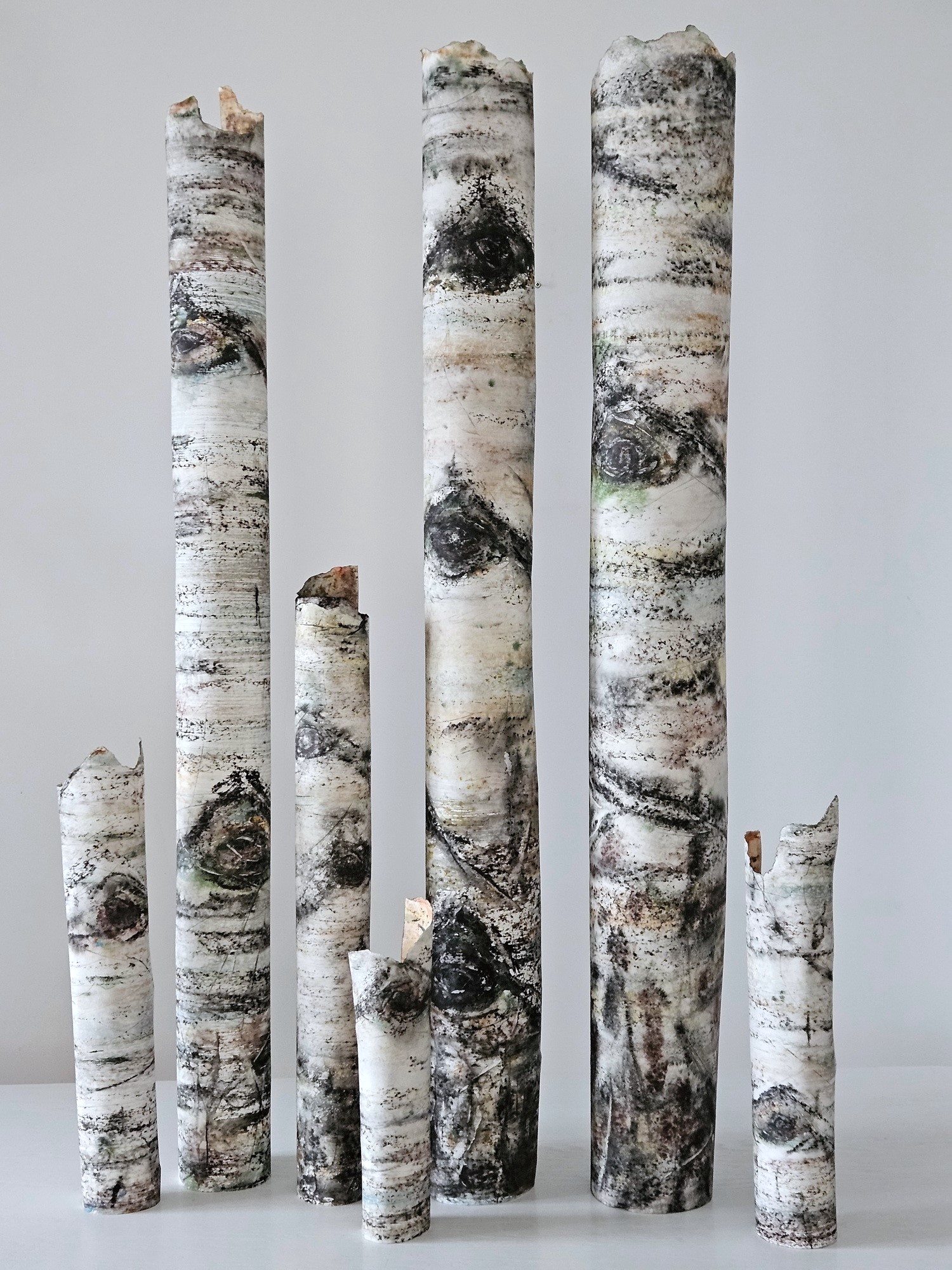
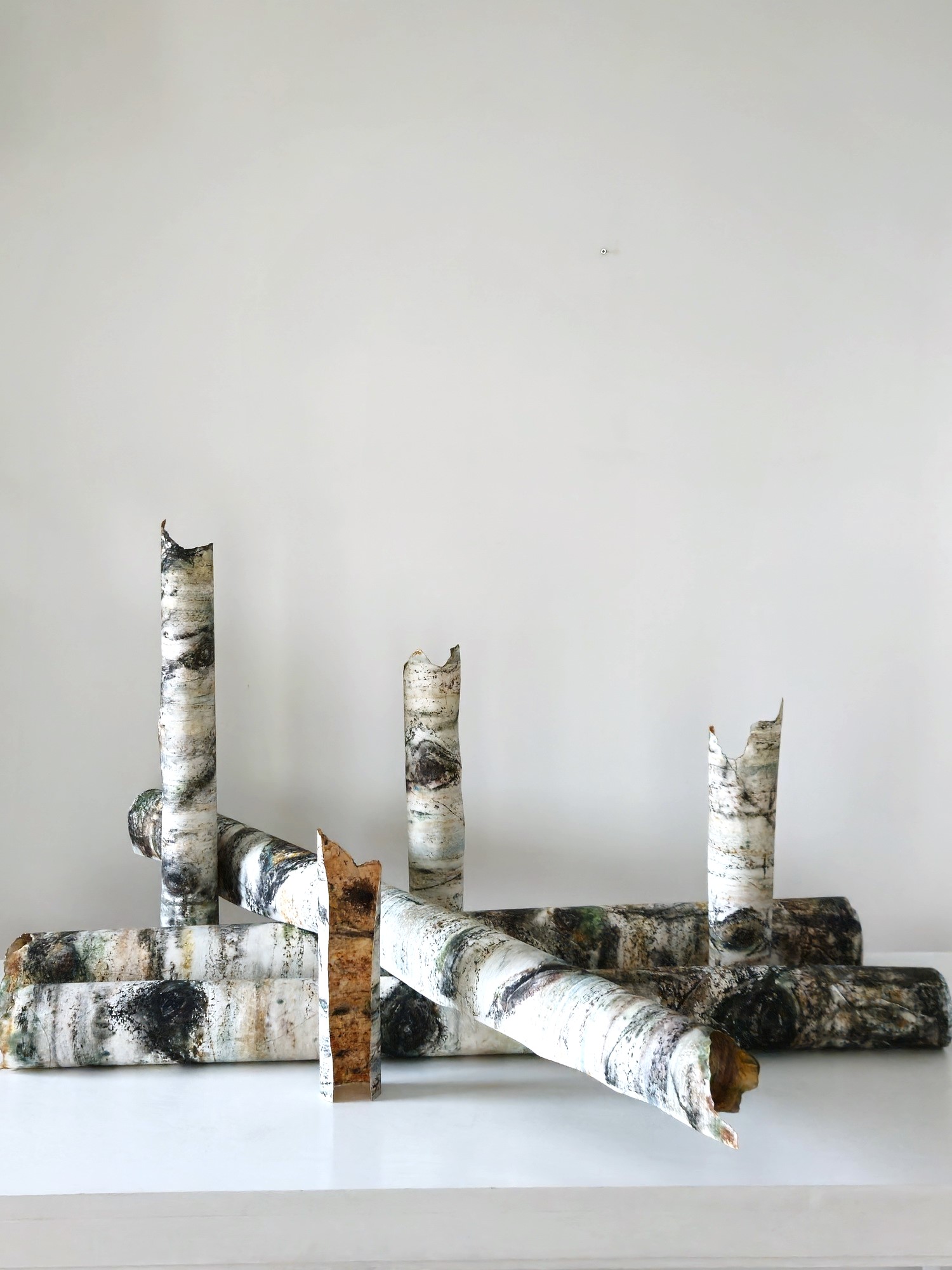
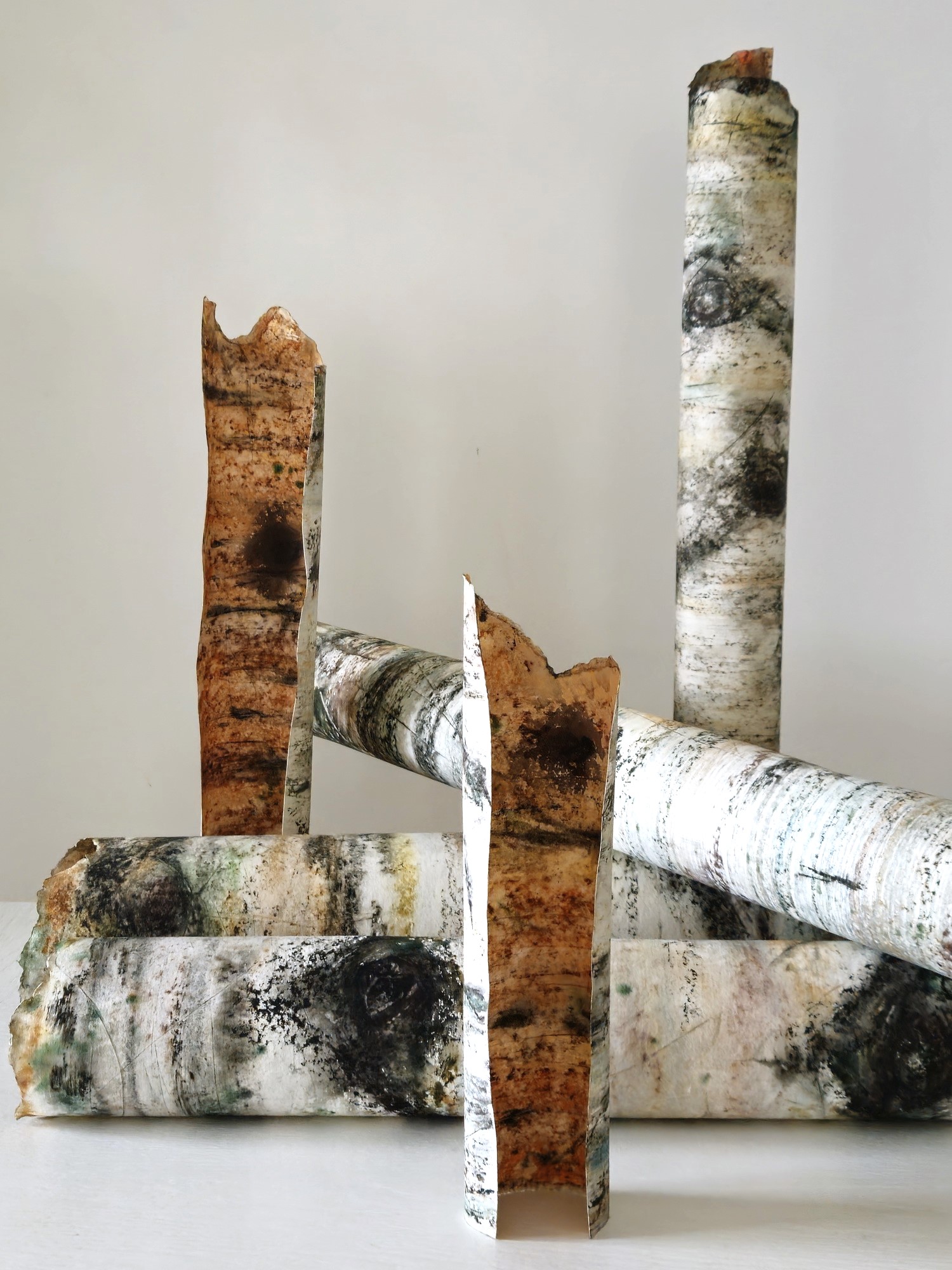
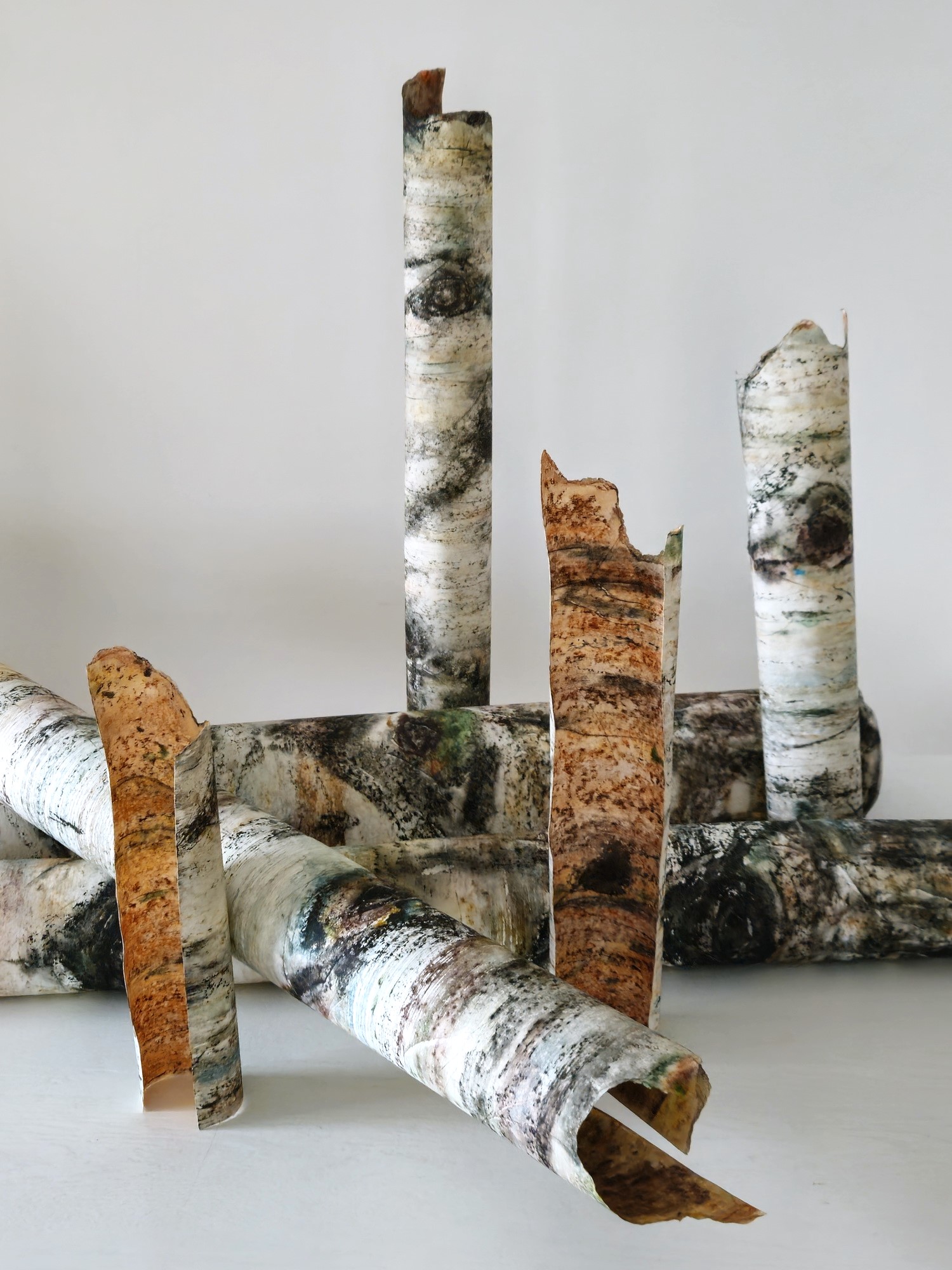
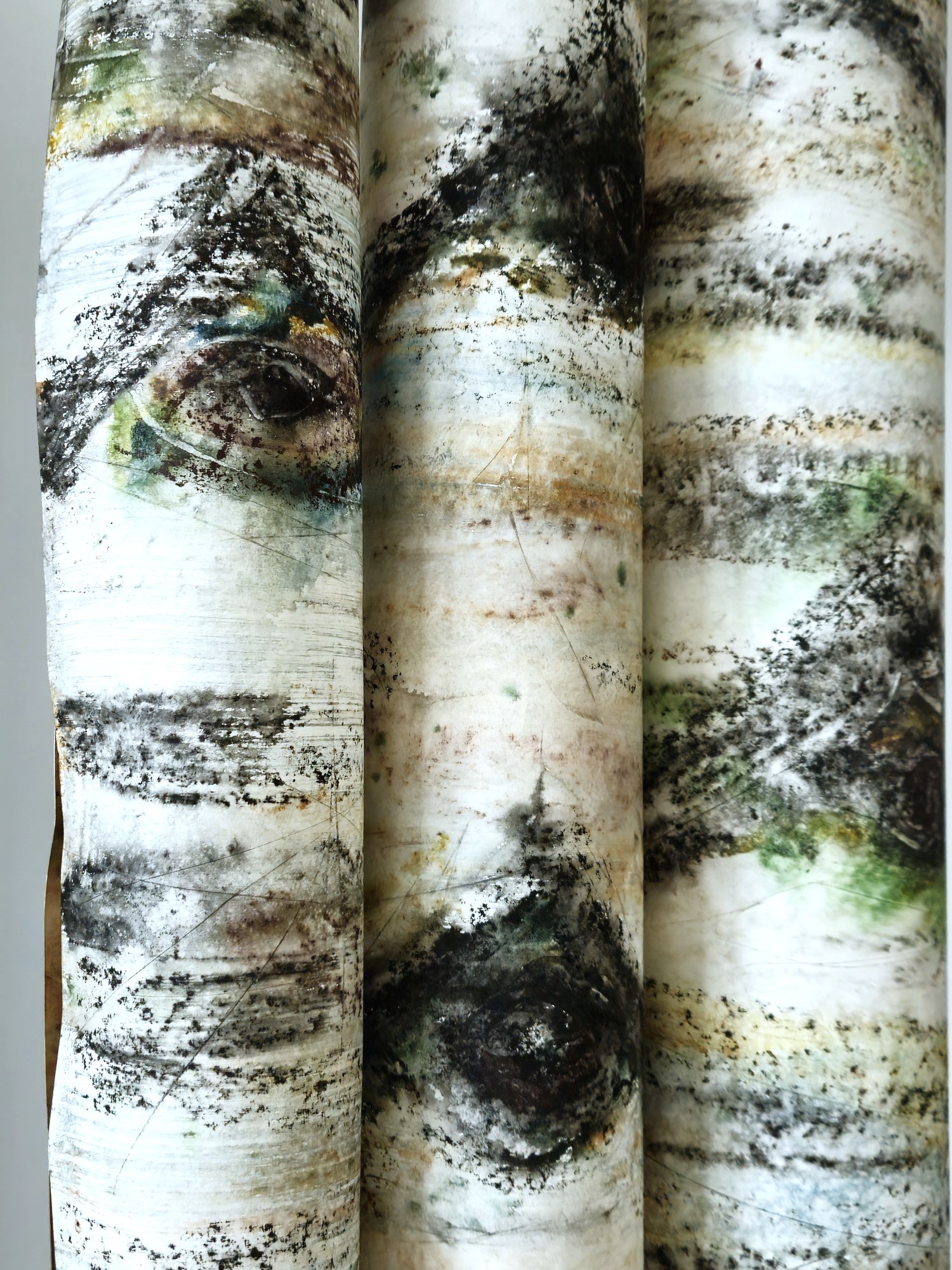
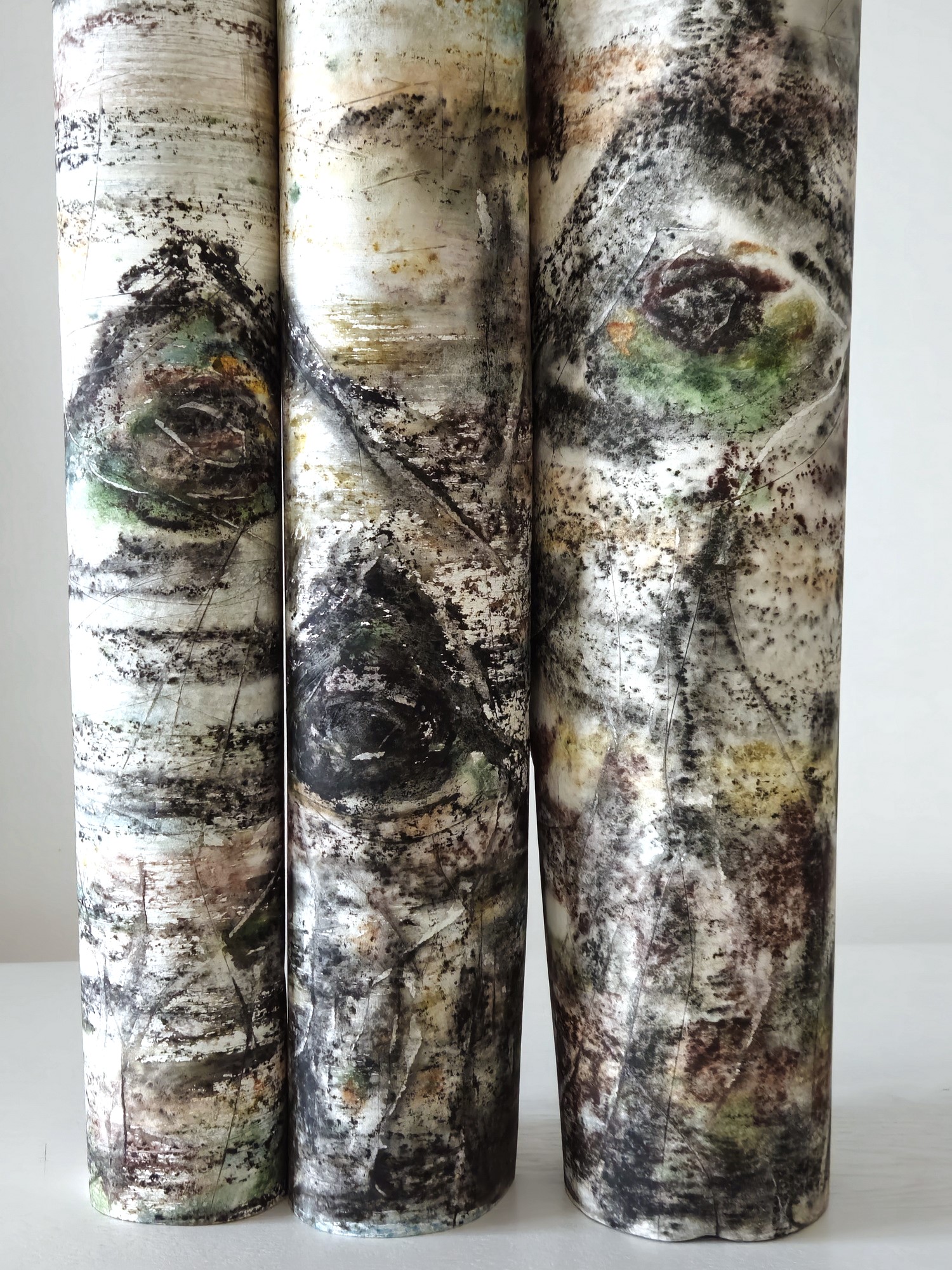
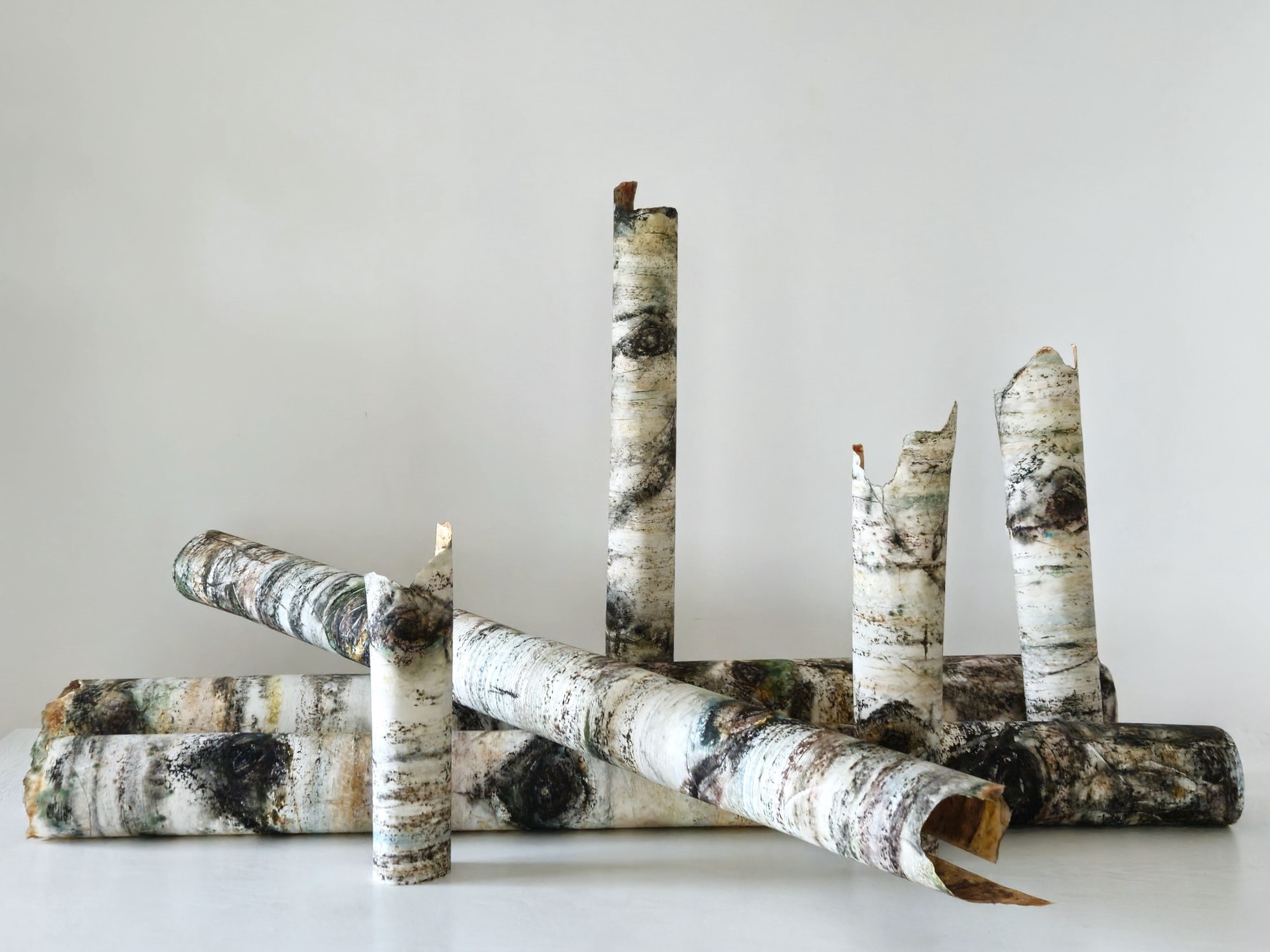
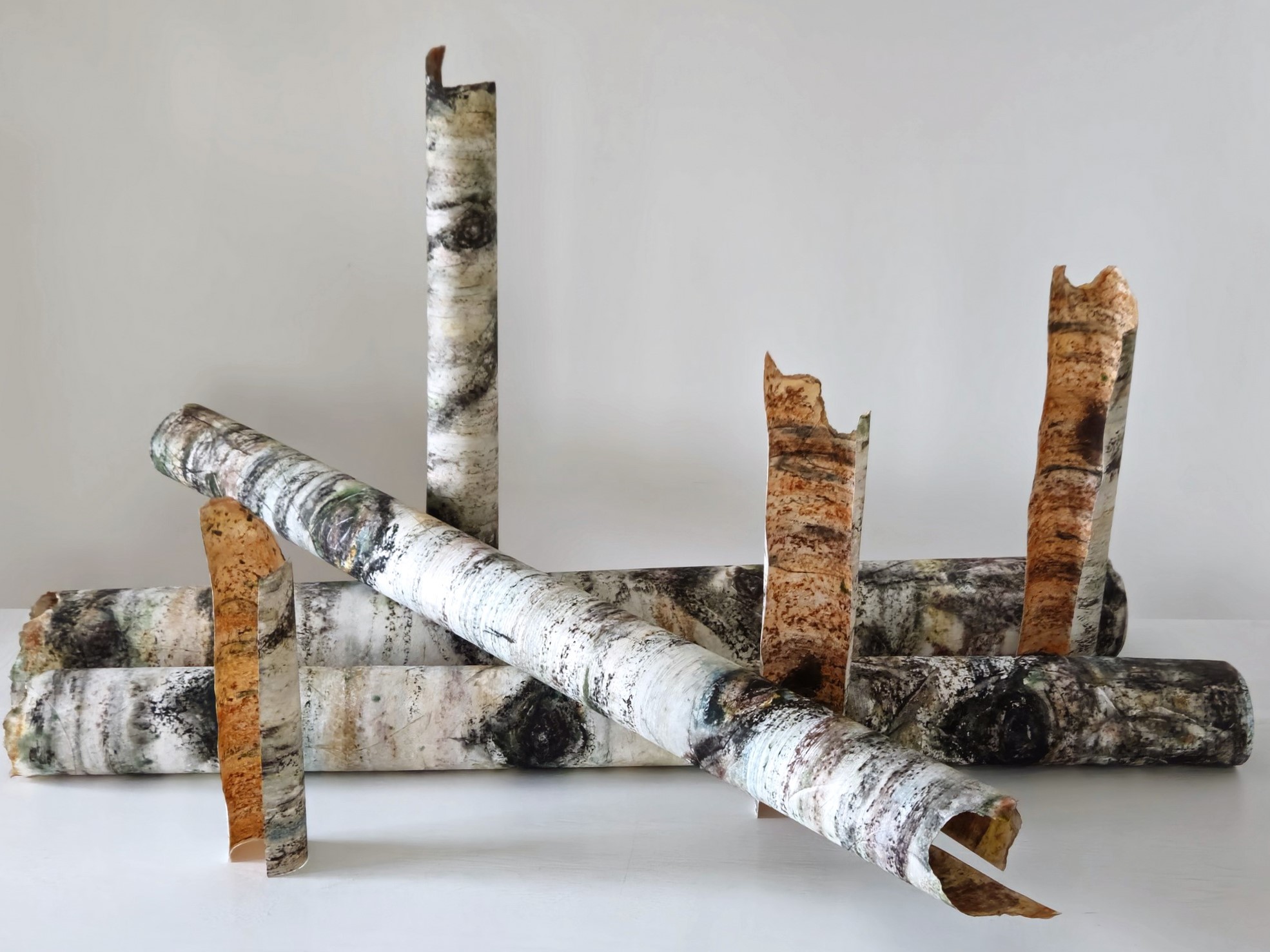
I painted this watercolor series inspired by birch trunks and fragments of bark.
Technical details:
Watercolor and liquid charcoal on Hahnemühle FineArt Natural Line ecological bamboo paper, 265 g/m².
Seven double-sided painted sheets, rolled in cylindrical form, dimensions: 45×125 cm, 35×125 cm, 30×125 cm, 25×60 cm, 25×65 cm, 20×40 cm, 20×47 cm. 2025.


RO
Mesteceni & aur
Dintre toți copacii, mestecenii sunt favoriții mei. Din totdeauna m-au fascinat pădurile de mesteceni cu trunchiurile albe și zvelte, iar frunzișul lor îngălbenit toamna, dă un contrast frumos pe cerul albastru.
Pot afirma că îmi place mesteacănul nu numai din punct de vedere estetic, ci și din punct de vedere geobotanic. Mai precis, unele plante pot fi folosite ca markeri geochimici (bioindicatori) pentru anumite minerale sau elemente chimice din sol — o disciplină numită geobotanică sau biogeochimie. Aceste plante acumulează în țesuturile lor cantități neobișnuit de mari dintr-un anumit element, reflectând compoziția chimică a substratului geologic.
Mesteacănul are și o proprietate mai puțin cunoscută: poate fi considerat un marker geochimic slab–moderant pentru aur (Au) în anumite condiții.
Mesteacănul are un sistem radicular adânc și un metabolism care îi permite să absoarbă urme de metale din sol și să le transporte spre frunze și scoarță. Studii efectuate în Siberia, Scandinavia și Australia au arătat că în apropierea zăcămintelor aurifere, micro-particule de aur pot fi absorbite din soluțiile solului și depuse în țesuturile sale.frunzele și scoarța de Betula pendula (mesteacăn argintiu) care ajung să conțină concentrații mai ridicate de aur (de ordinul zecilor de ppb – părți per milliard).
Totuși, mesteacănul nu indică direct zăcământul (ca unele hiperacumulatoare de Ni sau Cu), dar poate semnala anomalii aurifere prin analiza chimică a frunzelor și scoarței.
Dacă vedeți mesteceni în natură sau chiar prin parcuri urbane vă recomand să admirați frumusețea lor. O clipă de contempare poate fi realmente prețioasă, nu are rost să săpați pentru aur!
Am pictat această serie de acuarele care par a fi trunchiuri de mesteacăn și bucăți de scoarță.