
Earth – Water – Fire
Bauxite – Otranto, Italy
September 12, 2022
(*text în română mai jos)
During my geology studies at Babeș-Bolyai University in Cluj-Napoca, I had the opportunity to learn about a wide variety of minerals and rocks, including clay minerals and sedimentary rocks. Later, while traveling, I occasionally had the chance to encounter in the field and see firsthand some of the geological features I had previously studied.
***
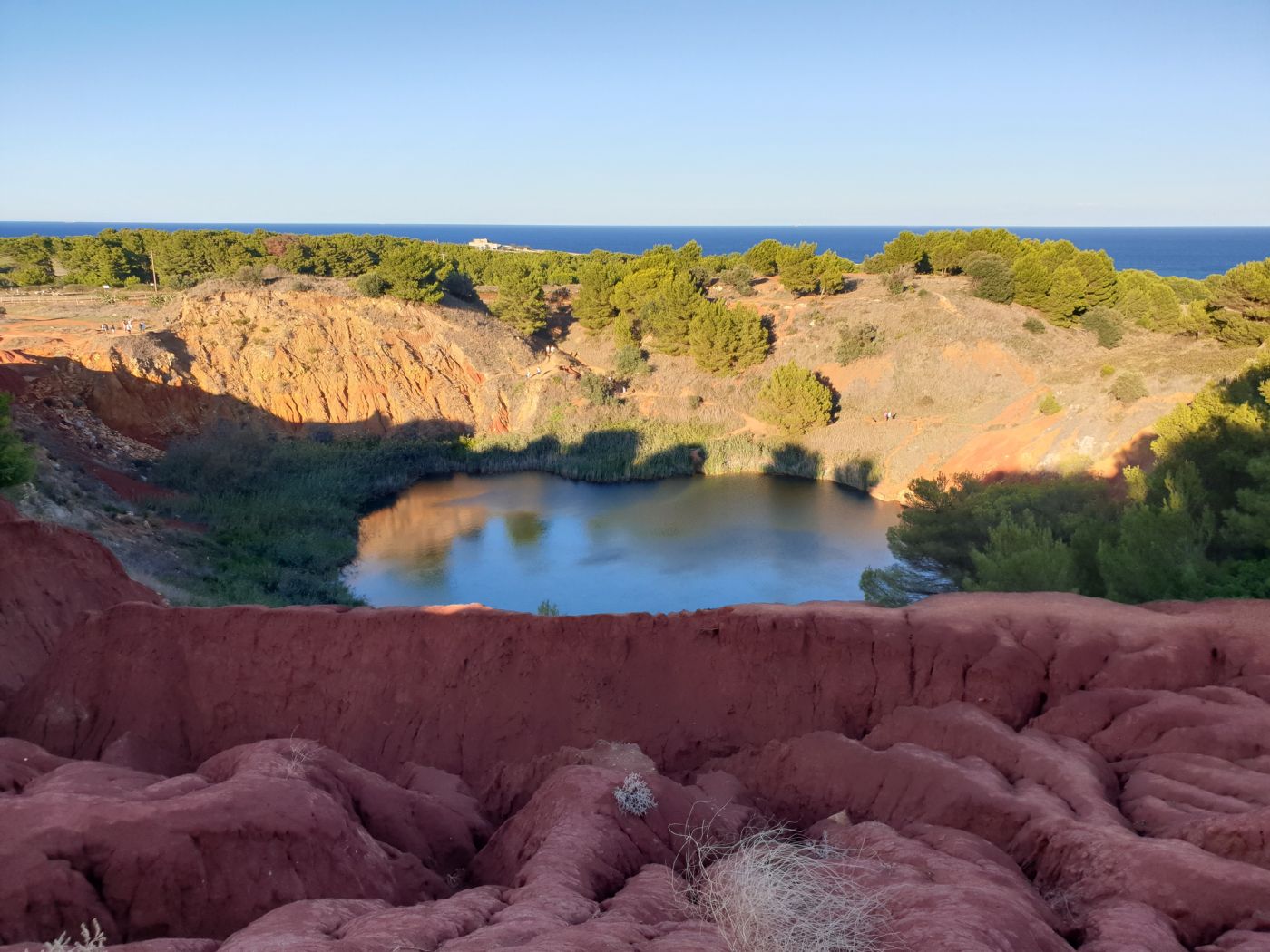
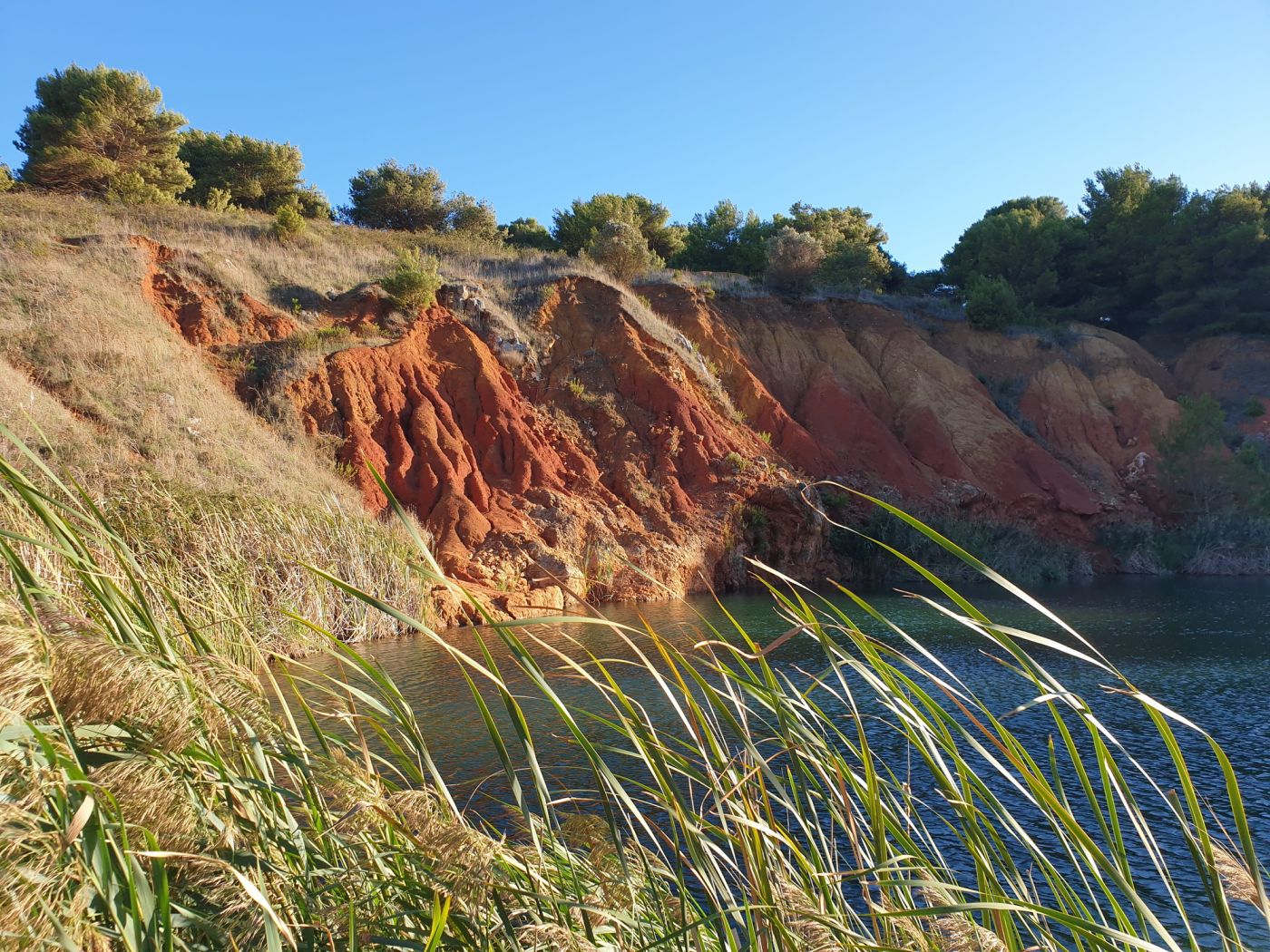
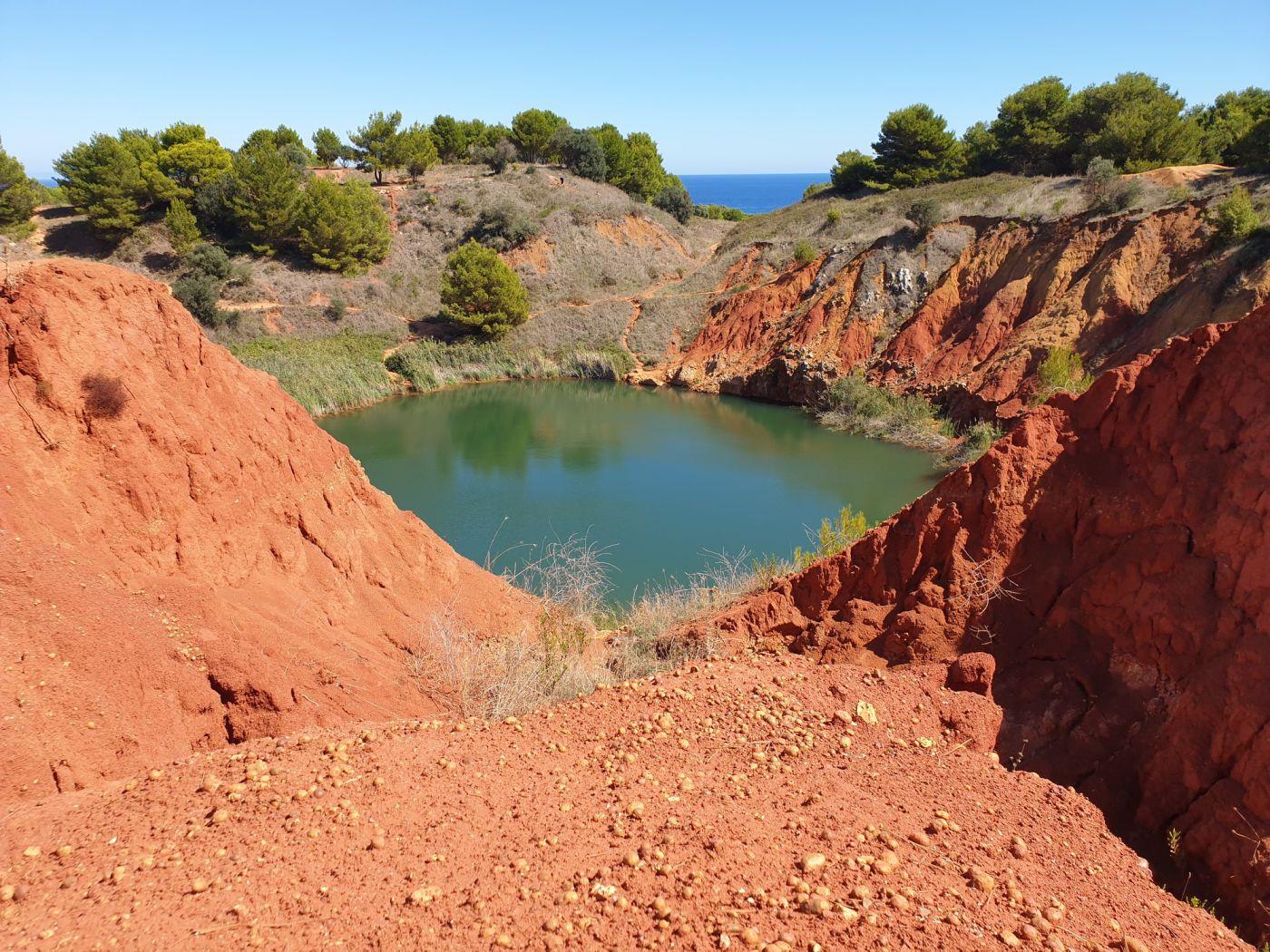
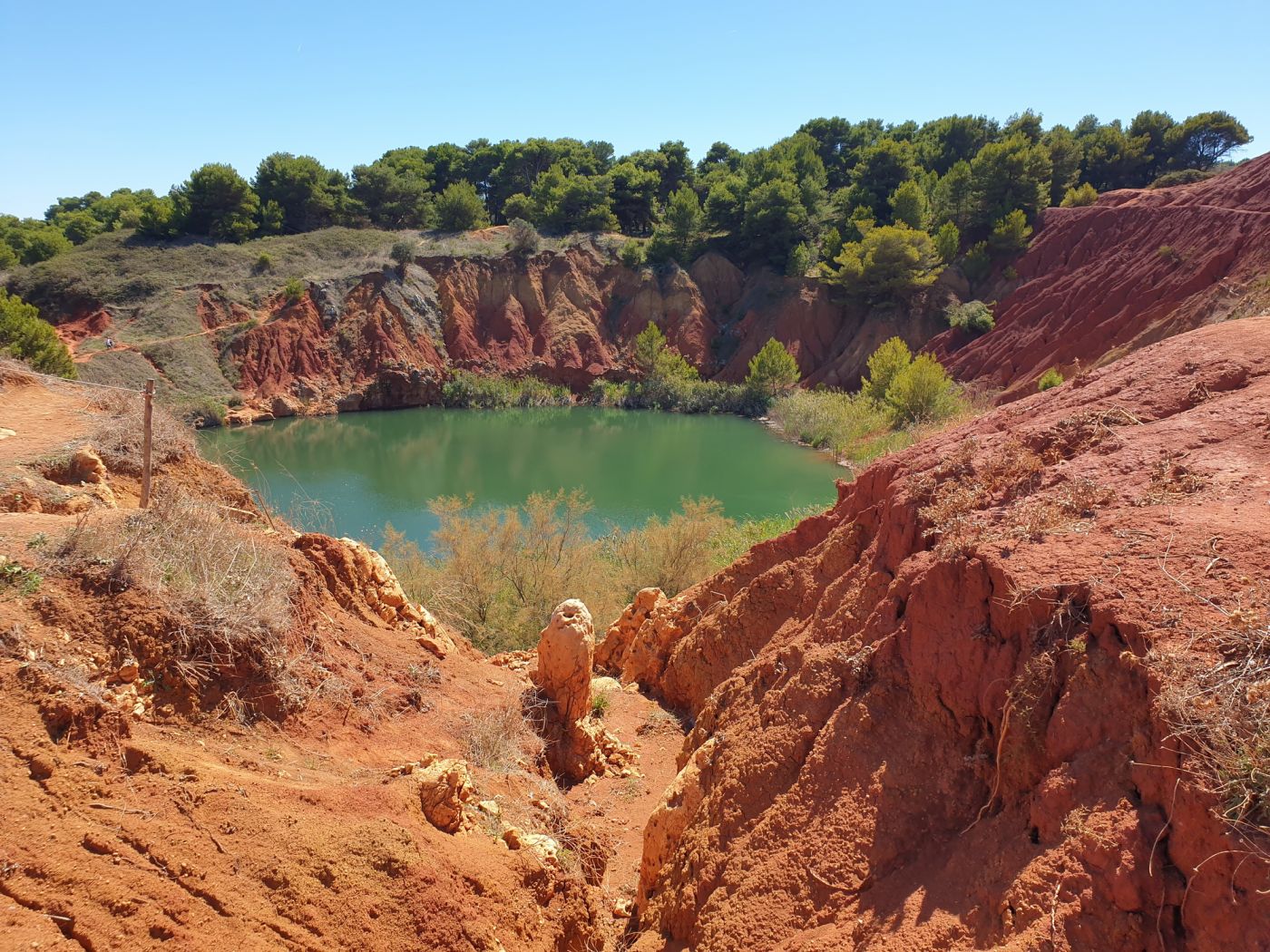
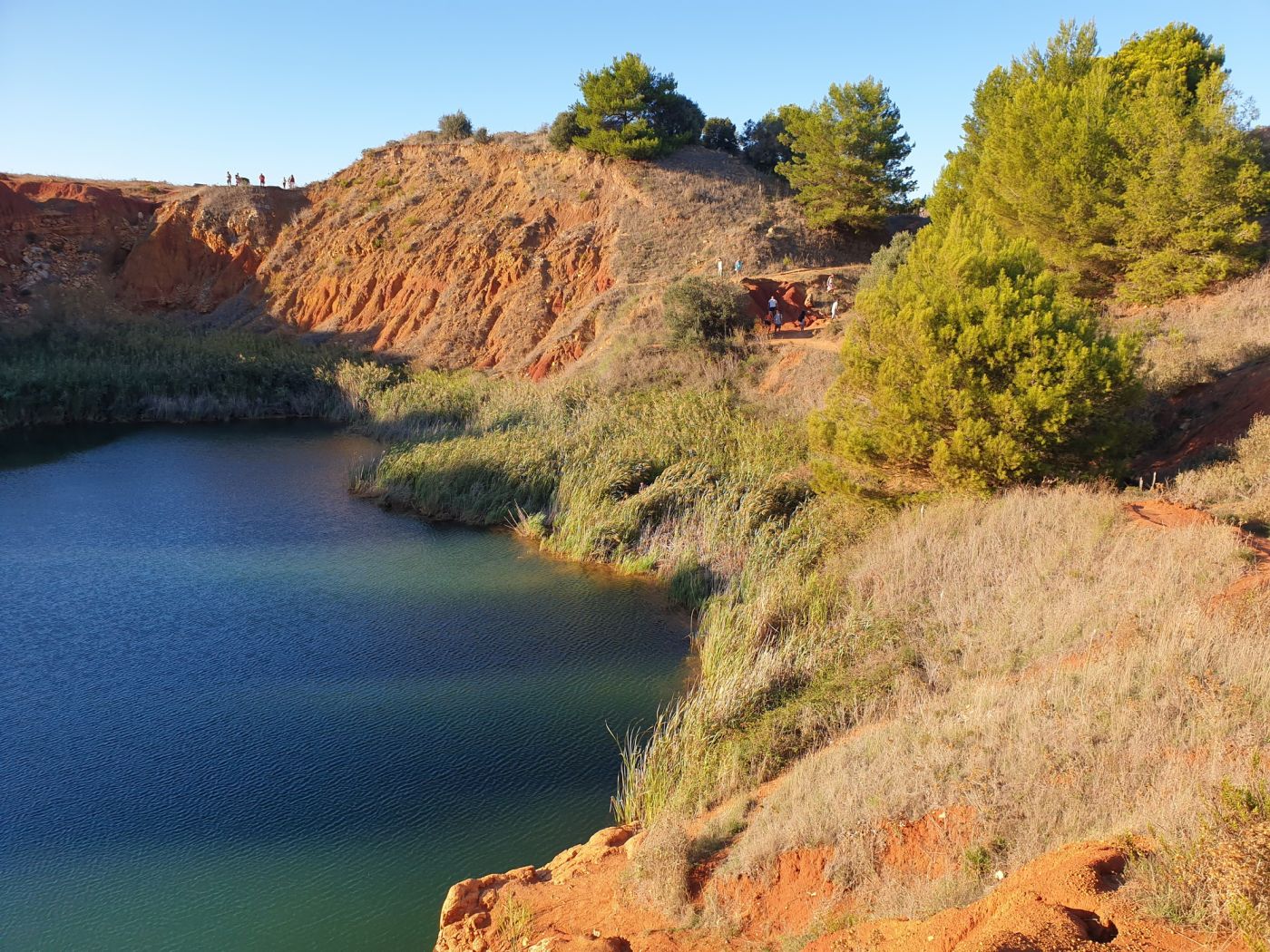
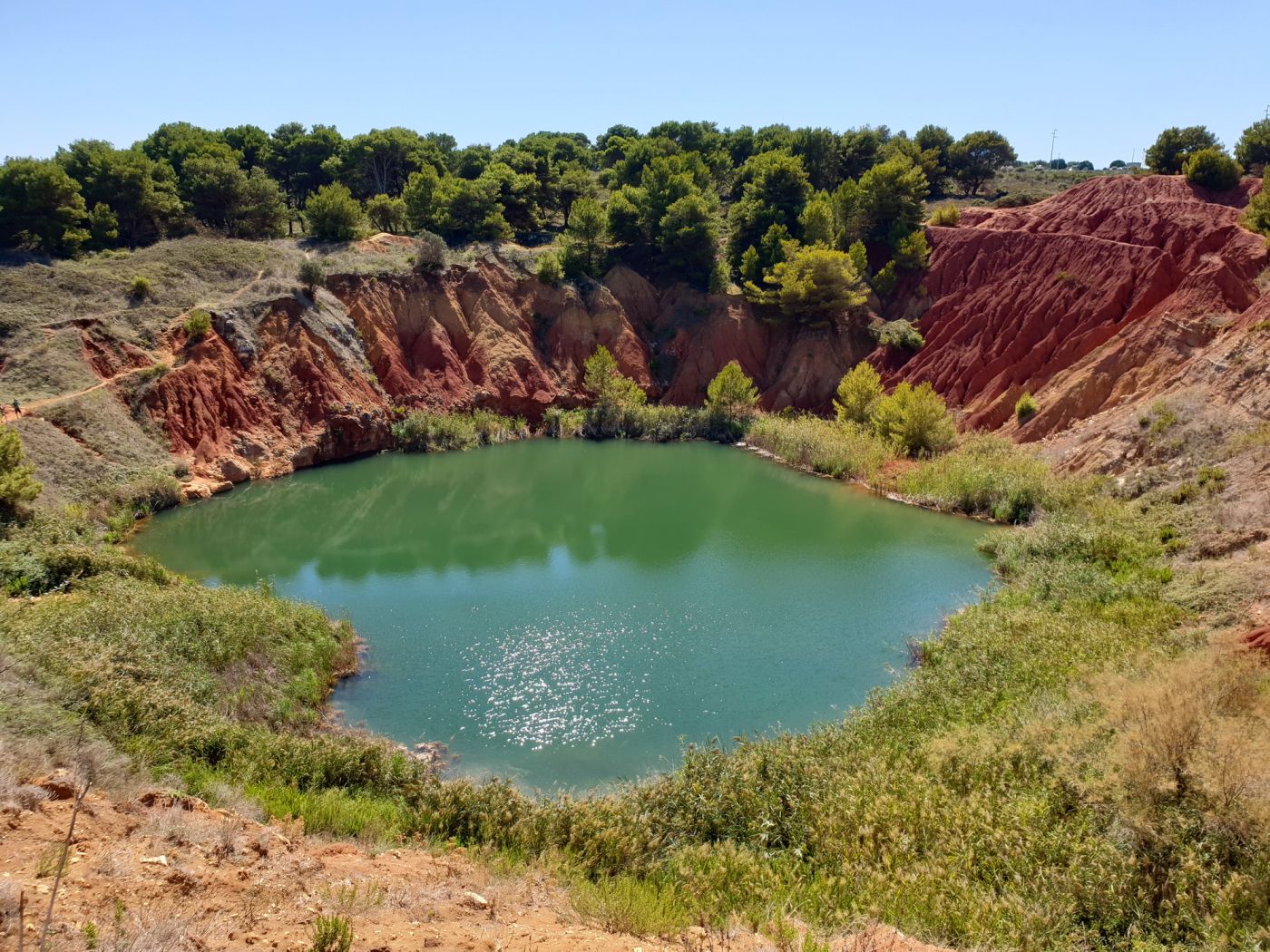
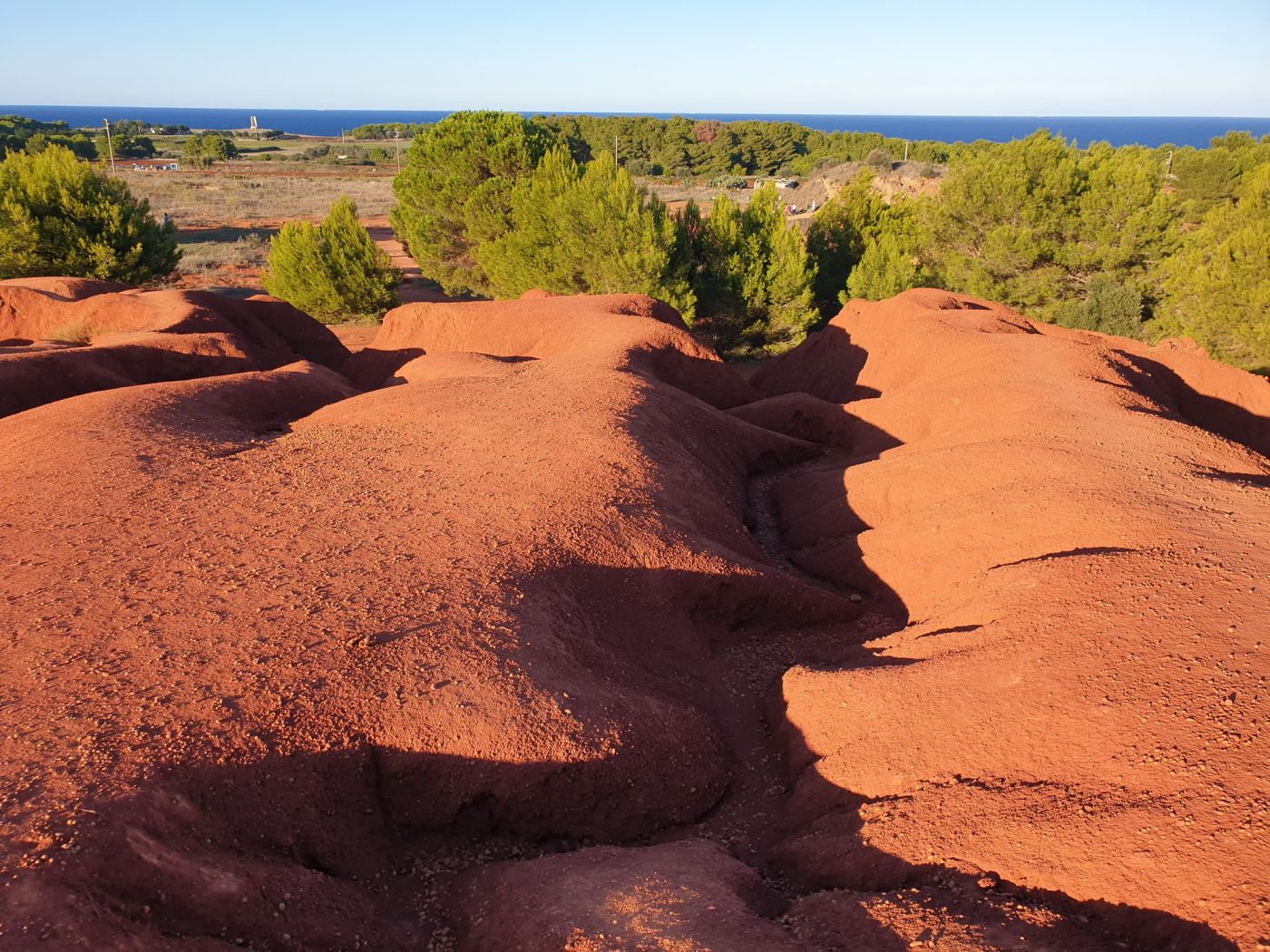
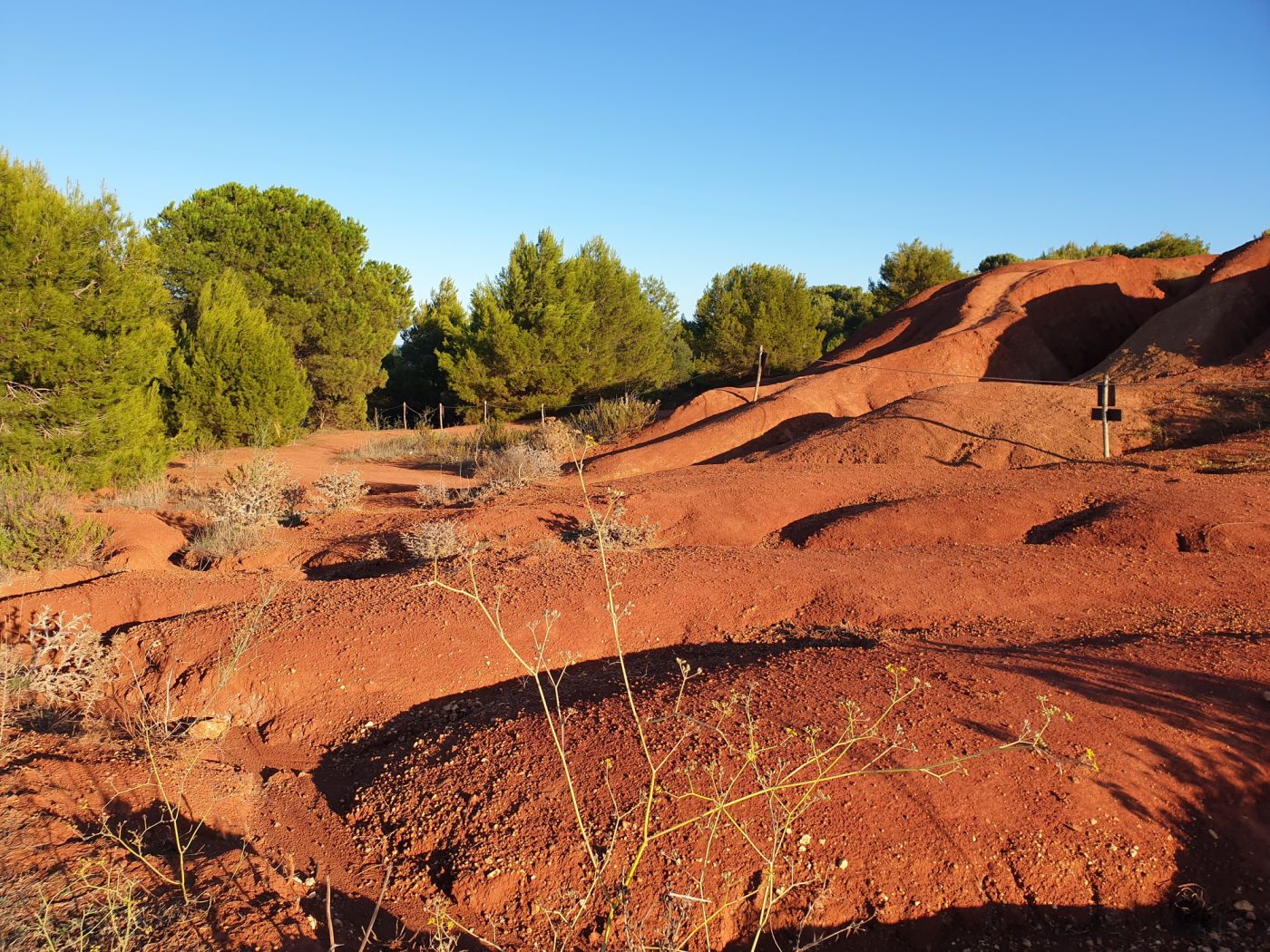
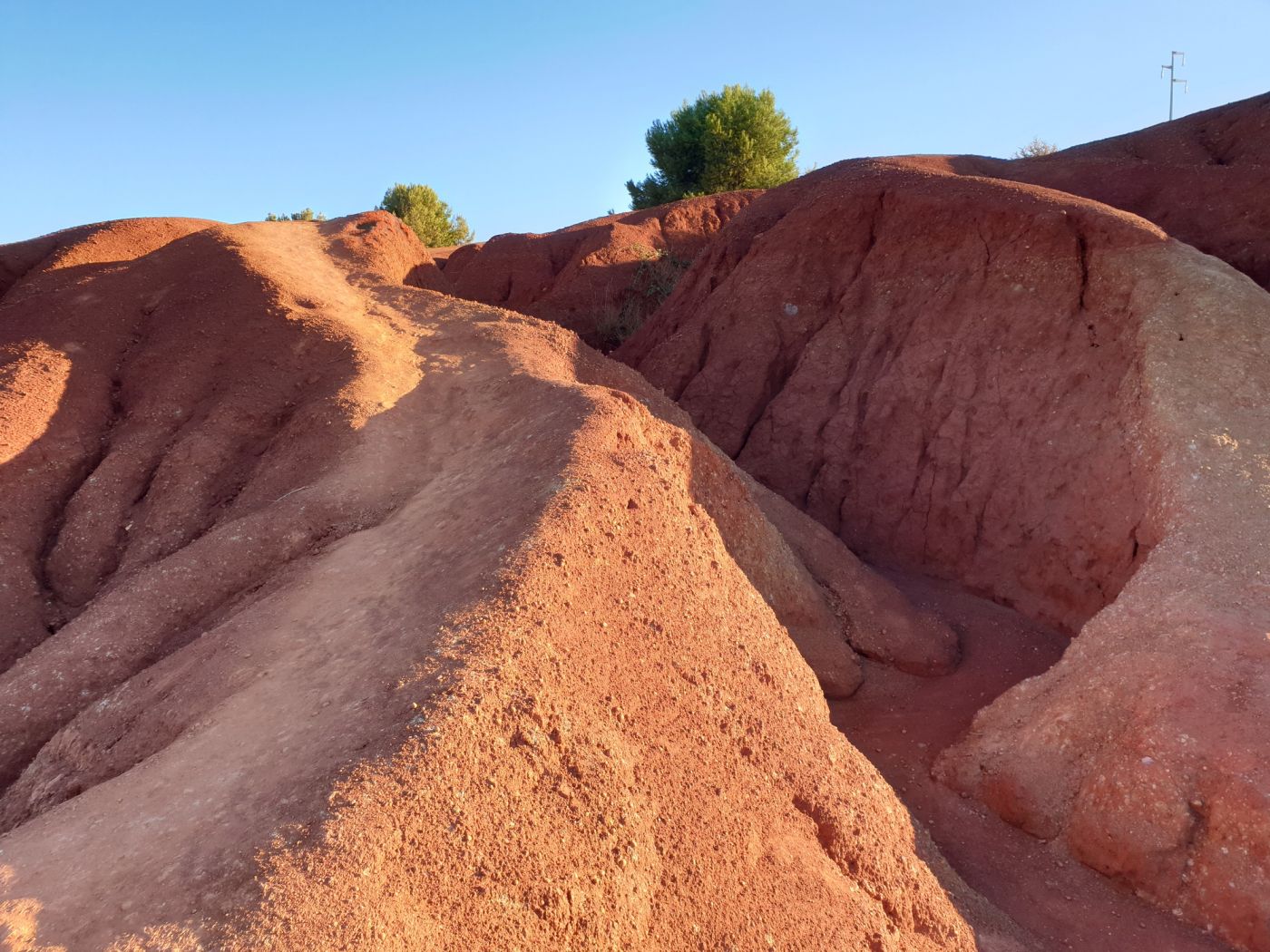
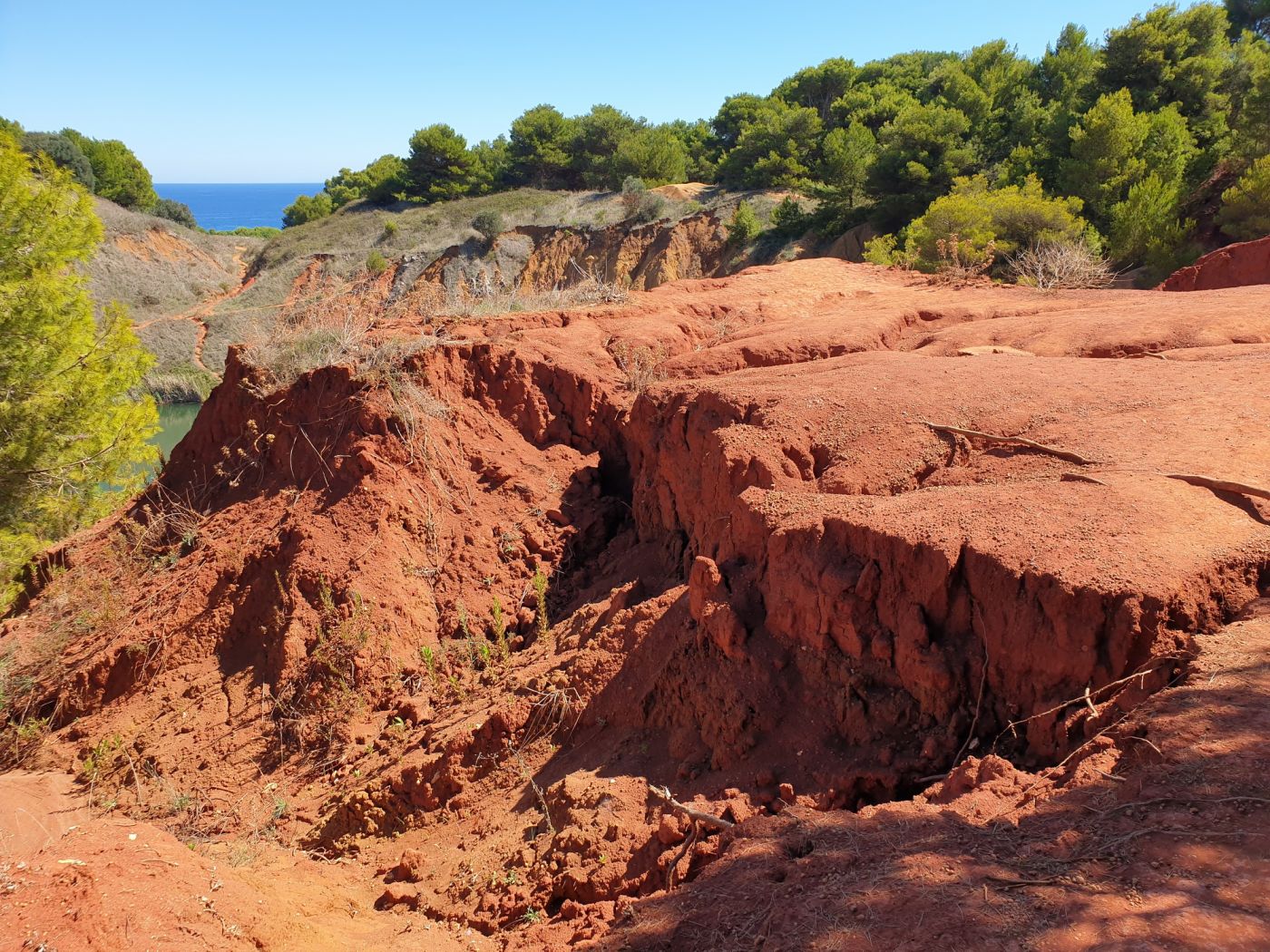
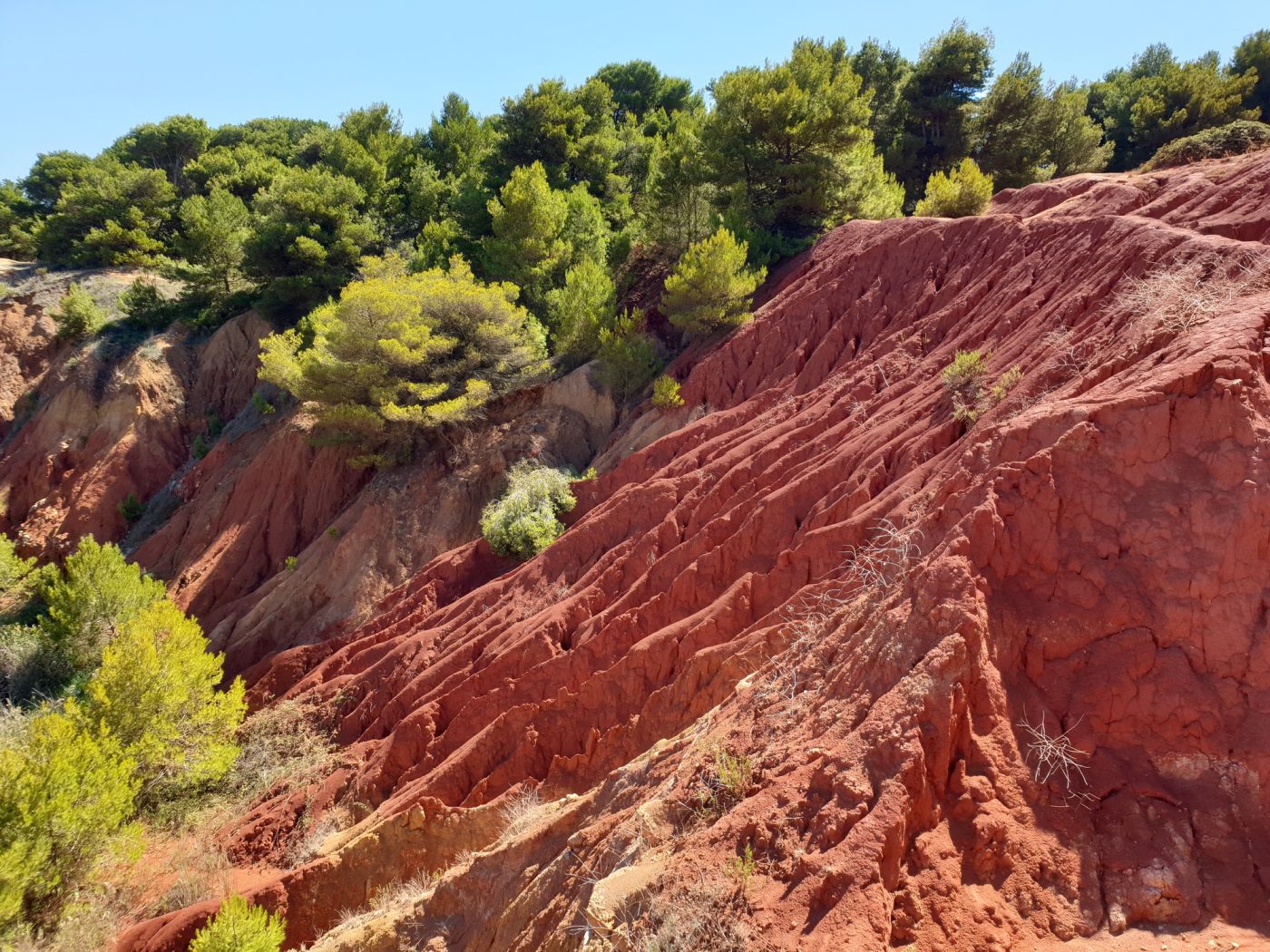
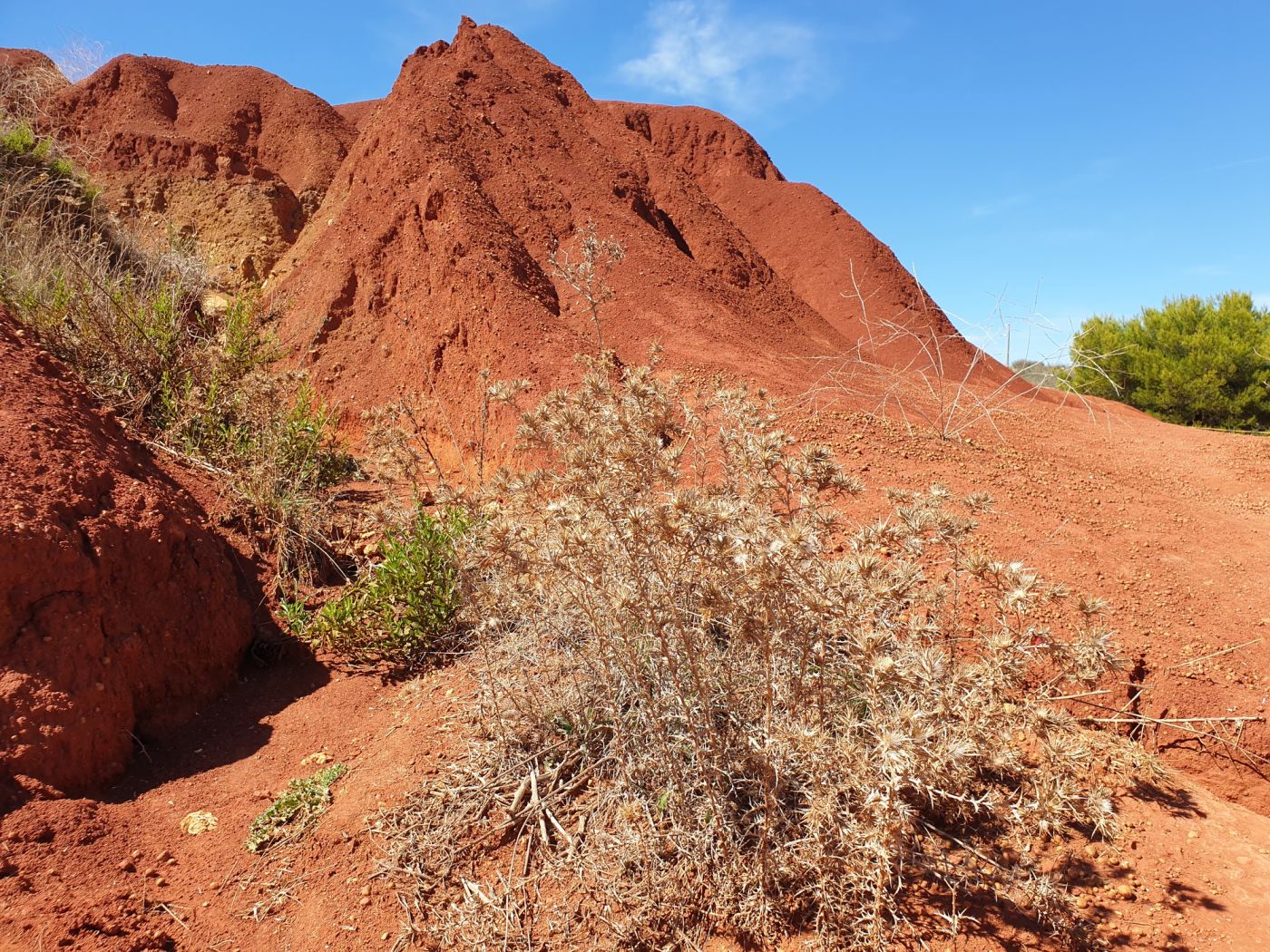
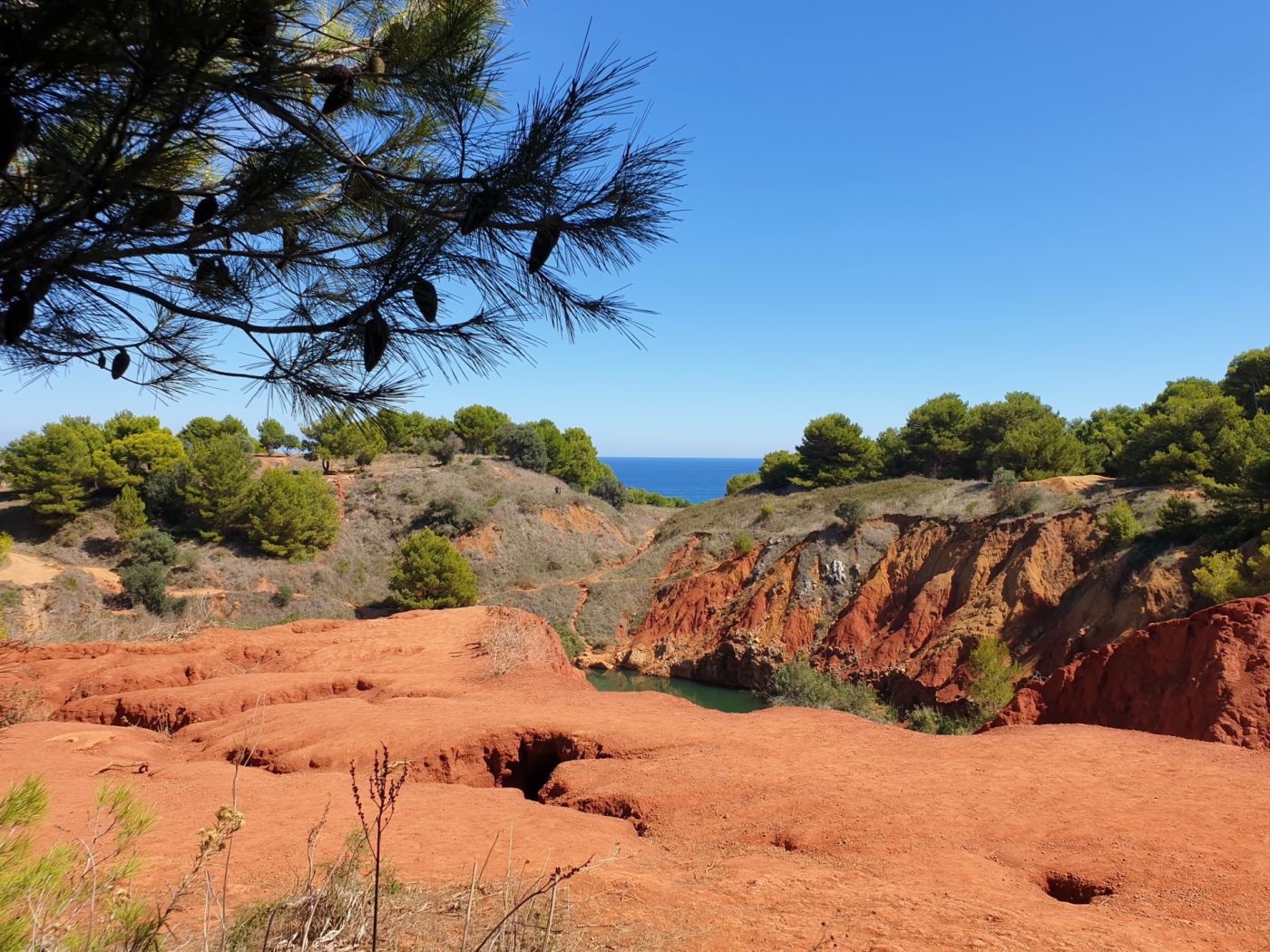
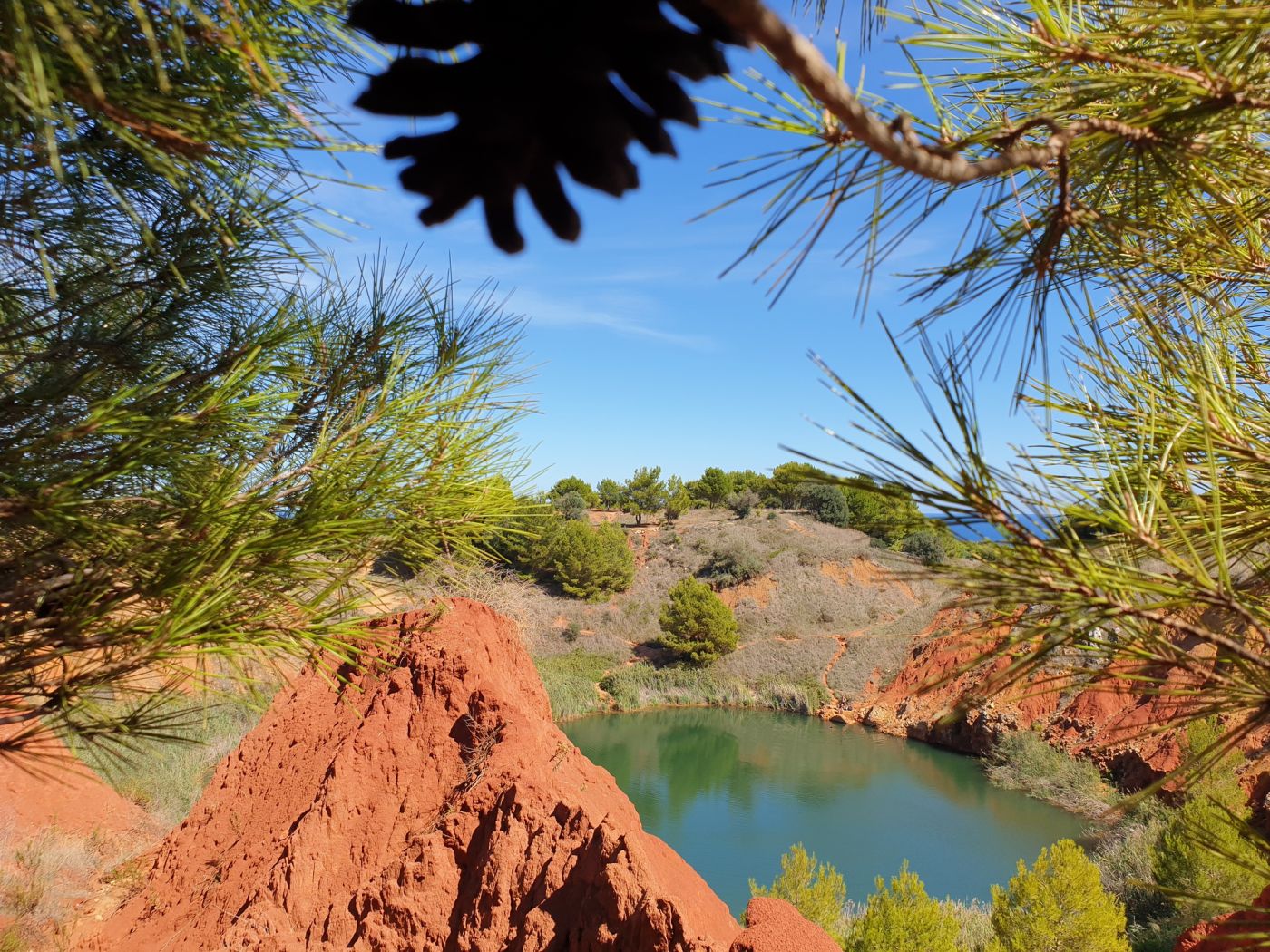
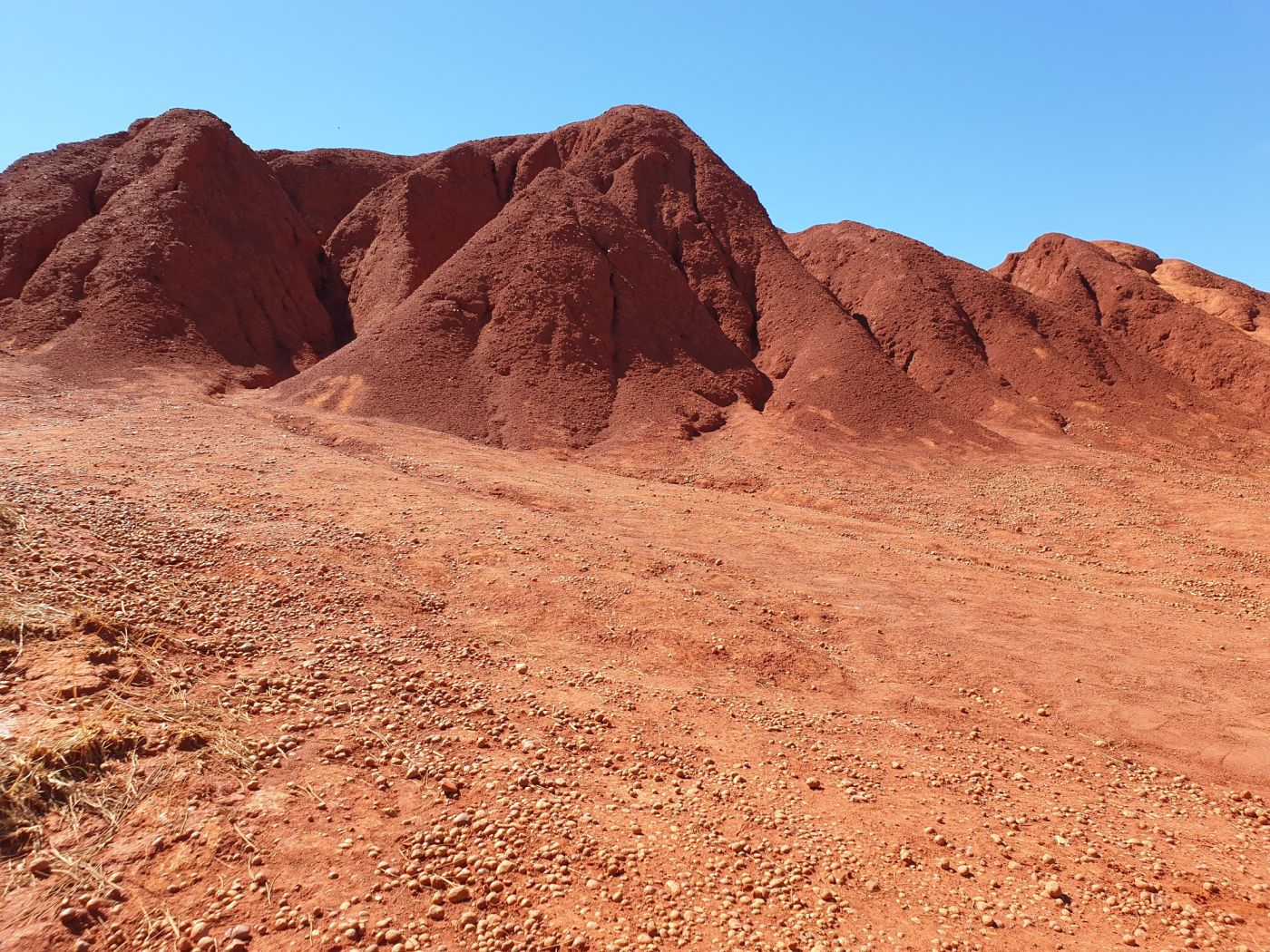
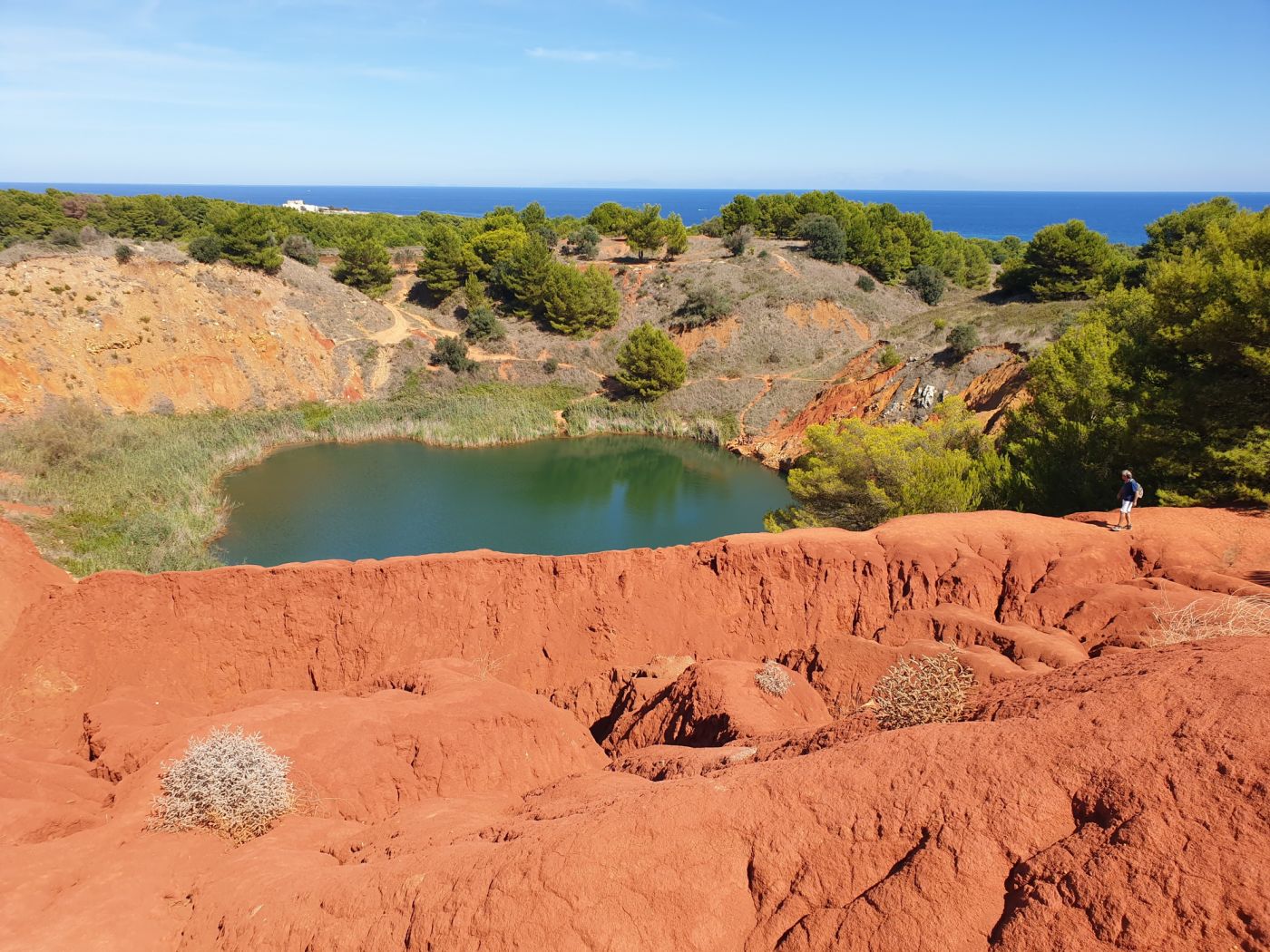
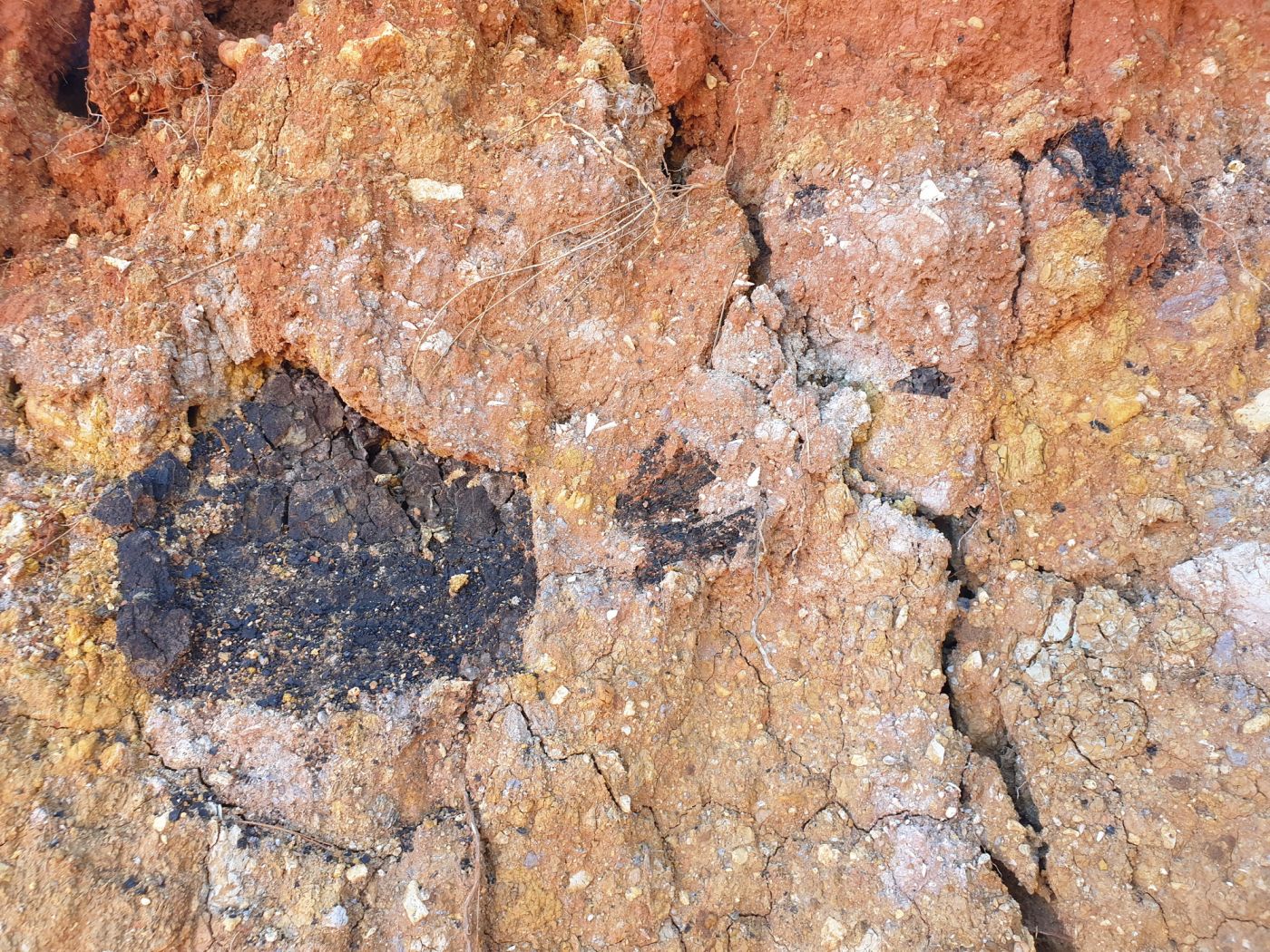
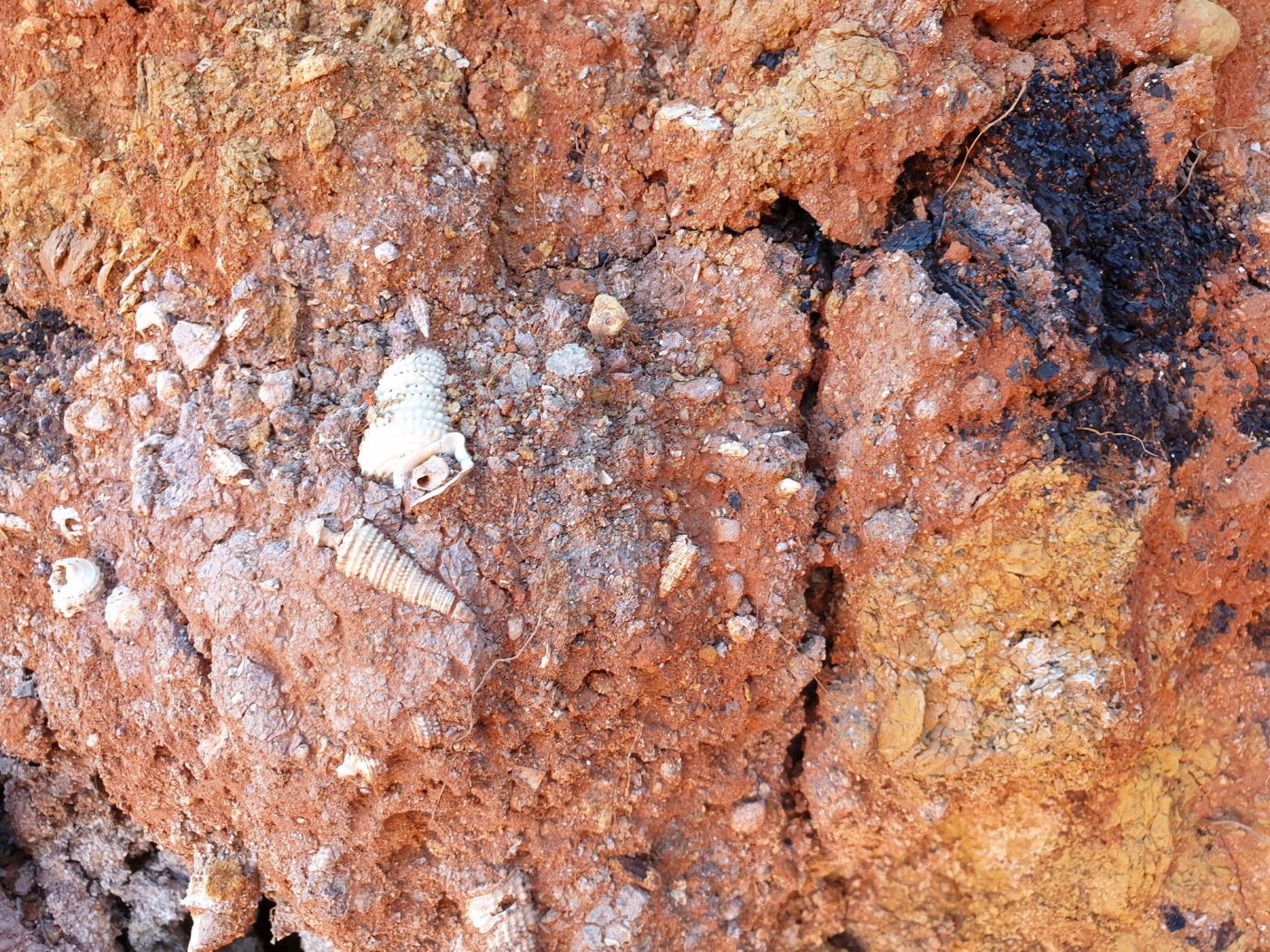
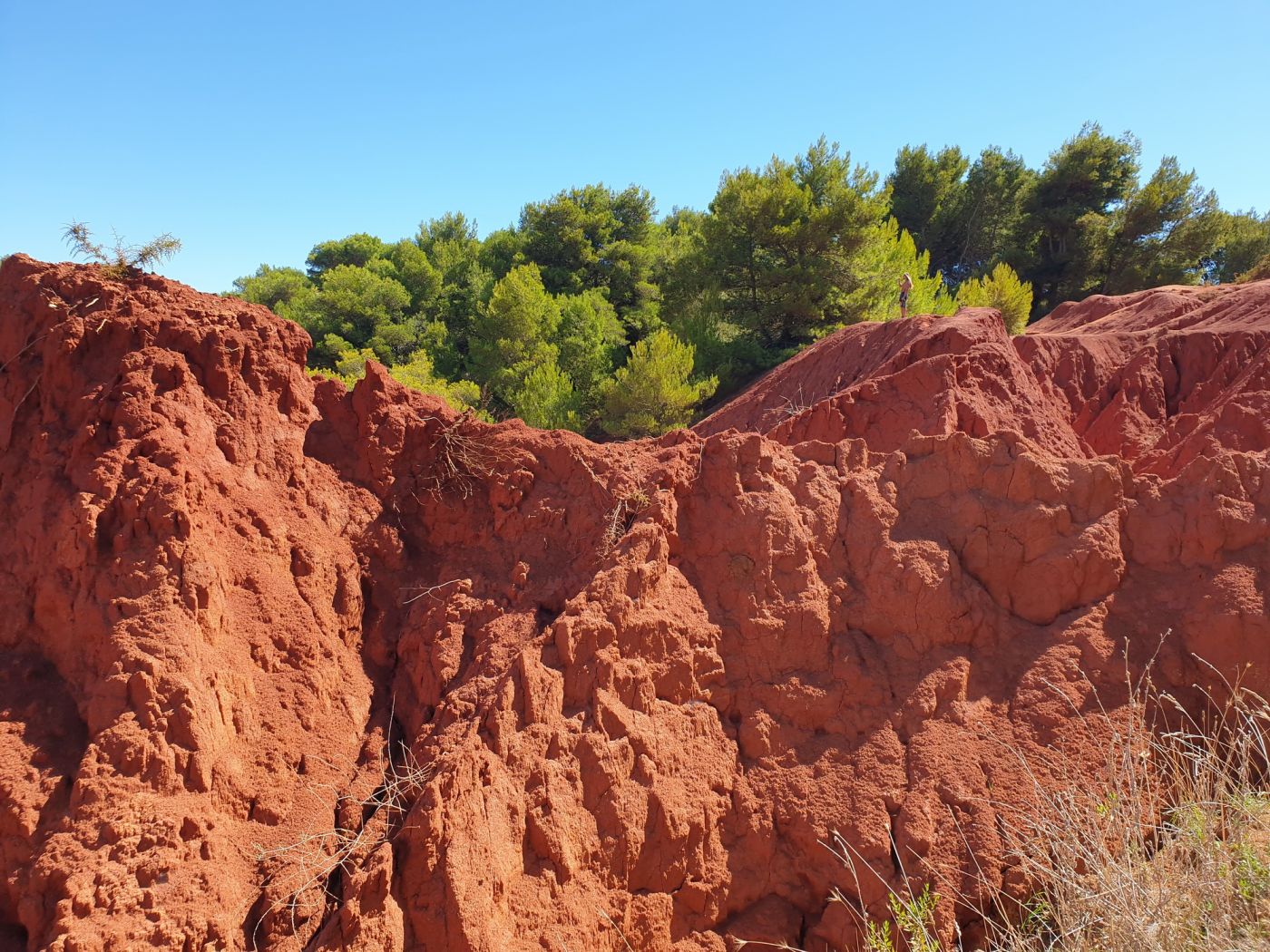
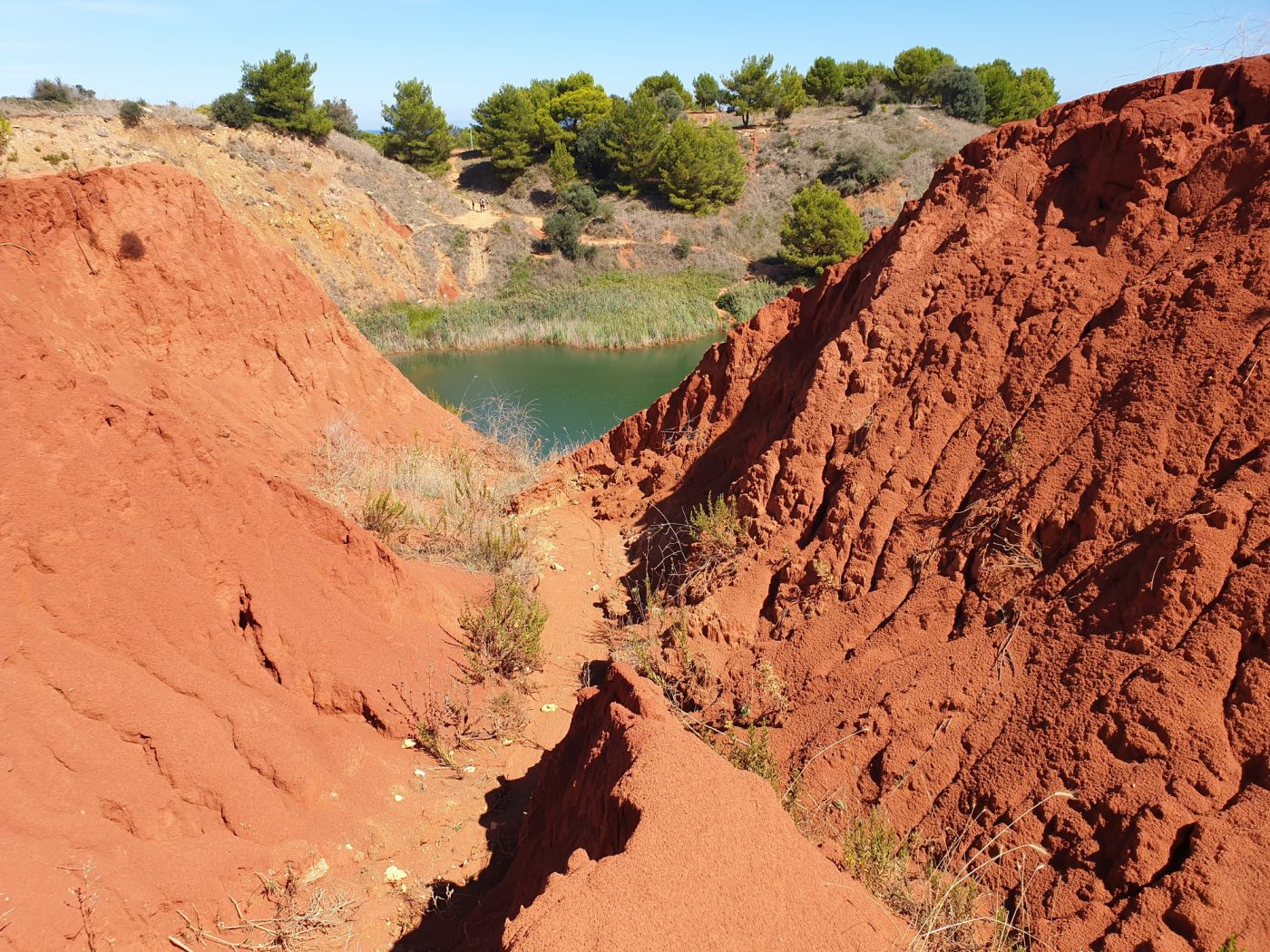
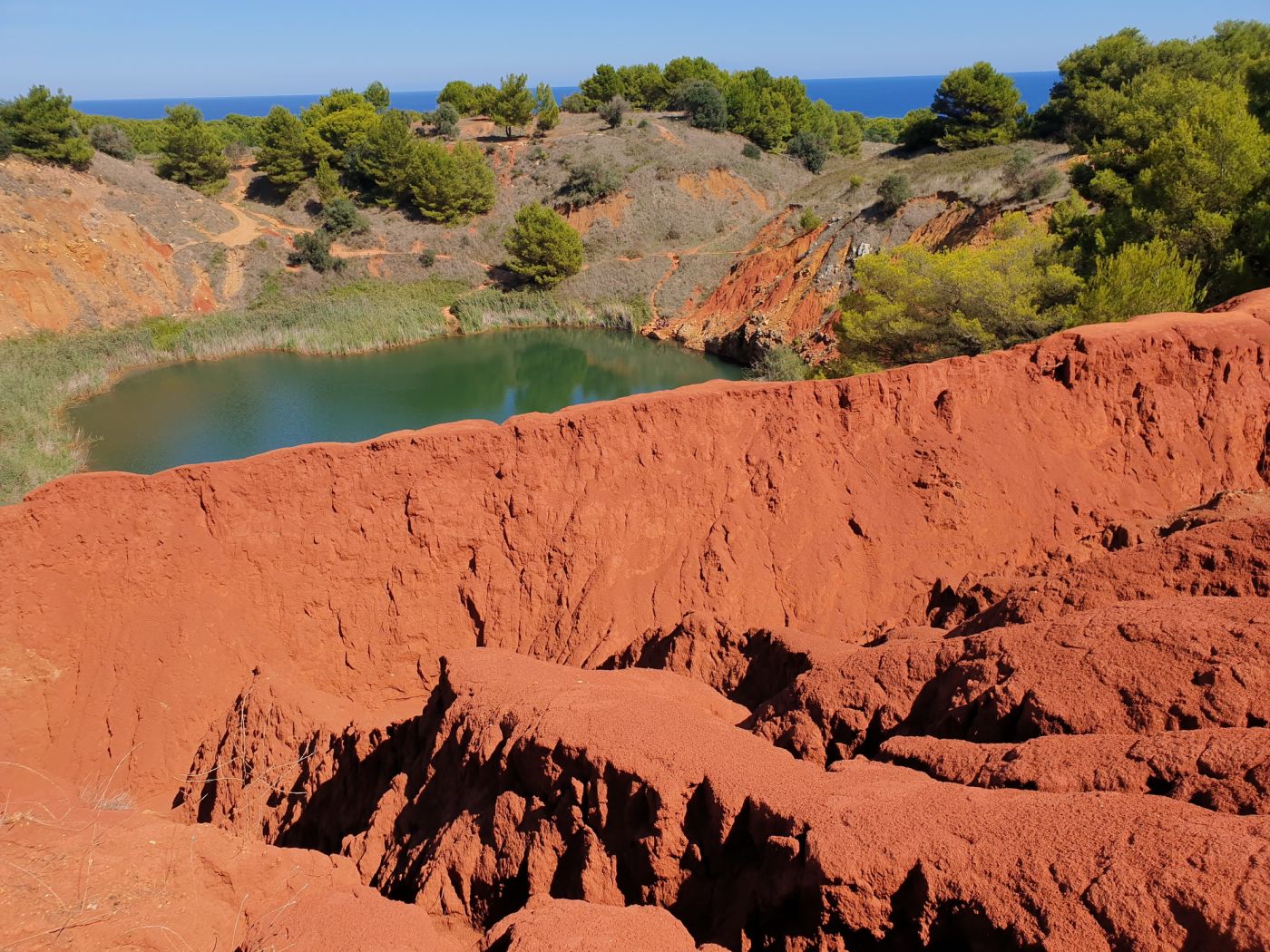
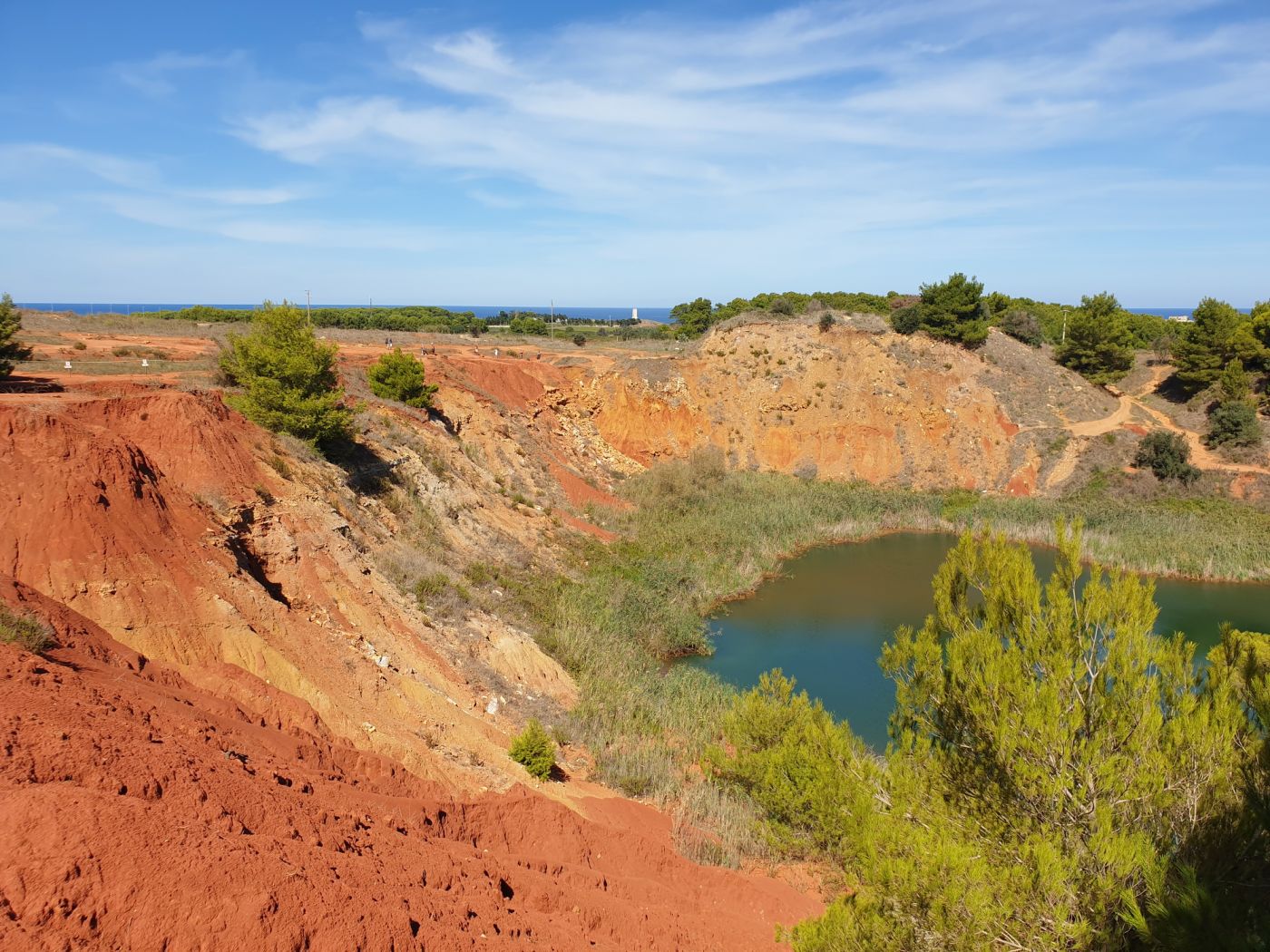
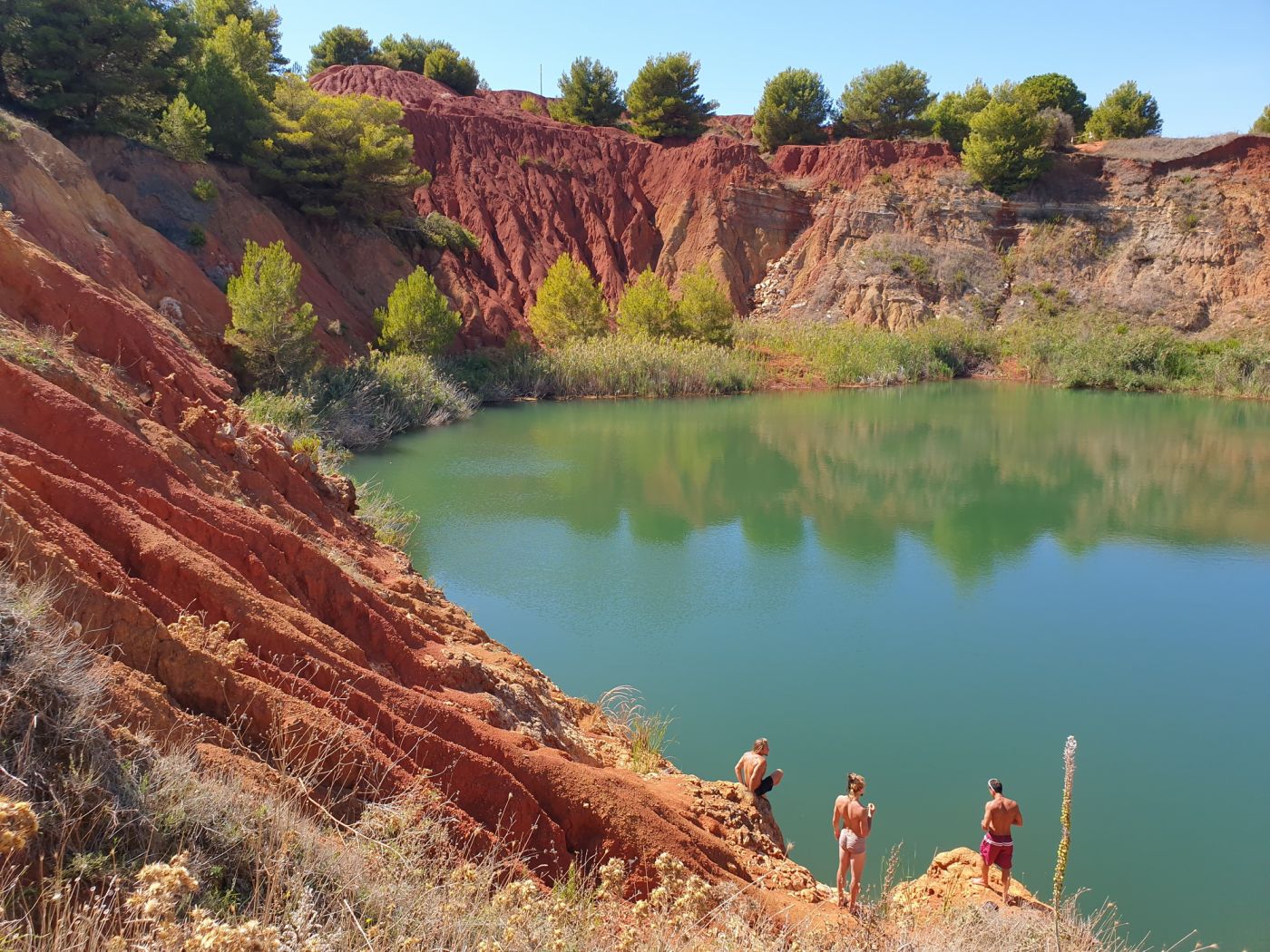
In southern Italy, in the Puglia region, just two kilometres south of the town of Otranto, I came across a place that is completely atypical compared with the rocky coastal landscape. Just a few hundred metres from the limestone cliffs along the shore, the ground has an intense reddish-brown colour. Hidden by vegetation, there lies an old abandoned quarry, an excavation more than 10 metres deep, at the bottom of which a lake with emerald-green water has formed. The striking contrast between the emerald water and the steep, intensely red banks makes the place look almost unreal in its beauty. And yet, that is only the beginning.
In the 1940s, Prof. Liborio Salomi discovered that the reddish soil and the deeper sediments contained bauxite.
Bauxite is a sedimentary rock composed of minerals containing aluminium hydroxides, mixed with clay minerals, iron oxides and quartz. It is the most important ore from which aluminium is extracted.
It was not until twenty years later, on the initiative of Eng. Camillo Crema, that bauxite mining began there. The operation continued until 1976.
Worldwide, bauxite is mined in countries such as Australia, Brazil, India and China, as well as in Romania.
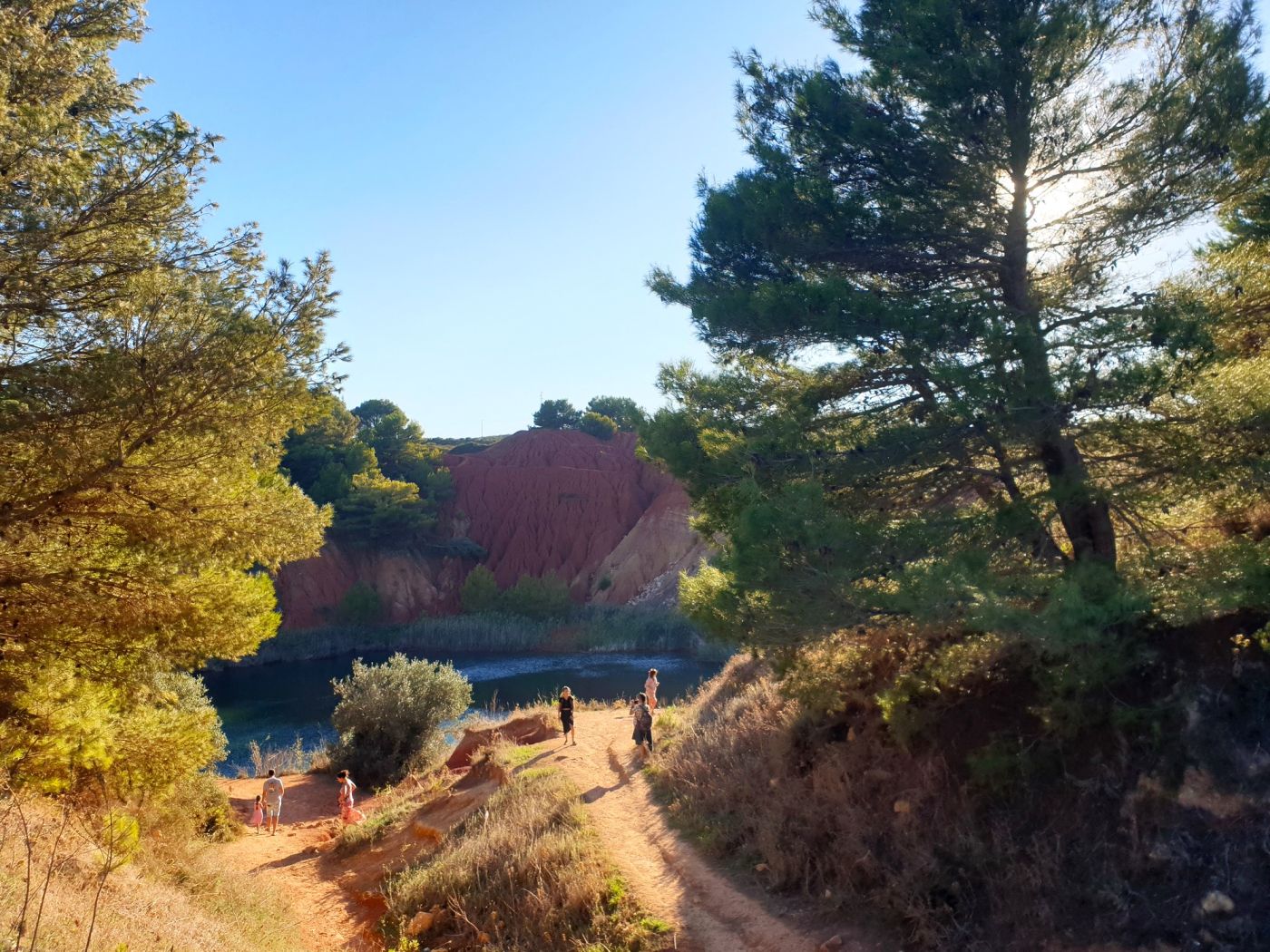
Now, 50 years after the mine was abandoned, the old quarry has become a curiosity for tourists who make their way there.
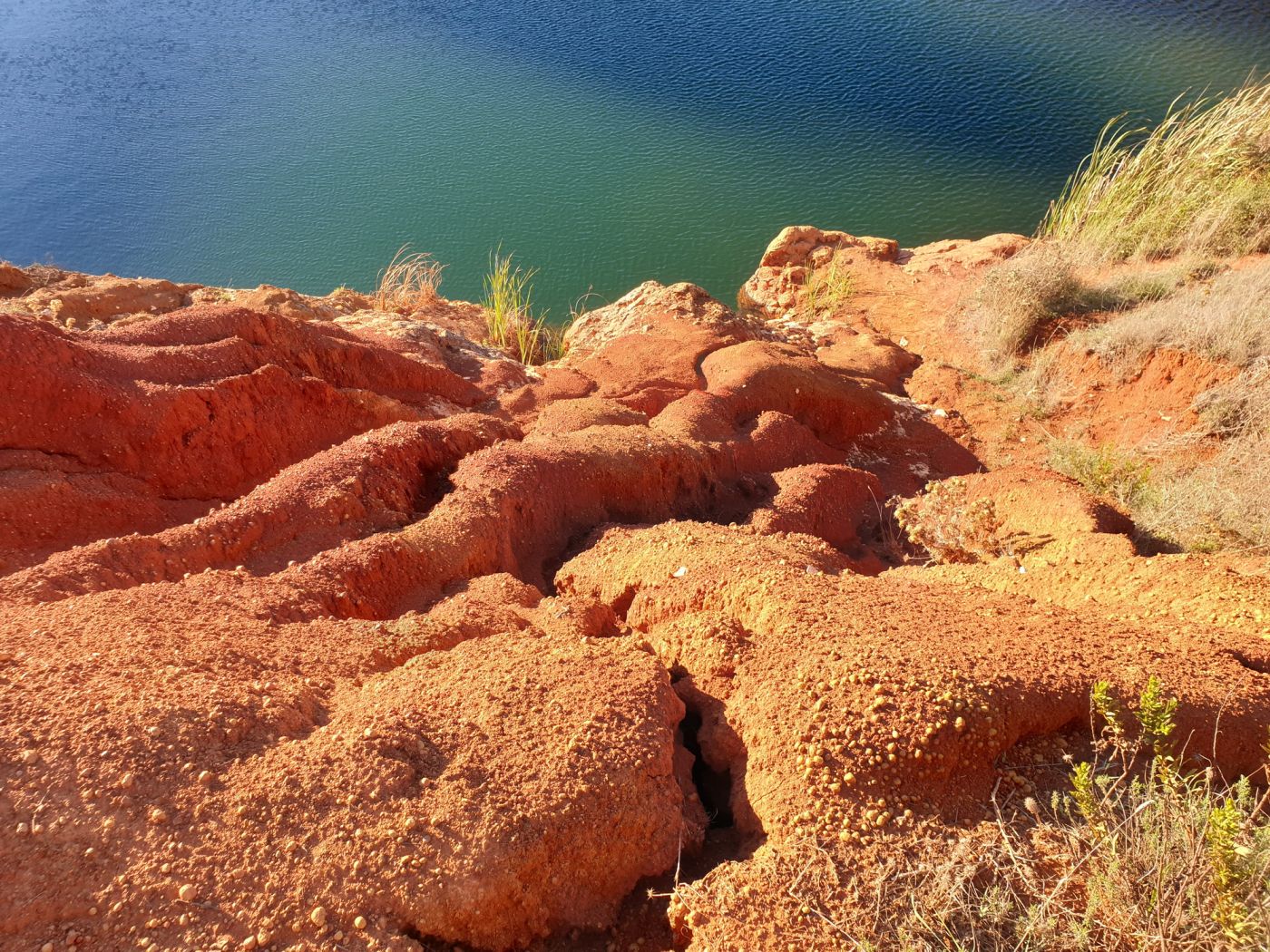
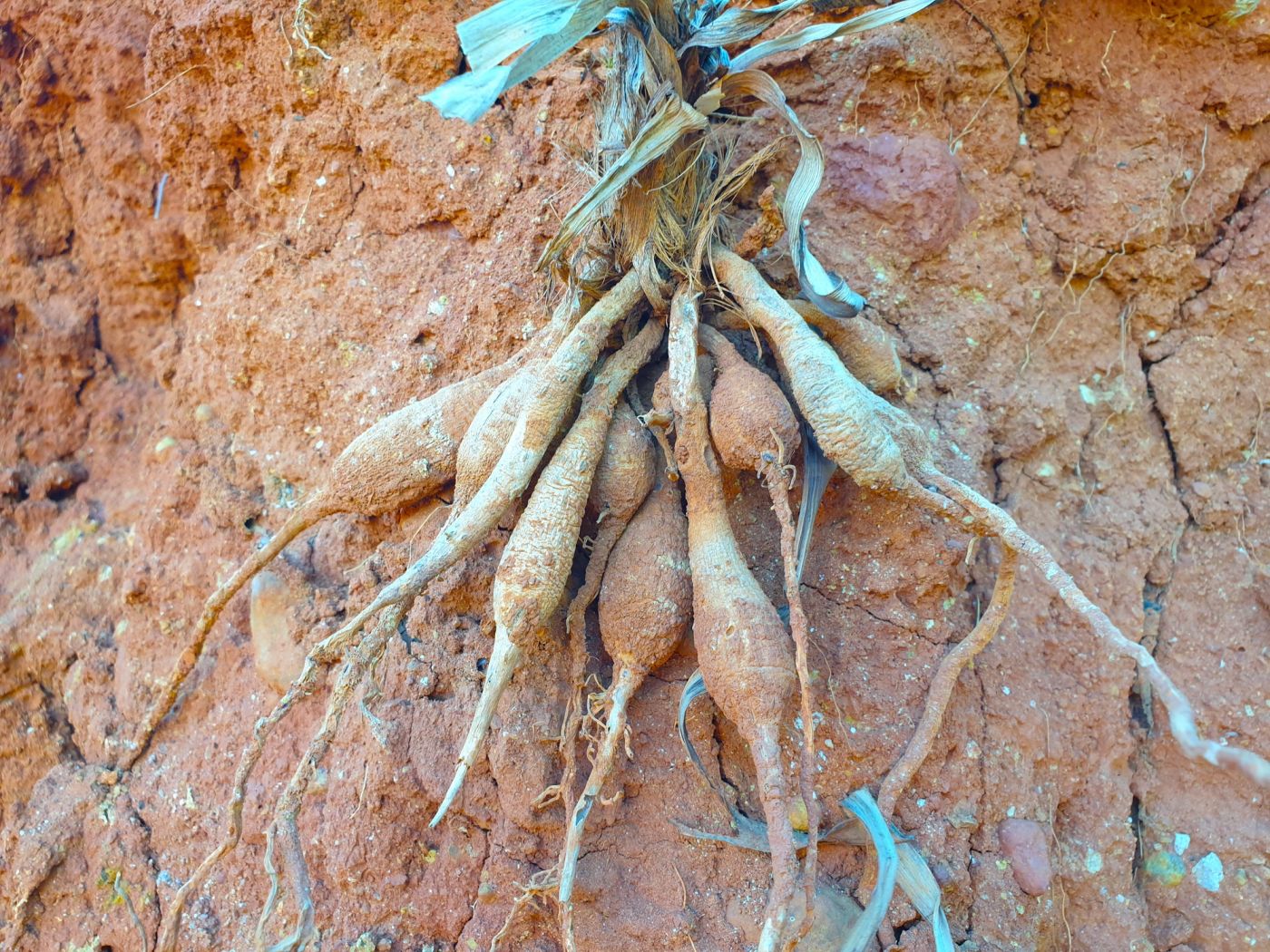
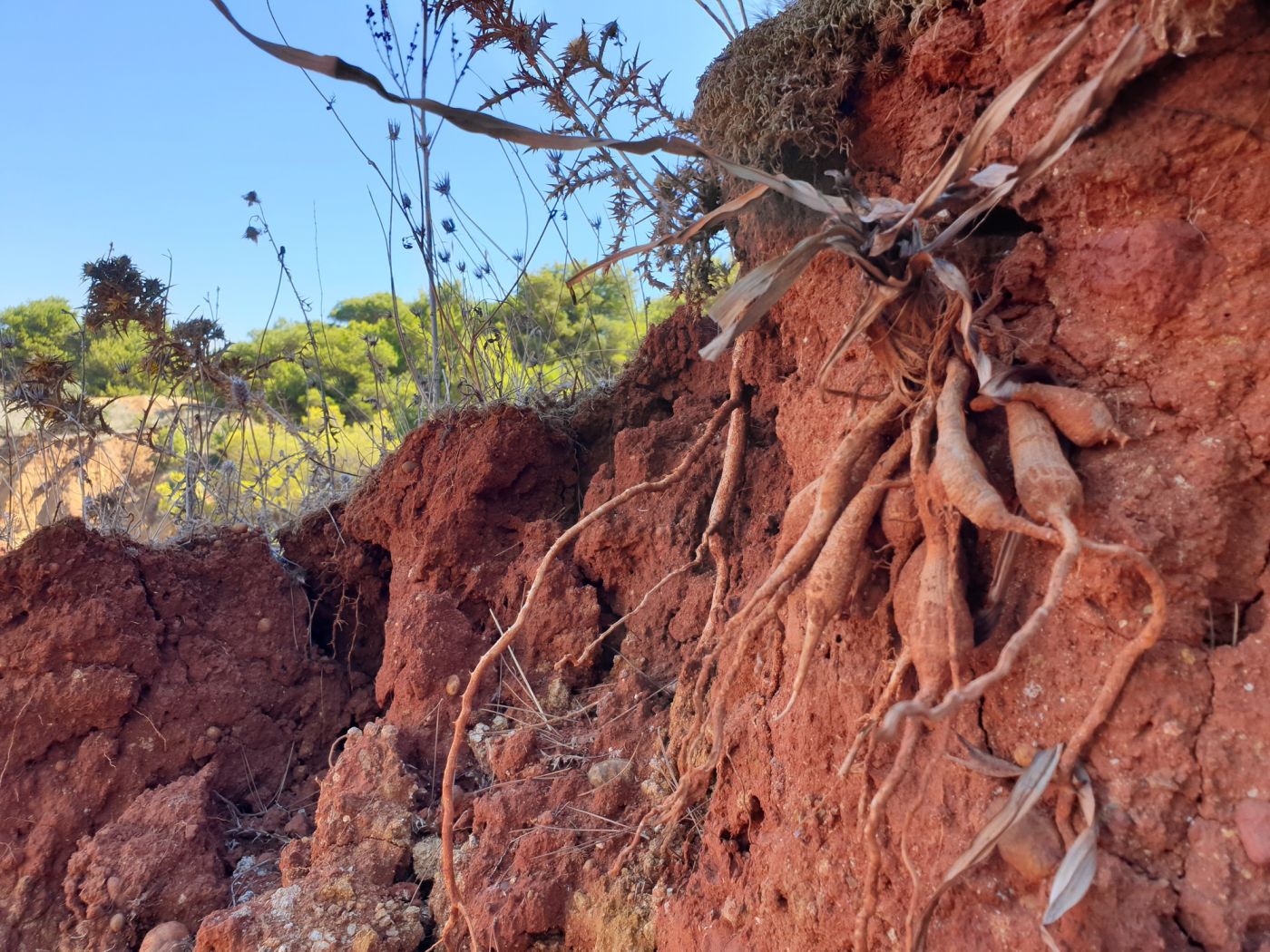
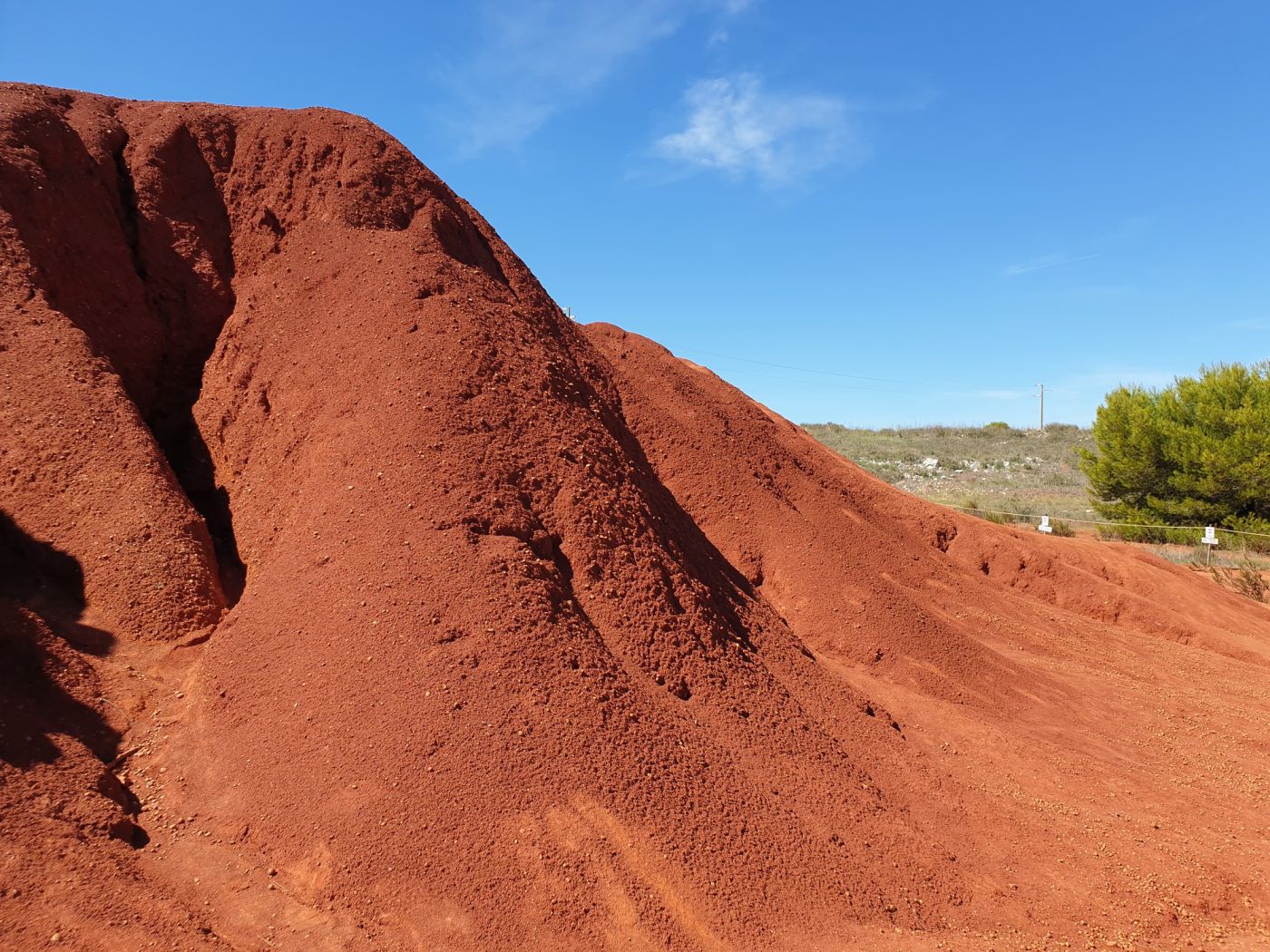
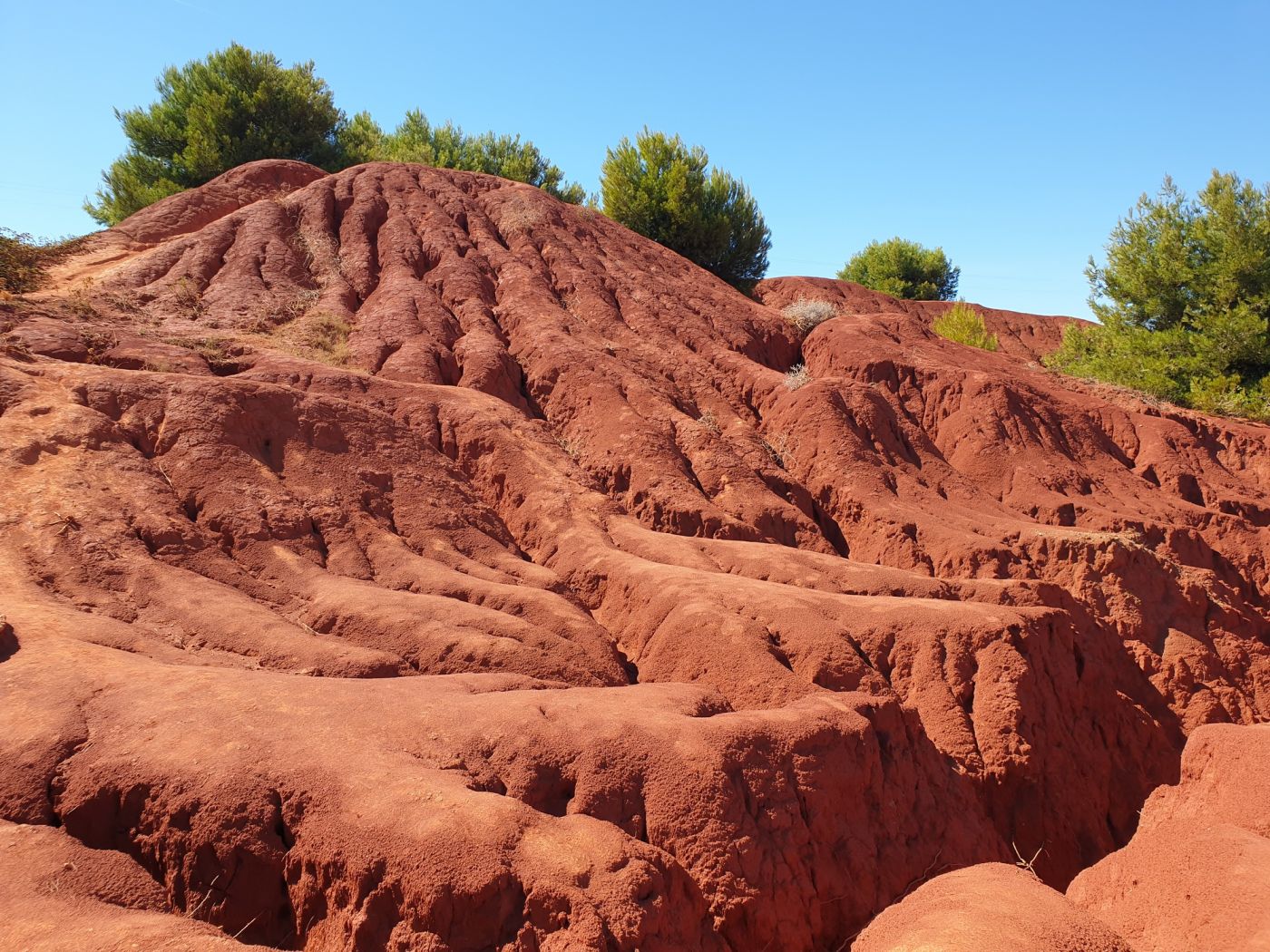
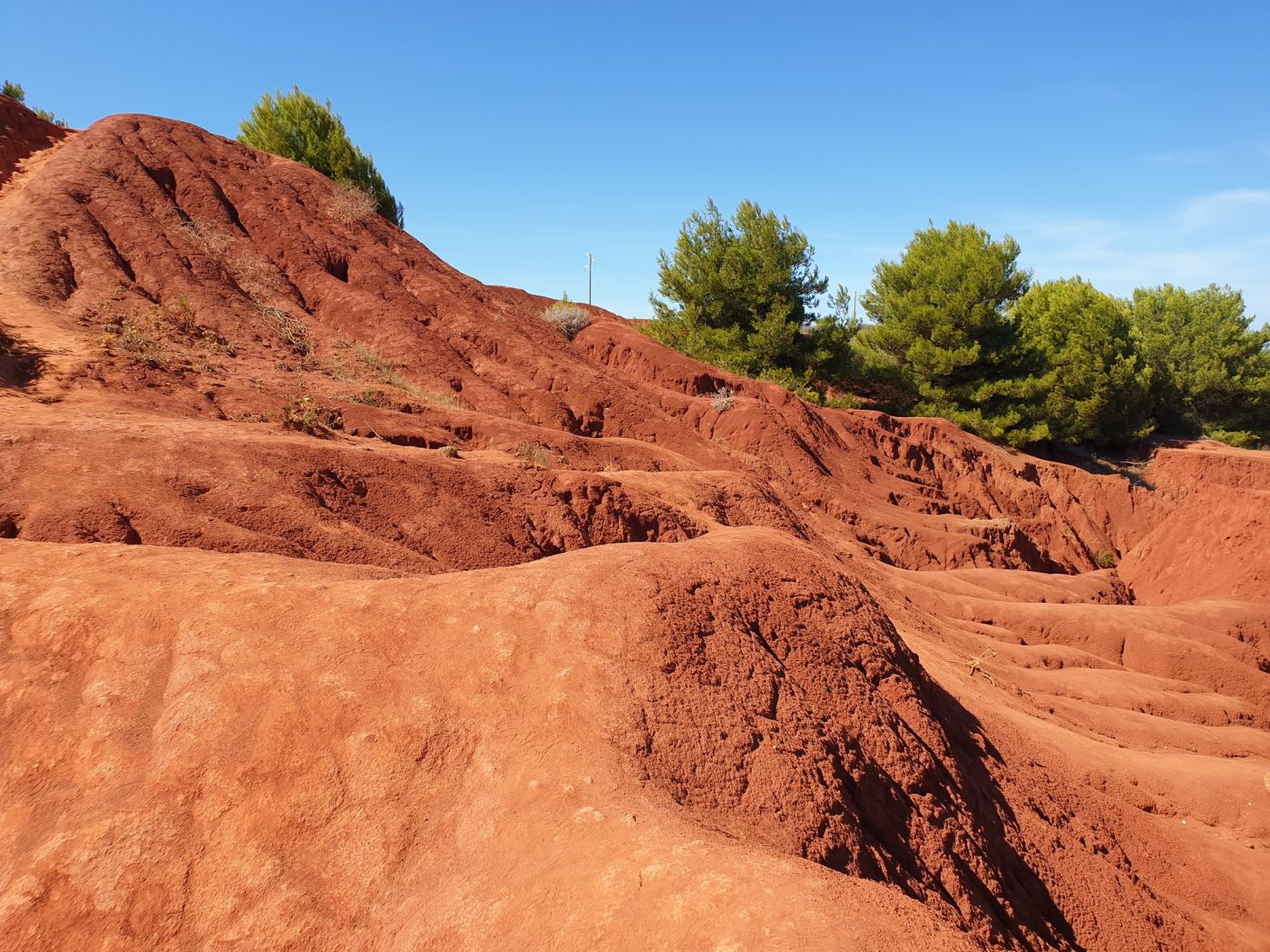
The landscape is constantly changing, mainly as a result of erosion caused by rainwater. Along the steep banks and the inner slopes of the quarry, various erosion processes take place, including surface runoff and infiltration. These processes create gullies and, occasionally, small landslides and slope collapses.
All these formations can be of interest from both a geological and geomorphological perspective. Some tourists come simply to admire the landscape and take a swim in the emerald-green water, which looks almost impossibly beautiful.
Photo gallery – Cava di Bauxite Otranto
Ro
PĂMÂNT – APĂ – FOC
Cariera de exploatare a bauxiteu, Otranto, Italia
12 septembrie 2022
În timpul studiilor de Geologie, pe care le-am făcut la Universitatea Babes Bolyai din Cluj Napoca, am avut ocazia să învăț despre diverse minerale și roci, inclusiv despre minerale argiloase și roci sedimentare, cât și despre exploatarea lor.
Ulterior, în timpul călătoriilor pe care le-am făcut, am avut uneori ocazia să descopăr pe teren și să văd în practică, câte ceva specific, din ceea ce am învățat.
***
În sudul Italiei, Regiunea Puglia, la doar doi kilometri sud de orașul Otranto, am dat peste un loc total atipic față de peisajul stâncos al litoralului. La doar câteva sute de metri de țărmul cu faleze din calcar, pământul are o culoare roșietică, brună, intensă. Ascunsă de vegetație, acolo este o veche carieră abandonată, o excavație de peste 10 metri adâncime, pe fundul căreia s-a format un lac cu apă de culoare verde-smarald. Contrastul cromatic cu malurile abrupte de un roșu intens face ca locul să arate ireal de frumos. Cu toate astea e destul de banal.
În anii 1940 Prof. Liborio Salomi a descoperit acolo că acel pământ roșietic și sedimentele din adâncime conțin bauxită. Aceasta este o rocă sedimentară formată din minerale ce conțin hidroxizi de aluminiu în amestec cu minerale argiloase, cu oxizi de fier și cuart. Bauxita este cel mai important minereu din care se extrage aluminiul.
Abia douăzeci de ani mai târziu, la inițiativa Ing. Camillo Crema, a început expoatarea bauxitei, care a contunuat până în anul 1976.
Pe plan mondial, bauxita se extrage din țări precum Australia Brazilia, India, China, dar și din România.
Acum, la 50 de ani de la abandonarea exploatării, vechea carieră a ajuns o curiozitate pentru turiștii care ajung pe acolo.
Peisajul este într-o continuă transformare, în principal datorită eroziunii provocate de apa provenită din precipitații. Pe malurile abrupte, pe versanții interiori ai carierei au loc procese de eroziune specifice, de șiroire, și infiltrații, care produc ravene și ocazional mici alunecări de teren și prăbușiri de versant. Toate aceste formațiuni pot fi interesante din punct de vedere geologic și geomorfologic. Unii turiști vin doar să admire peisajul și să facă o baie în apa smarald, ireal de frumoasă!