
Journeys with unexpected endings: discovering “blue tea”
In these troubled times, with wars raging around the world, if you say that you “see things through rose-colored glasses,” people may think you are, at best, naïve, if not something worse. But what if you mean it literally rather than figuratively?
(text în română mai jos)
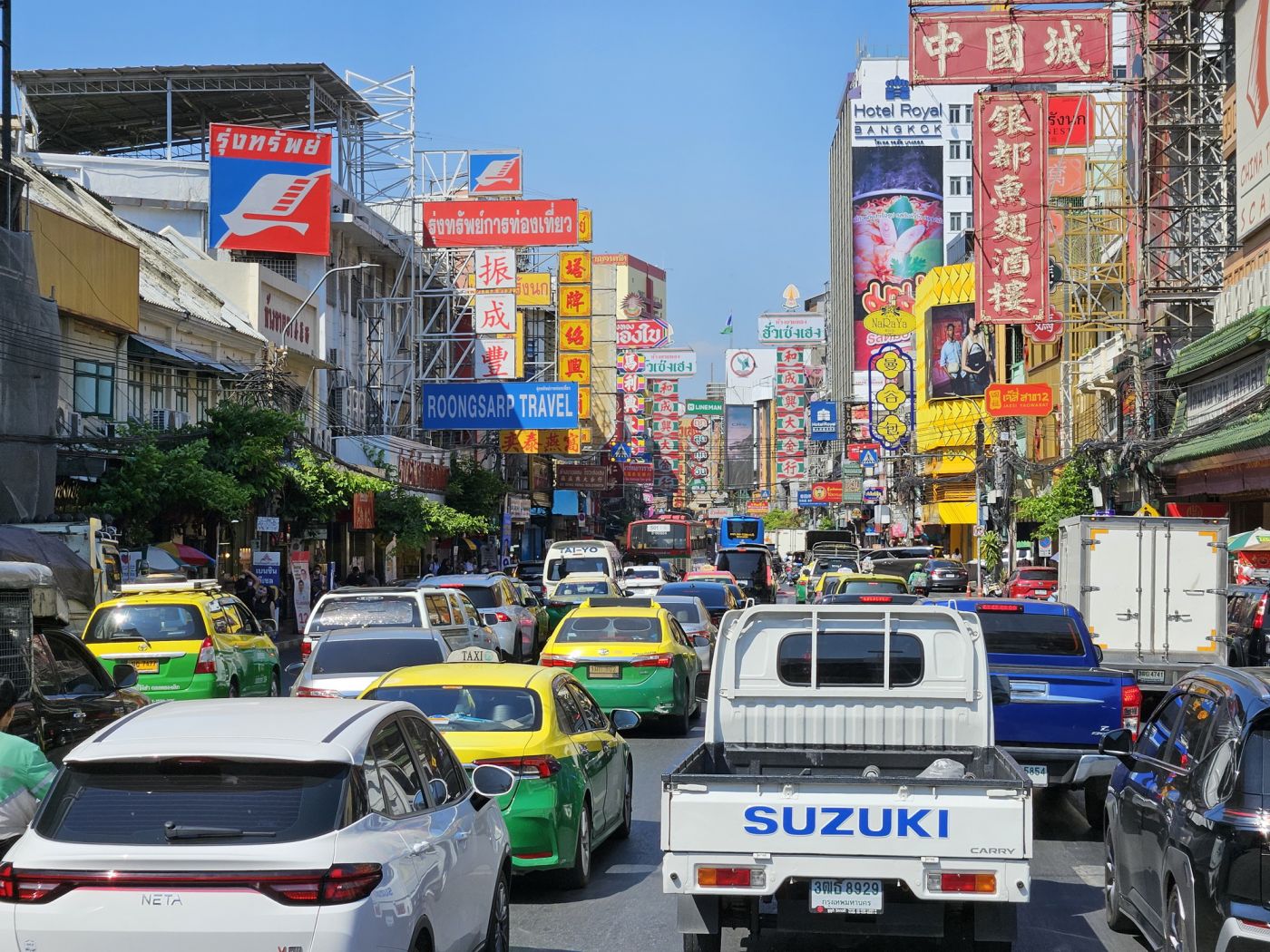
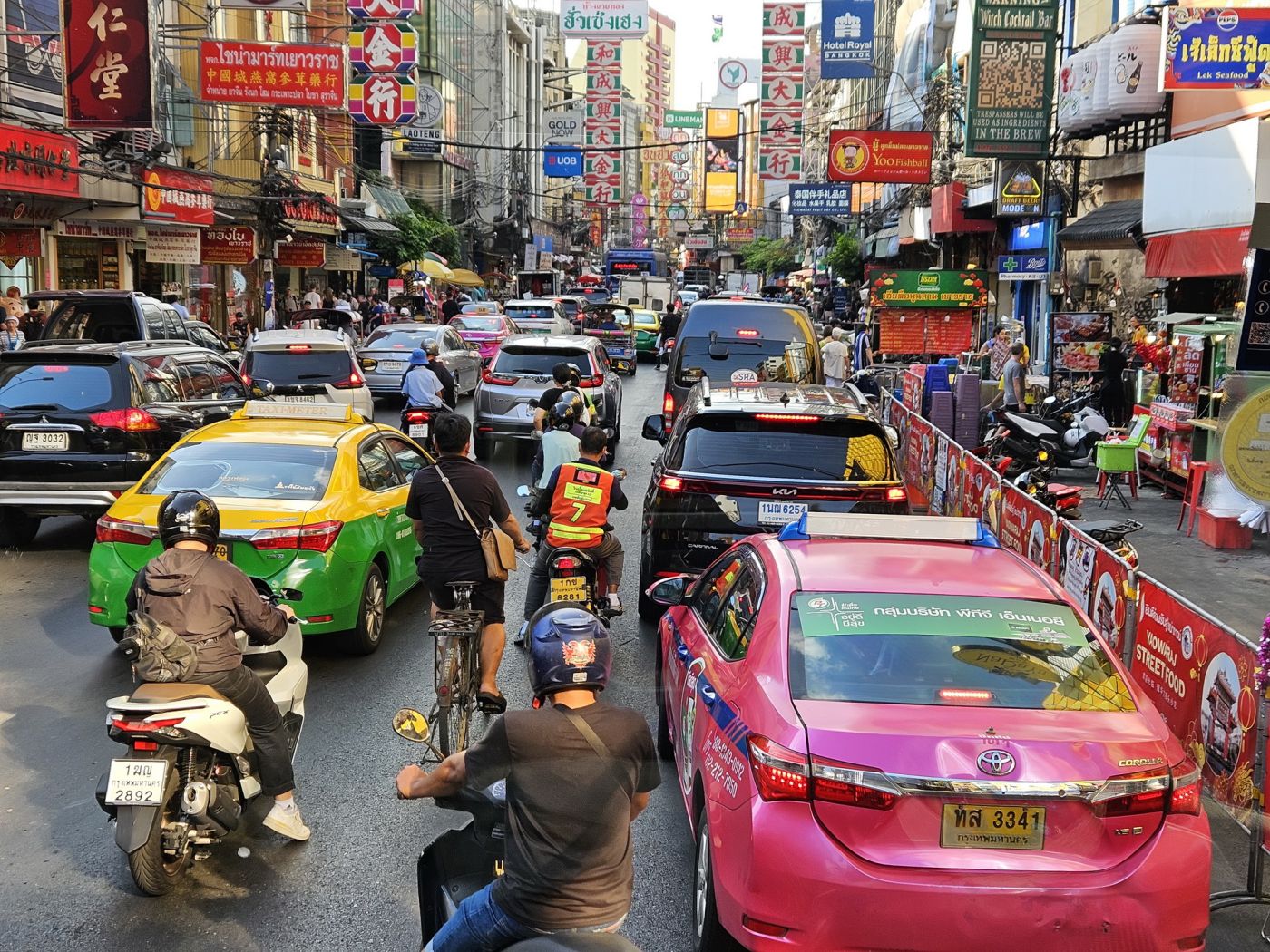
Bangkok, Thailand: a vibrant atmosphere in the first days of 2026.
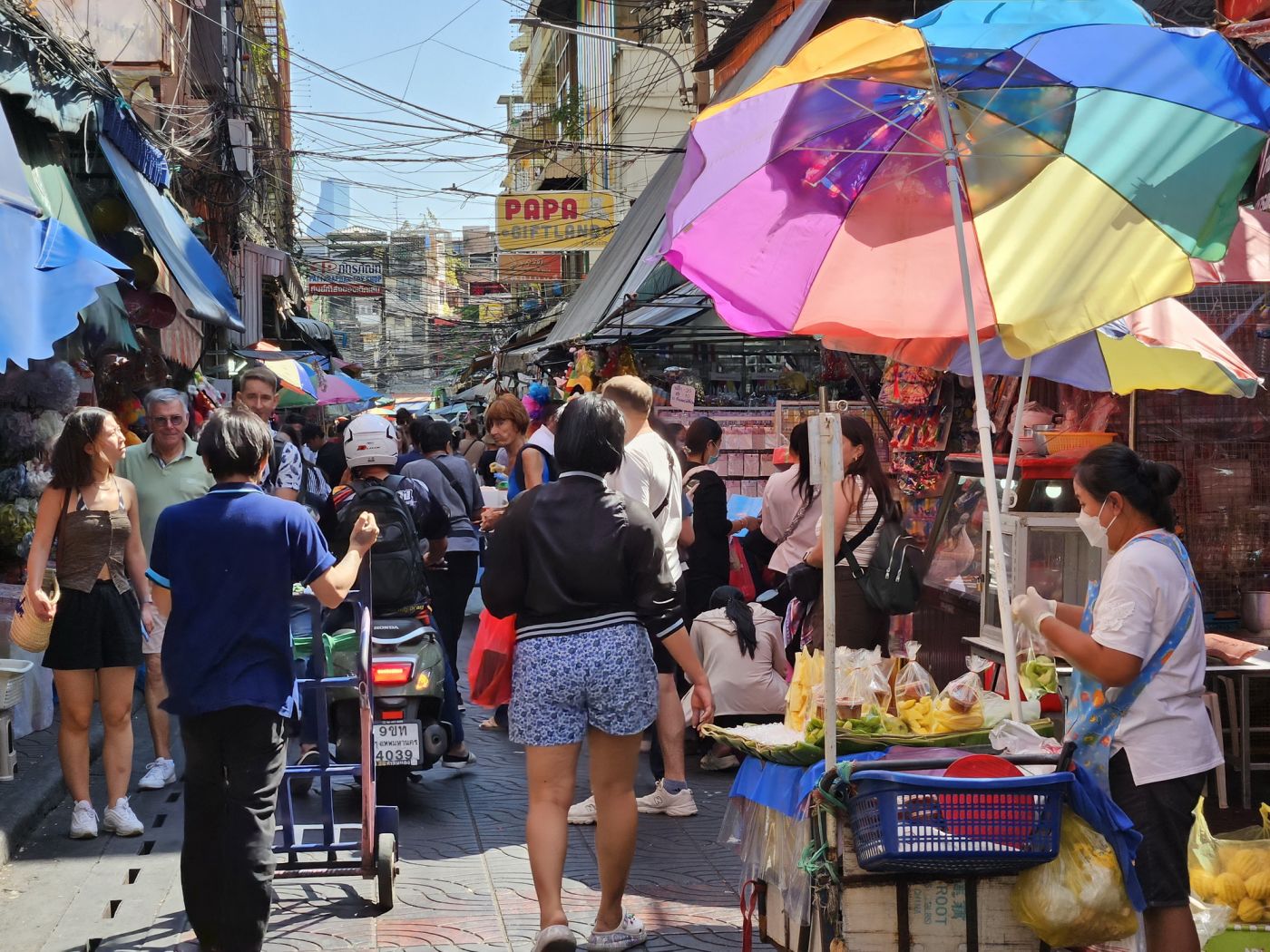
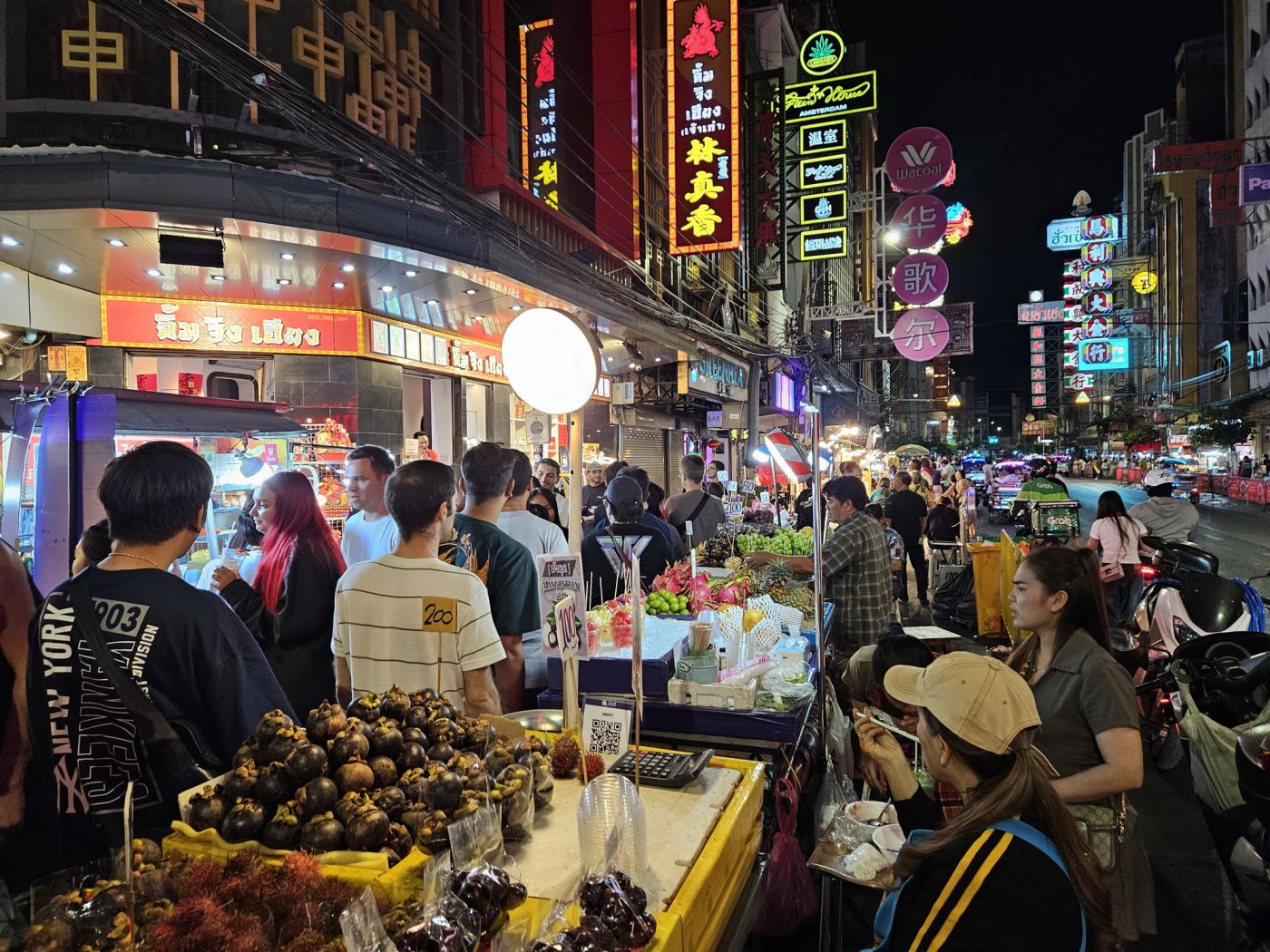
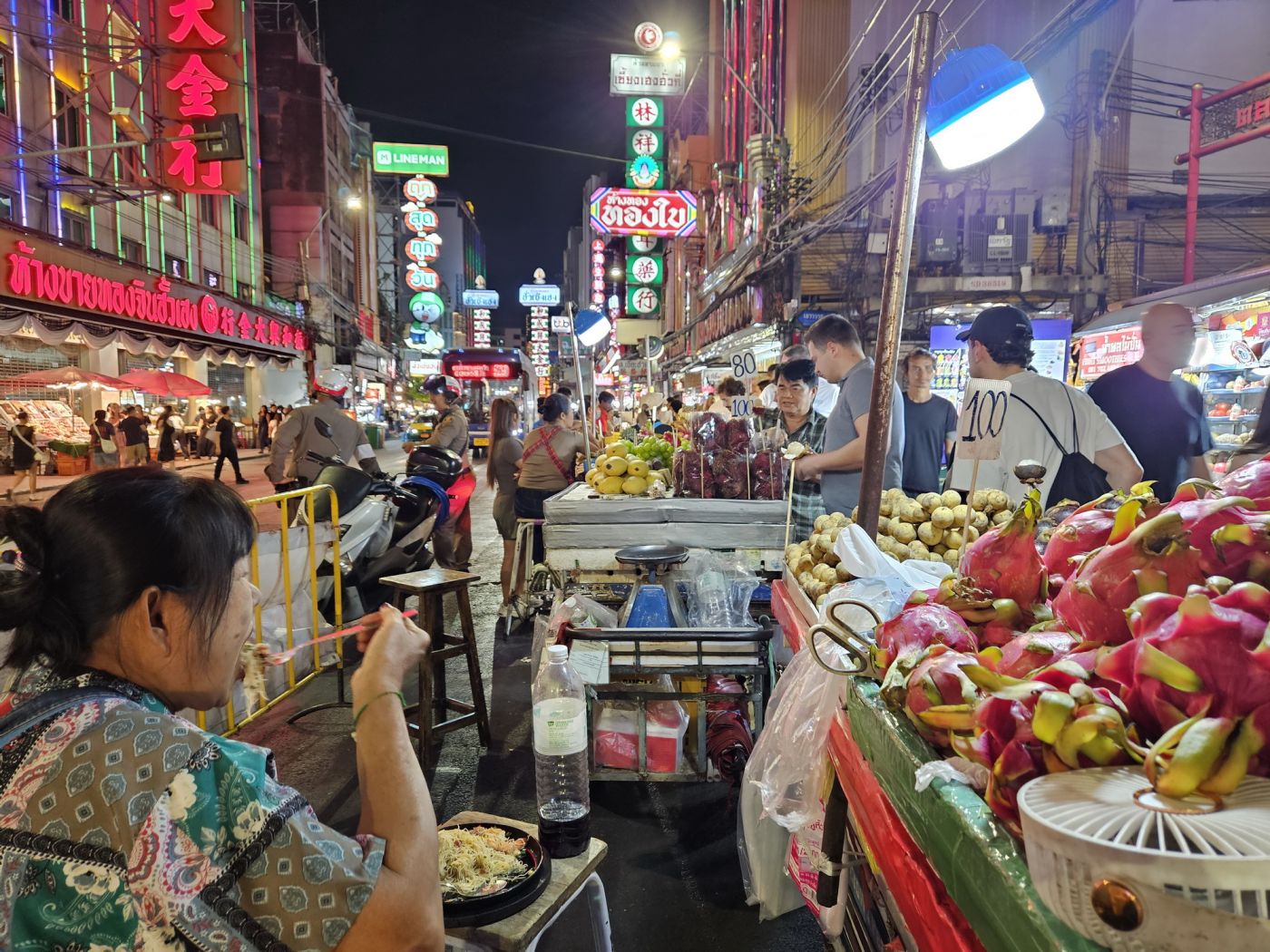
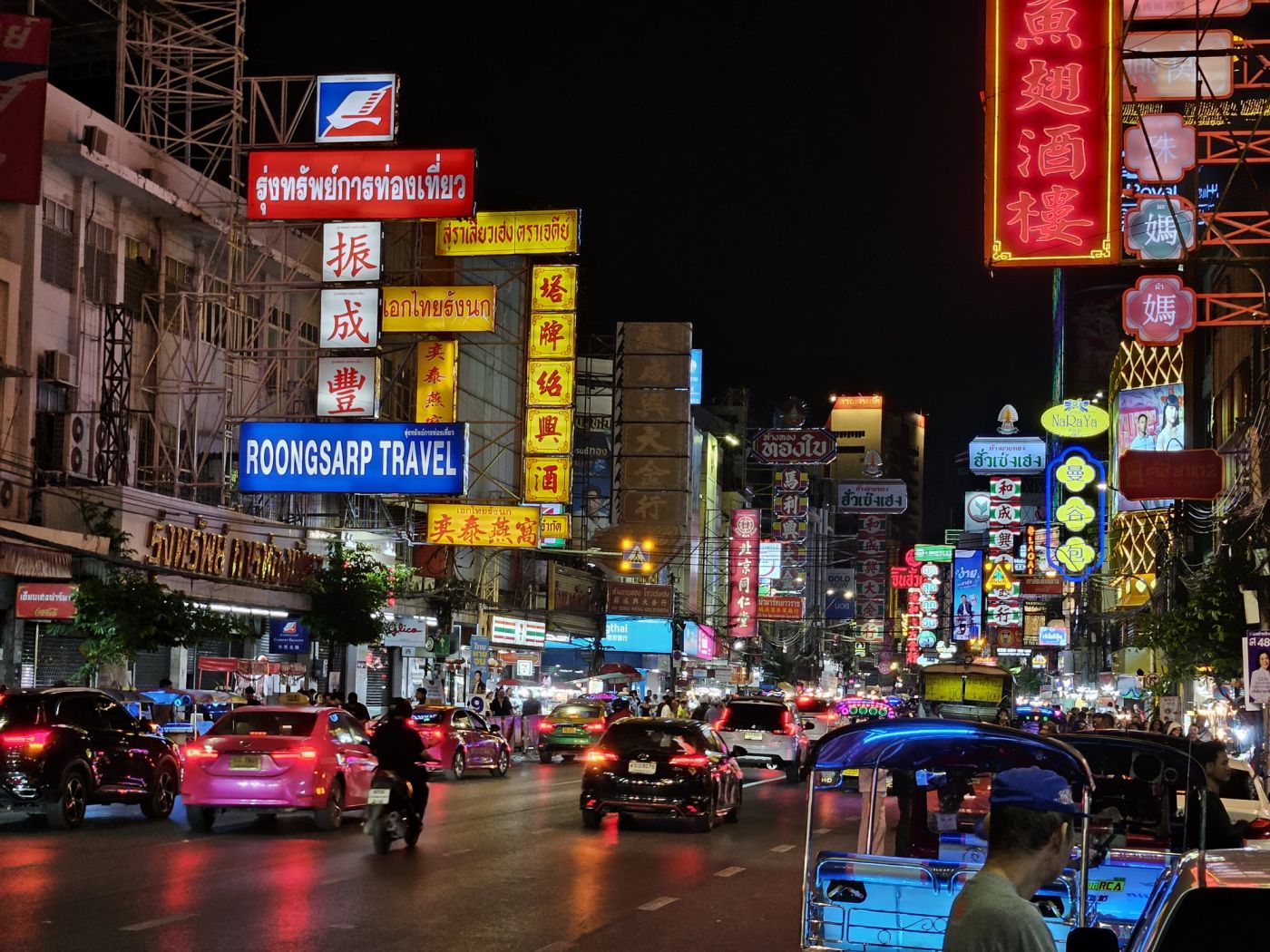
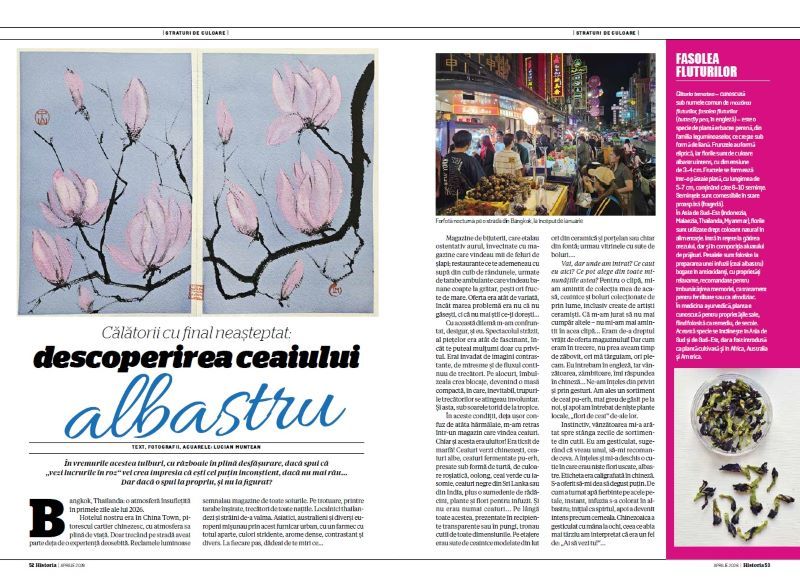
Our hotel was located in Chinatown, the picturesque Chinese district, alive with energy and activity. Simply walking down the street was already a remarkable experience. Bright neon signs advertised shops of every kind. Sidewalks lined with stalls teemed with passersby from all nations. Thai locals and foreigners mingled together. Asians, Australians, and Europeans of every sort swarmed through this urban anthill, a place of unique charm, vivid colors, rich aromas, and striking diversity. At every step, there was something unexpected to discover.
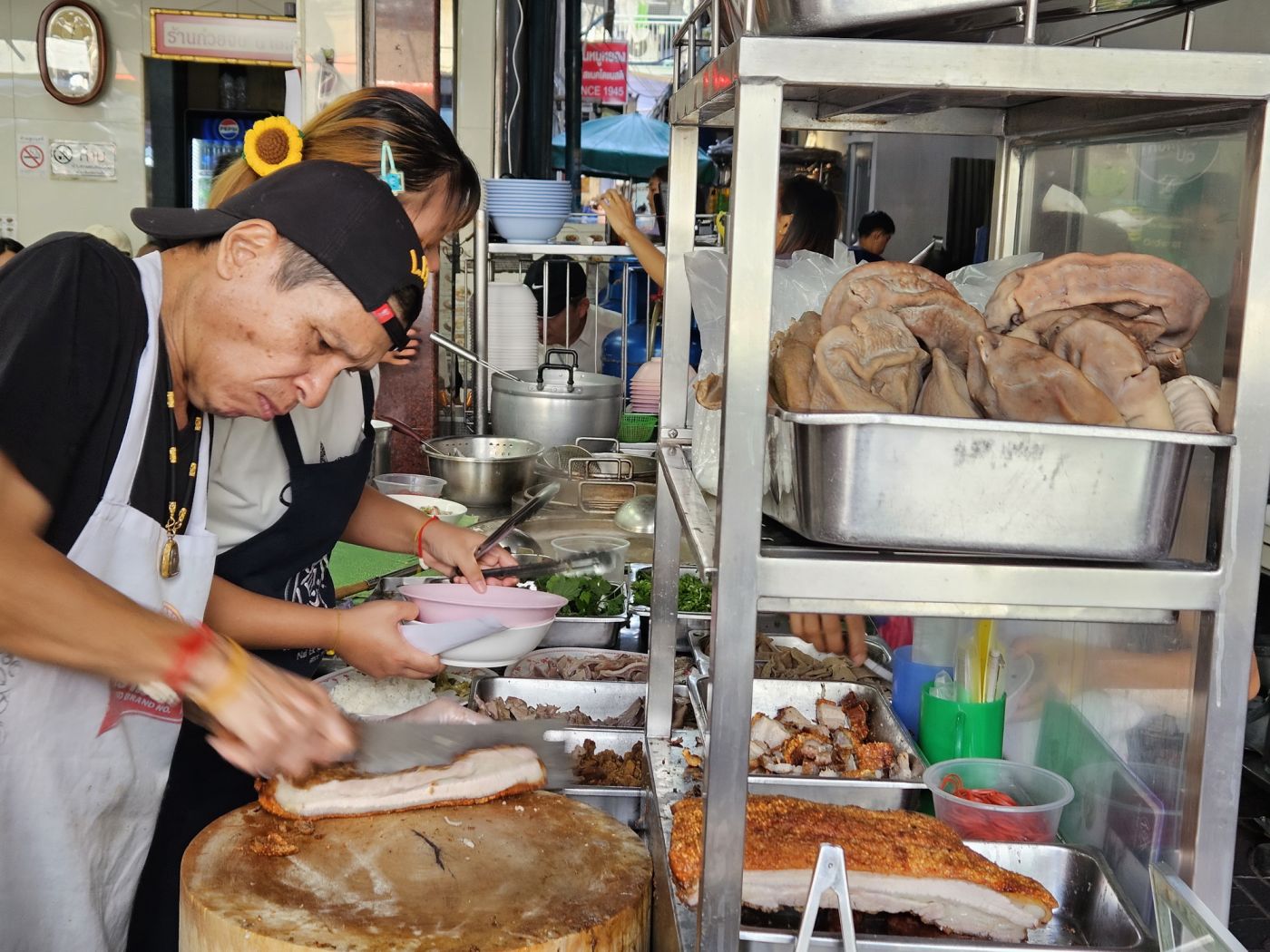
Jewelry stores ostentatiously displayed gold beside shops selling thousands of varieties of flip-flops; restaurants tempted customers with bird’s nest soup, followed by mobile stalls selling grilled bananas, fish, or seafood. The selection was so vast that the problem was not finding something – it was deciding what you wanted.
Naturally, I faced the same dilemma. The spectacle of the streets and markets was so fascinating that simply watching was enough. You were overwhelmed by contrasting images, scents, and the endless flow of people. At times, the crowds became so dense that movement slowed to a standstill, turning into a compact mass in which bodies inevitably brushed against one another. And all this under the scorching tropical sun.
Bangkok, Thailand, photo Lucian Muntean, January 2026
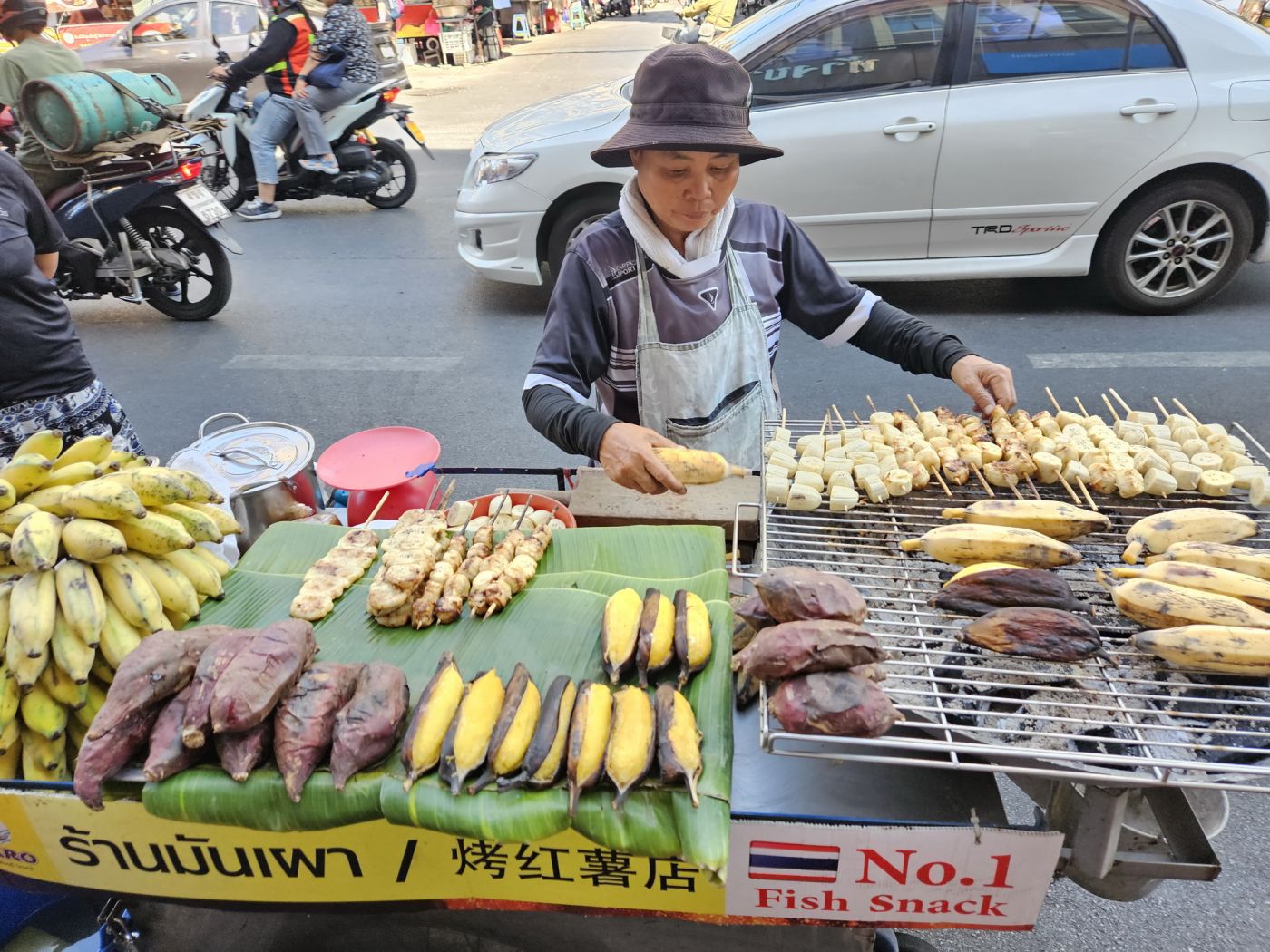
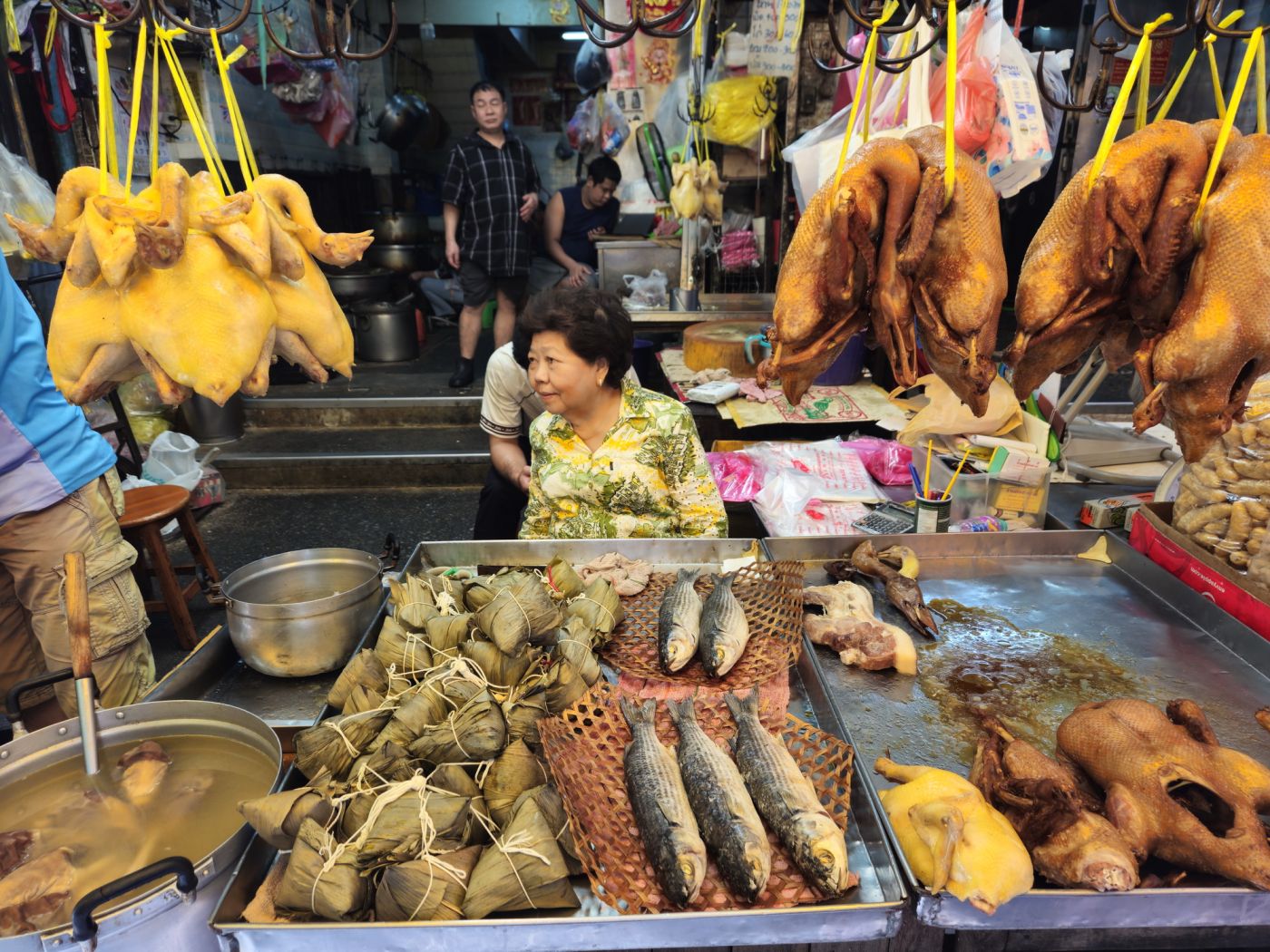
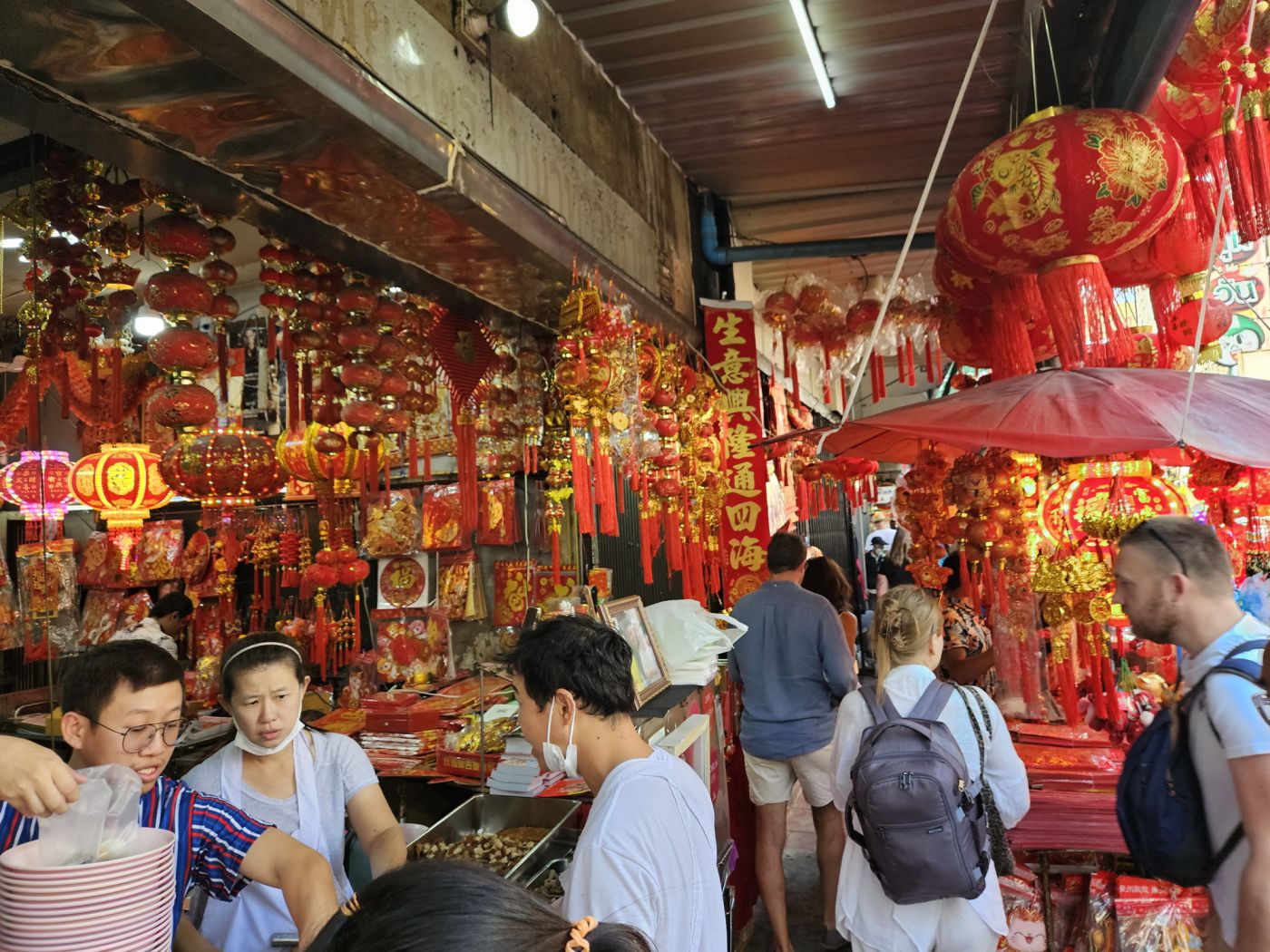
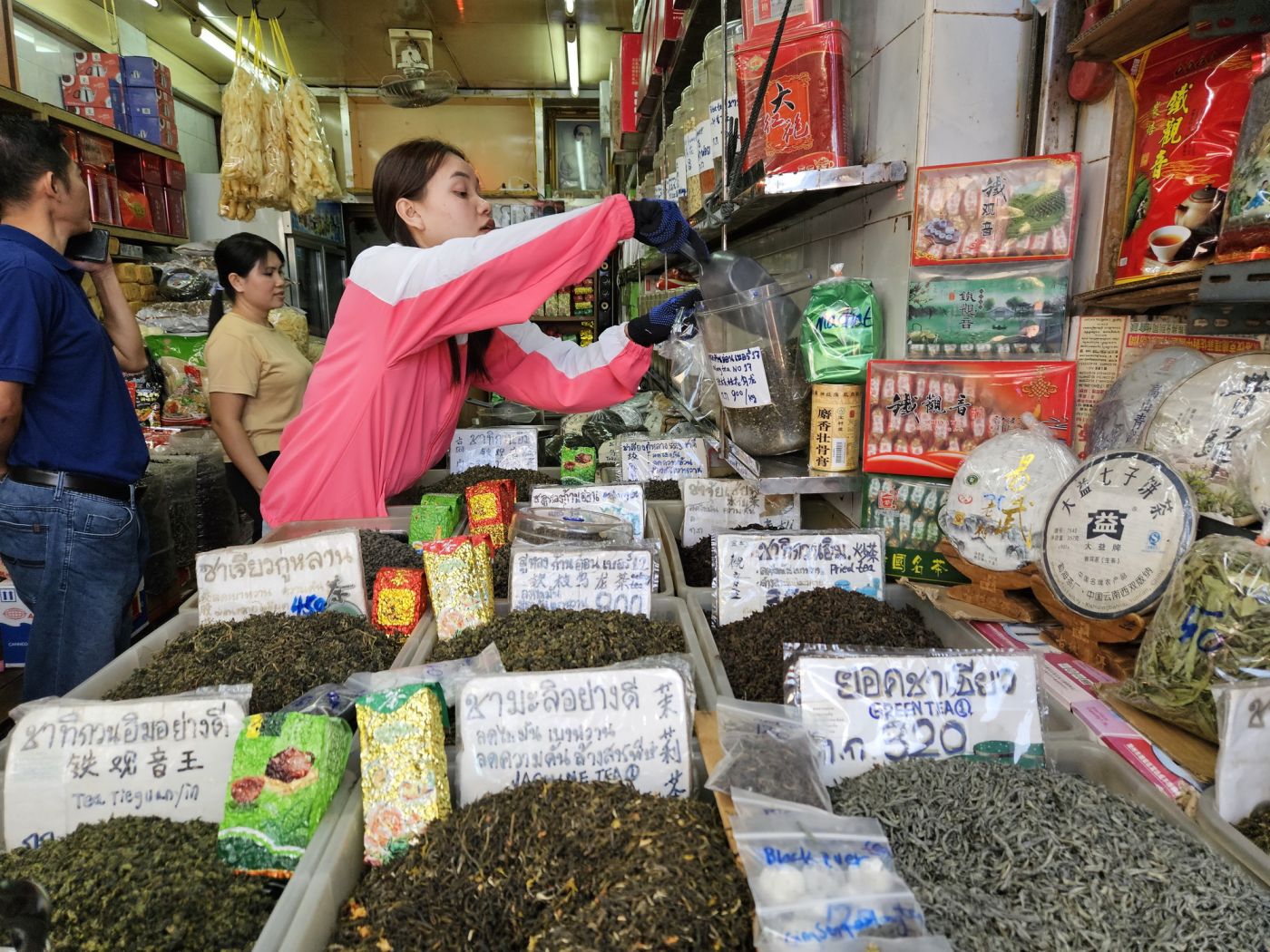
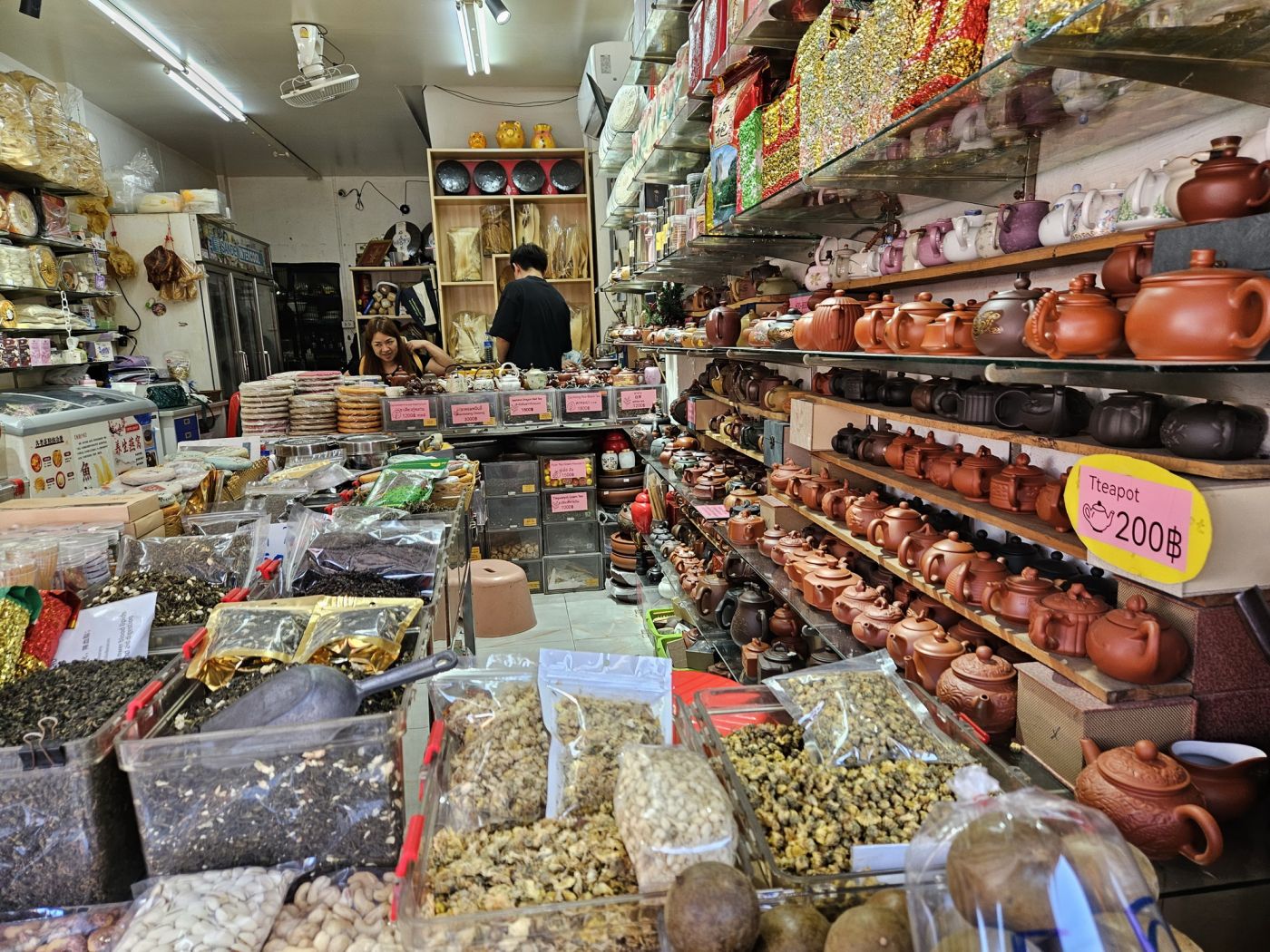
In these conditions, already somewhat dazed by the commotion, I retreated into a tea shop. It too was astonishingly impressive, packed to the brim with merchandise. Chinese green teas, white teas, fermented pu-erh teas compressed into reddish cakes, oolong teas, jasmine green teas, black teas from Sri Lanka and India, along with countless roots, herbs, and flowers for infusions. And there was more than just tea.
Alongside all these products, displayed in transparent containers or bags, stood boxes of every size. The shelves held hundreds of teapots crafted from clay, ceramic, porcelain, and even cast iron. Then came display cases filled with hundreds of bowls.
Good heavens, where had I wandered into? What was I doing here? How could I choose from all these marvels?
For a moment, I thought of my collection back home- teapots and bowls gathered from around the world, including pieces made by ceramic artists. The promise I had made to myself not to buy any more completely escaped me at that moment.
I was utterly enchanted by the shop’s offerings. But since I was only passing through, I had little time to linger: either I bargained or I left. I asked questions in English, while the smiling shopkeeper replied in Chinese. We communicated through glances and gestures. I chose a variety of pu-erh tea, which is difficult to find back home, and then asked about some local plants, their “tea flowers.”
Instinctively, the shopkeeper pointed to dozens of varieties displayed in boxes. I gestured that I wanted a recommendation. She understood and opened a box containing dried blue flowers. The label was written in Chinese calligraphy. She offered me a sample.
As soon as she poured hot water over the petals, the infusion instantly turned blue – at first the pale blue of rubbing alcohol, then gradually deepening into the rich color of ink. The Chinese woman gestured toward her eyes, which I only later interpreted as meaning: “You’ll see!”
Butterfly pea
Clitoria ternatea commonly known as butterfly pea – is a perennial herbaceous plant in the legume family that grows as a vine. Its leaves are elliptical, while its flowers are an intense blue and measure between 3 and 4 centimeters. The fruits develop in flat pods, 5 to 7 centimeters long, each containing 6 to 10 seeds. The fresh, tender seeds are edible.
Throughout Southeast Asia (Indonesia, Malaysia, Thailand, and Myanmar), the flowers are used as a natural food coloring. They are added to rice dishes and cake batters. The petals are also used to prepare an infusion known as blue tea, rich in antioxidants and believed to have relaxing properties. It is recommended for improving memory and is sometimes used as a fertility treatment or aphrodisiac. In Ayurvedic medicine, the plant has been valued for centuries for its medicinal properties.
The species is native to South and Southeast Asia but has also been introduced as a cultivated plant in Africa, Australia, and the Americas.
An unexpected source of inspiration
Back home in Bucharest, I brewed some blue tea. Knowing the effect in advance, we poured it into transparent glass cups to better appreciate the color. The infusion’s beautiful, clear blue hue inspired curiosity more than anything else. After all, one rarely consumes blue foods or beverages; the color seems unnatural, associated more with chemistry than cuisine.
The taste? Hmm… delicate, somewhat reminiscent of fresh beans or peas taken directly from the pod. It was unexpected rather than pleasantly floral or fragrant like many other flower infusions.
At that point, I translated the label using Google Translate. The Chinese characters meant butterfly pea. Interesting – the flavor of raw beans seemed even more apparent now, though it still wasn’t particularly delicious.
What if I added a little lemon juice to soften the taste?
That was when the real surprise occurred.
The moment two drops of lemon juice fell into the cup, the liquid instantly changed color, turning pinkish-purple. What magic! It felt as though I were witnessing a chemistry experiment.
In fact, that was exactly what it was: the citric acid in the lemon juice altered the pH of the solution, much like litmus paper changes color when used to determine whether substances are acidic or alkaline.
I was amazed and fascinated by this small discovery, even though the taste itself did not particularly win me over. Instantly, I remembered the shopkeeper’s gesture: “You’ll see!”
Well then, what was I supposed to do with all this blue tea? Play chemistry teacher? I wondered, gazing into the blue liquid.
But what if I painted with it? That was the second revelation.
In this way, my journey through Asia continued in an unexpected fashion, this small yet precious discovery becoming an unforeseen source of inspiration. For me, those Clitoria ternatea flowers truly had an effect on the mind, encouraging learning, curiosity, and creativity.
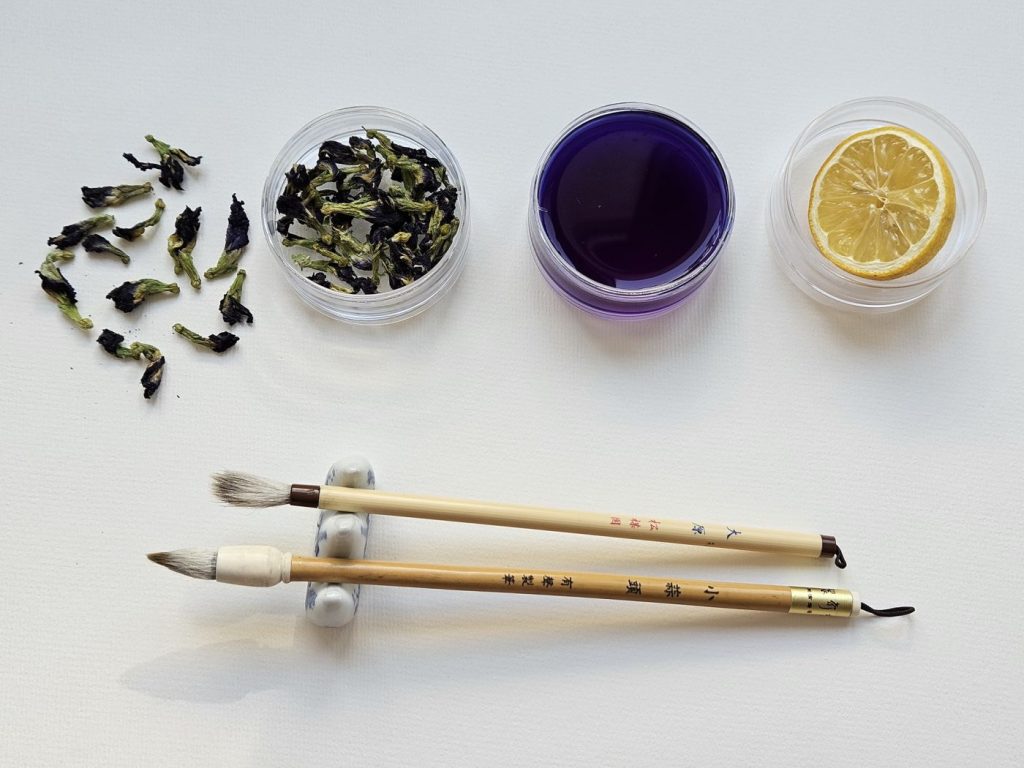
Painting with tea and lemon
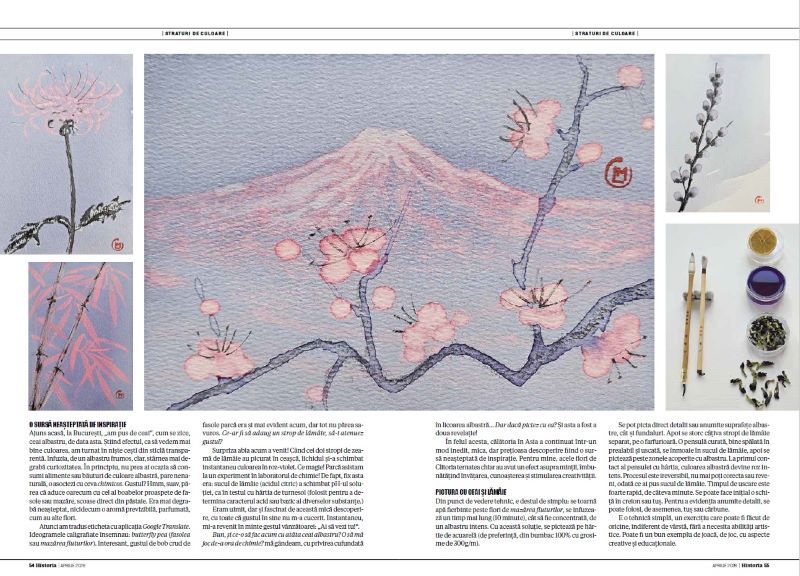
From a technical standpoint, the process is quite simple. Hot water is poured over butterfly pea flowers and allowed to steep for a longer period (about 10 minutes) until a concentrated, intensely blue infusion is obtained. This solution is then used to paint on watercolor paper (preferably 100% cotton, 300 g/m²).
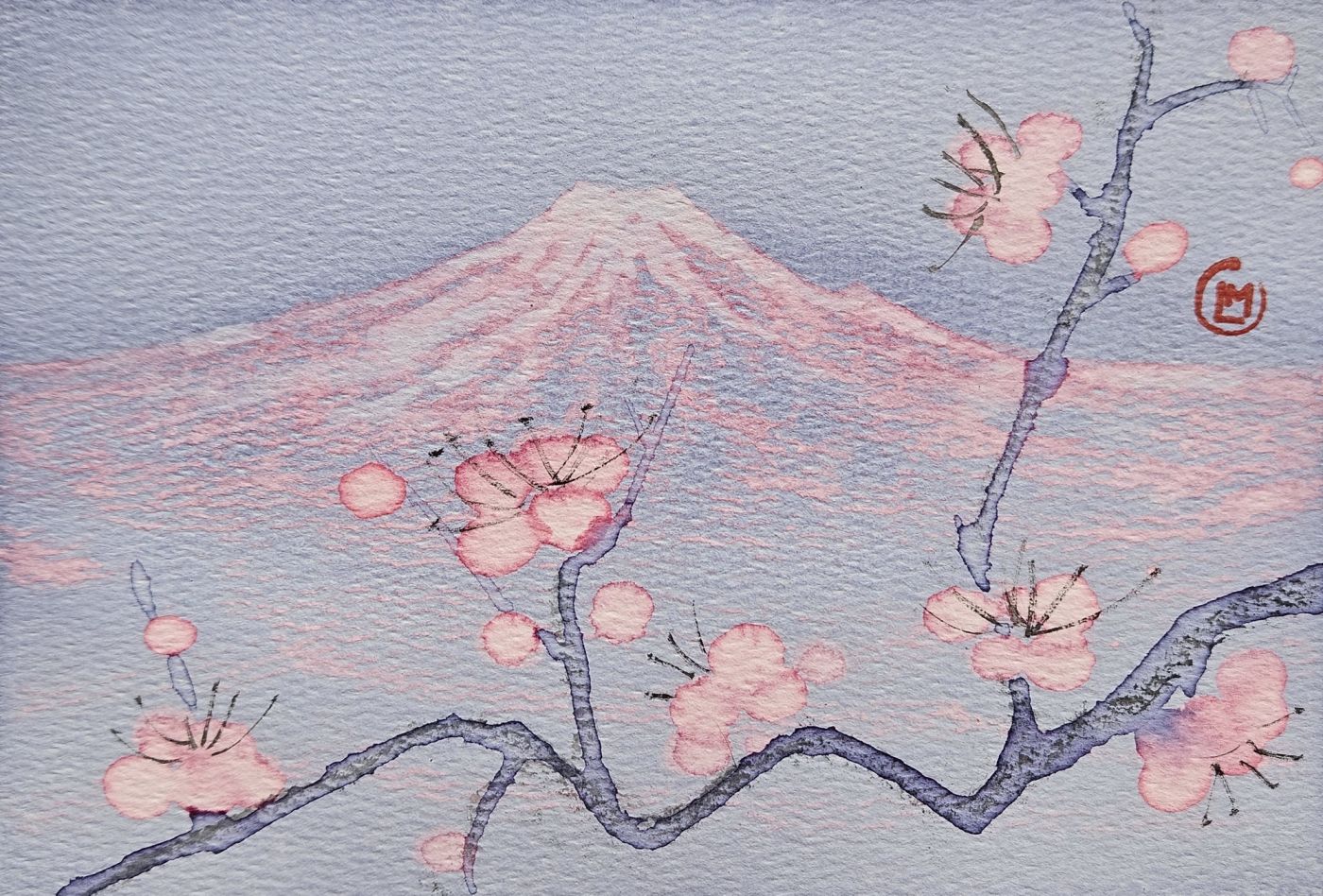
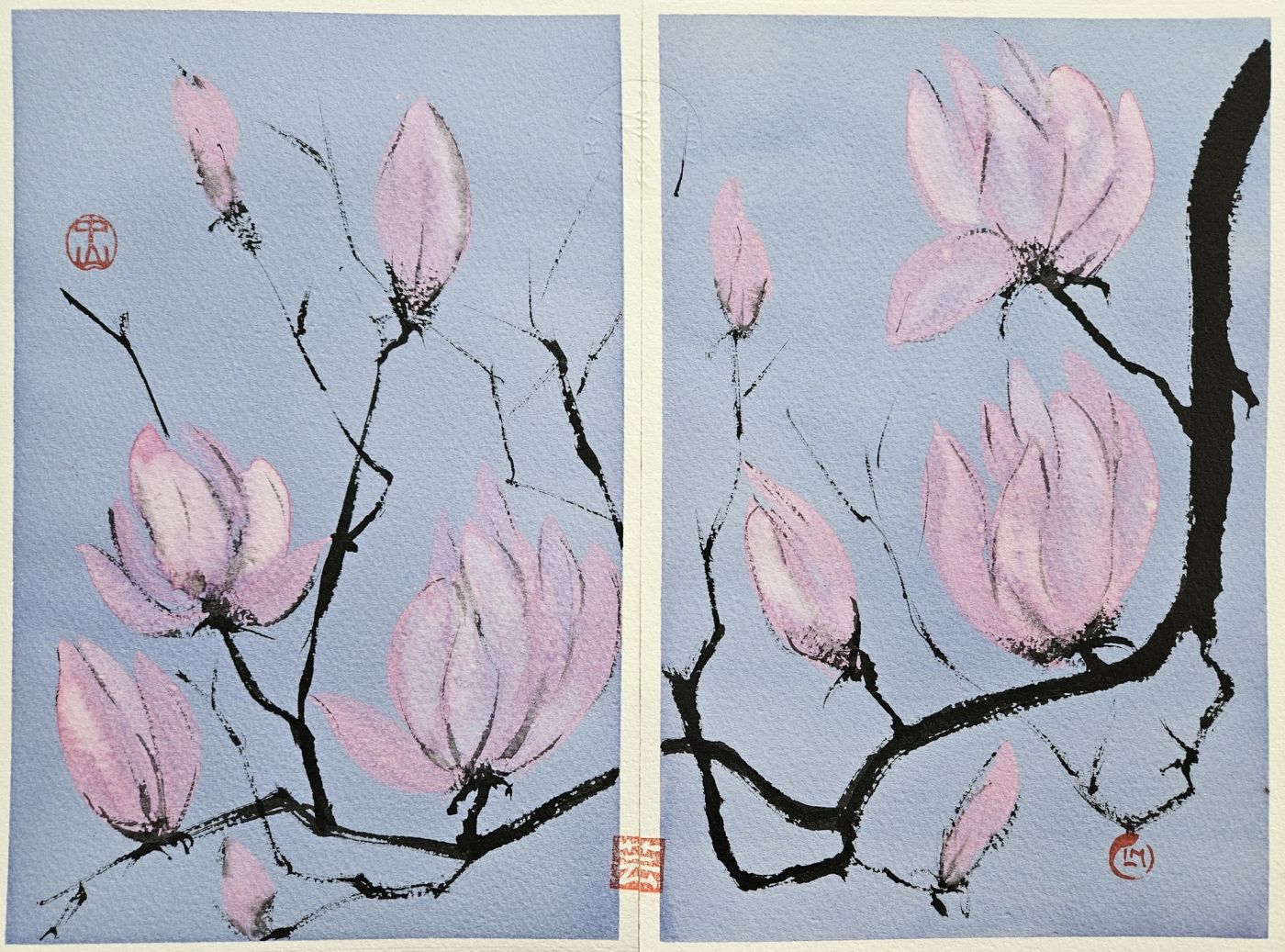
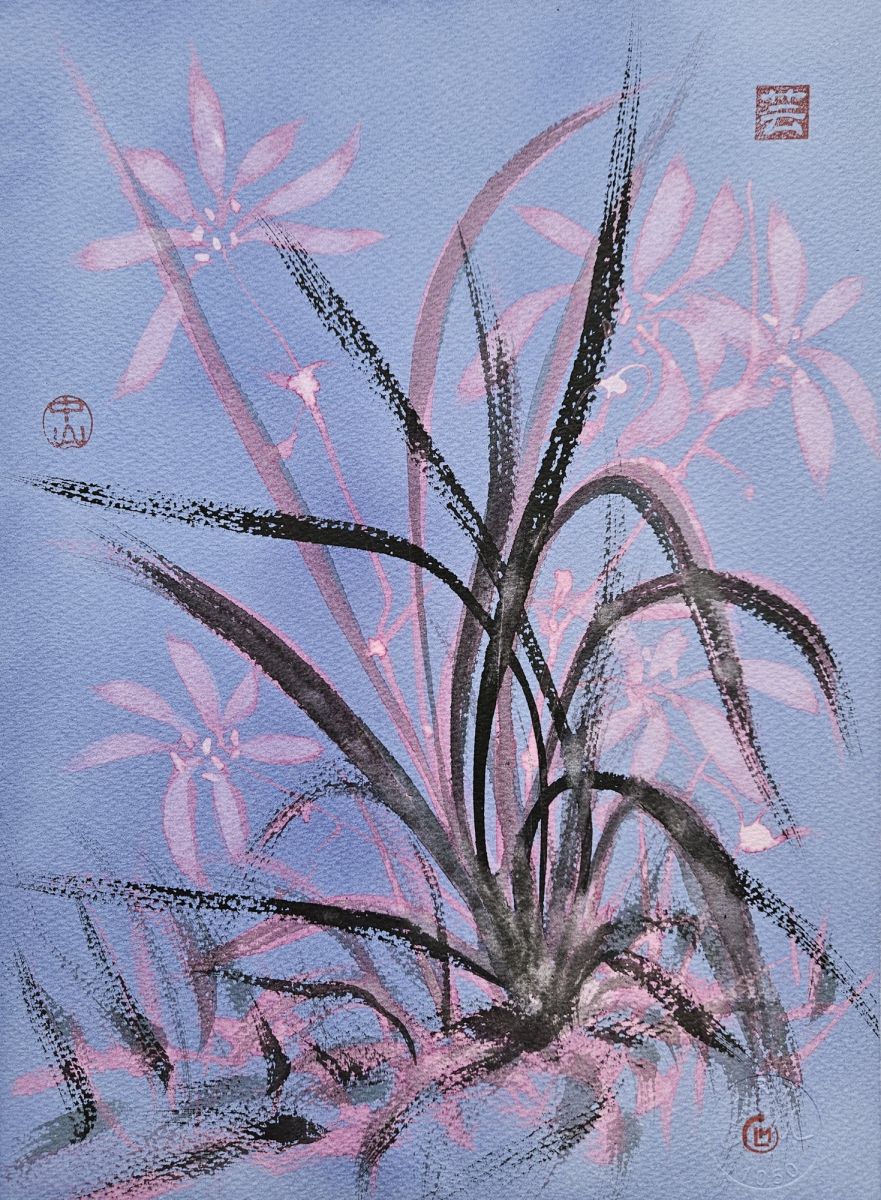
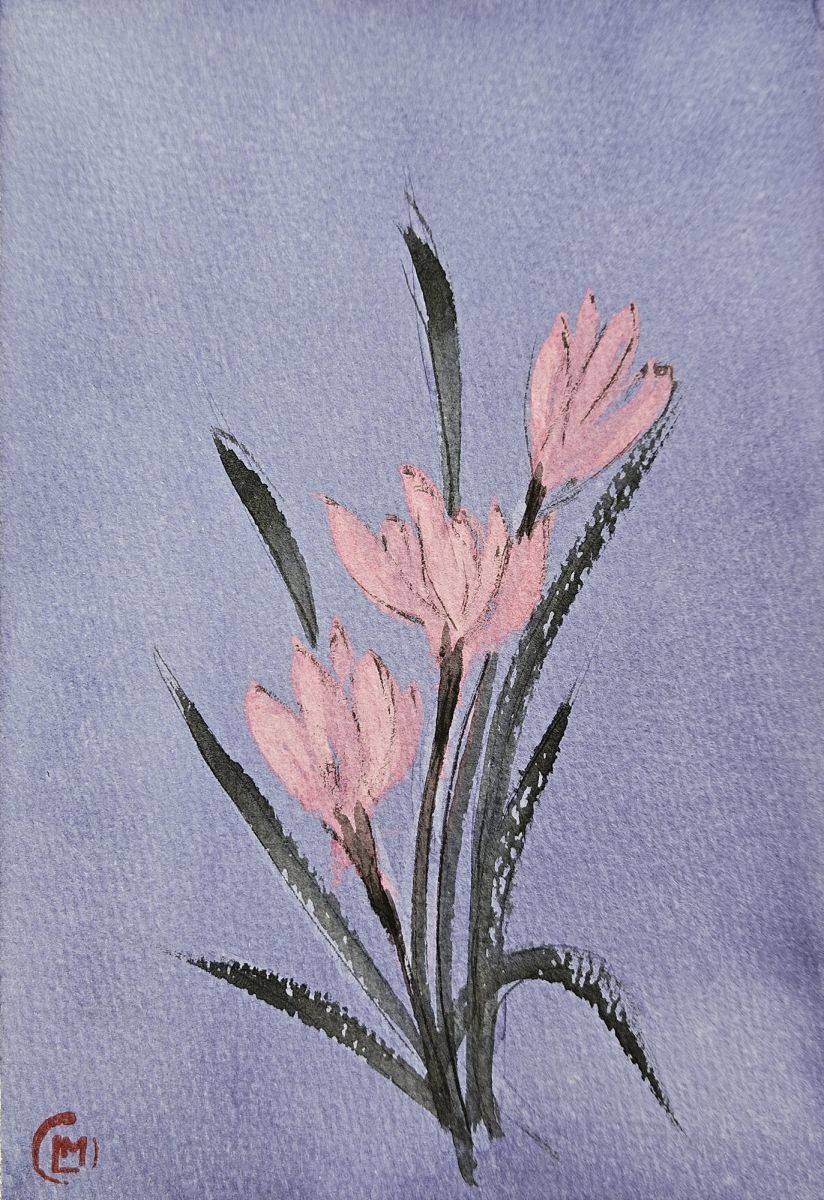
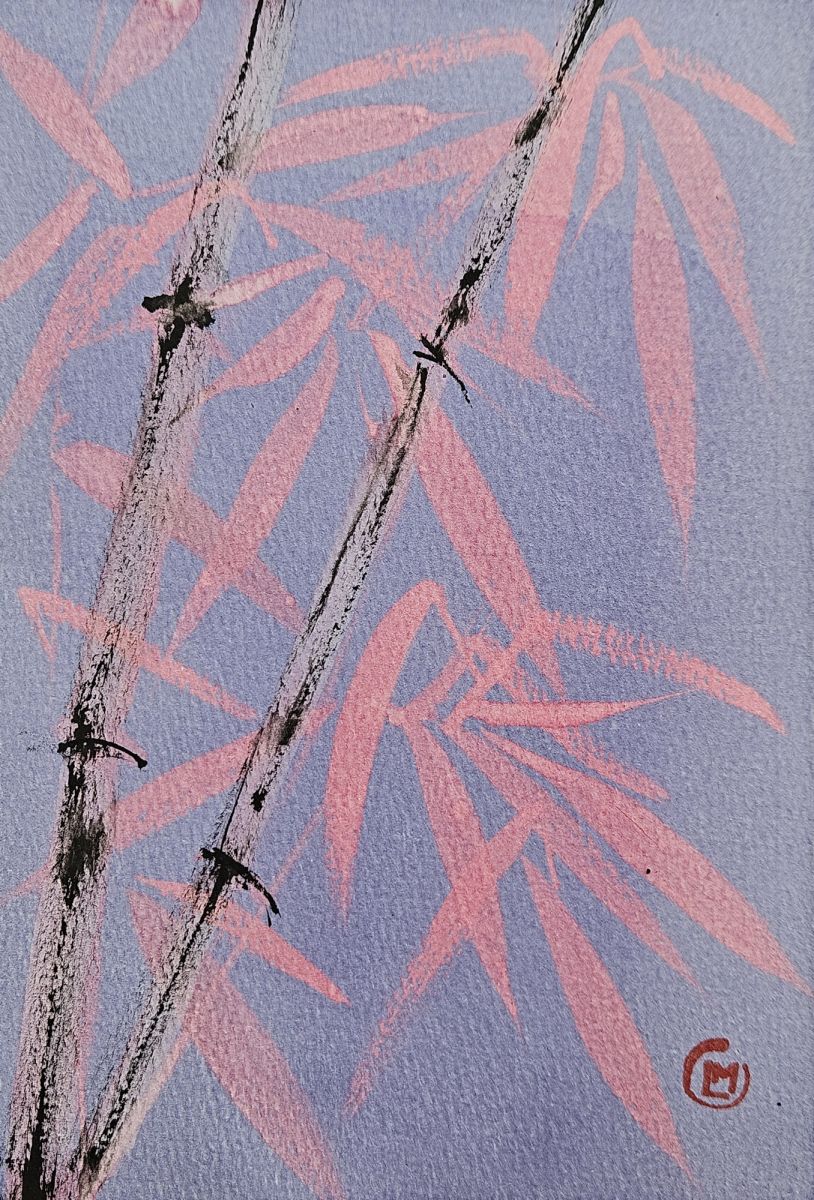
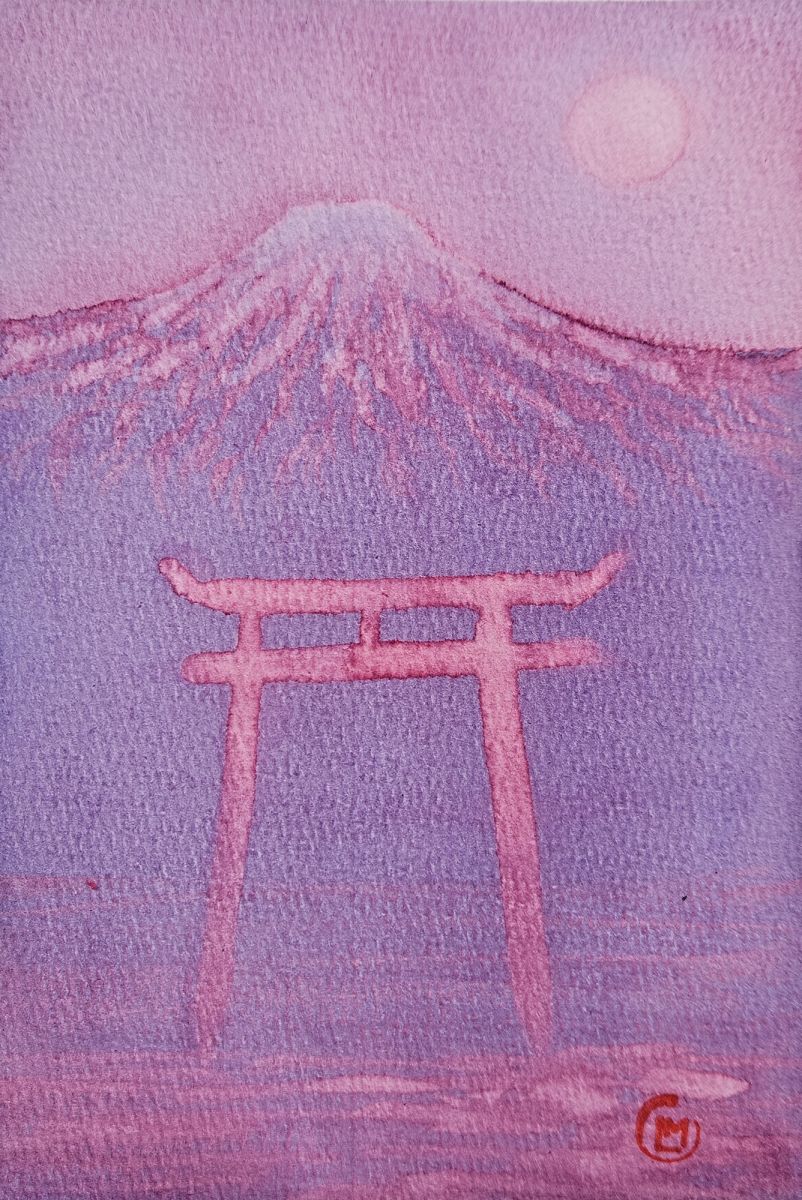
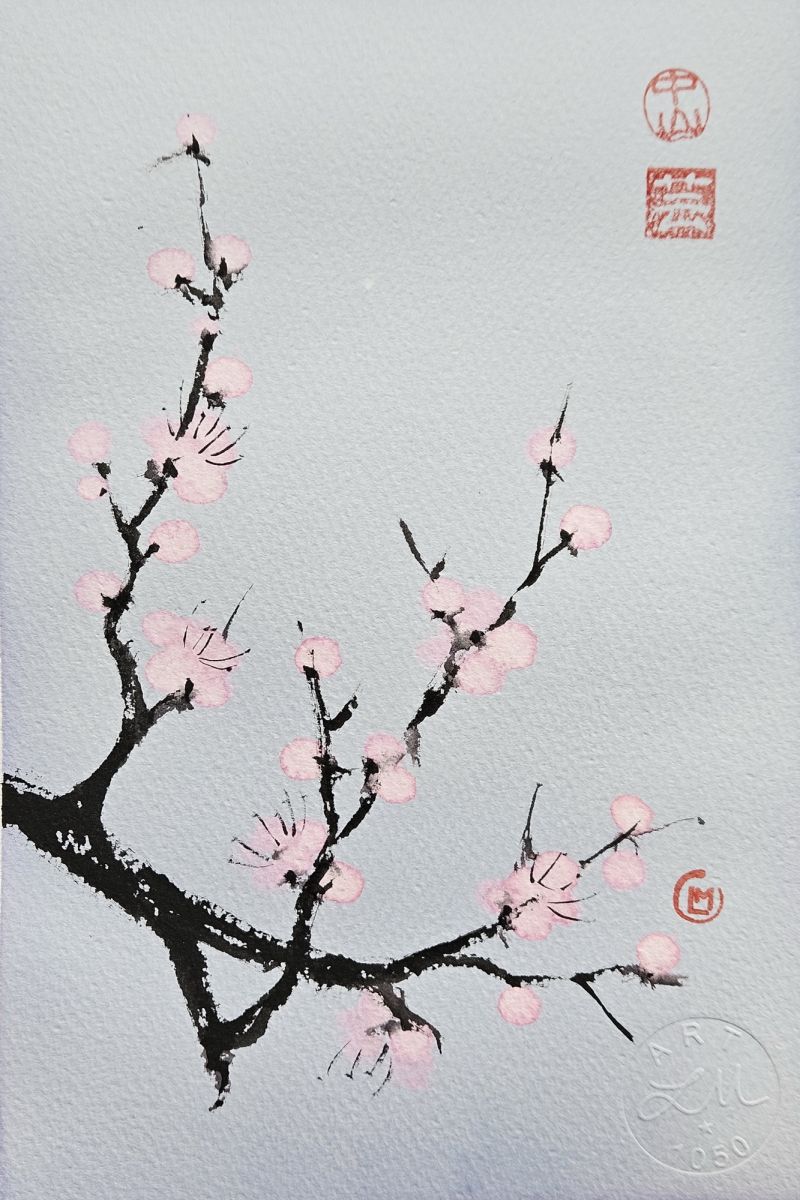
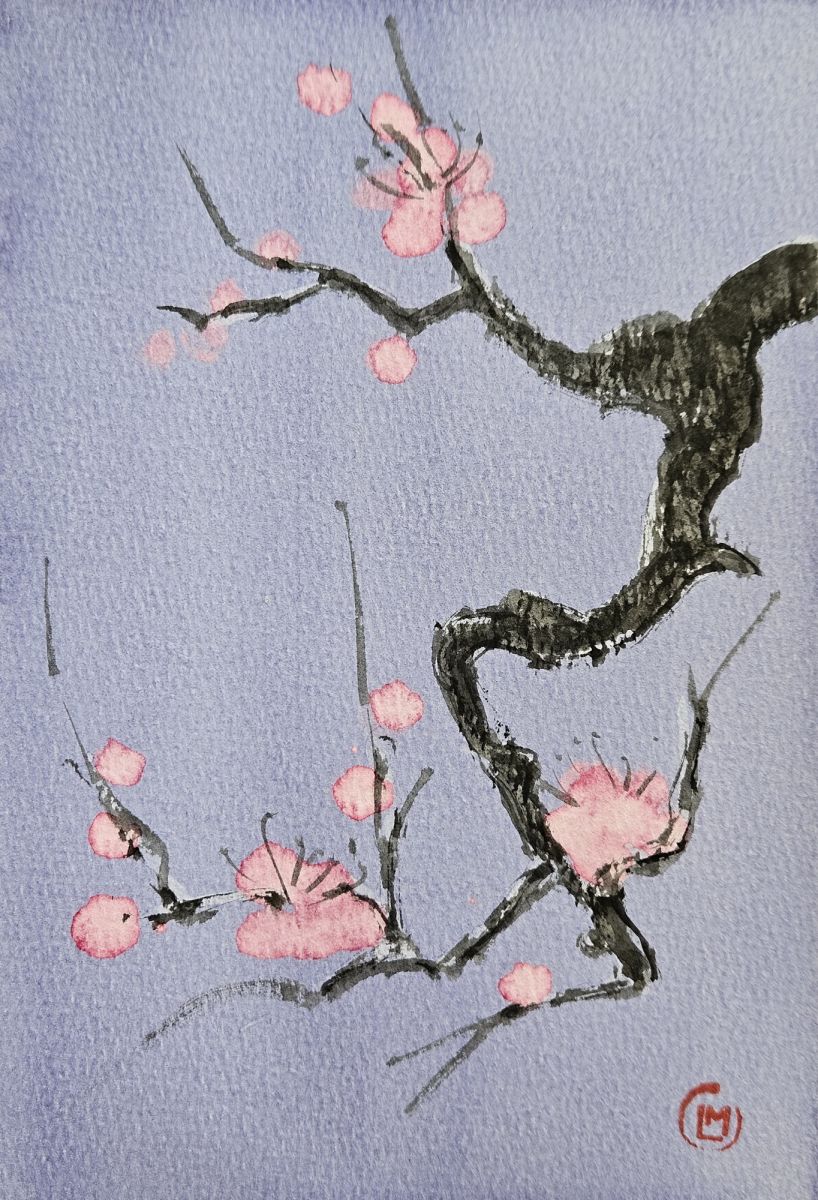
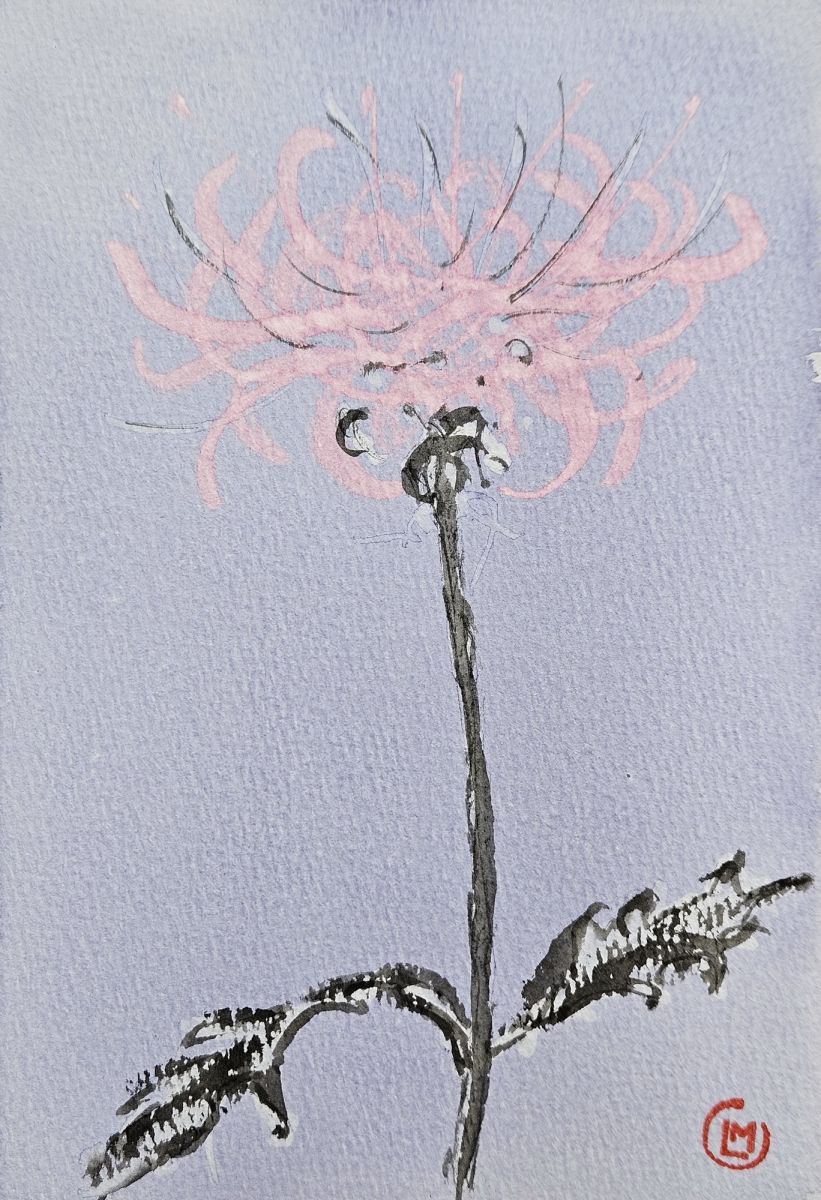
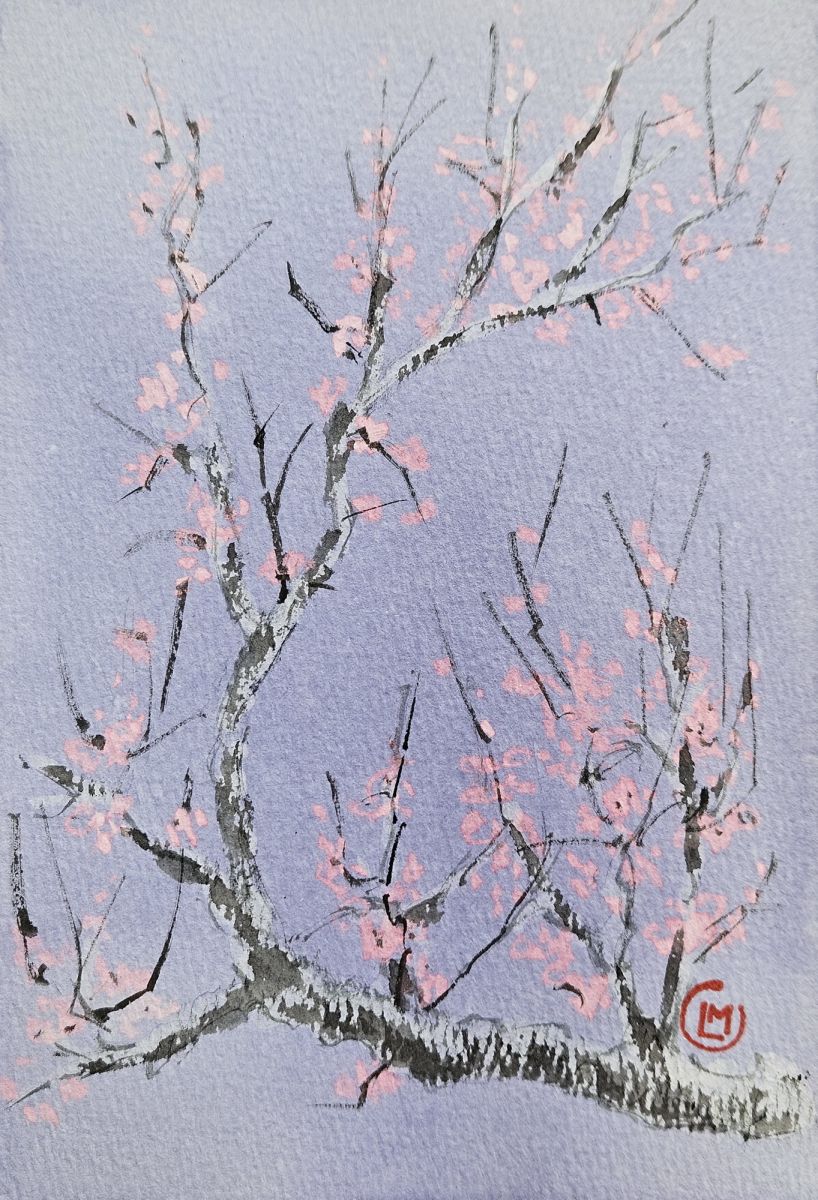
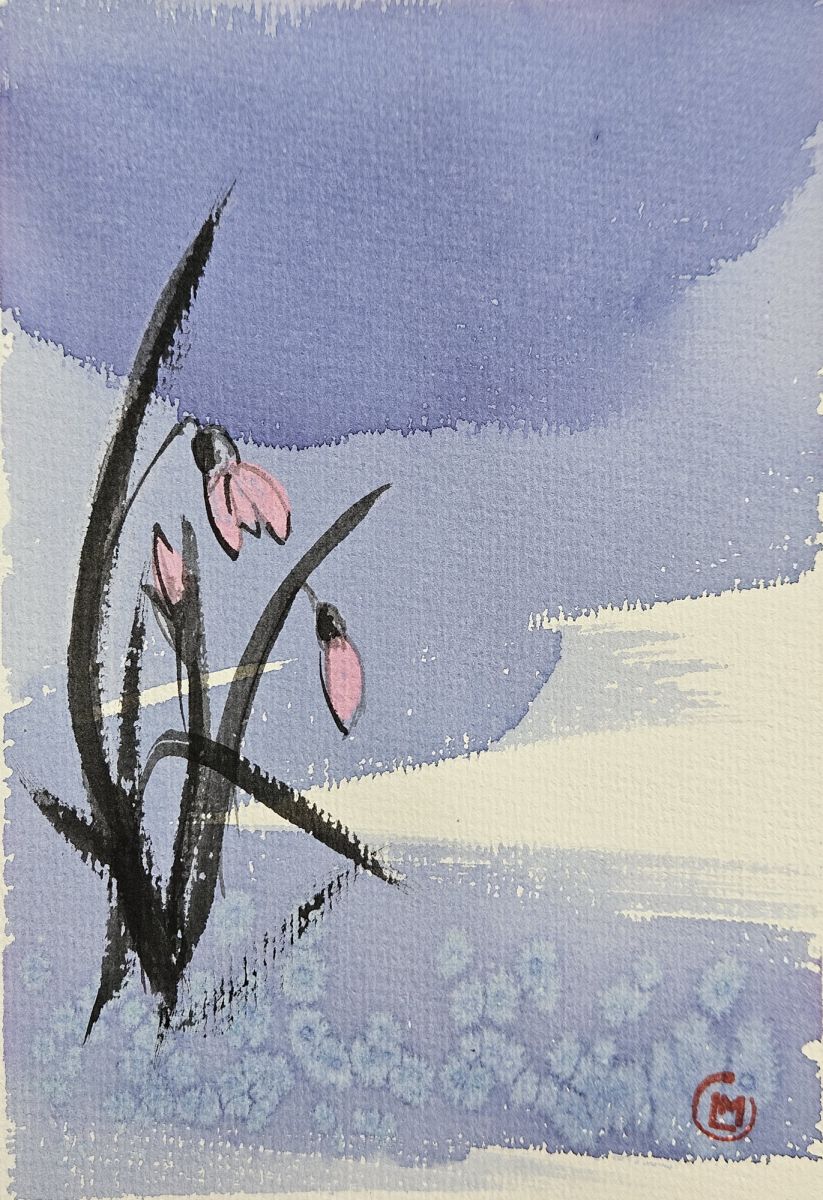
One may paint blue details directly or create entire blue backgrounds. A few drops of lemon juice are squeezed onto a separate plate. A clean, thoroughly washed and dried brush is dipped into the lemon juice and then applied over the blue-painted areas. Upon first contact with the paper, the blue color instantly turns bright pink.
The process is irreversible; once the lemon juice has been applied, the color cannot be restored. Drying time is very short, only a few minutes. An initial sketch may be made in pencil or ink. Ink or charcoal can also be used to emphasize certain details.
It is a simple technique, an exercise that anyone can enjoy regardless of age, requiring no particular artistic skills. It serves as an excellent example of creative and educational play.
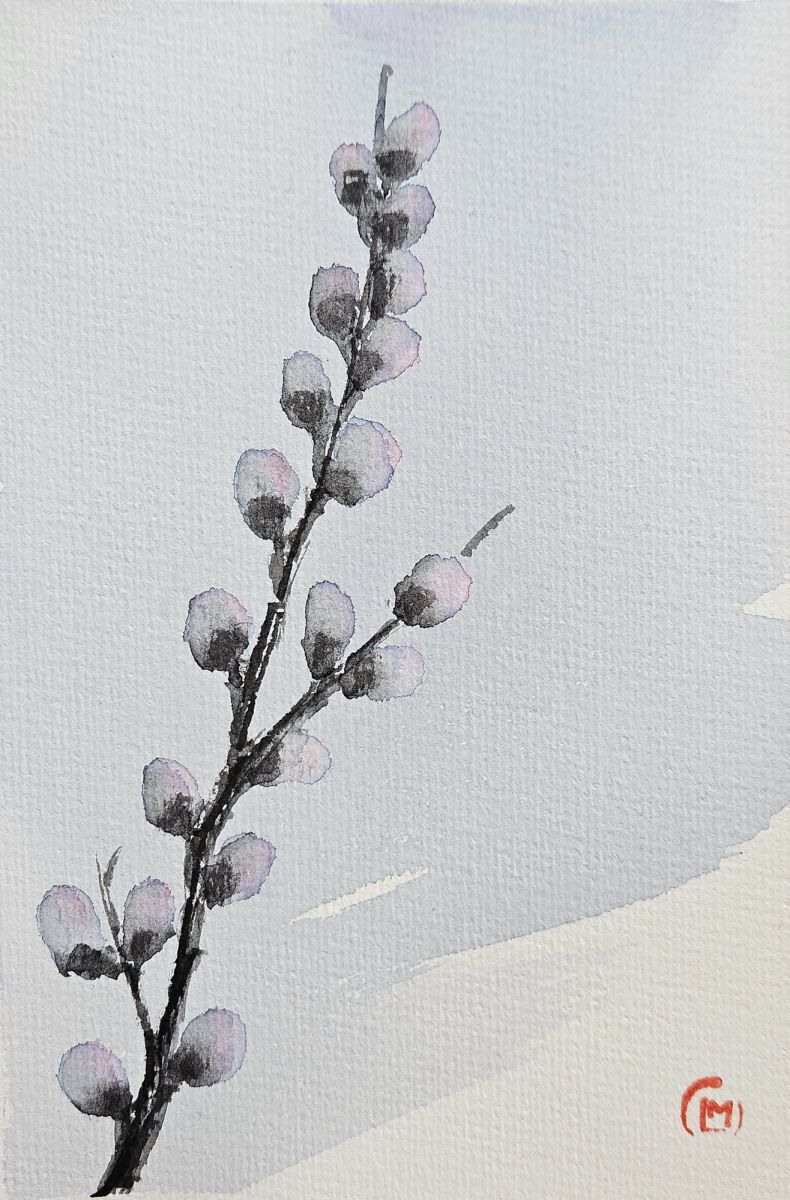
Gallery – painting with tea and lemon – the first test
***
Article published in Historia magazine, April 2026.
***
Experimentul ceaiului albastru
Călătorii cu final neaşteptat: descoperirea ceaiului albastru
În vremurile acestea tulburi, cu războaie în plină desfăşurare, dacă spui că „vezi lucrurile în roz” vei crea impresia că eşti cel puţin inconştient, dacă nu mai rău… Dar dacă o spui la propriu, şi nu la figurat?
Bangkok, Thailanda: o atmosferă însufleţită în primele zile ale lui 2026.
Hotelul nostru era în China Town, pitorescul cartier chinezesc, cu atmosfera sa plină de viaţă. Doar trecând pe stradă aveai parte deja de o experienţă deosebită. Reclamele luminoase semnalau magazine de toate soiurile. Pe trotuare, printre tarabe înşirate, trecători de toate naţiile. Localnici thailandezi şi străini de-a valma. Asiatici, australieni şi diverşi europeni mişunau prin acest furnicar urban, cu un farmec cu totul aparte, culori stridente, arome dense, contrastant şi divers. La fiecare pas dădeai de te miri ce…
Magazine de bijuterii, care etalau ostentativ aurul, învecinate cu magazine care vindeau mii de feluri de şlapi; restaurante ce te ademeneau cu supă din cuib de rândunele, urmate de tarabe ambulante care vindeau banane coapte la grătar, peşti ori fructe de mare. Oferta era atât de variată încât marea problemă era nu că nu găseşti, ci că nu mai ştii ce-ţi doreşti…
Cu această dilemă m-am confruntat, desigur, şi eu. Spectacolul străzii, al pieţelor era atât de fascinant încât te puteai mulţumi doar cu privitul. Erai invadat de imagini contrastante, de miresme şi de fluxul continuu de trecători. Pe alocuri, îmbulzeala crea blocaje, devenind o masă compactă, în care, inevitabil, trupurile trecătorilor se atingeau involuntar. Şi asta, sub soarele torid de la tropice.
În aceste condiţii, deja uşor confuz de atâta hărmălaie, m-am retras într-un magazin care vindea ceaiuri. Şi acesta era uluitor! Era ticsit de marfă! Ceaiuri verzi chinezeşti, ceaiuri albe, ceaiuri fermentate pu-erh, presate sub formă de turtă, de culoare roşiatică, oolong, ceai verde cu iasomie, ceaiuri negre din Sri Lanka sau din India, plus o sumedenie de rădăcini, plante şi flori pentru infuzii. Şi nu erau numai ceaiuri… Pe lângă toate acestea, prezentate în recipiente transparente sau în pungi, tronau cutii de toate dimensiunile. Pe etajere erau sute de ceainice modelate din lut, ori din ceramică şi porţelan sau chiar din fontă; urmau vitrinele cu sute de boluri….
Vai, dar unde am intrat? Ce caut eu aici? Ce pot alege din toate minunăţiile astea? Pentru o clipă, mi-am amintit de colecţia mea de acasă, ceainice şi boluri colecţionate de prin lume, inclusiv create de artişti ceramişti. Că m-am jurat să nu mai cumpăr altele – nu mi-am mai amintit în acea clipă… Eram de-a dreptul vrăjit de oferta magazinului! Dar cum eram în trecere, nu prea aveam timp de zăbovit, ori mă târguiam, ori plecam. Eu întrebam în engleză, iar vânzătoarea, zâmbitoare, îmi răspundea în chineză… Ne-am înţeles din priviri şi prin gesturi. Am ales un sortiment de ceai pu-erh, mai greu de găsit pe la noi şi apoi am întrebat de nişte plante locale, „flori de ceai” de-ale lor.
Instinctiv, vânzătoarea mi-a arătat spre stânga zecile de sortimente din cutii. Eu am gesticulat, sugerând că vreau unul, să-mi recomande ceva. A înţeles şi mi-a deschis o cutie în care erau nişte flori uscate, albastre. Eticheta era caligrafiată în chineză. S-a oferit să-mi dea să degust puţin. De cum a turnat apă fierbinte pe acele petale, instant, infuzia s-a colorat în albastru; iniţial ca spirtul, apoi a devenit intens precum cerneala. Chinezoaica a gesticulat cu mâna la ochi, ceea ce abia mai târziu am interpretat că era un fel de: „Ai să vezi tu!”…
Fasolea fluturilor
Clitoria ternatea – cunoscută sub numele comun de mazărea fluturilor, fasolea fluturilor (butterfly pea în engleză) – este o specie de plantă erbacee perenă, din familia leguminoaselor, ce creşte sub formă de liană. Frunzele au formă eliptică, iar florile sunt de culoare albastru intens, cu dimensiune între 3-4 cm. Fructele se formează într-o păstaie plată, cu lungimea de 5-7 cm, conţinând fiecare câte 6-10 seminţe. Seminţele sunt comestibile în stare proaspătă (fragedă).
În Asia de Sud-Est (Indonezia, Malaysia, Thailanda, Myanmar), florile sunt utilizate ca şi colorant natural în alimentaţie. Intră în reţete la gătirea orezului, dar şi în compoziţia aluatului de prăjituri. Petalele sunt folosite la prepararea unei infuzii (ceai albastru) bogate în antioxidanţi, cu proprietăţi relaxante, recomandate pentru îmbunătăţirea memoriei, ca tratament pentru fertilitate sau ca afrodisiac. În medicina ayurvedică, planta e cunoscută pentru proprietăţile sale, fiind folosită ca remediu de secole.
Această specie se întâlneşte în Asia de Sud şi de Sud-Est, dar a fost introdusă ca plantă cultivată şi în Africa, Australia şi America.
O sursă neaşteptată de inspiraţie
Ajuns acasă, la Bucureşti, „am pus de ceai”, cum se zice, ceai albastru de data asta. Ştiind efectul, ca să vedem mai bine culoarea, am turnat în nişte ceşti din sticlă transparentă. Infuzia, de un albastru frumos, clar, stârnea mai degrabă curiozitatea. În principiu, nu prea ai ocazia să consumi alimente sau băuturi de culoare albastră, pare nenaturală, o asociezi cu ceva chimicos. Gustul? Hmm, suav, părea că aduce oarecum cu cel al boabelor proaspete de fasole sau mazăre, scoase direct din păstaie. Era mai degrabă neaşteptat, nicidecum o aromă previzibilă, parfumată, cum au alte flori.
Atunci am tradus eticheta cu aplicaţia Google Translate. Ideogramele caligrafiate însemnau: butterfly pea (fasolea sau mazărea fluturilor). Interesant, gustul de bob crud de fasole parcă era şi mai evident acum, dar tot nu părea savuros. Ce-ar fi să adaug un strop de lămâie, să-i atenuez gustul?
Surpriza abia acum a venit! Când cei doi stropi de zeamă de lămâie au picurat în ceaşcă, lichidul şi-a schimbat instantaneu culoarea în roz-violet. Ce magie! Parcă asistam la un experiment în laboratorul de chimie! De fapt, fix asta era: sucul de lămâie (acidul citric) a schimbat ph-ul soluţiei, ca şi în testul cu hârtia de turnesol (folosit pentru a determina caracterul acid sau bazic al diverselor substanţe.)
Eram uimit dar şi fascinat de această mică descoperire, cu toate că gustul în sine nu m-a cucerit. Instant mi-a revenit în minte gestul vânzătoarei: „Ai să vezi tu!”
Bun, şi ce-o să fac acum cu atâta ceai albastru? O să mă joc de-a ora de chimie?, mă gândeam, cu privirea cufundată în licoarea albastră… Dar dacă pictez cu ea? Şi asta a fost a doua revelaţie!
În felul acesta, călătoria în Asia a continuat într-un mod inedit, mica, dar preţioasa descoperire fiind o sursă neaşteptată de inspiraţie. Pentru mine, acele flori de Clitorea ternatea chiar au avut un efect asupra minţii, îmbunătăţind învăţarea, cunoaşterea şi stimularea creativităţii.
Pictura cu ceai şi lămâie
Din punct de vedere tehnic, e destul de simplu: se toarnă apă fierbinte peste flori de mazărea fluturilor, se infuzează un timp mai lung (10 minute), cât să fie concentrată, de un albastru intens. Cu această soluţie se pictează pe hârtie de acuarelă (de preferinţă din bumbac 100% cu grosime de 300g/m).
Se pot picta direct detalii sau anumite suprafeţe albastre, cât şi fundaluri. Apoi se storc câţiva stropi de lămâie separat, pe o farfurioară. O pensulă curată, bine spălată în prealabil şi uscată, se înmoaie în sucul de lămâie, apoi se pictează peste zonele acoperite cu albastru. La primul contact al pensulei cu hârtia, culoarea albastră devine roz intens. Procesul este ireversibil, nu mai poţi corecta sau reveni odată ce ai pus sucul de lămâie. Timpul de uscare este foarte rapid, de câteva minute. Se poate face iniţial o schiţă în creion sau tuş. Pentru a evidenţia anumite detalii se poate folosi de asemenea tuş sau cărbune.
E o tehnică simplă, un exerciţiu care poate fi făcut de oricine, indiferent de vârstă, fără a necesita abilităţi artistice. Poate fi un bun exemplu de joacă, de joc, cu aspecte creative şi educaţionale.
Articol publicat în revista Historia, aprilie 2026.