
Fire has shaped the Earth throughout history. Volcanic eruptions, in particular, have had the greatest impact. Fires have occurred in many places and have been caused by natural phenomena such as volcanic eruptions, lightning during storms, or spontaneously ignited wildfires, for example through the focusing of sunlight by a drop of dew. Of course, humans have also caused numerous fires, either intentionally or through negligence.
Today, with global warming and climate change facilitating extreme phenomena such as prolonged droughts and periods of excessive heat, wildfires are devastating many regions across the globe. These fires leave behind massive destruction, profoundly affecting ecosystems over areas of thousands of hectares. They claim victims among wildlife as well as humans, while material losses in the affected regions are enormous. In recent years, we have witnessed such catastrophes in Australia, Greece, Turkey, and more recently in Spain, France, and Canada. The large amounts of smoke and CO₂ released into the atmosphere further intensify the greenhouse effect.
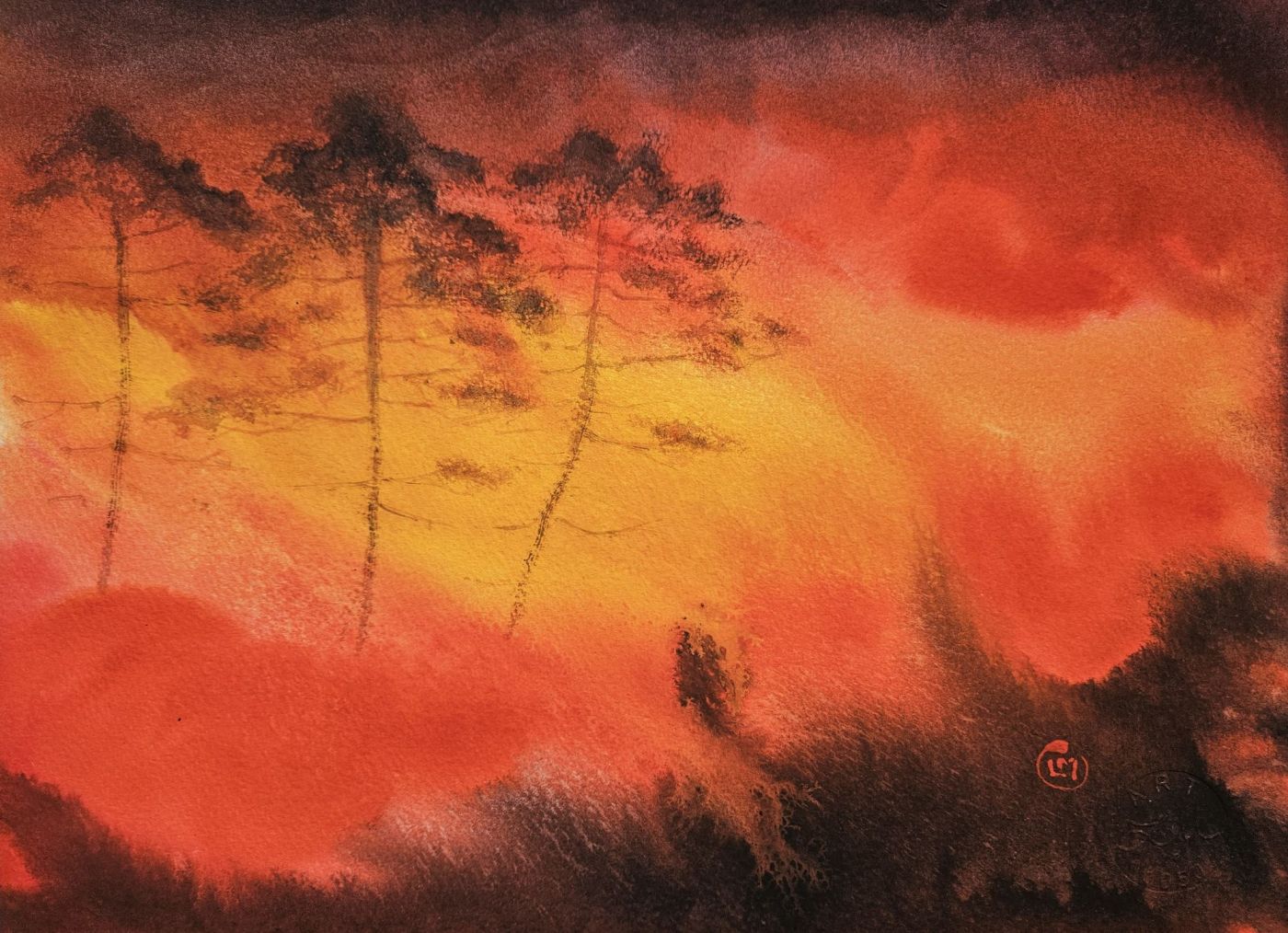
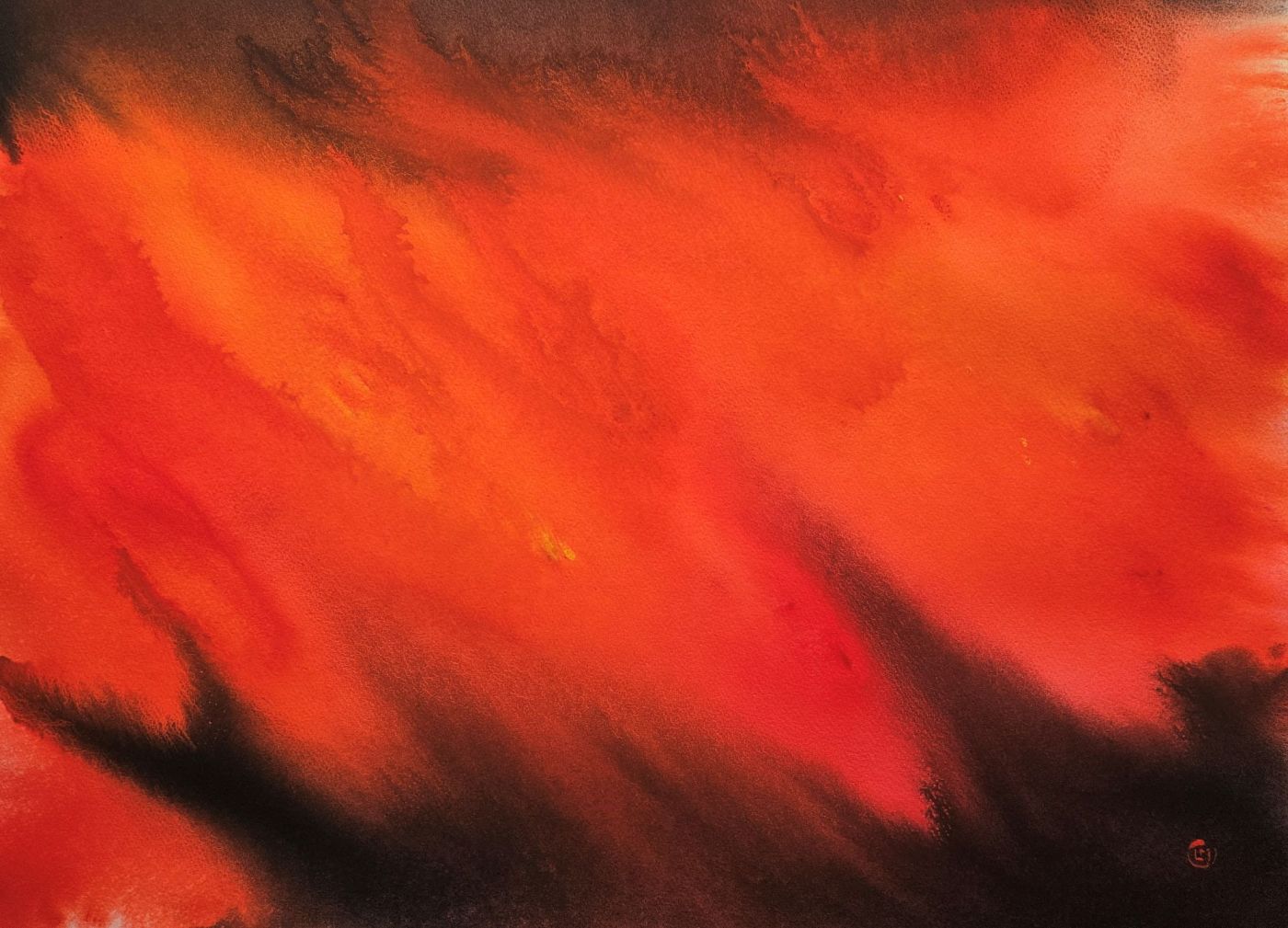
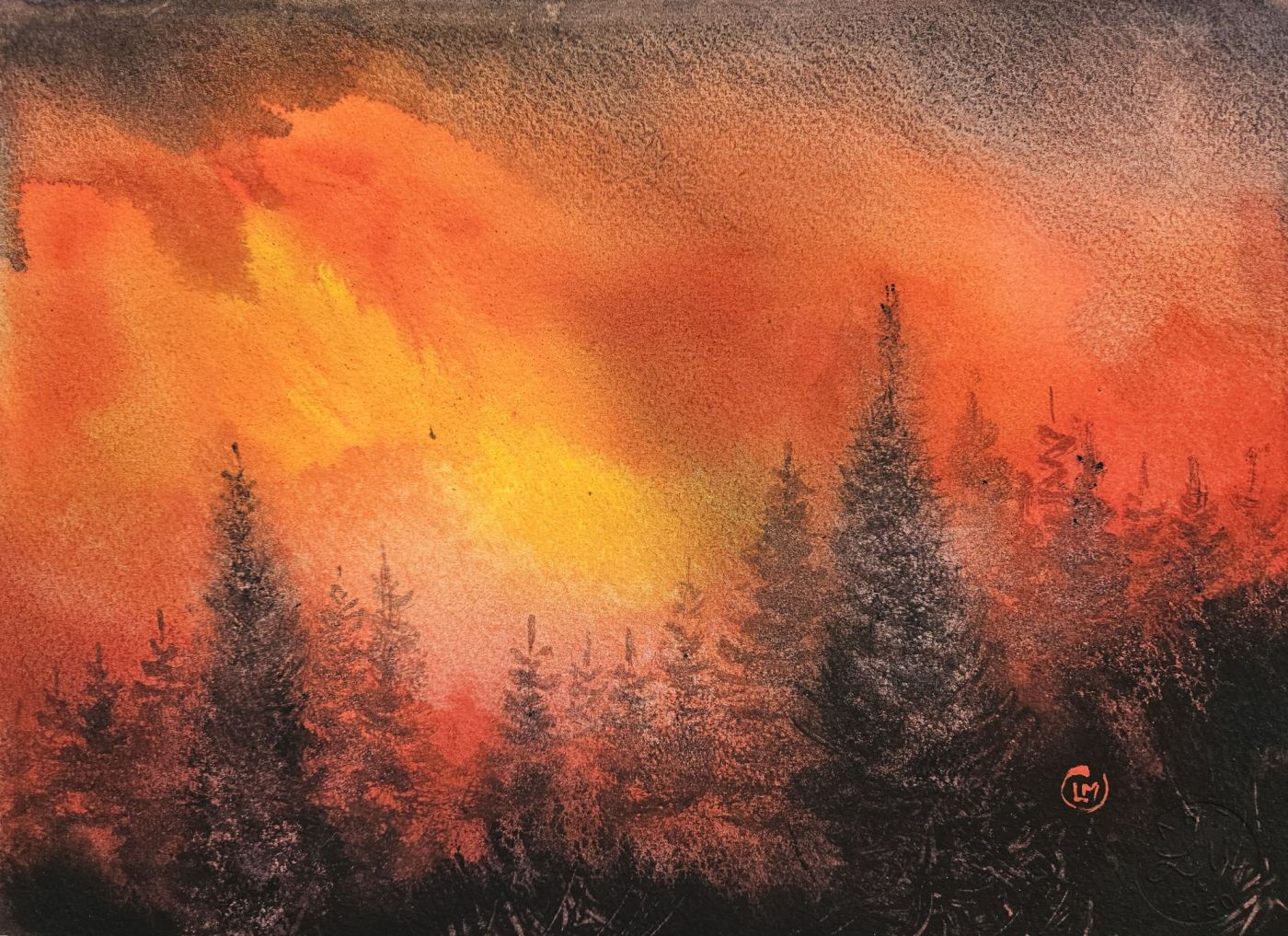
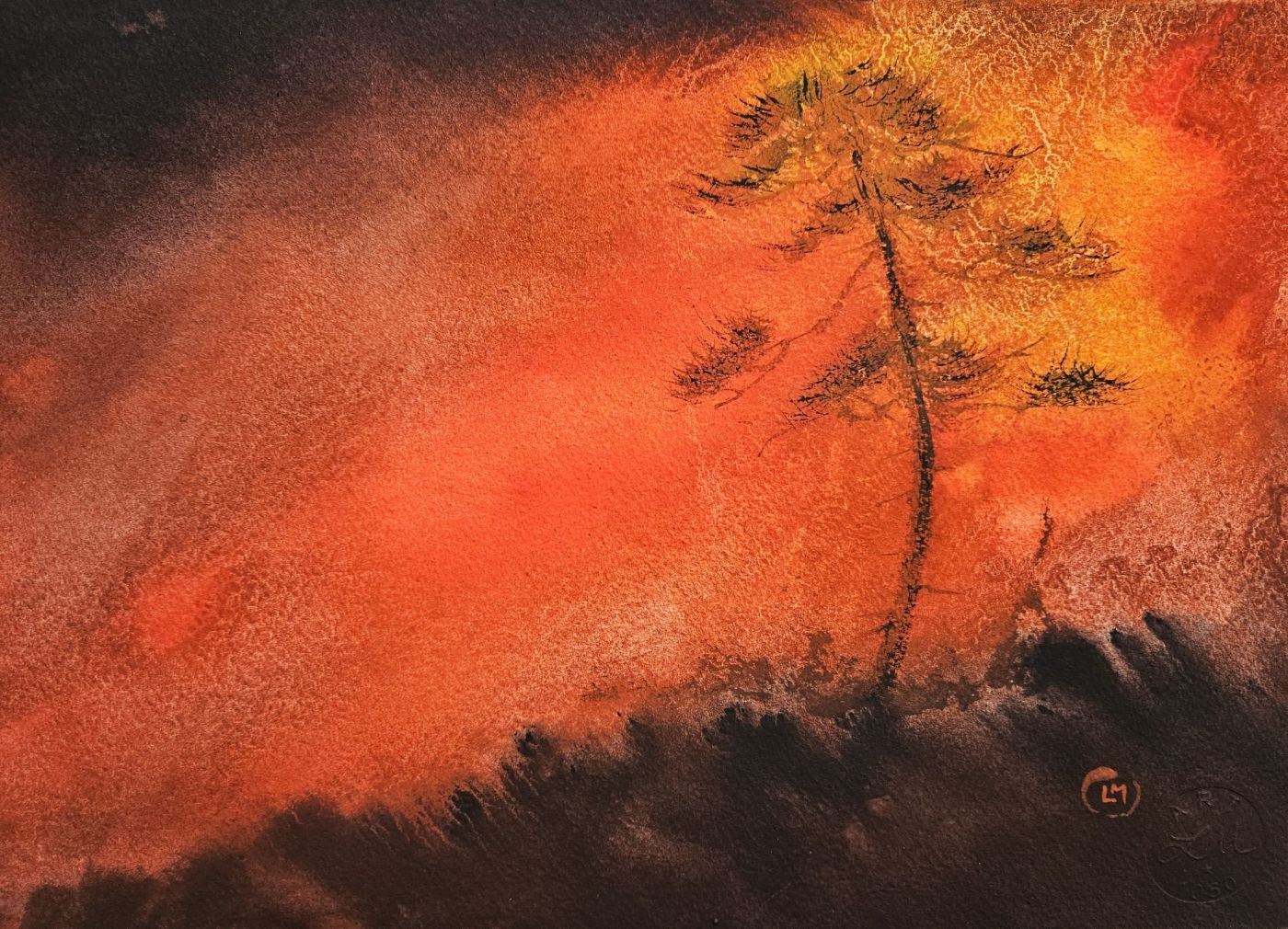
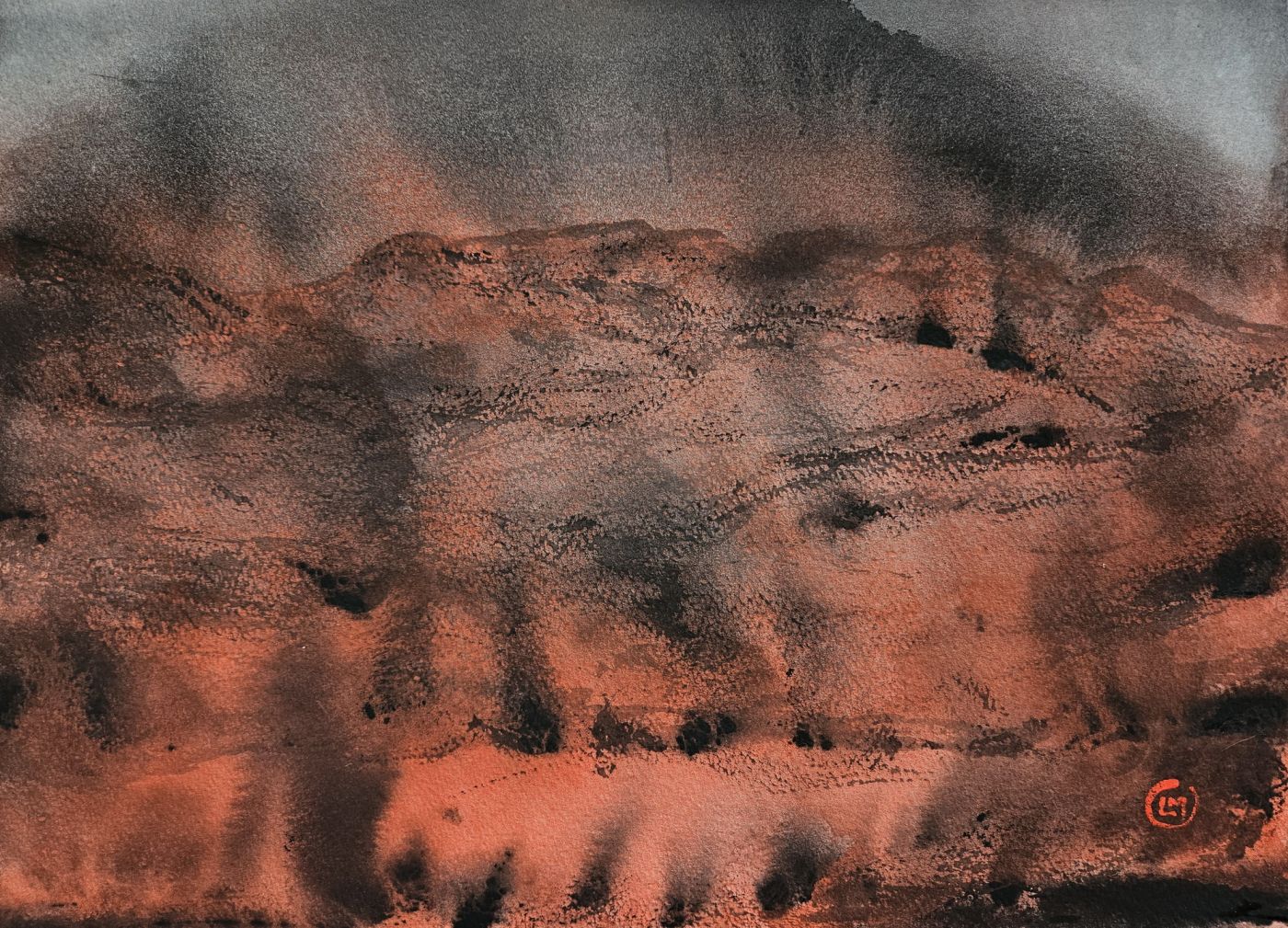
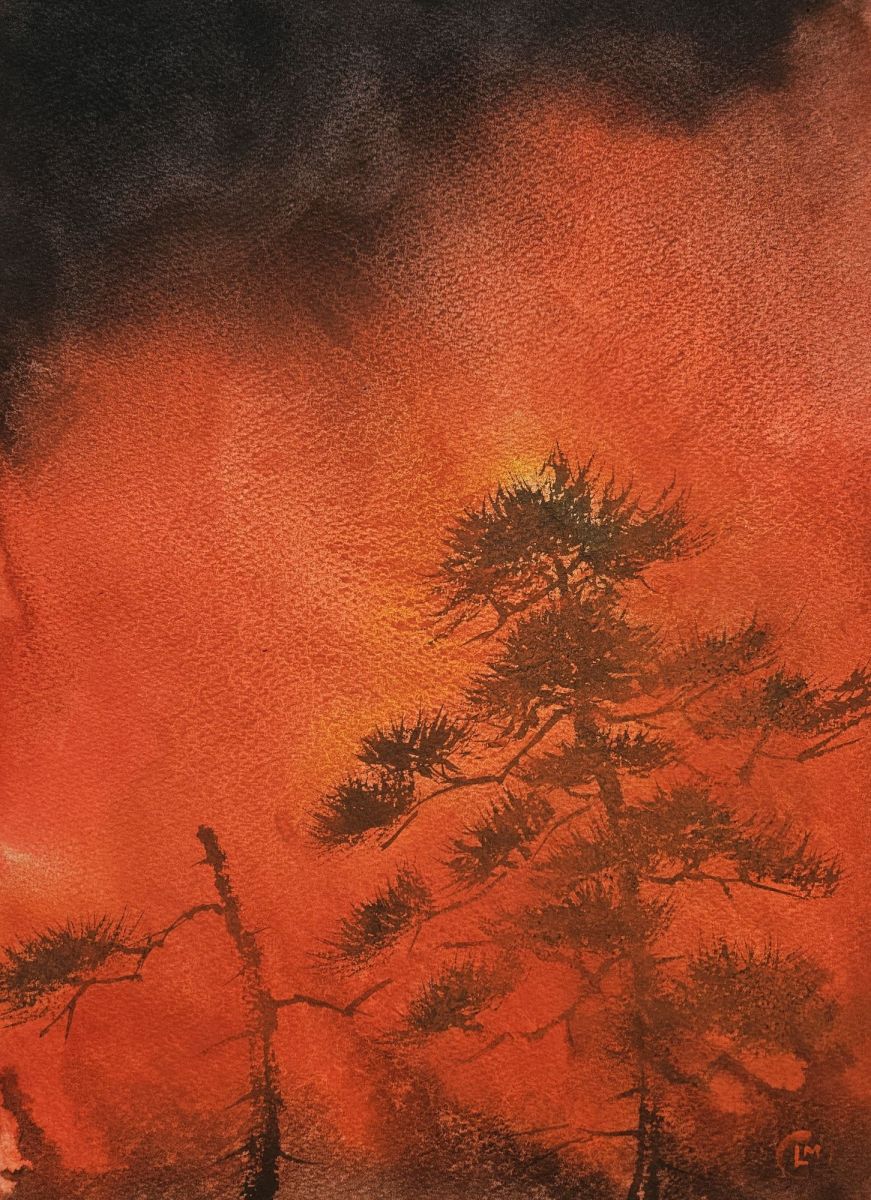
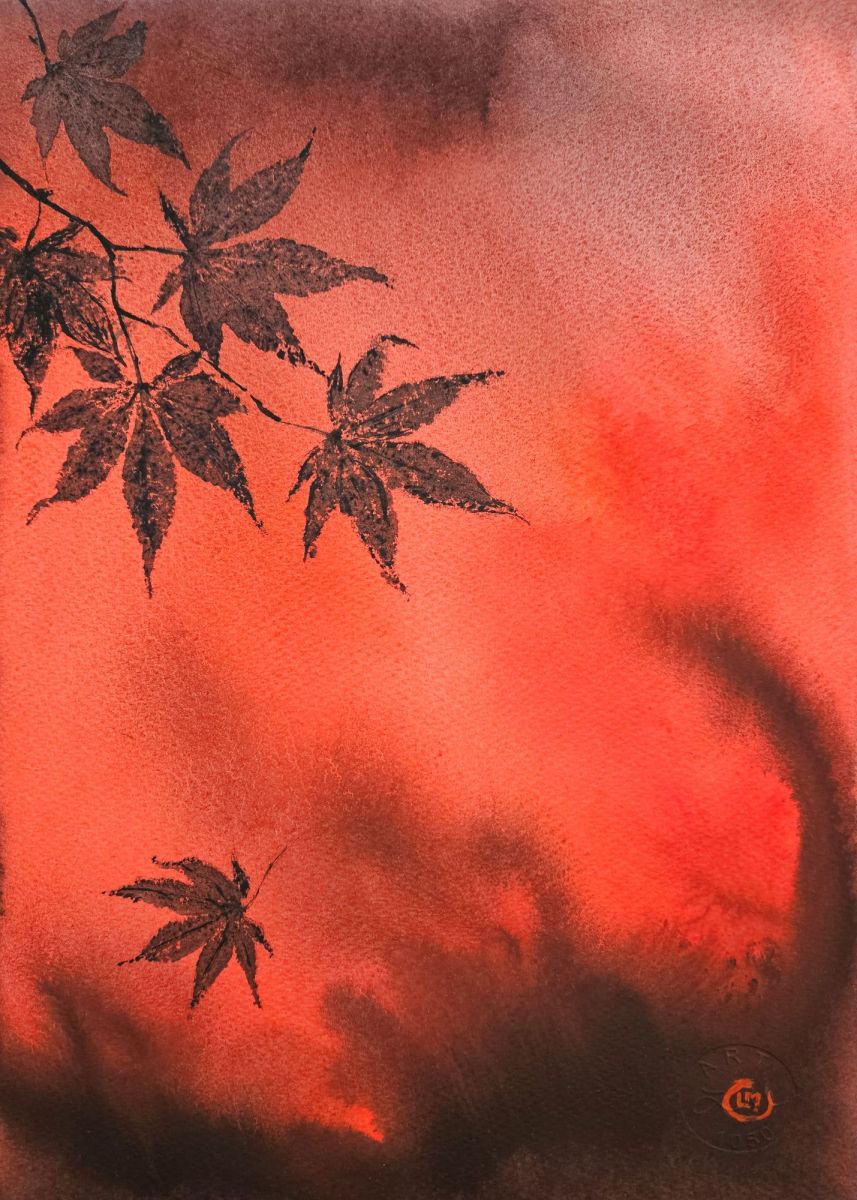
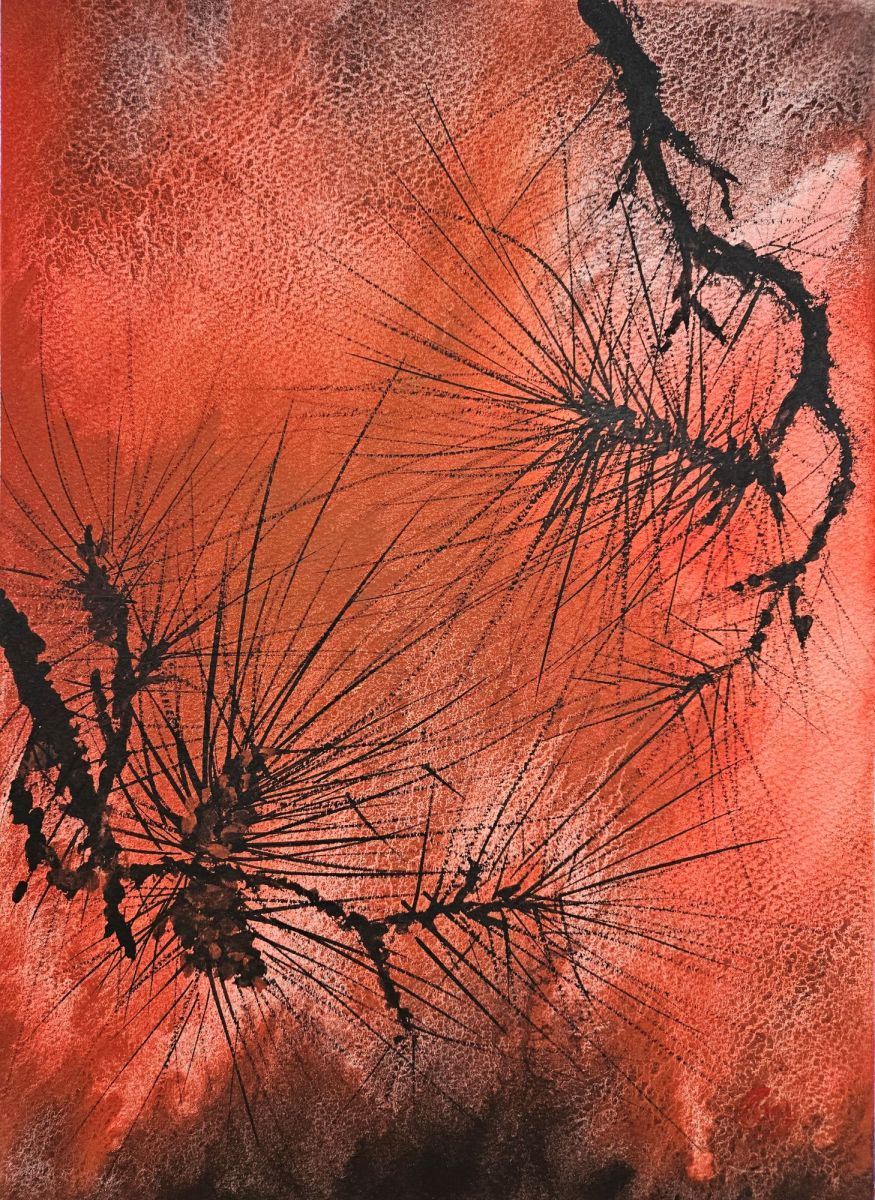
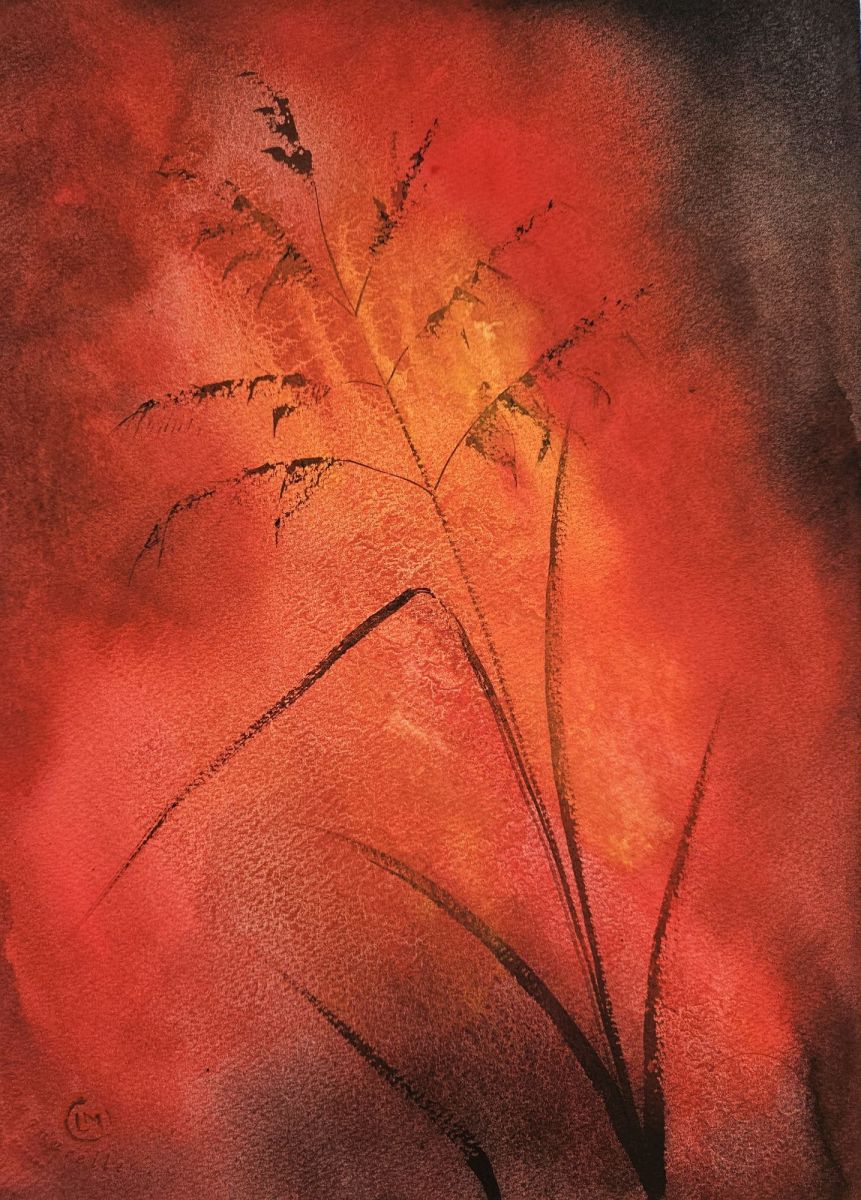
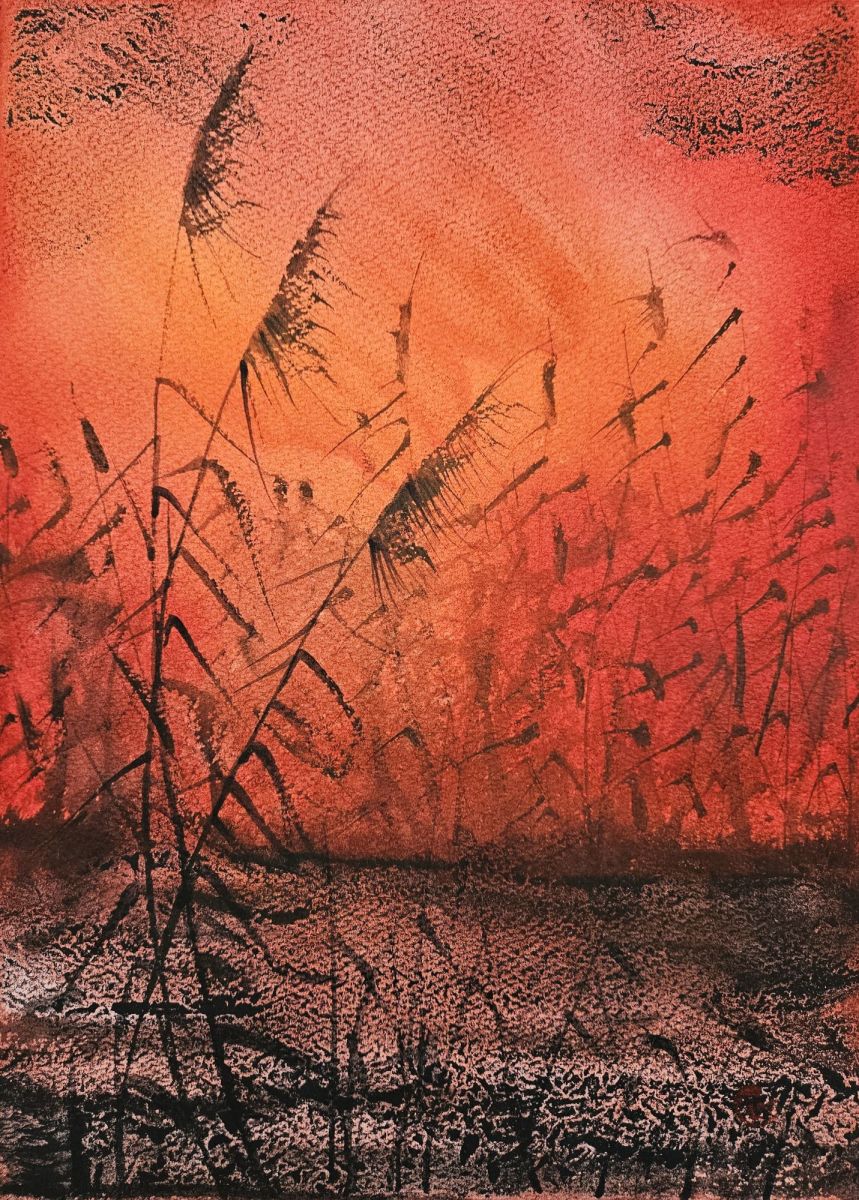
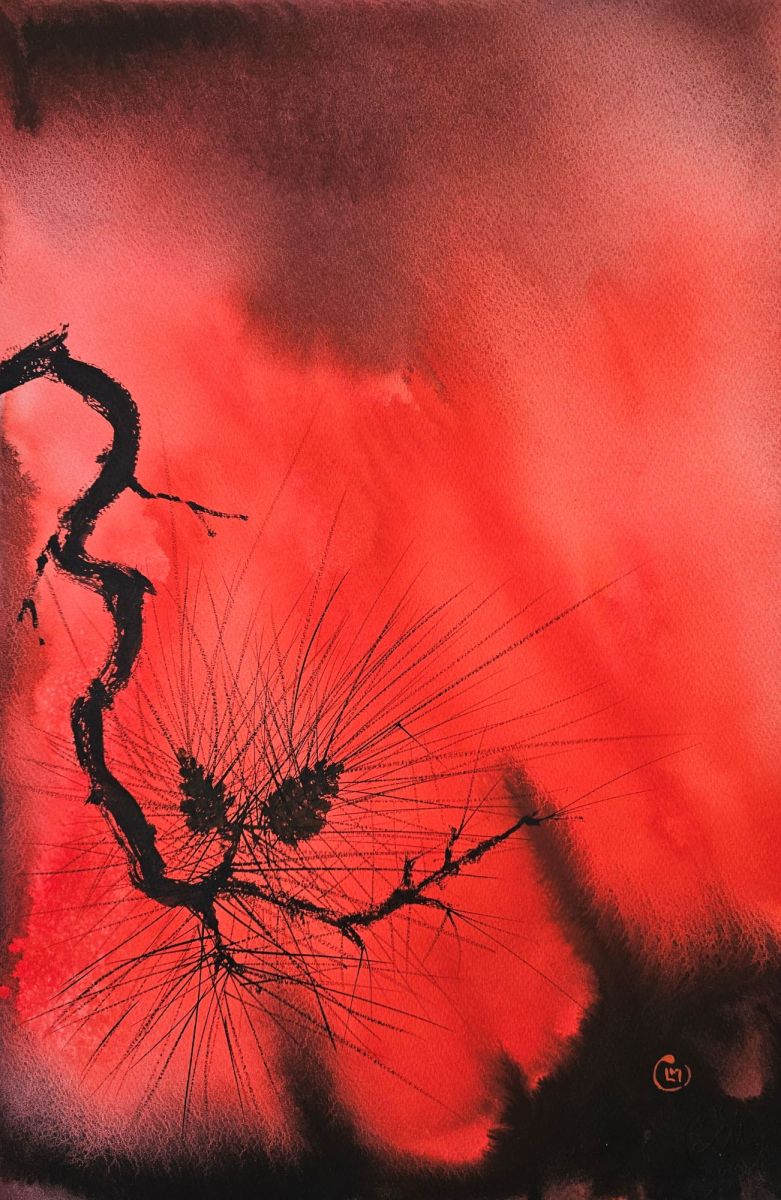
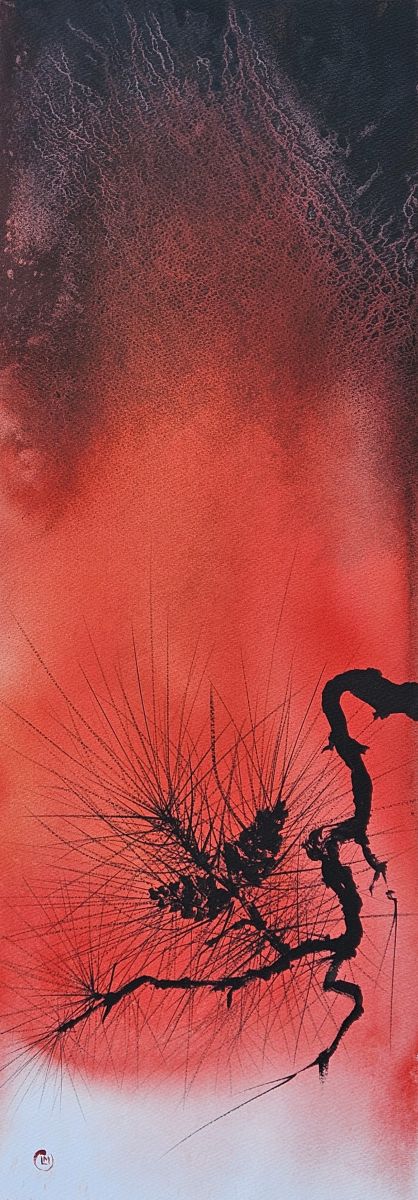
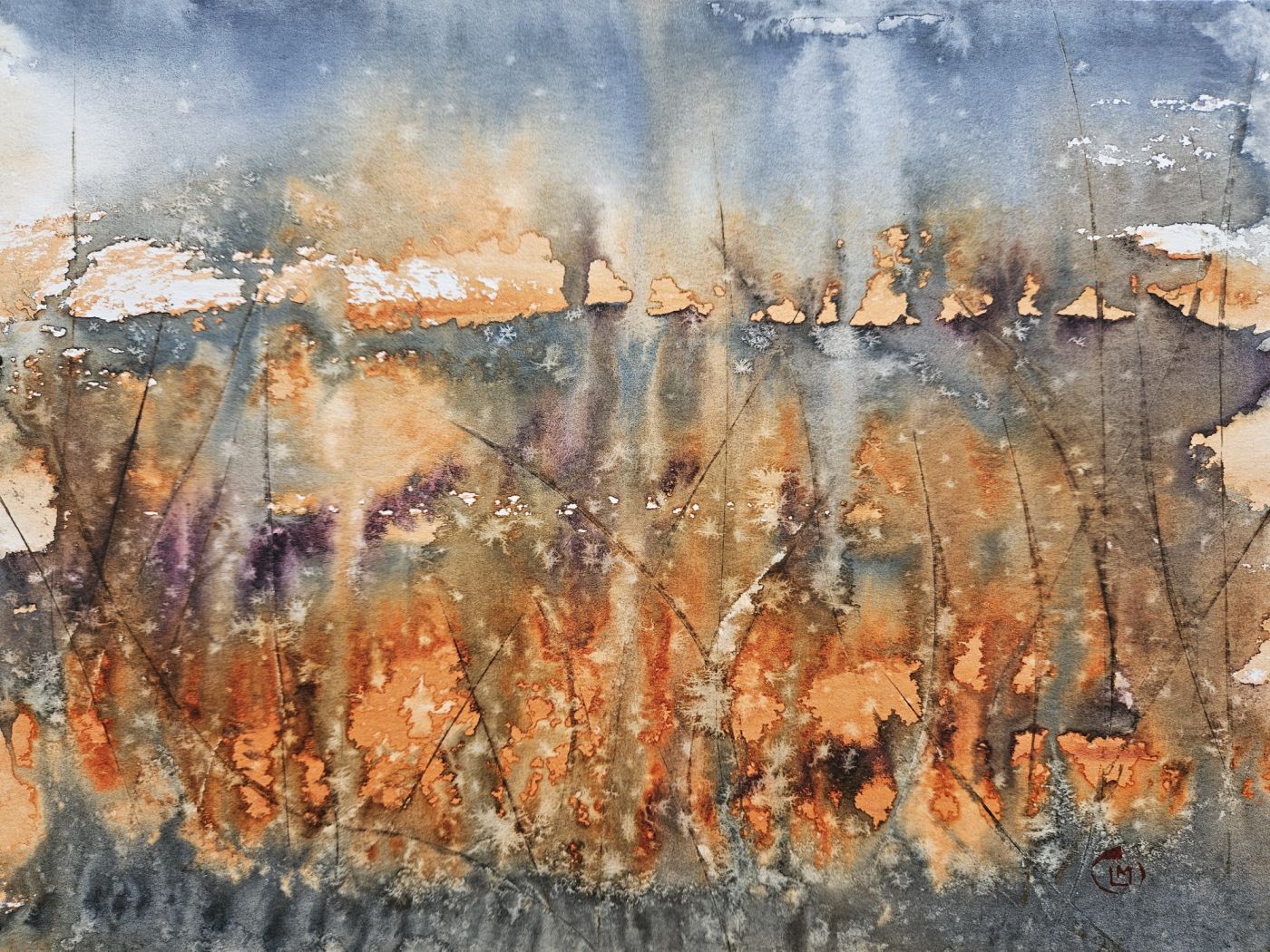
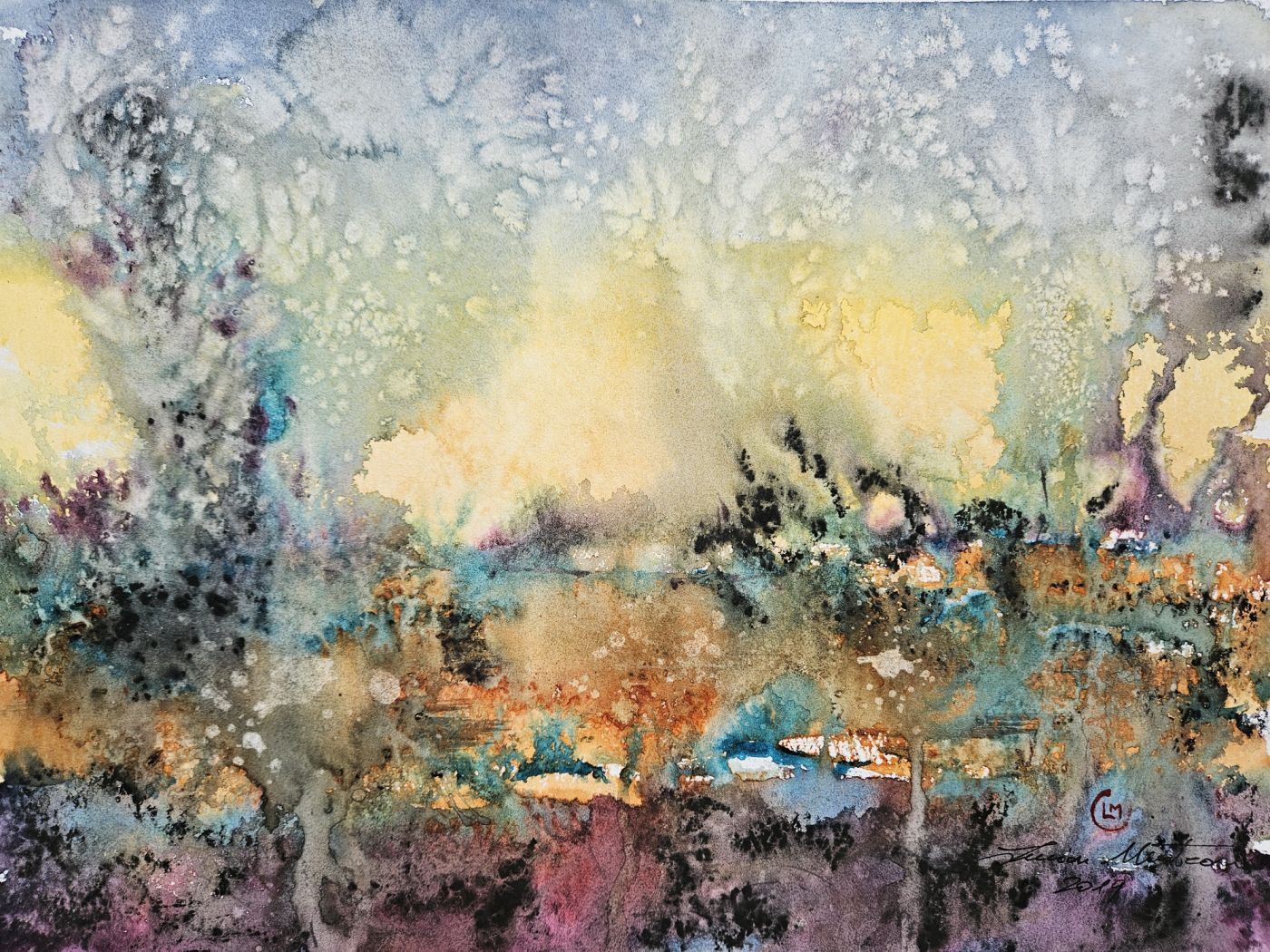
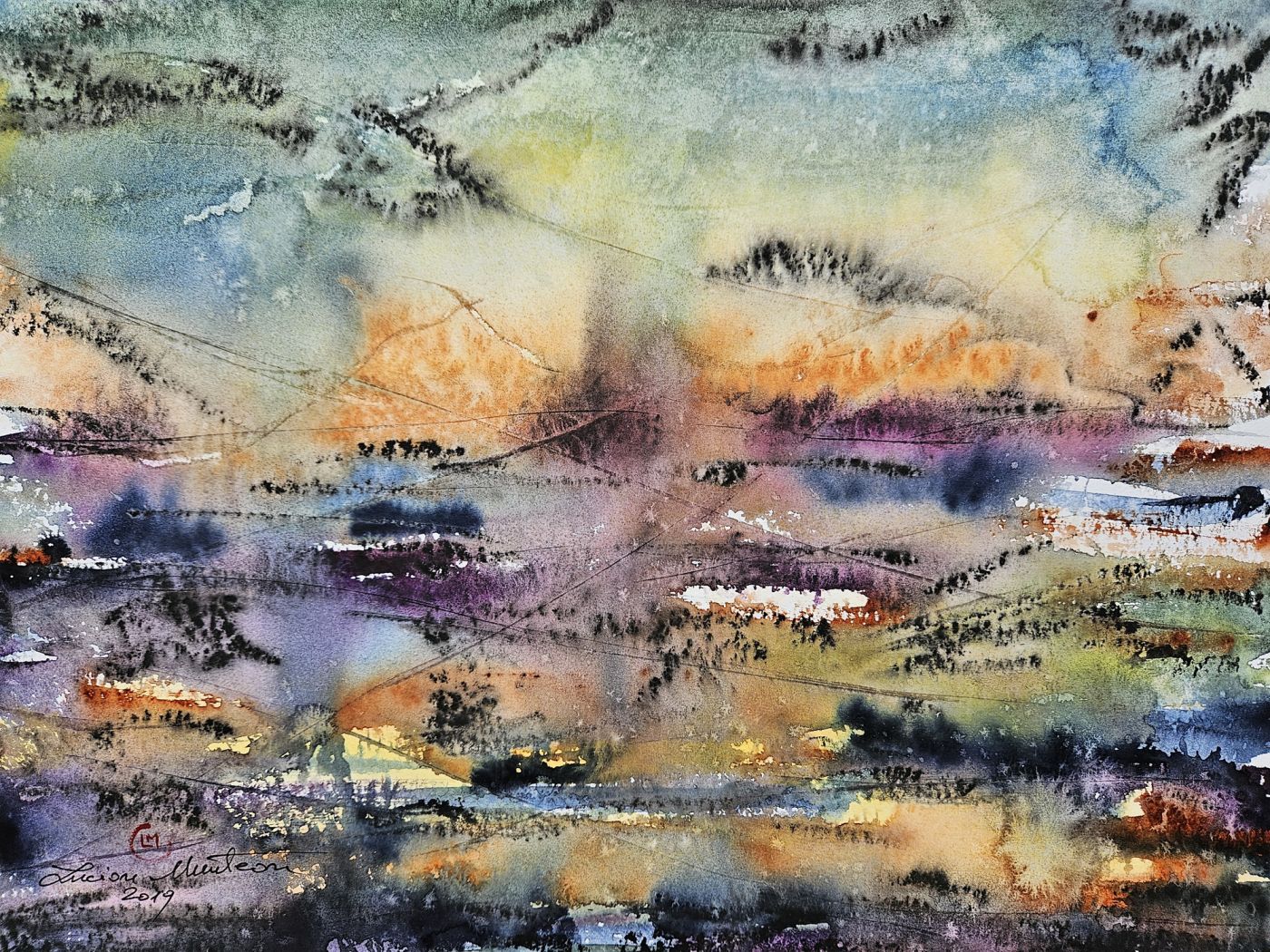
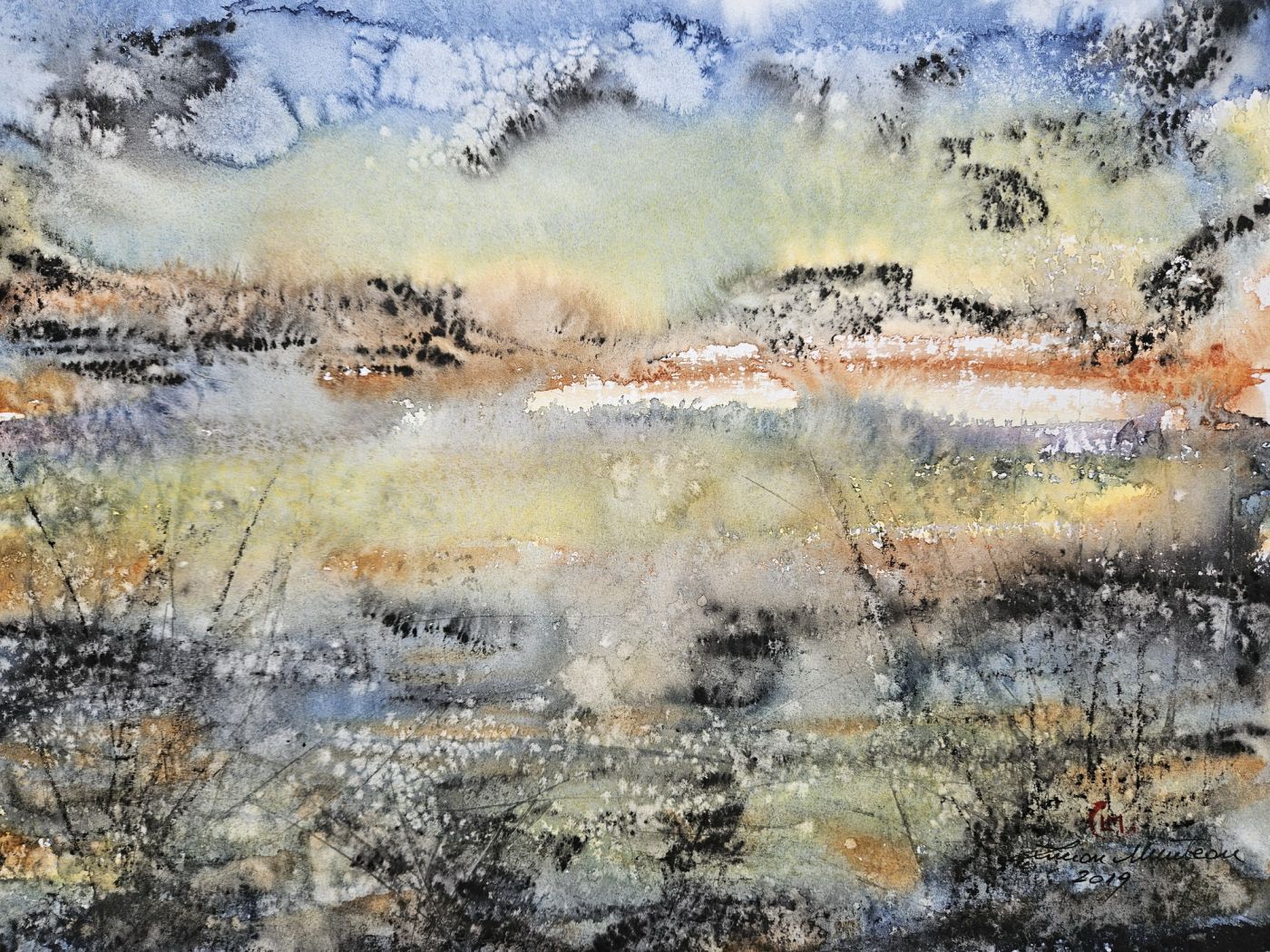
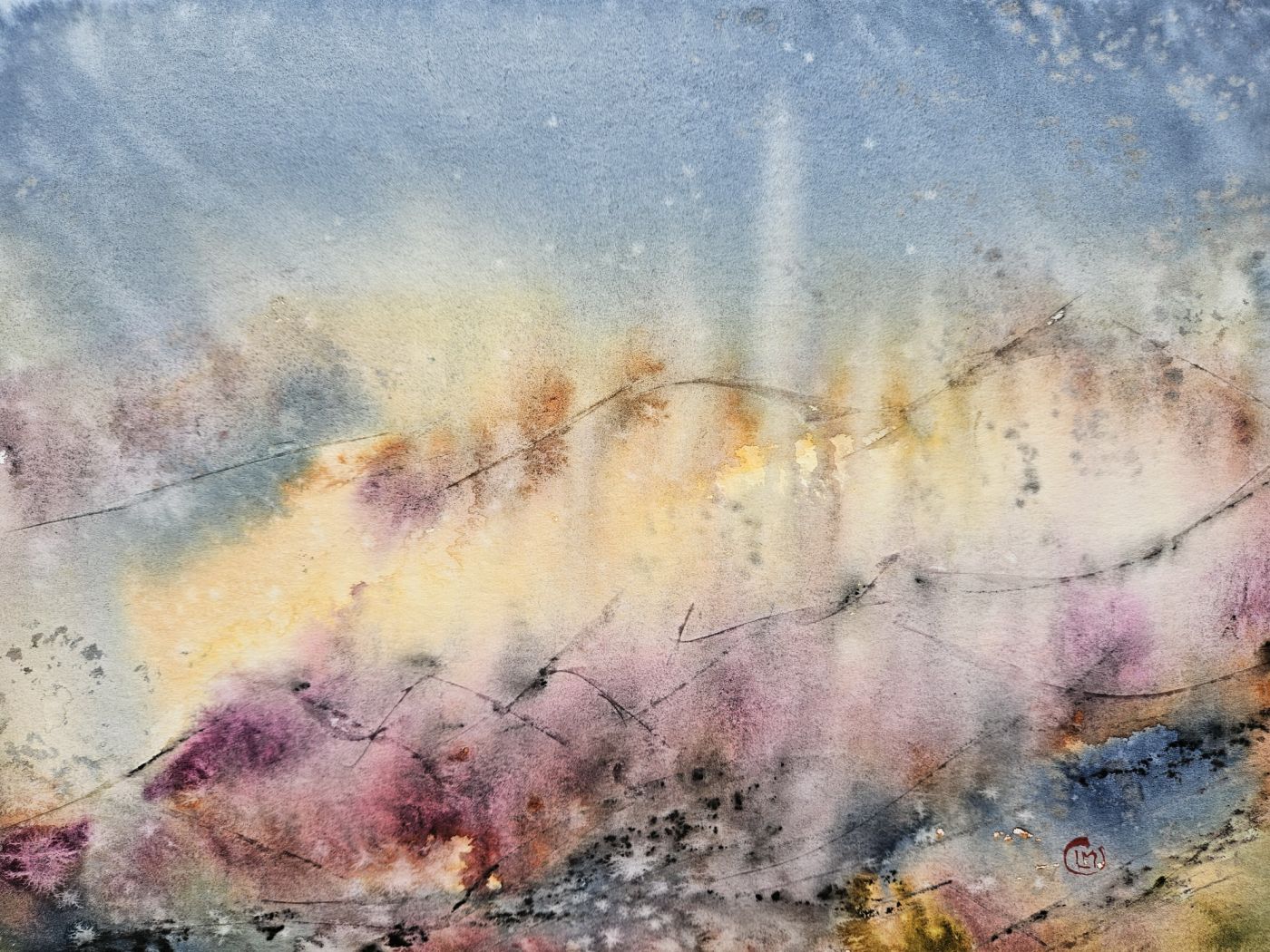
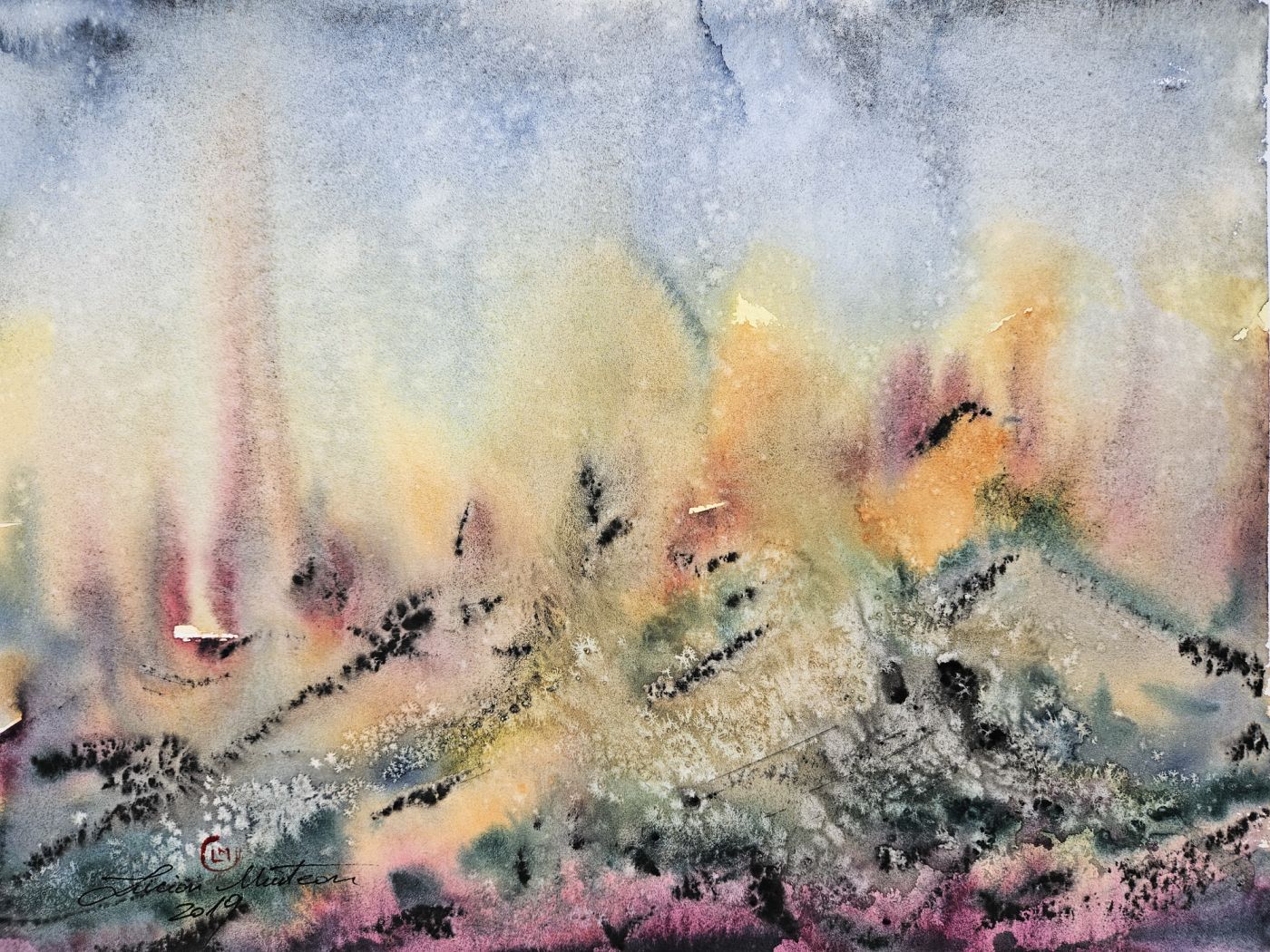
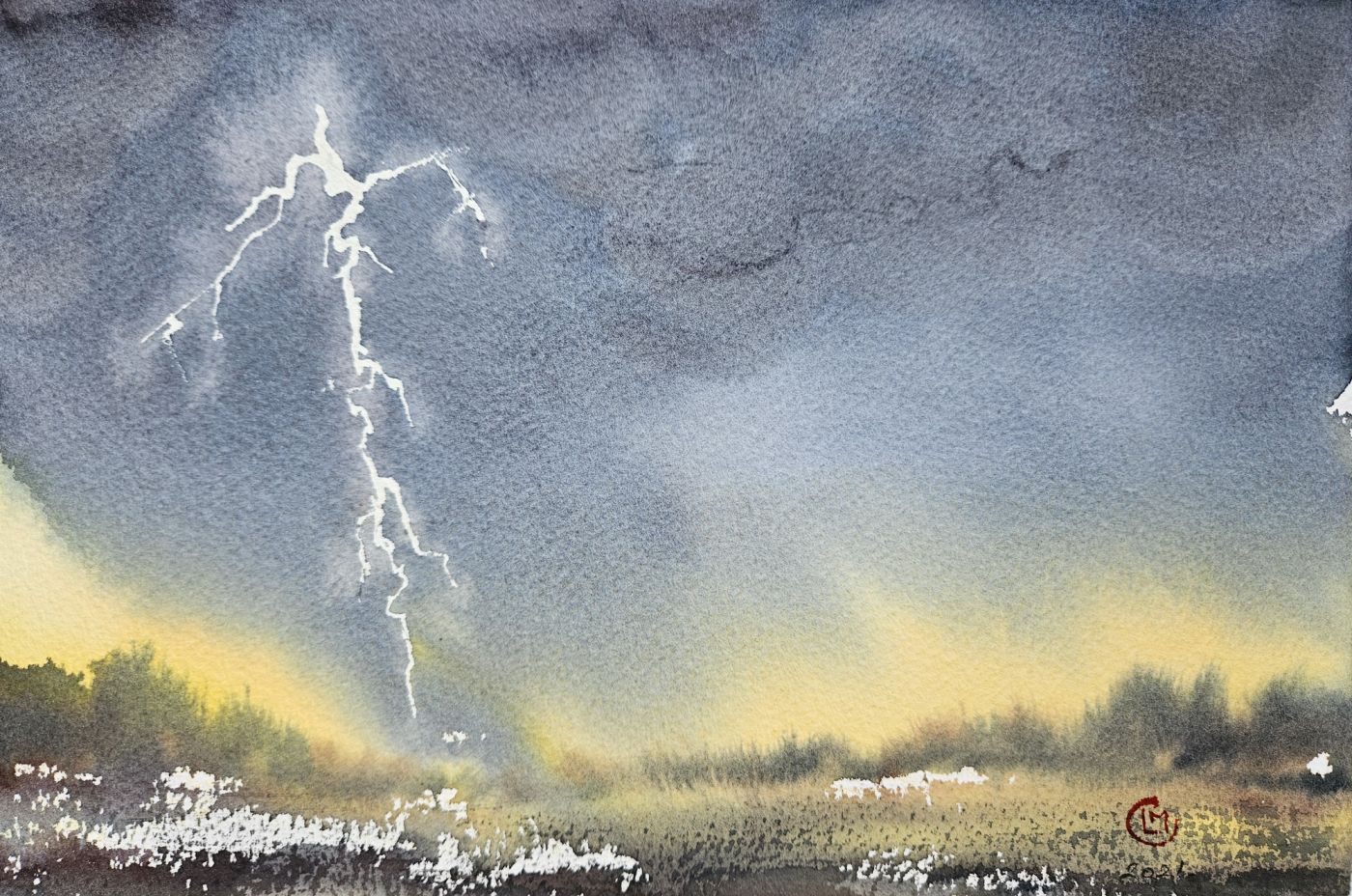
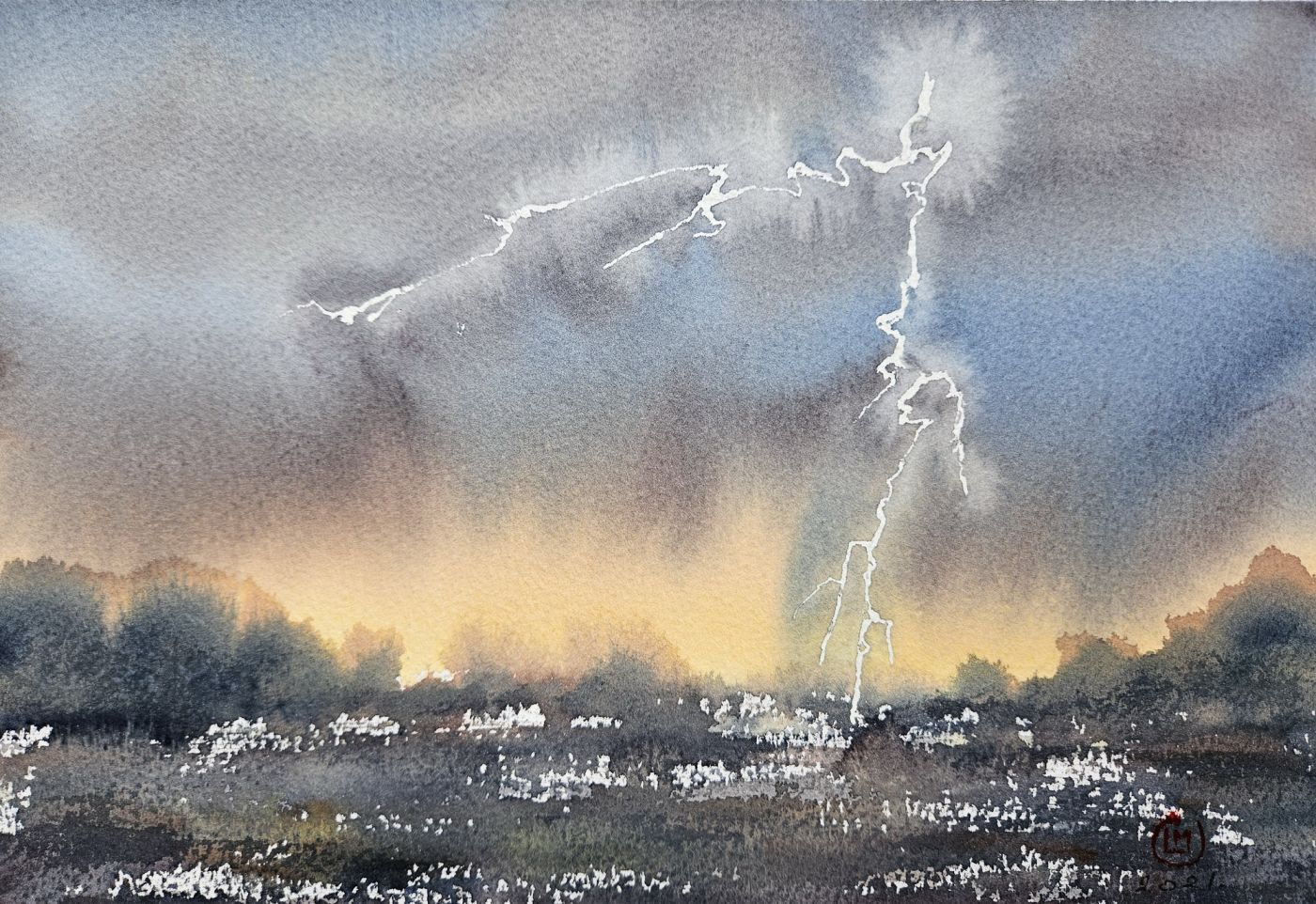
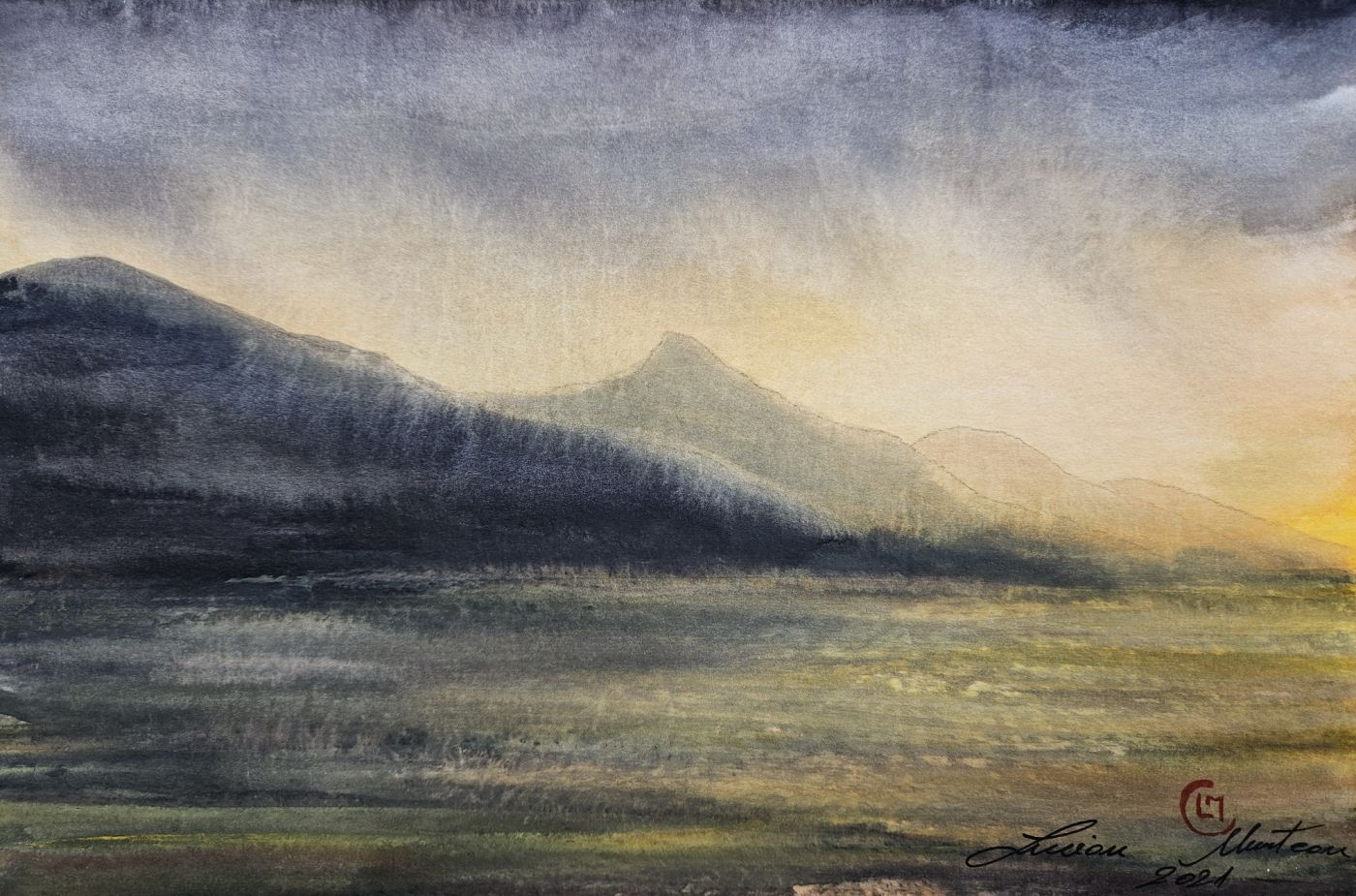
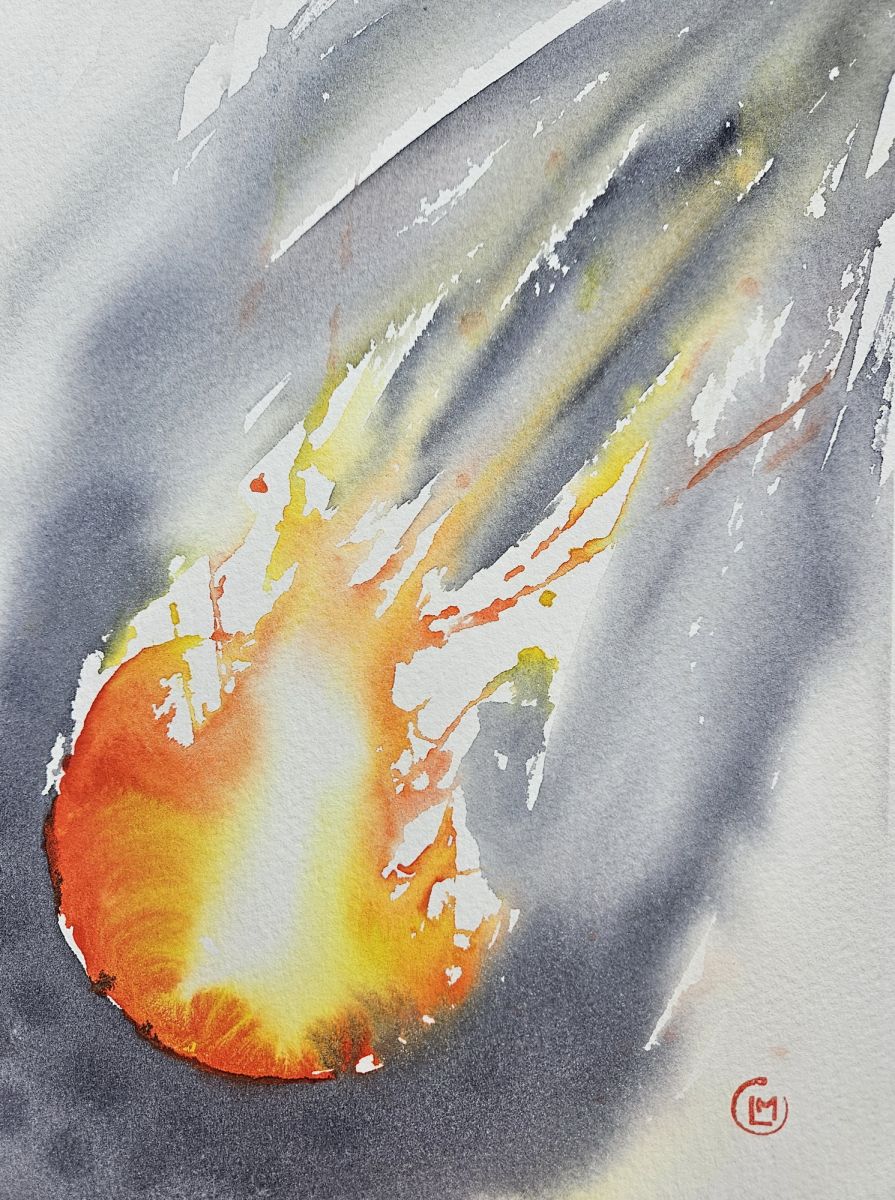
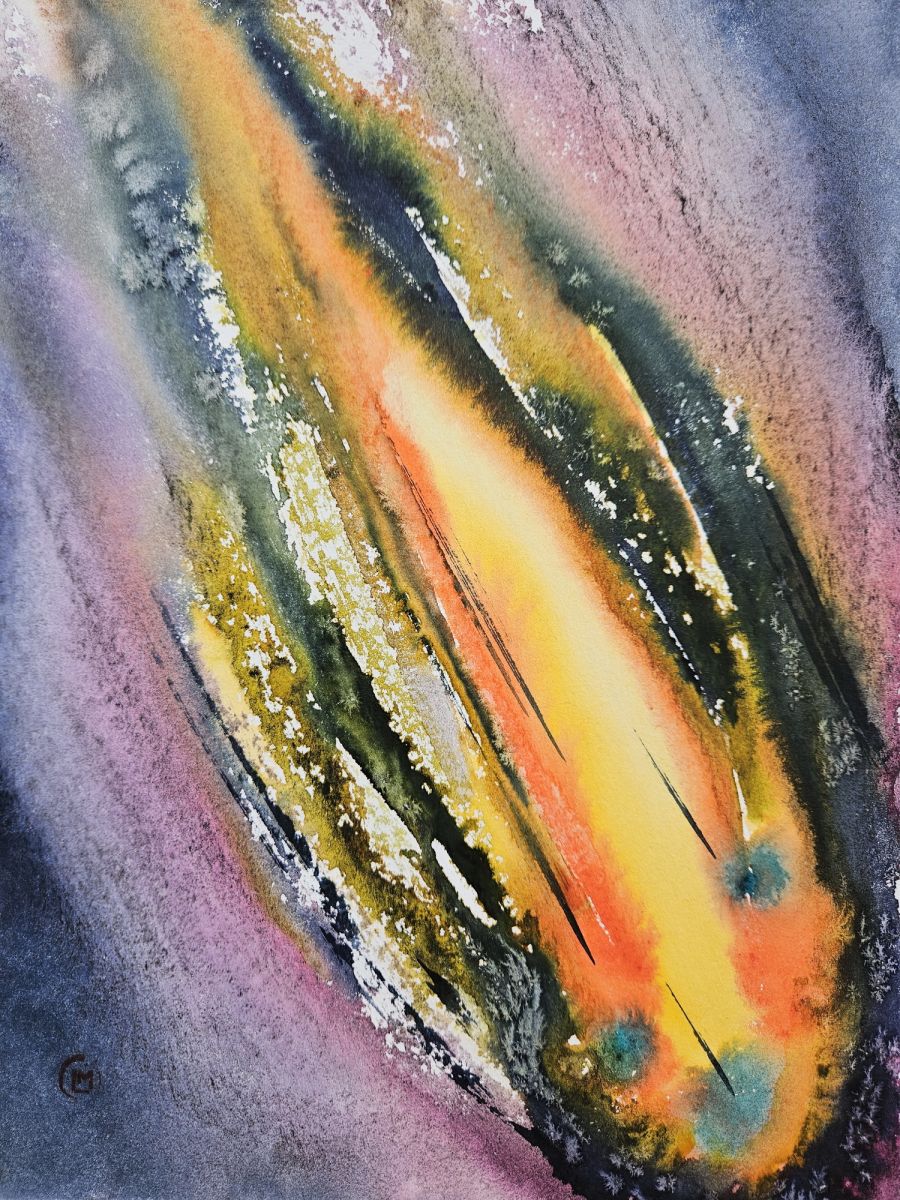
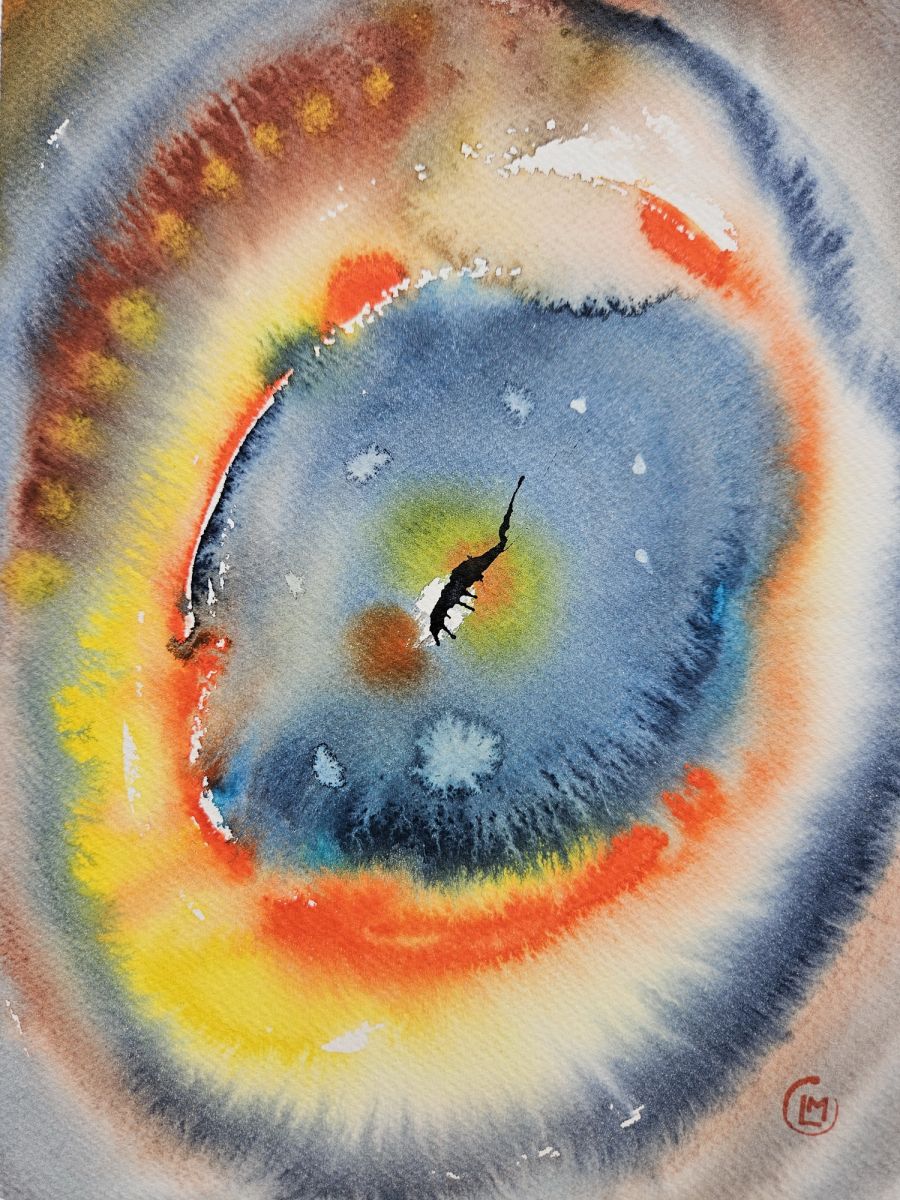
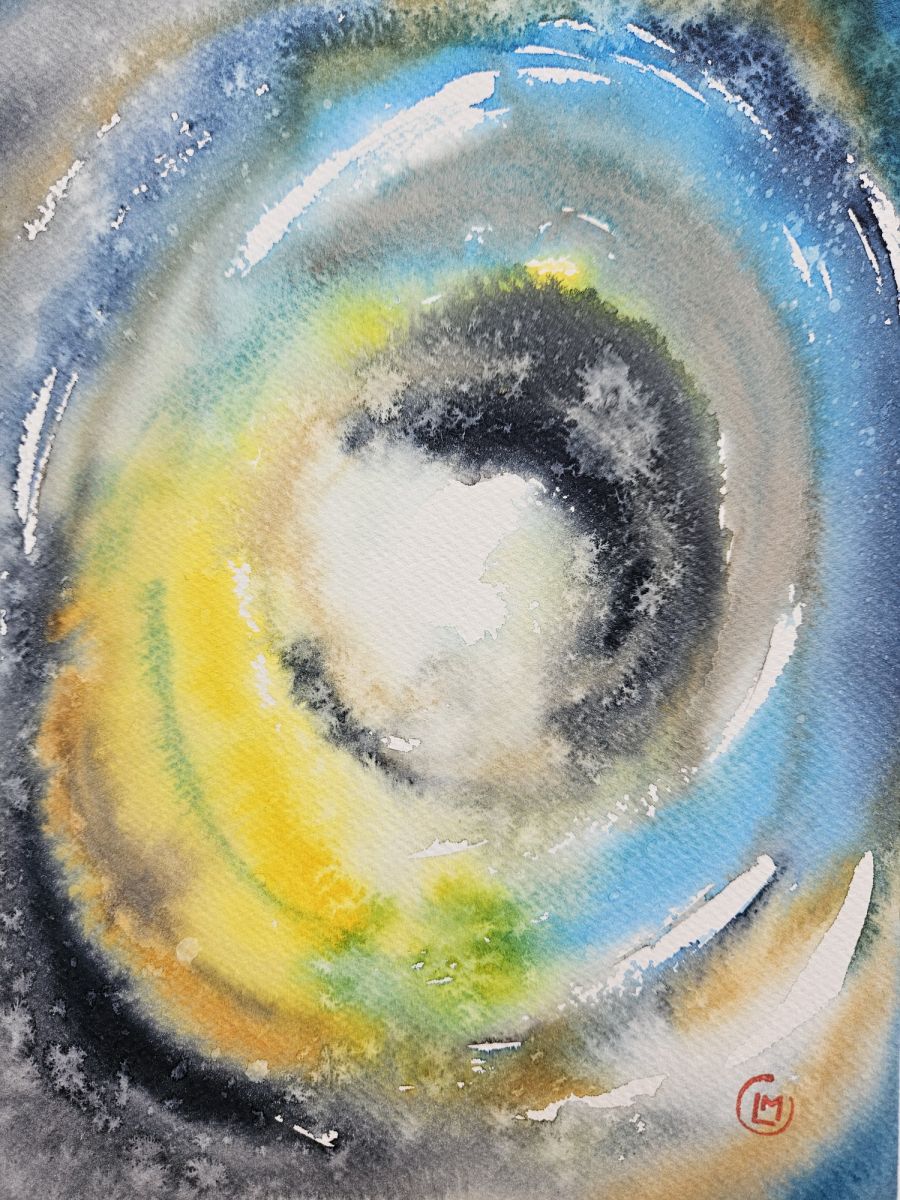
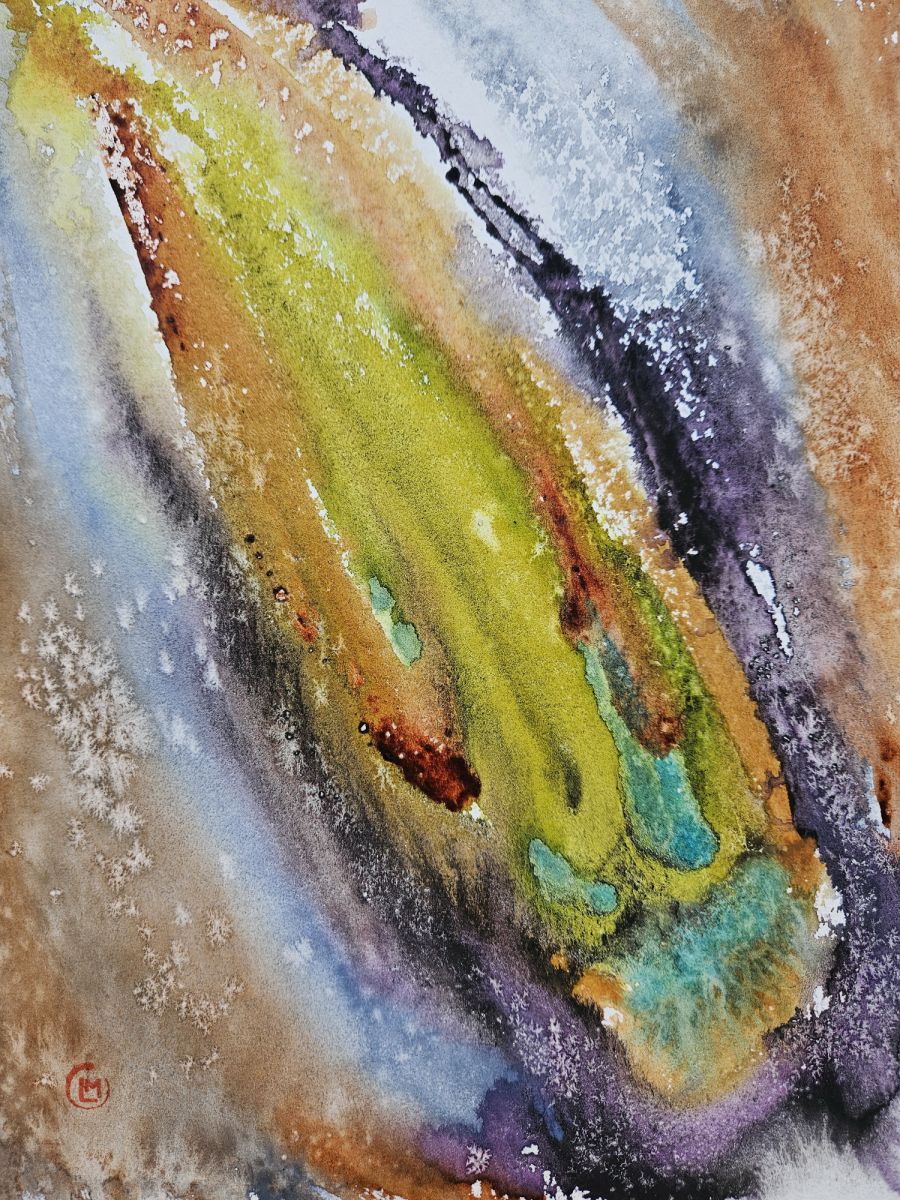
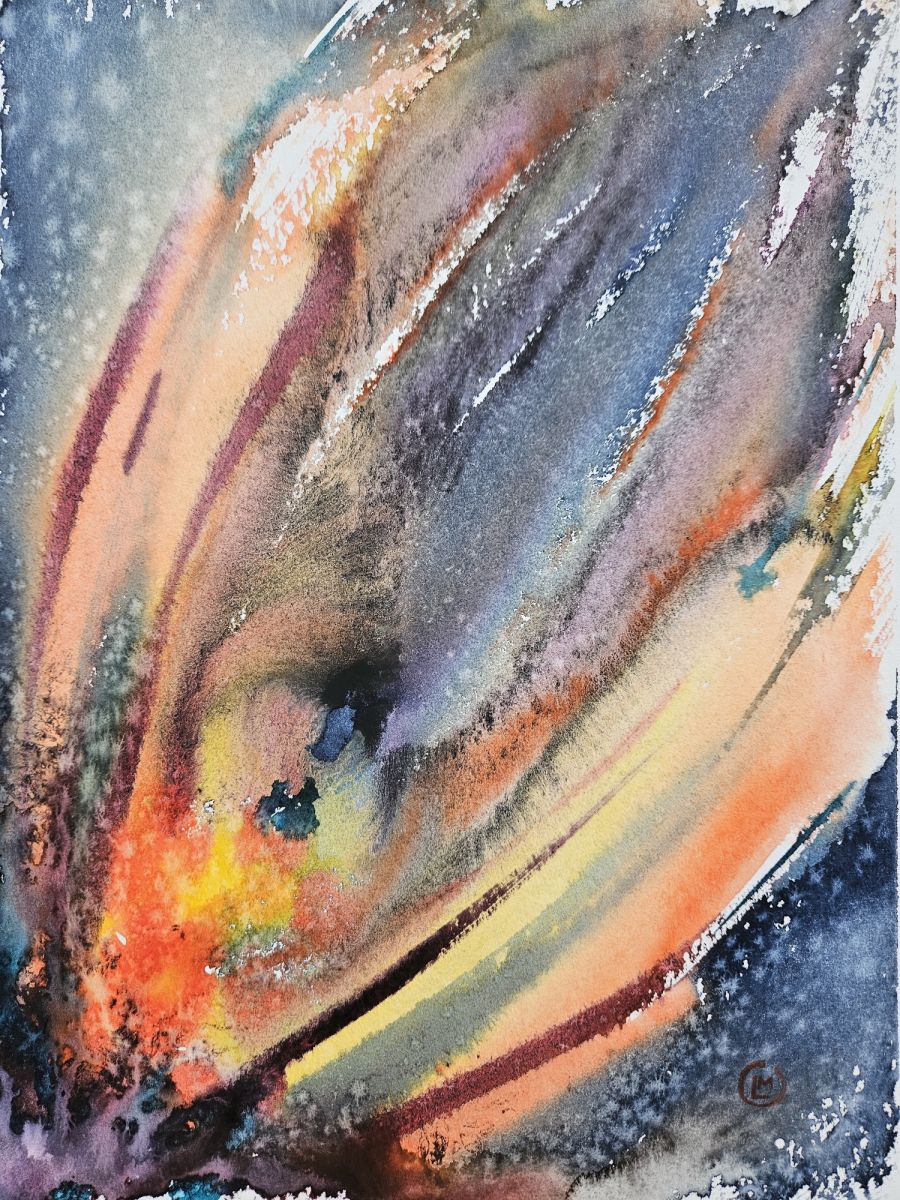
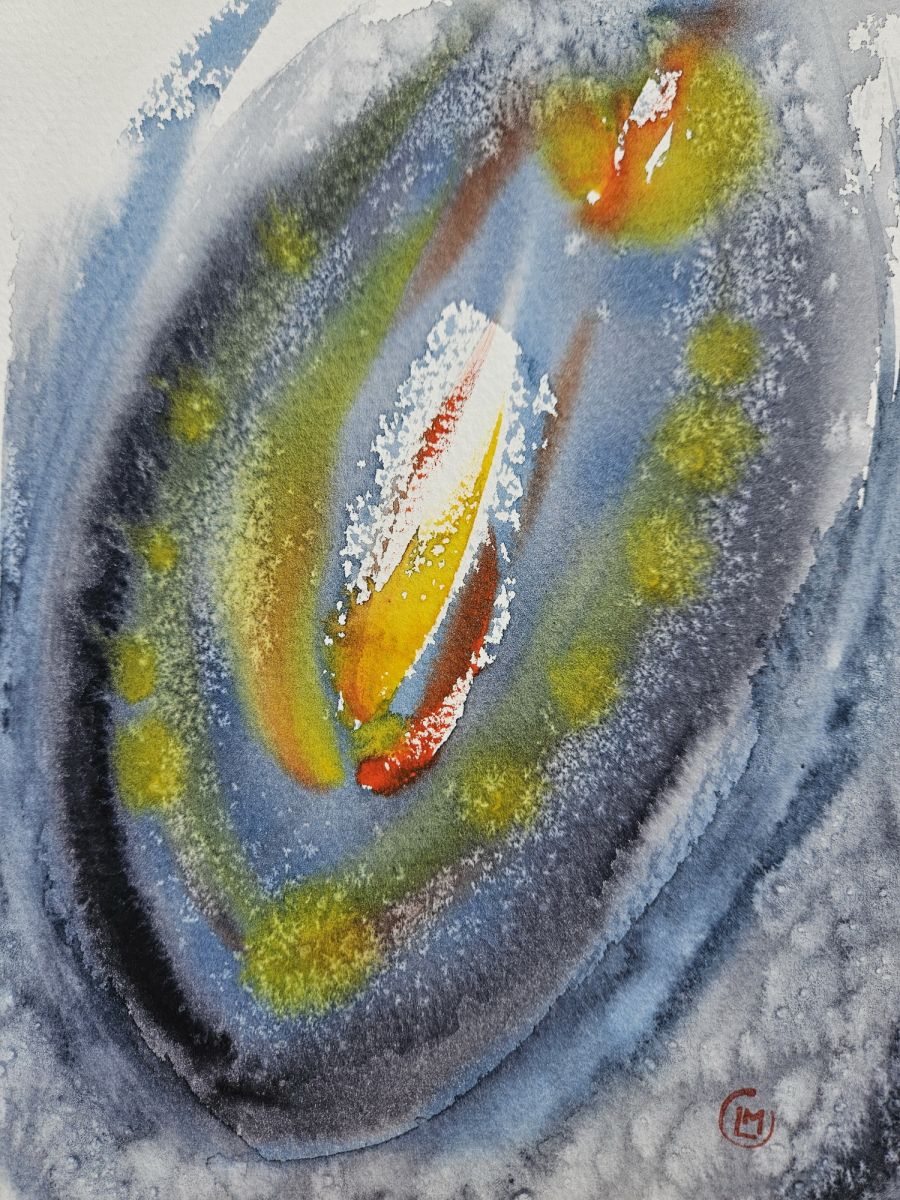
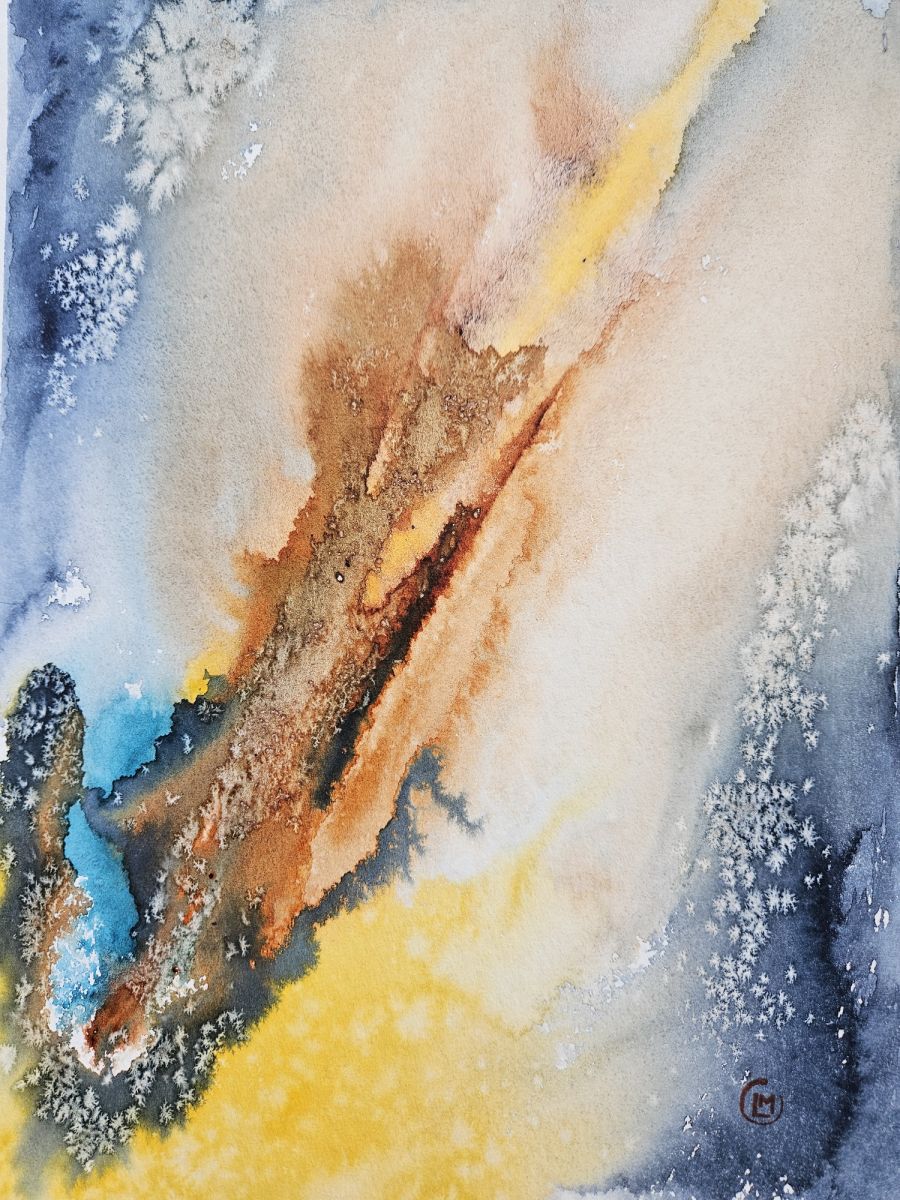
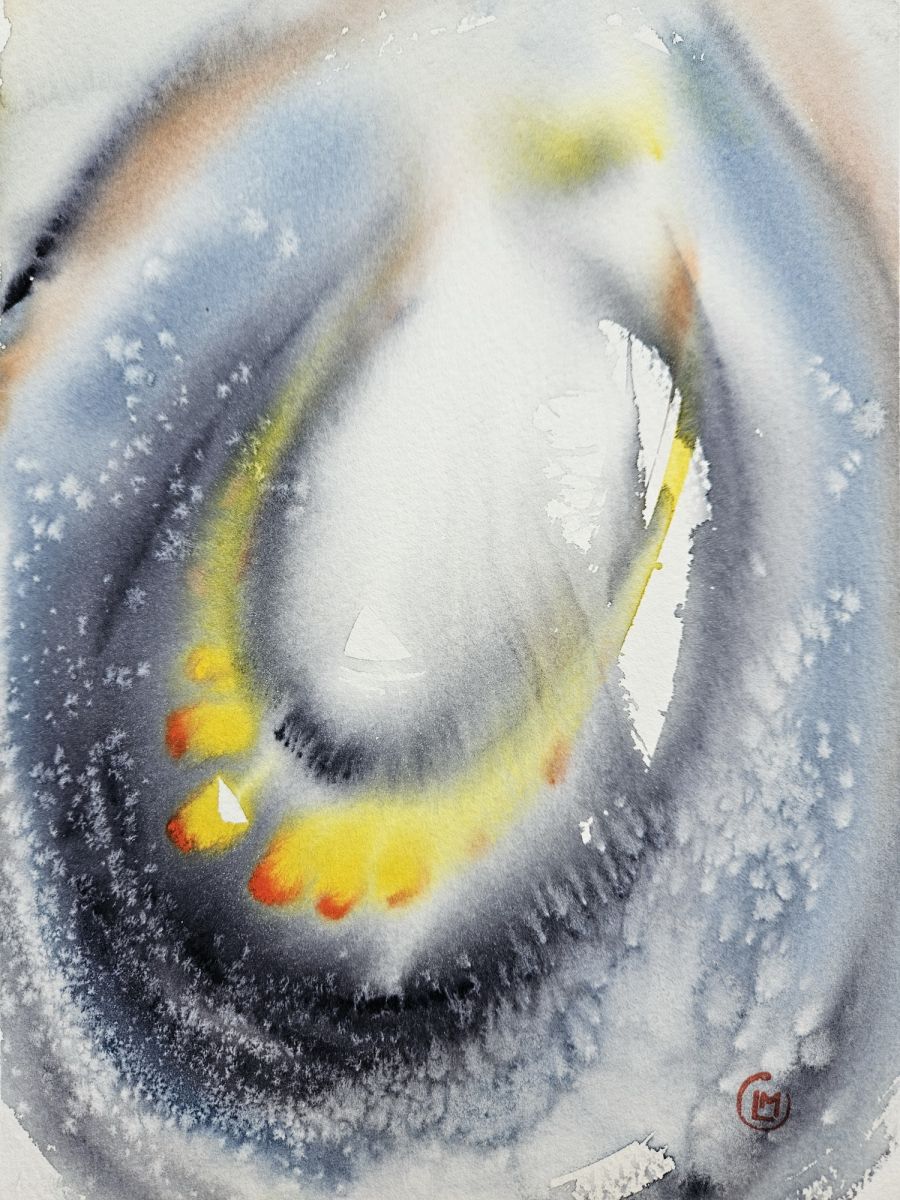
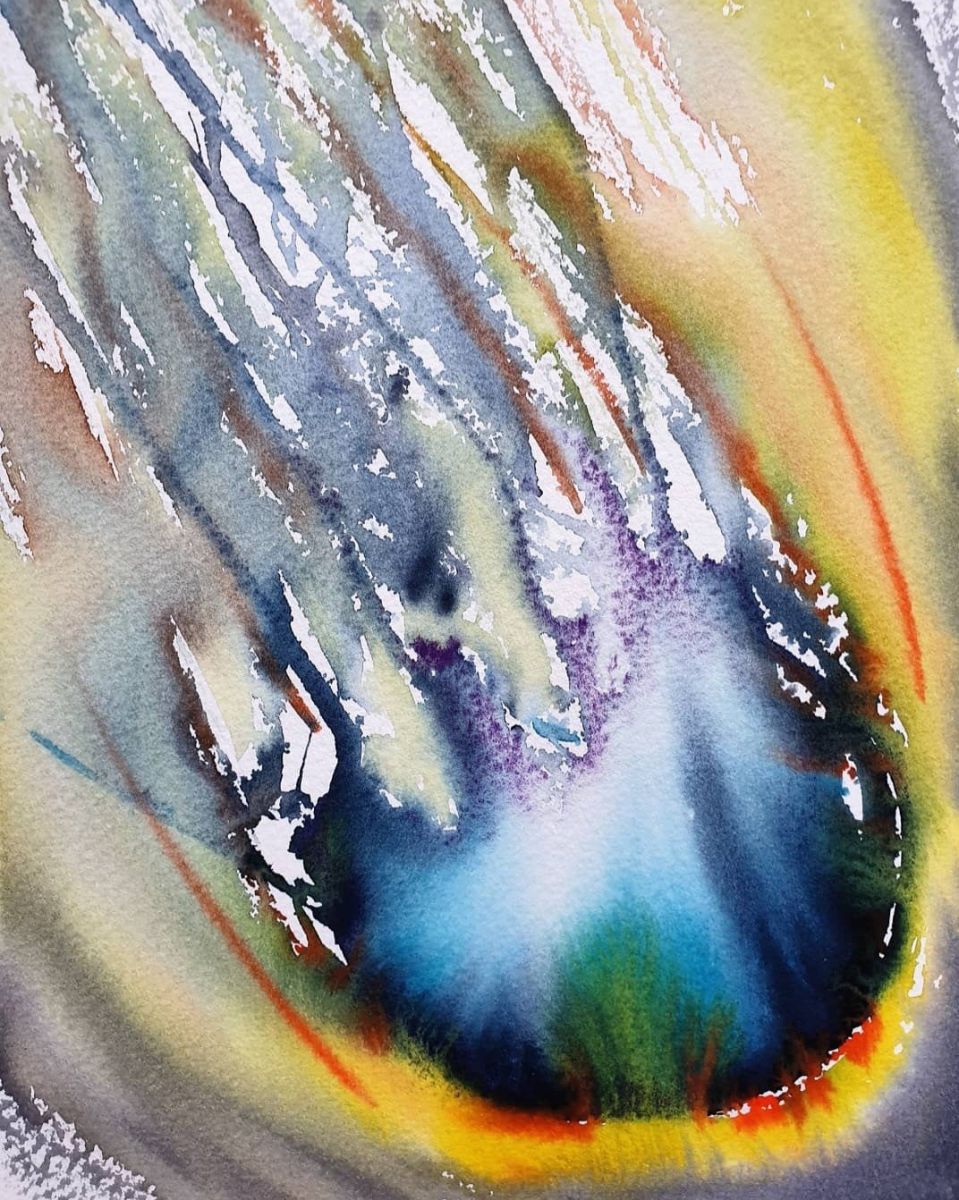
This series of watercolours, begun in 2019, illustrates in an almost abstract manner the appearance of landscapes in areas affected by fire. We are accustomed to seeing idyllic landscapes, yet we rarely imagine that they can literally be transformed into ashes.
Technique: watercolour on 300 g/m² paper (Canson, Hahnemühle, Lanaquarelle); dimensions: 19×25 cm, 19×28 cm, 20×30 cm, 28×38 cm, 30×40 cm, 56×38 cm, 56×76 cm, 76×28 cm.
***
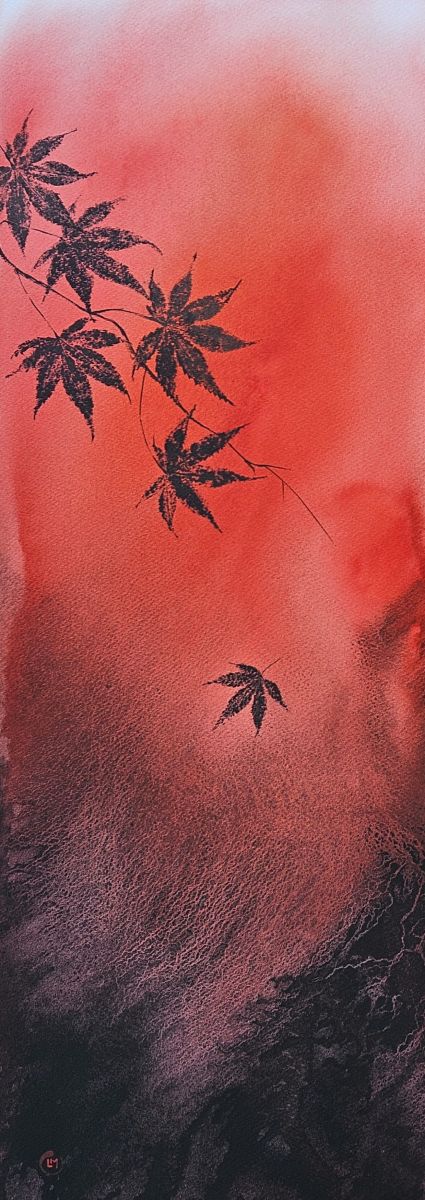
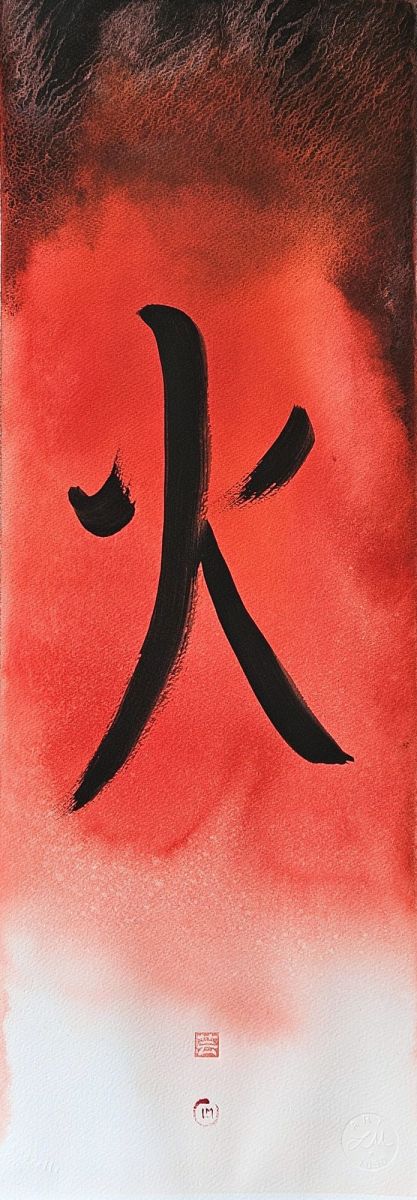
The forest fires – 2026
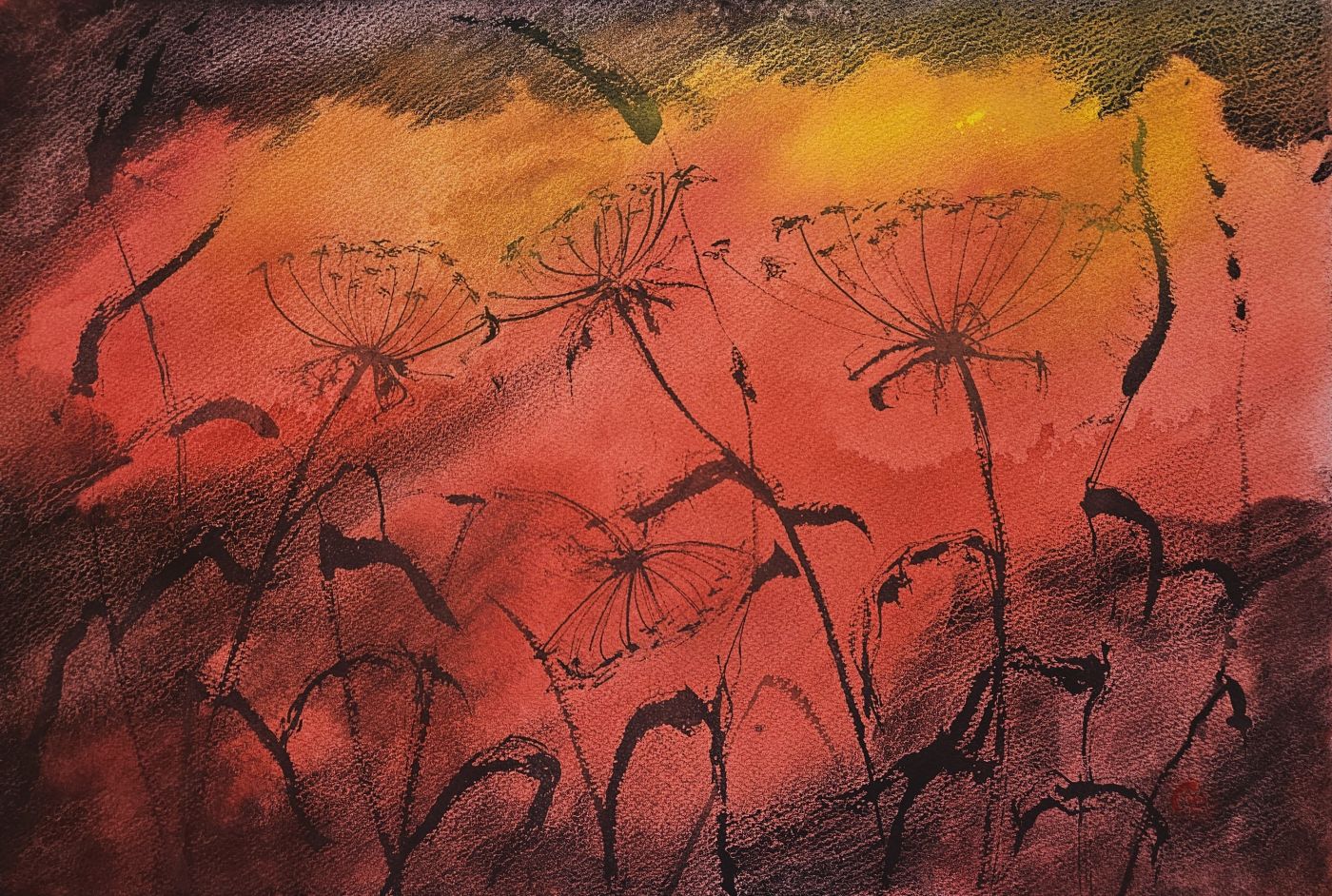
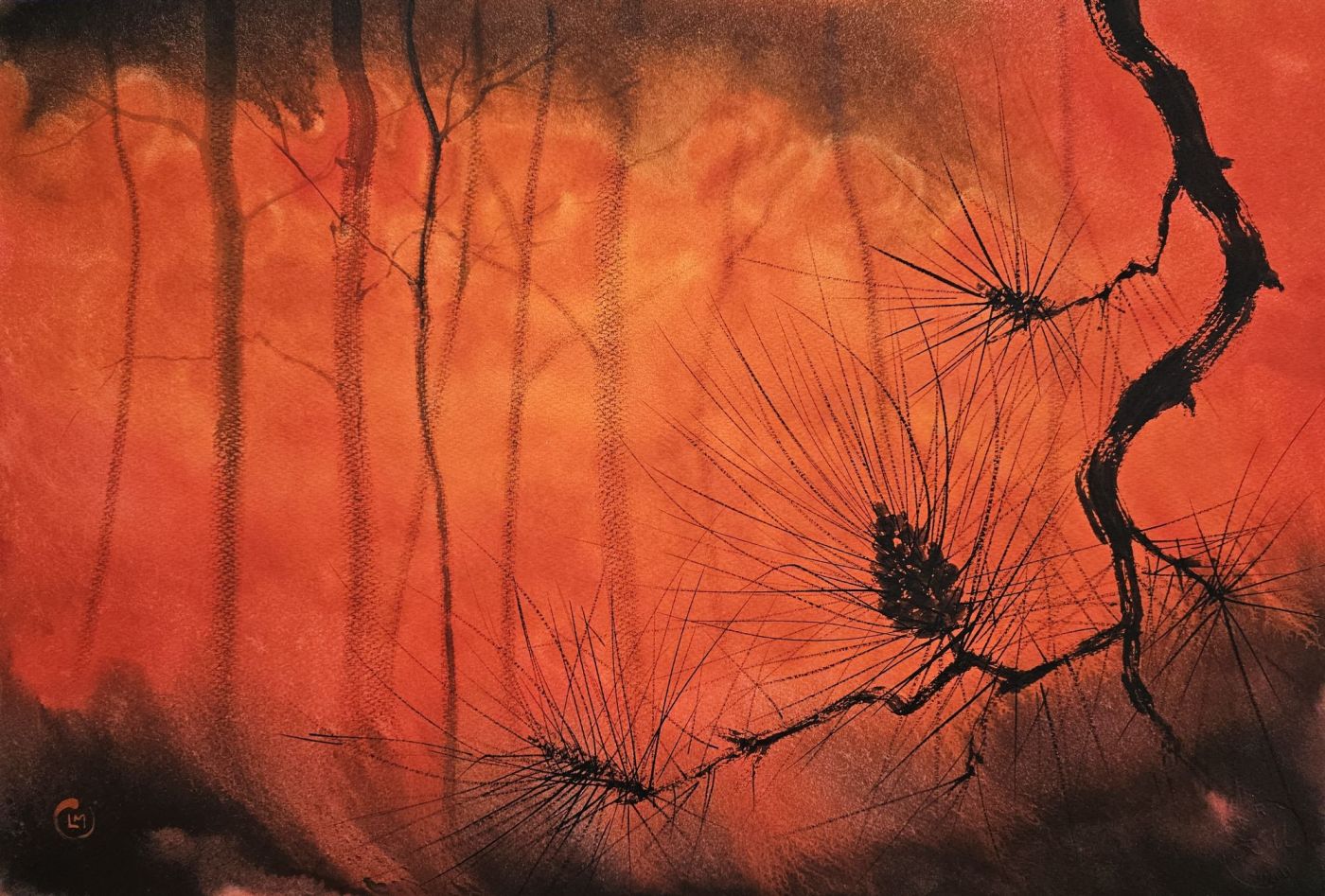
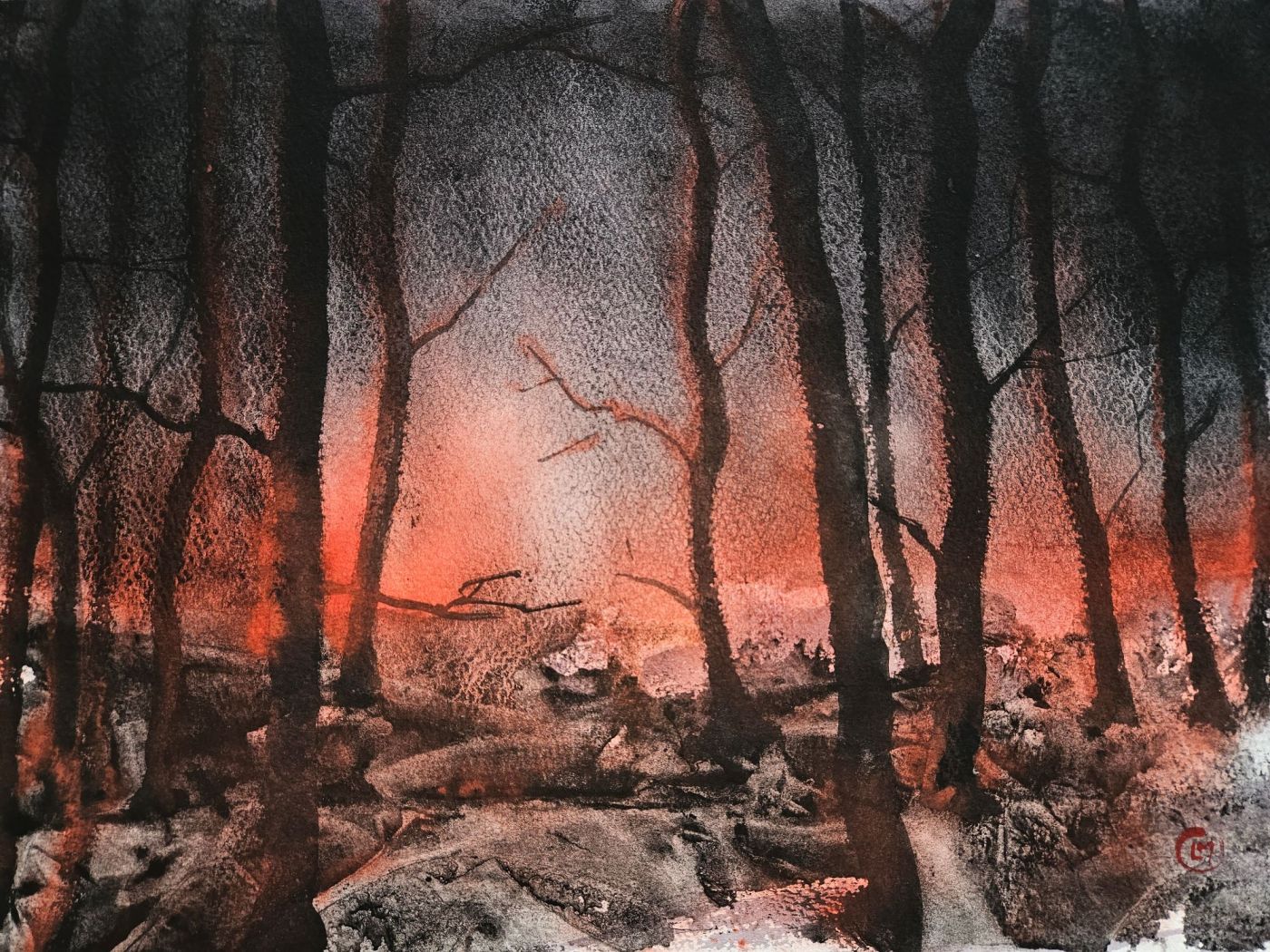
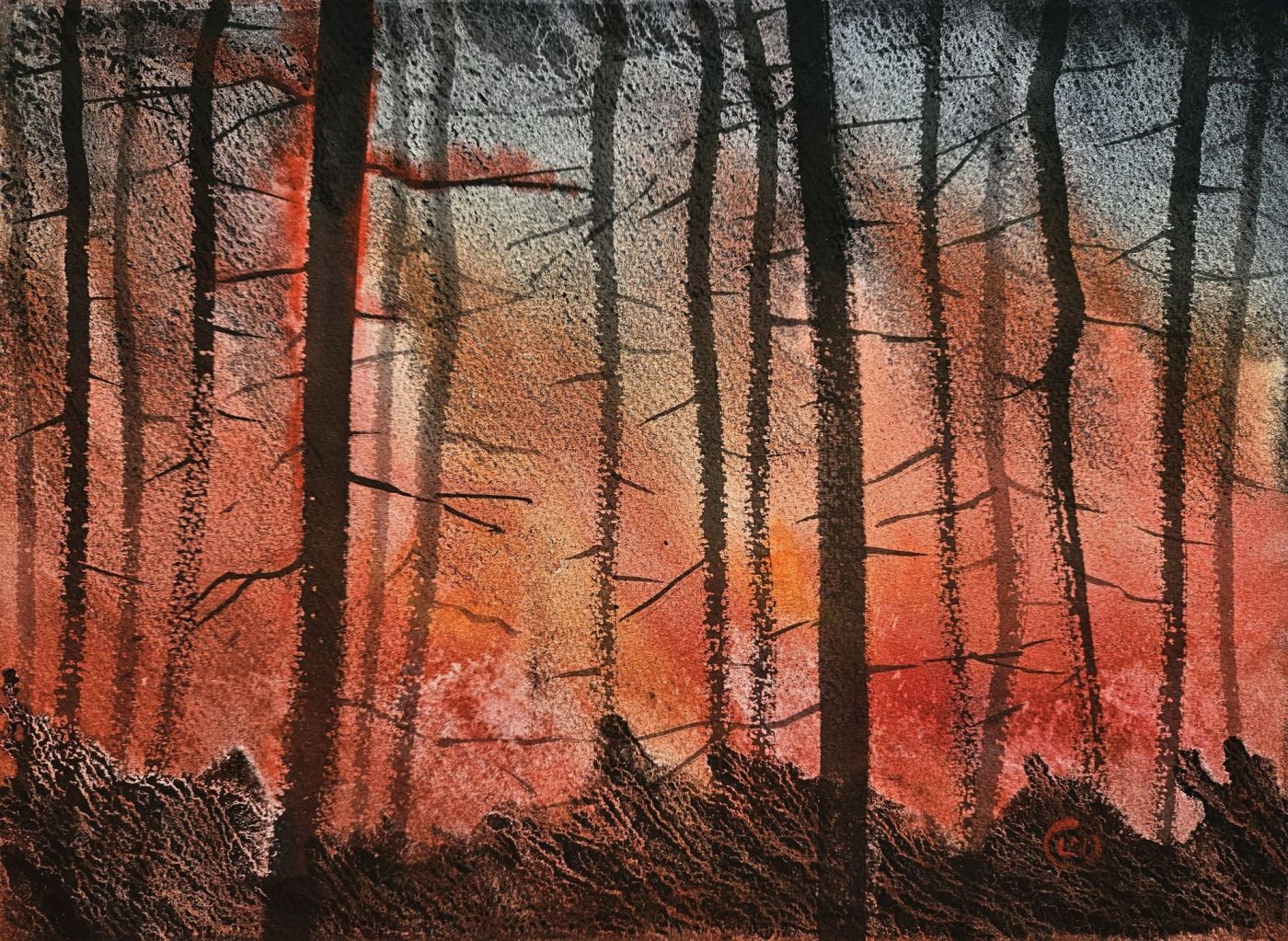
***
The lendscape after the fire
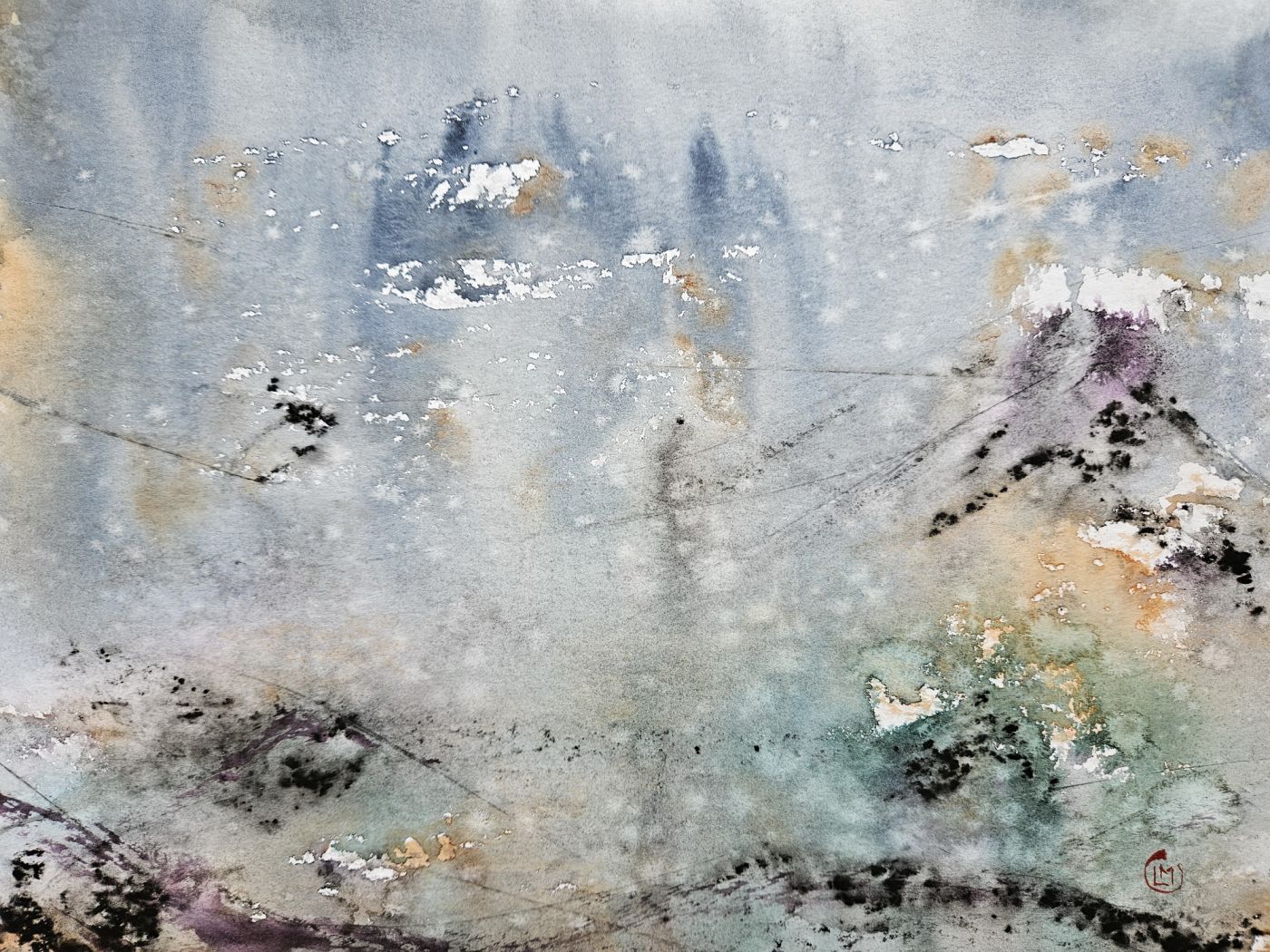
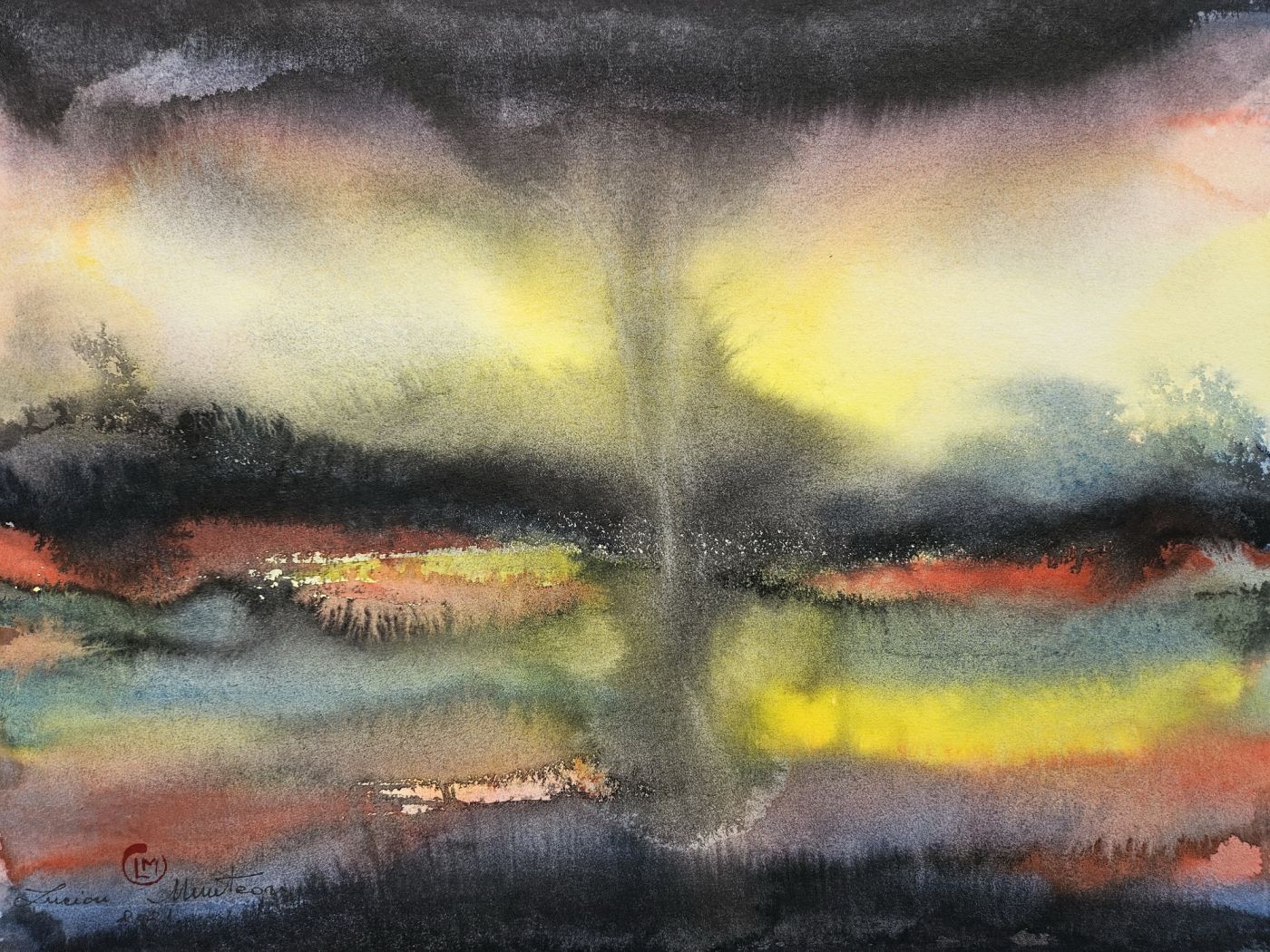
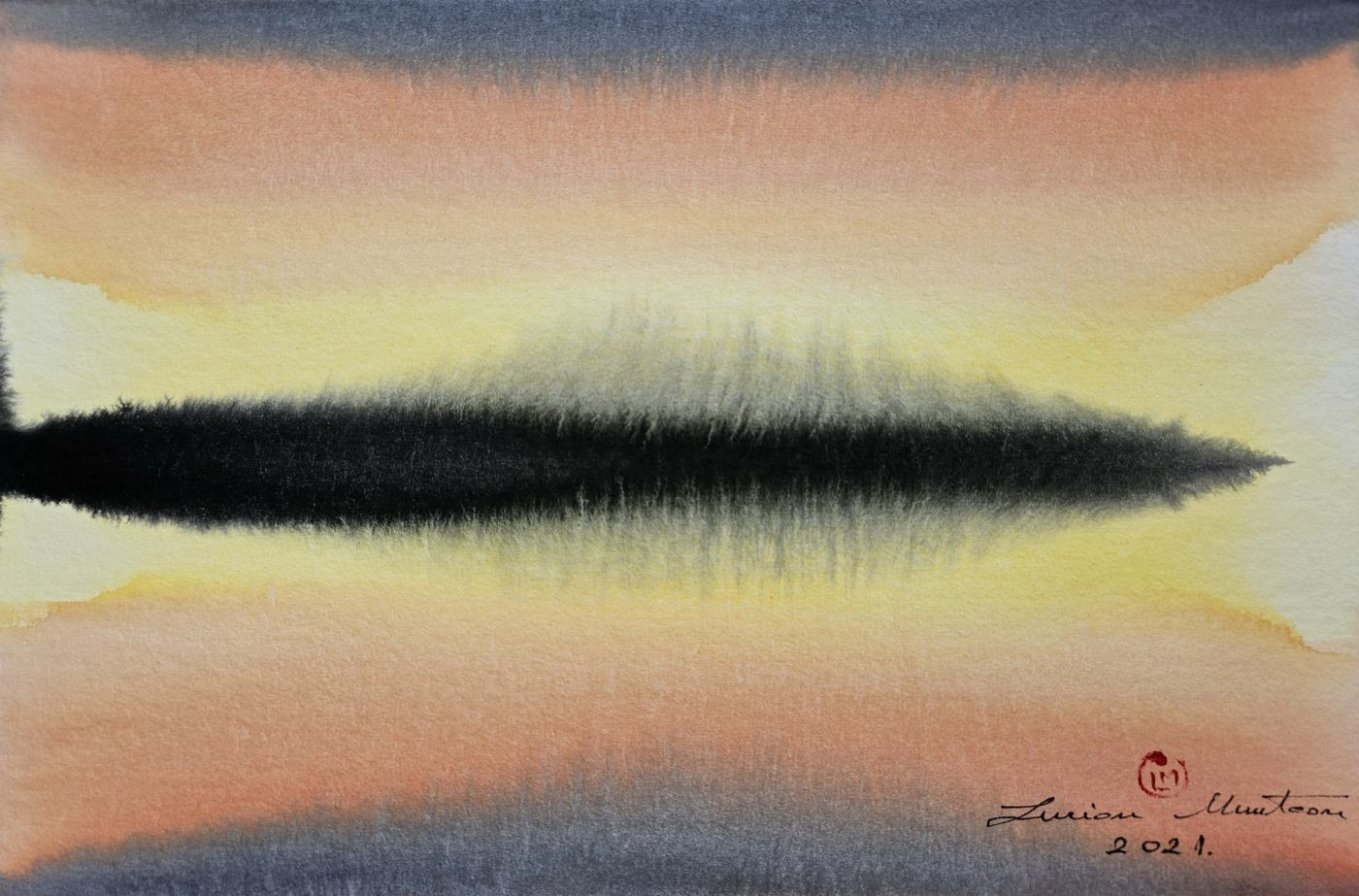
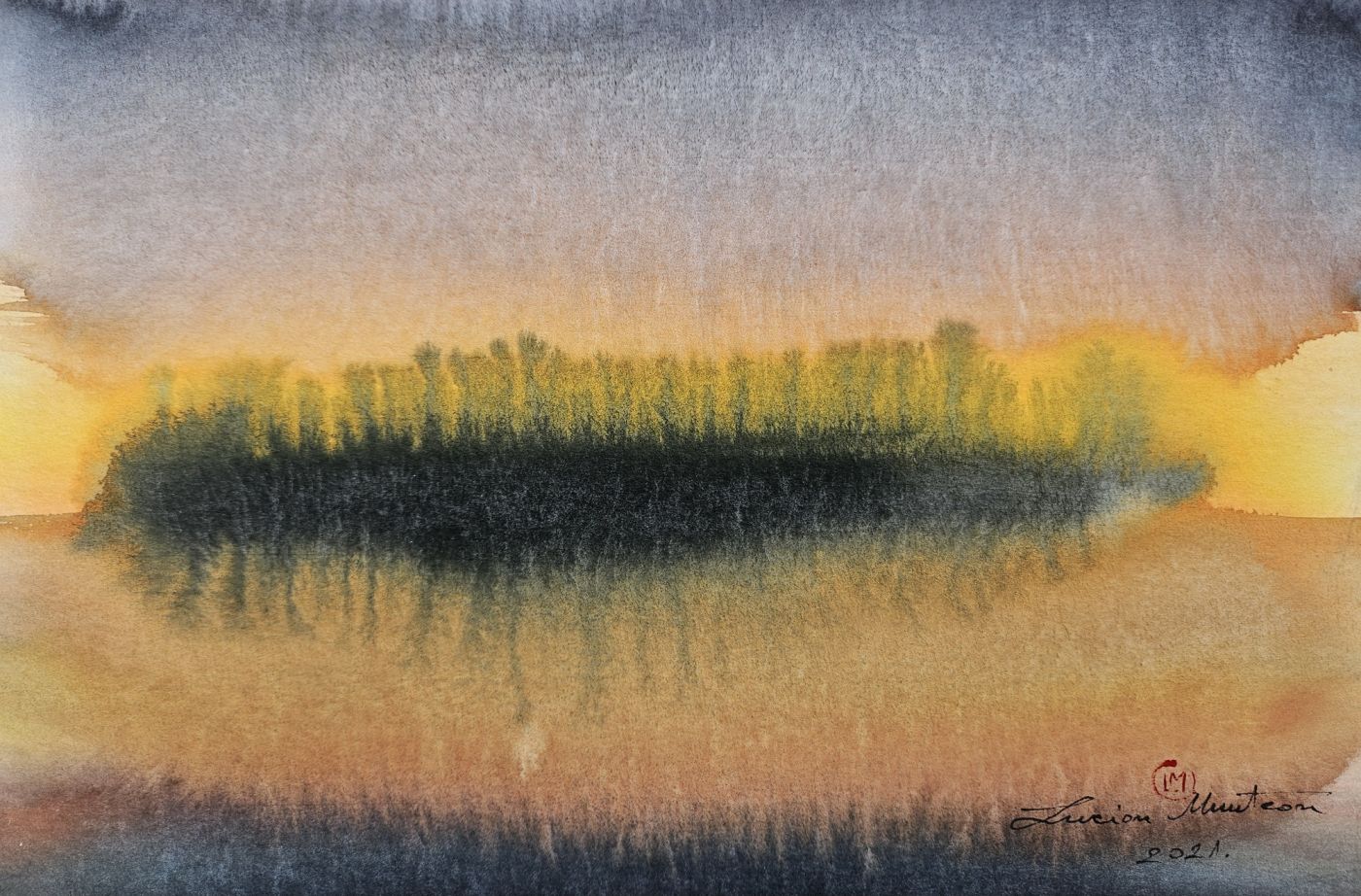
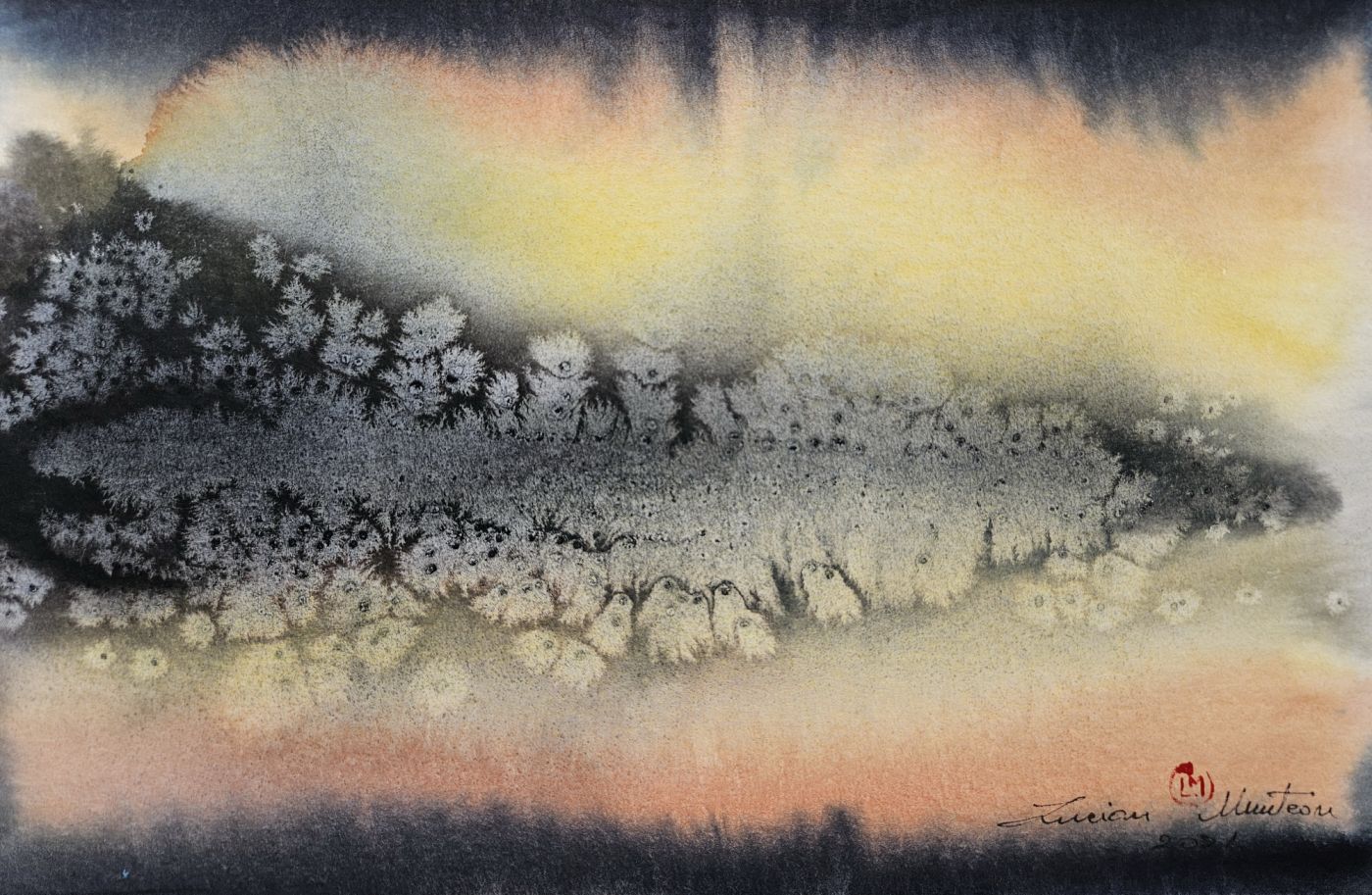
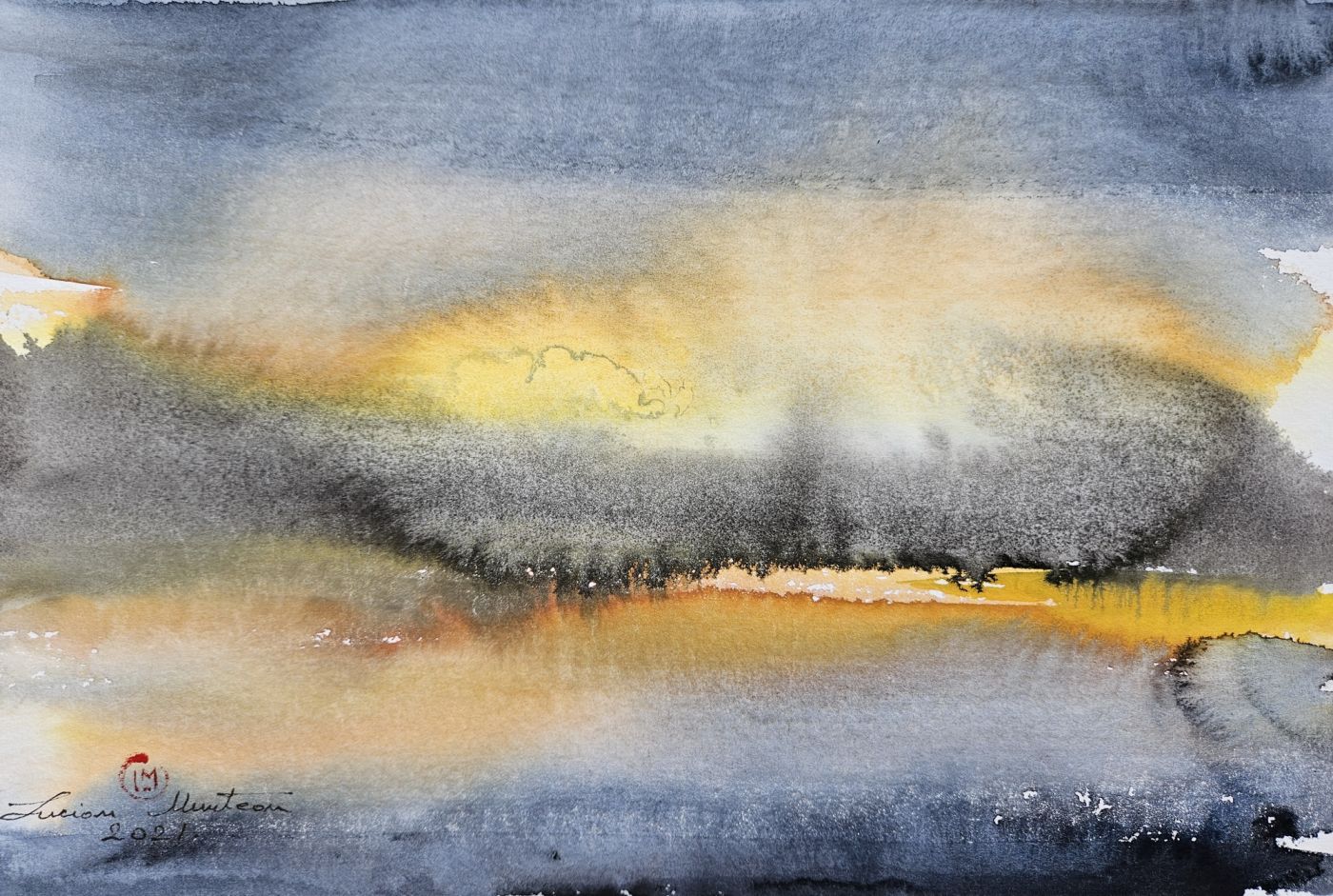
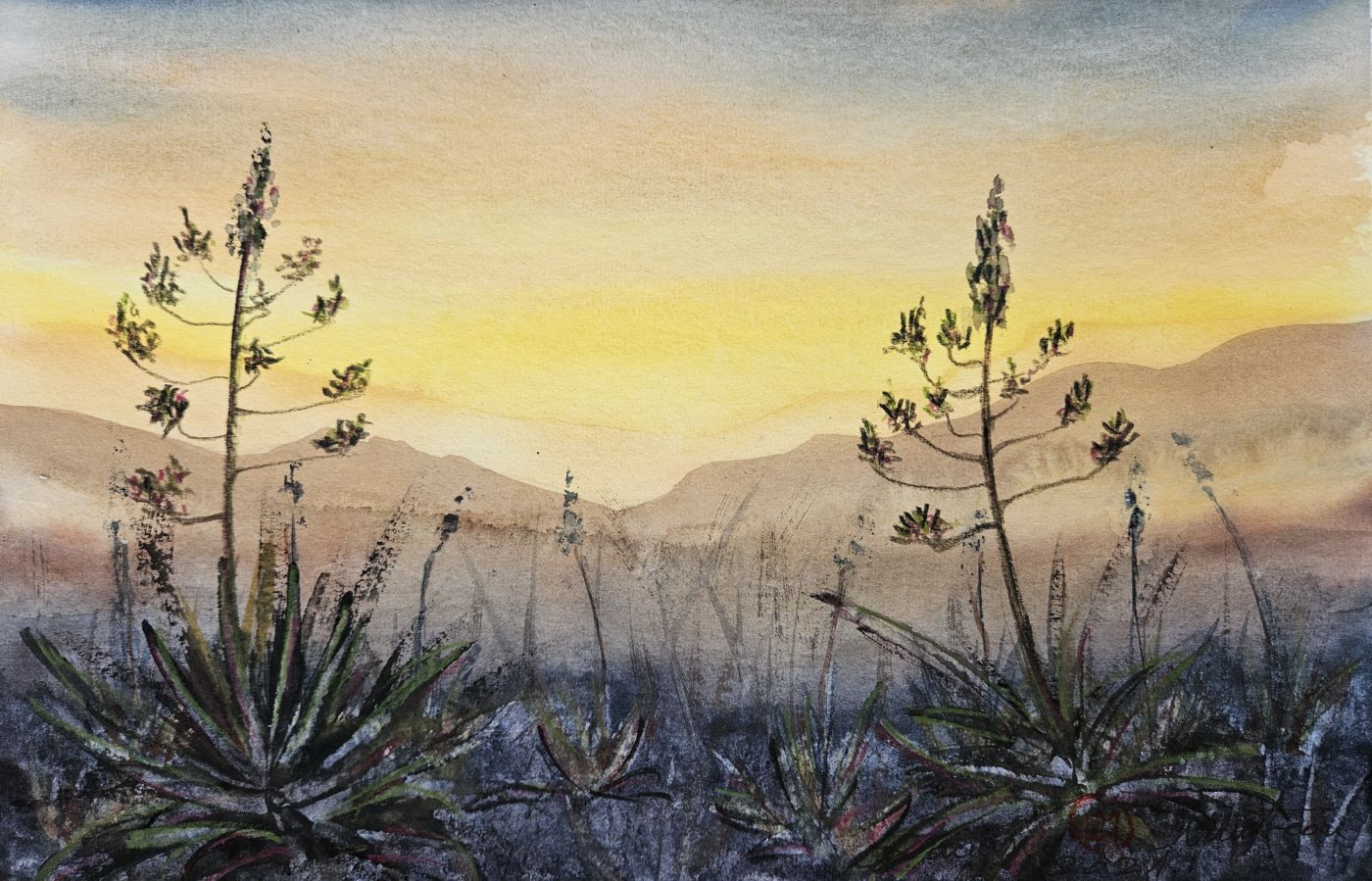
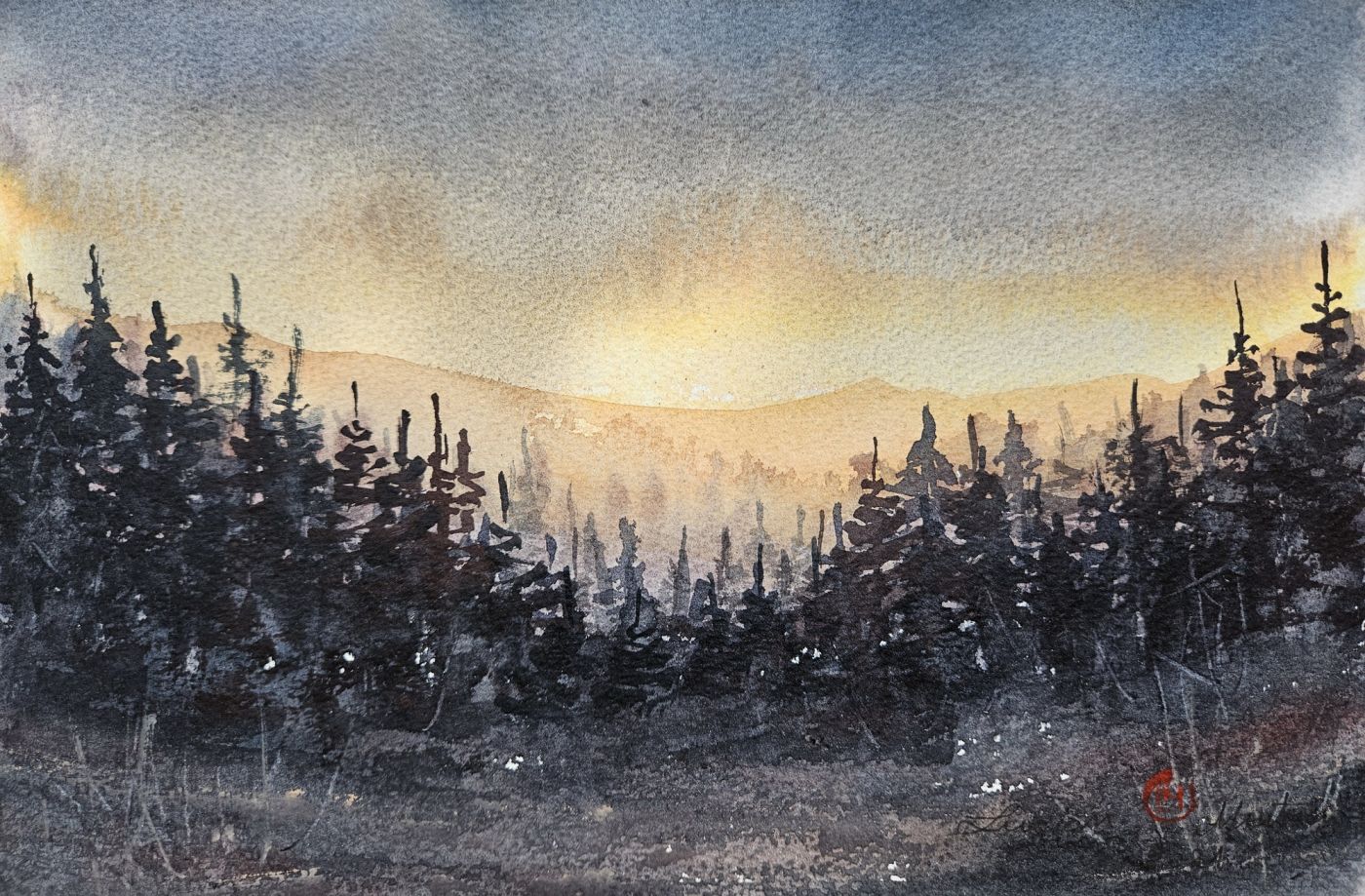
***
The fireball
Ro:
Pământul arzând
Focul a modelat pământul de-a lungul istoriei. În special erupțiile vulcanice au avut cel mai mare impact. În diferite locuri au avut loc incendii, care au putut avea cauze naturale, precum erupții vulcanice, fulgere din timpul furtunilor, incendii de vegetație iscate spontan, prin aprinderea datorată focalizarii luminii îuntr-un strop de rouă. Desigur omul a produs numeroase incendii, uneori intenționat sau din neatenție.
Acum, odată cu încălzirea globală și cu schimbarile climatice care facilitează producerea fenomenelor extreme, secetă prelungită și perioade de caniculă excesivă, incendiile fac ravagii în numeroase zone pe glob. Evident acestea lasă în urmă distrugeri majore, afectând profund ecosistemul pe suprafețe de mii de hectare. Incendiile fac victime în rândul faunenei, dar și al oamenilor. Pagubele materiale sunt uriașe în zonele afectate. În ultimii ani am fost martorii unor astfel de catastrofe în Australia, Grecia, Turcia, mai nou în Spania, Franța și Canada. Cantitatea mare de fum și CO2 generată în atmosferă amplifică efectul de seră.
Această serie de acuarele, începută în anul 2019, ilustrează într-un mod aproape abstract, felul cum arată peisajul în zonele afectate de incendii. Suntem familiarizați să vedem un peisaj idilic, dar nu ne imaginăm că acesta se poate transforma în scrum, la propriu!
Tehnica – acuarelă pe hârtie 300g/m: Canson, Hahnemuhle, Lanaquarelle, dimensiuni: 19×25 cm, 19x28cm, 20×30 cm, 28×38 cm, 56×38 cm, 56×76 cm.