
Earth – Fire – Water
(*text în română mai jos)
During my Geology studies at Babes Bolyai University in Cluj Napoca, I had the opportunity to learn about various geological processes, including volcanology. Subsequently, I followed what was happening in this field and paid attention to reports from areas with intense volcanic activity.
Since then, I have continued to follow developments in this field and have paid close attention to reports from regions with intense volcanic activity, such as Italy, Iceland, Japan, and Hawaii.
I am not an explorer or an adventurer, but rather a traveler and an observer. I balance contemplation with curiosity and the desire to discover interesting places.
Mount Etna, Sicily, Italy
When I traveled to southern Italy, to Sicily, in 2015, I could only admire the imposing Mount Etna from afar.
At 3,357 meters, Etna is the highest active volcano in Europe. It is a majestic presence, clearly visible from Catania, Taormina, and Messina, dominating the northeastern coastline of the island. The relatively short time I had available did not allow me to join one of the organized excursions onto the slopes of the volcanic cone. I was curious, but I was neither prepared nor properly equipped.
As one of Europe’s most active volcanoes, Etna regularly returns to the spotlight because of its frequent and spectacular eruptions.
At the time of writing (August 2026), Etna is experiencing another major eruptive phase. Romania’s Ministry of Foreign Affairs has issued travel advisories for the area, while the Italian authorities have raised the alert level and closed access to the volcano’s summit zone, which is currently considered a permanent danger area.
Spectacular images of the volcanic activity are being broadcast on television news and shared across social media platforms. Everything is transmitted live, allowing people around the world to witness these truly awe-inspiring natural phenomena.
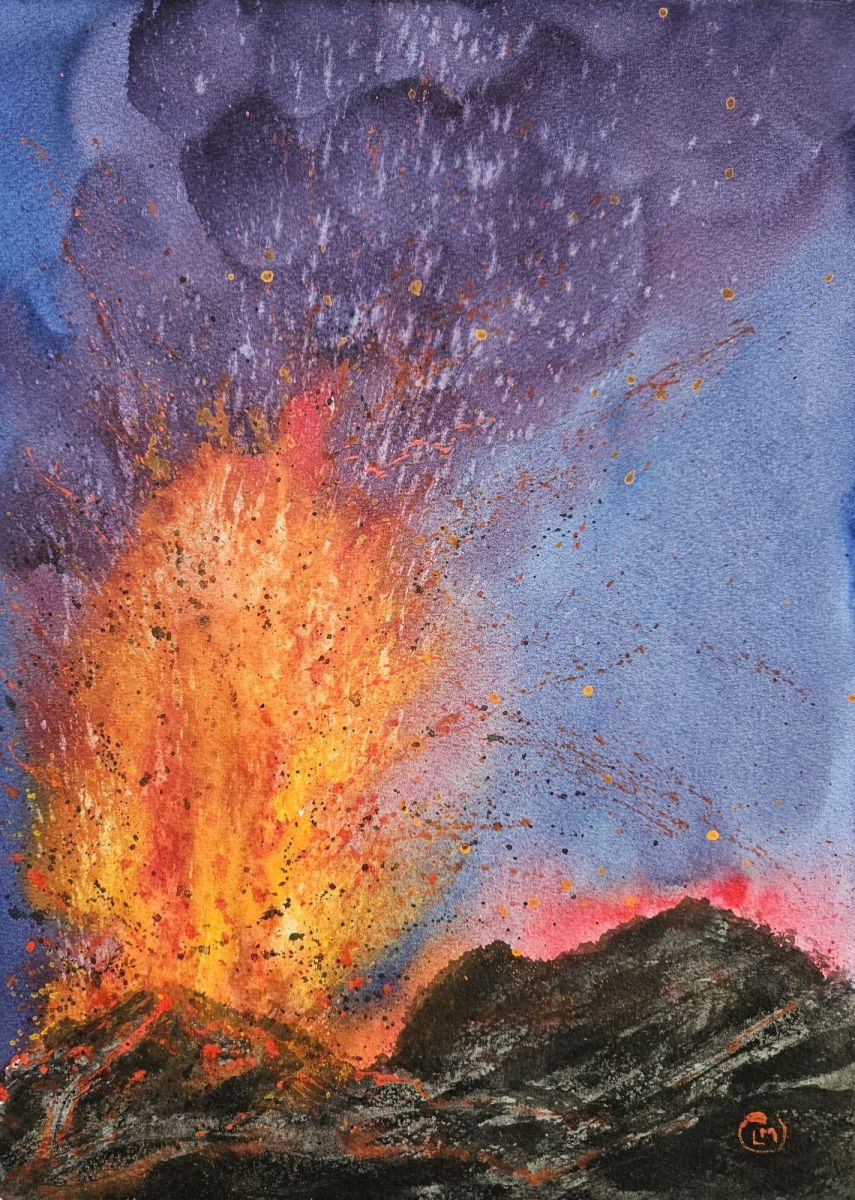
Etna primarily produces basaltic lava. This is a highly fluid type of lava with temperatures ranging between 1,050°C and 1,150°C and relatively low viscosity. The volcano commonly generates effusive eruptions, characterized by the outpouring of fluid lava that flows down the slopes without violent explosions. Another common eruptive style is the Strombolian eruption, consisting of moderate explosions that eject incandescent lava fragments and volcanic scoria. Occasionally, Etna also produces paroxysmal eruptions, featuring spectacular lava fountains accompanied by towering ash plumes that can rise several kilometers into the atmosphere. These eruptions may disrupt air traffic and release large quantities of volcanic gases and fine ash particles into the atmosphere. The ash can be carried over great distances before settling to the ground, sometimes accumulating in thick layers far from the eruption site.
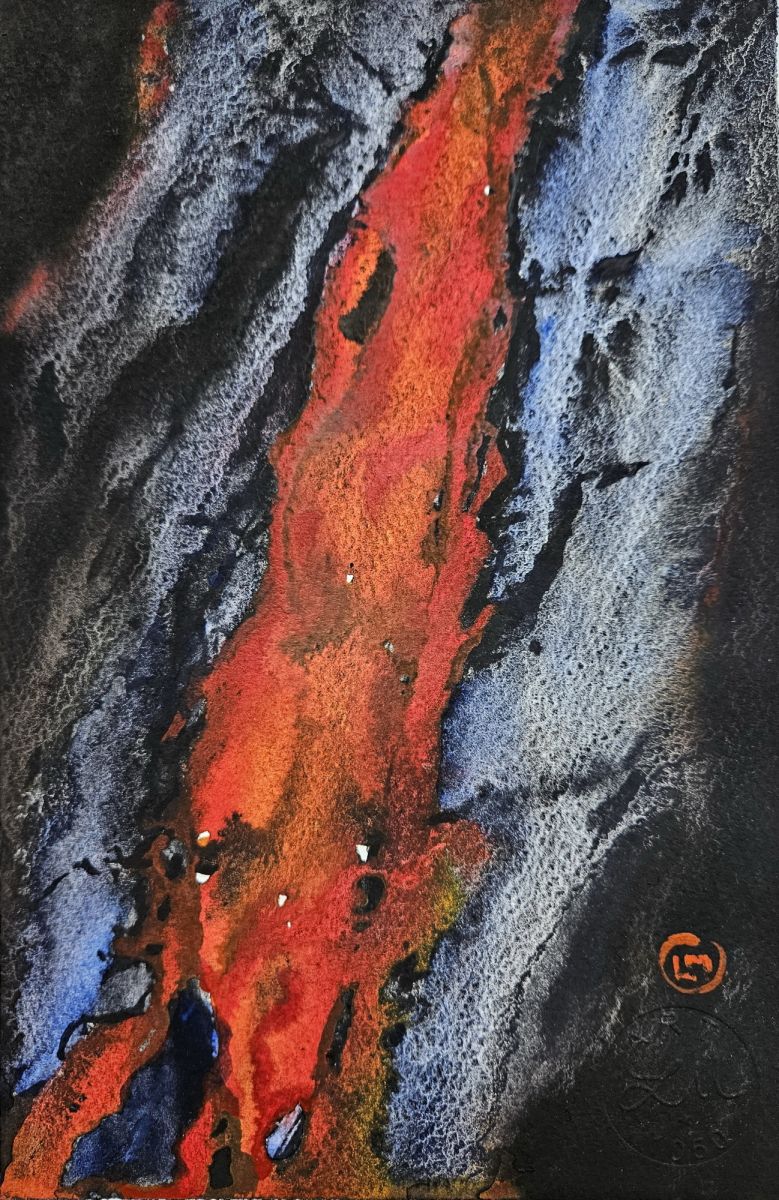
Once cooled, basaltic rocks become dark in color and often display a porous or glassy texture with a rough, abrasive surface.
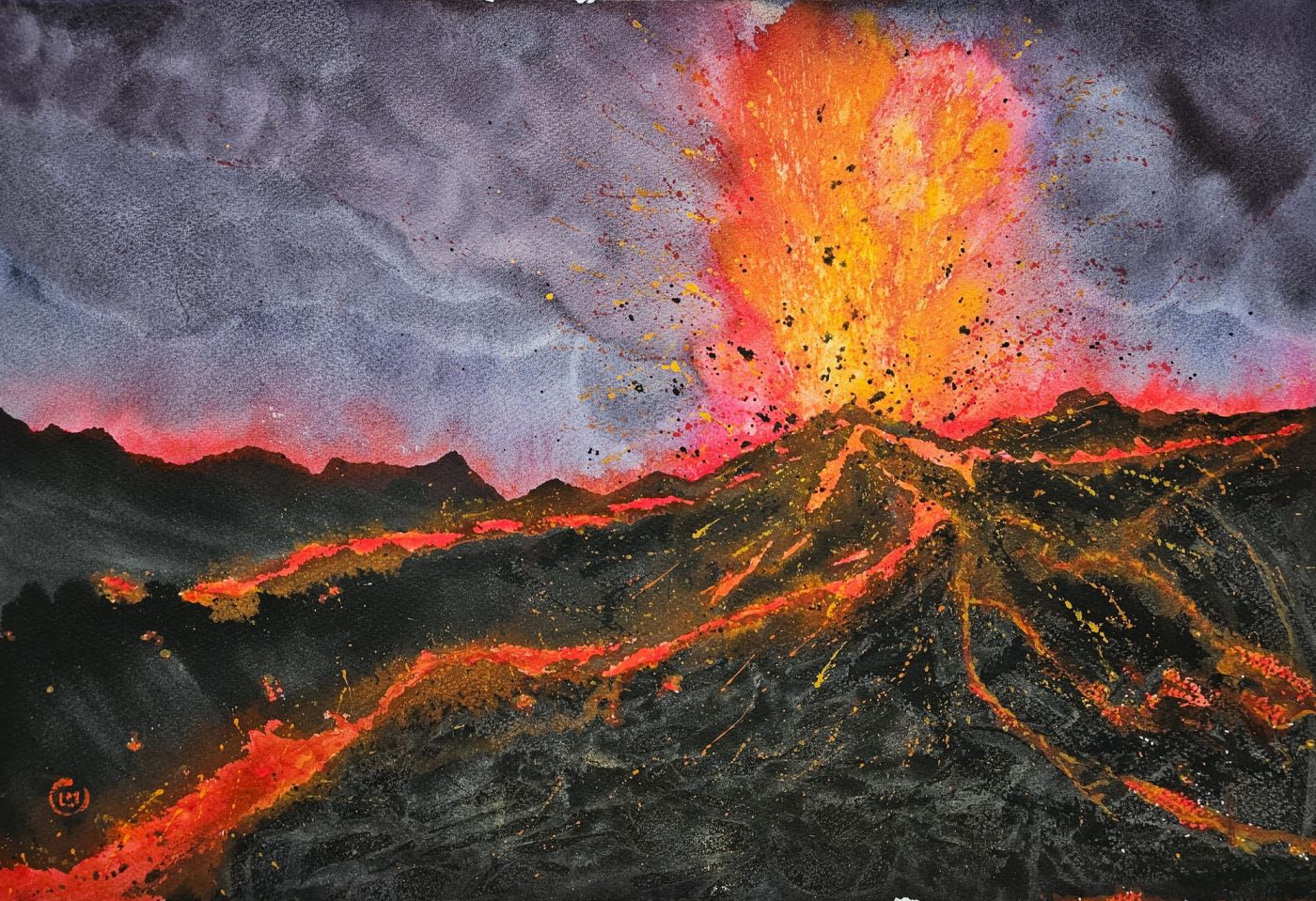
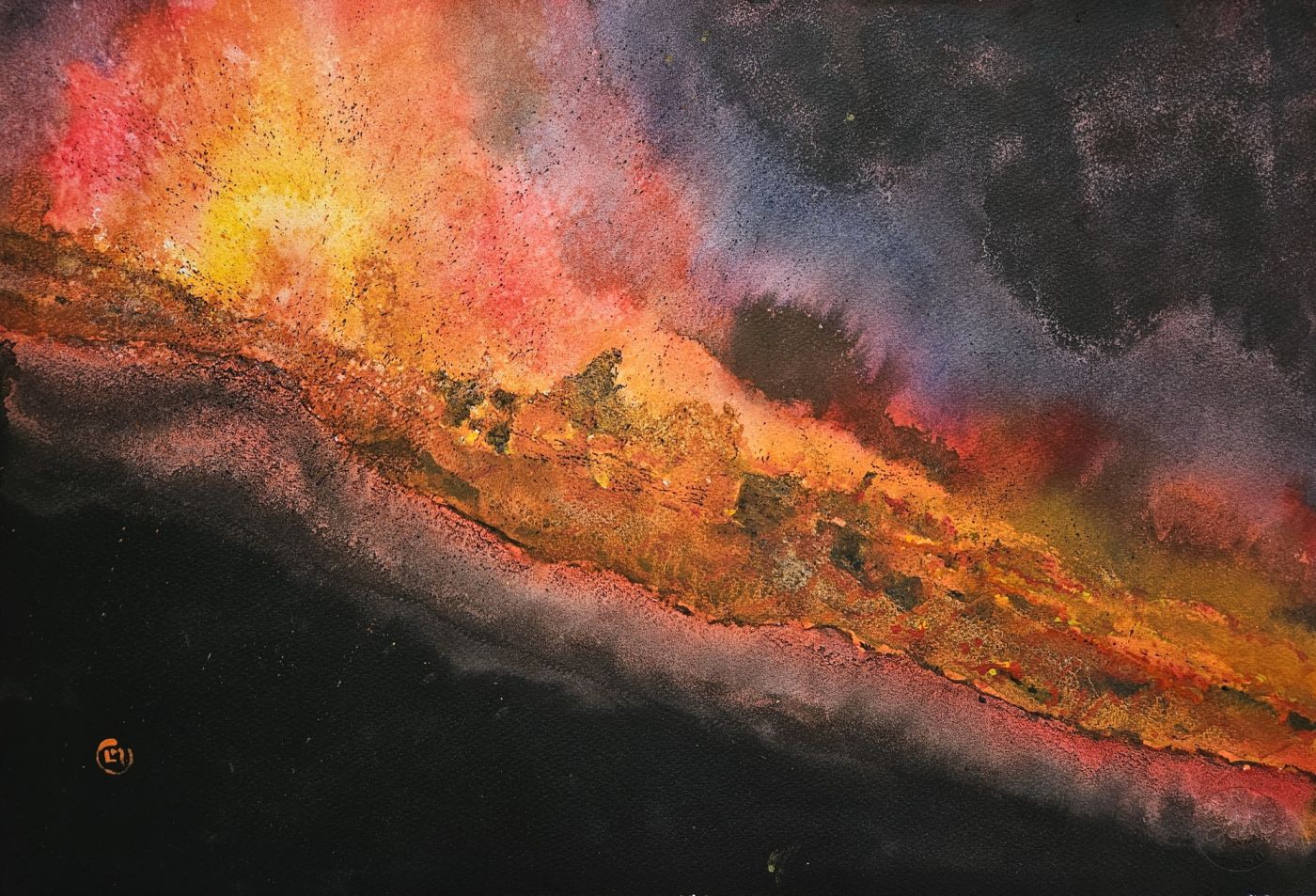
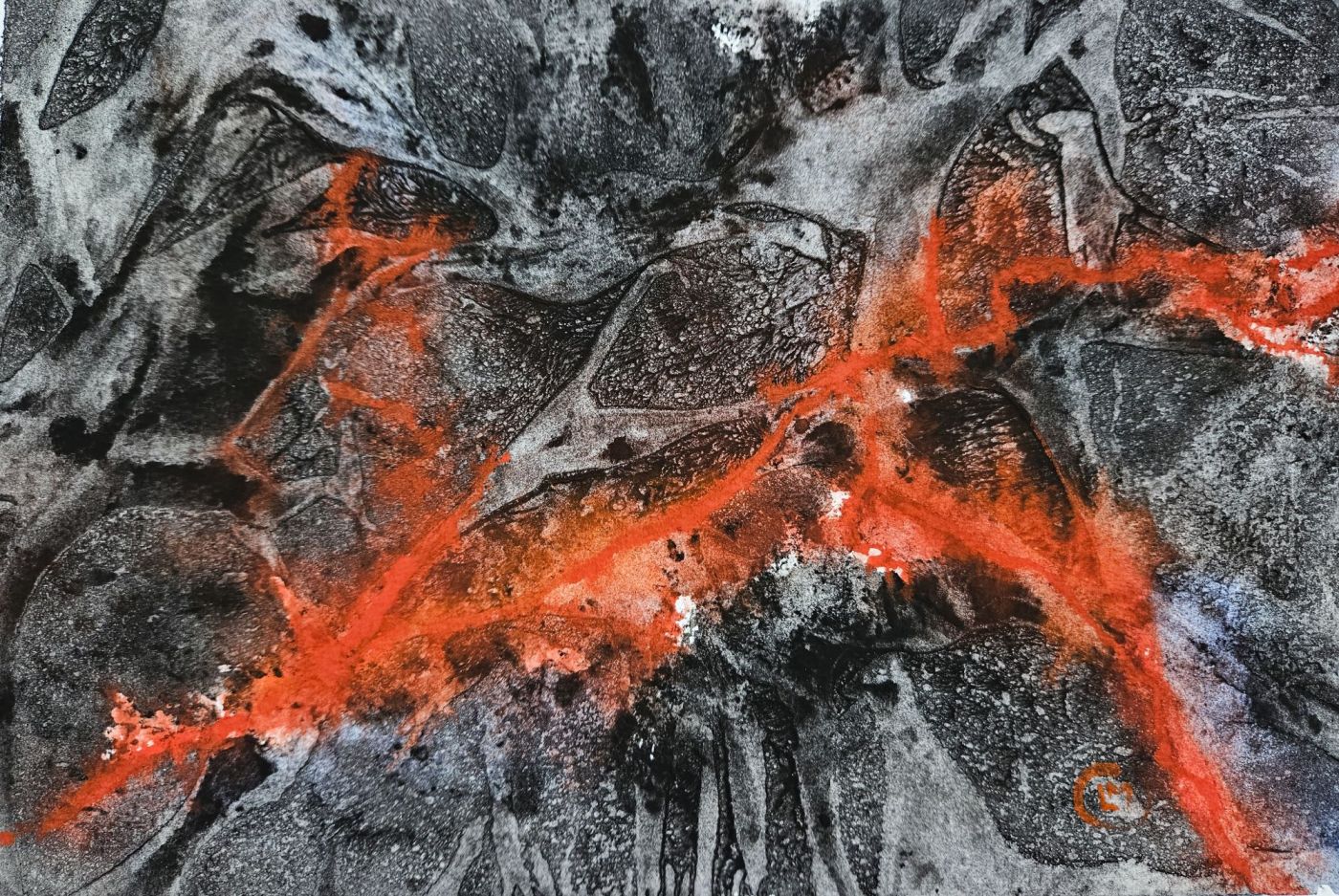
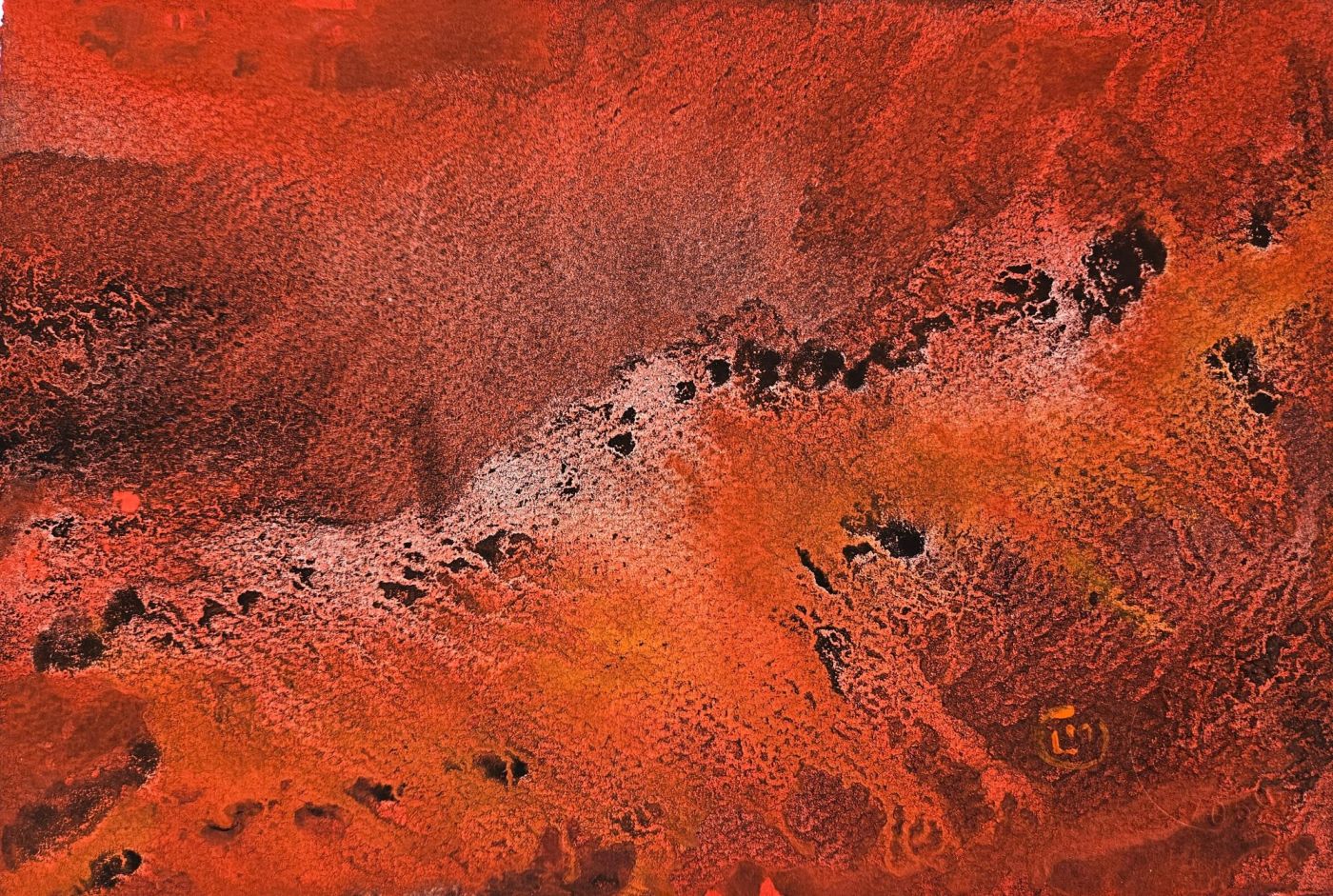
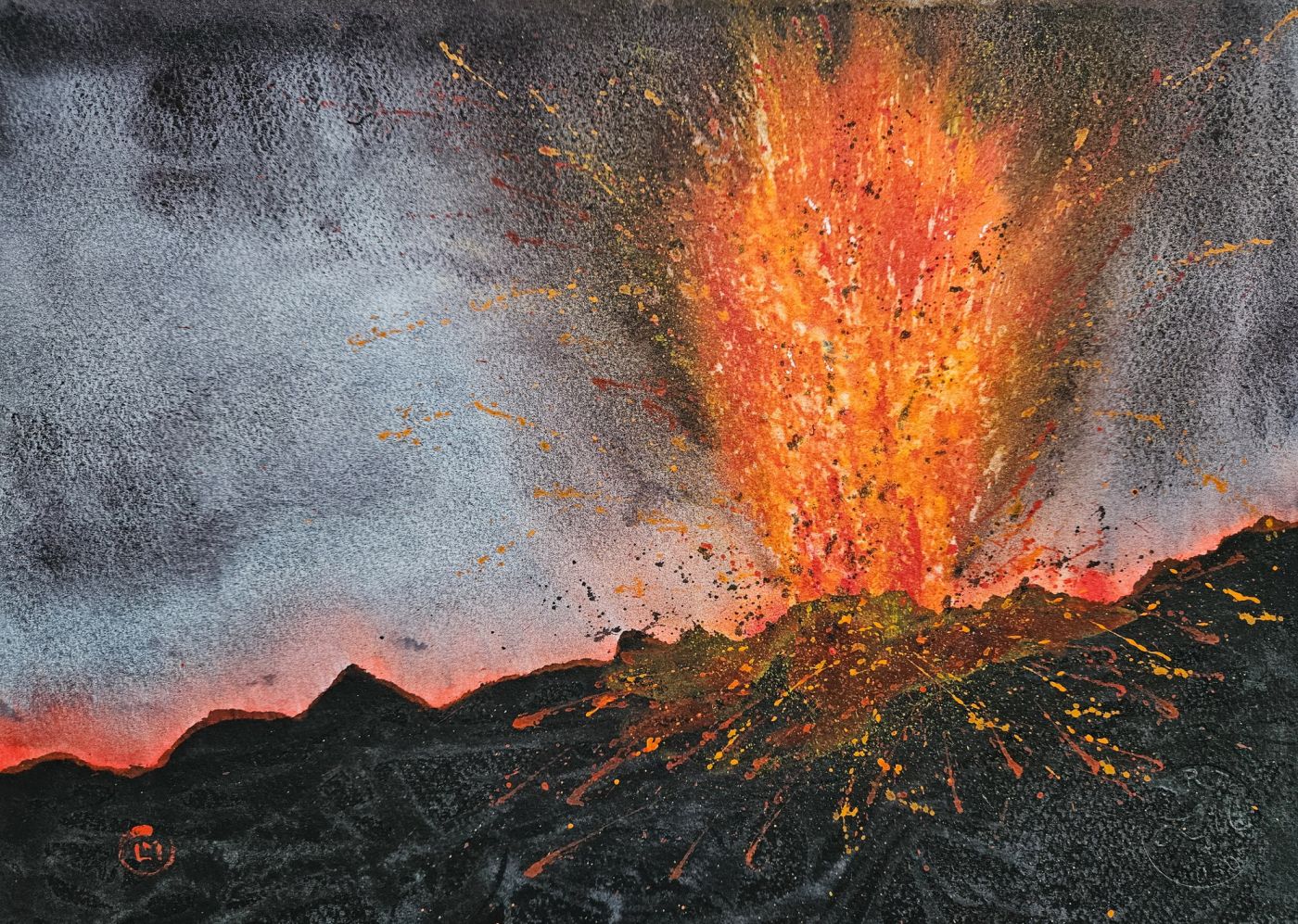
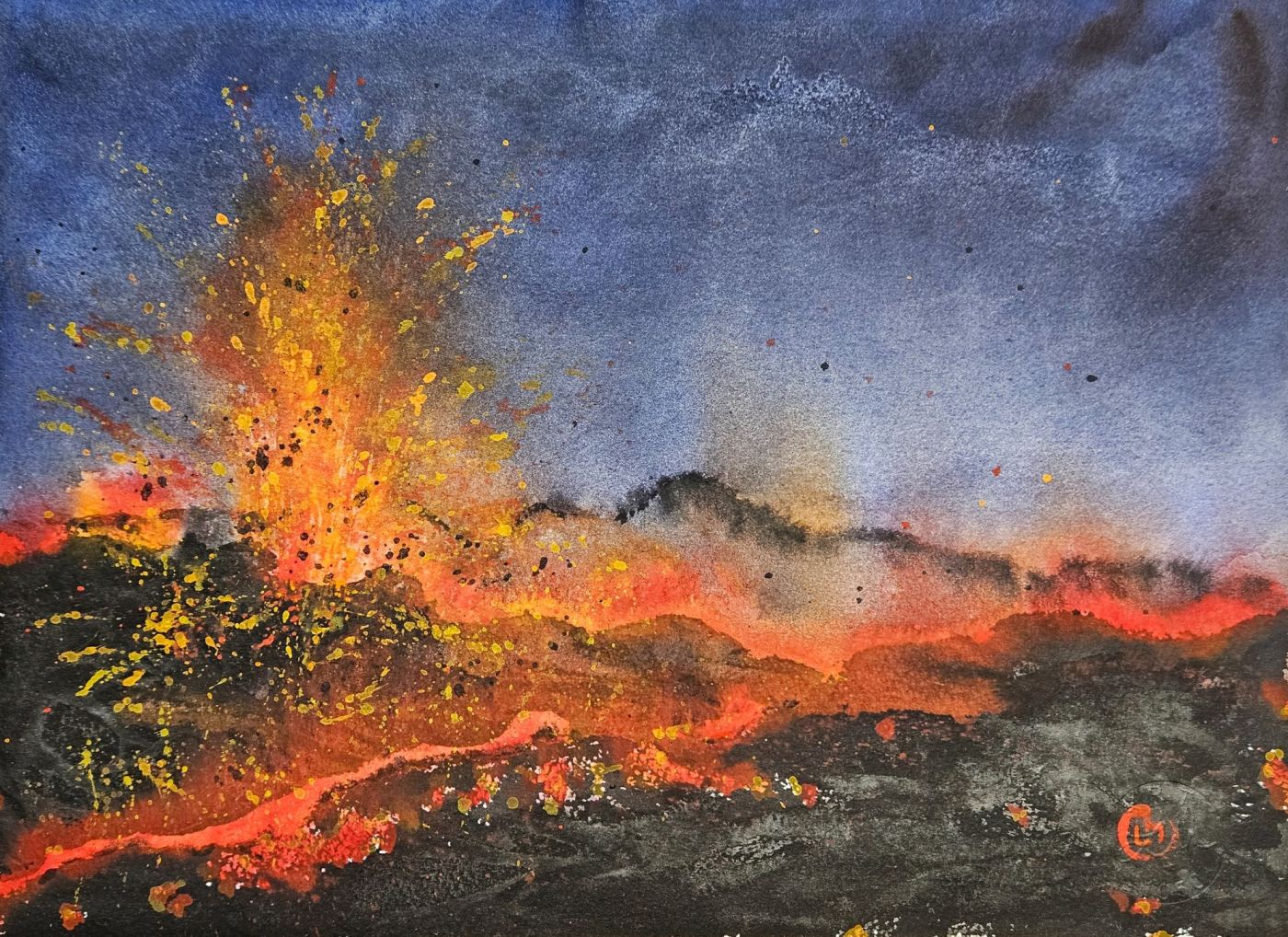
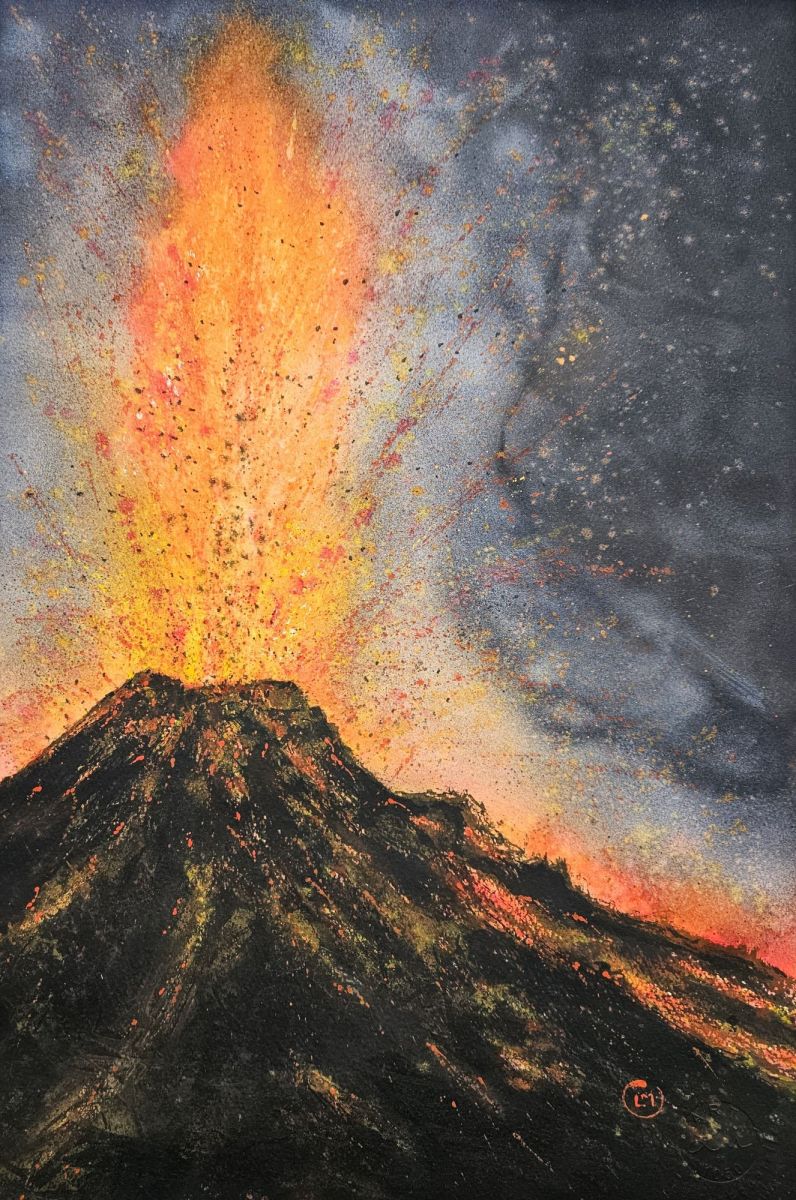
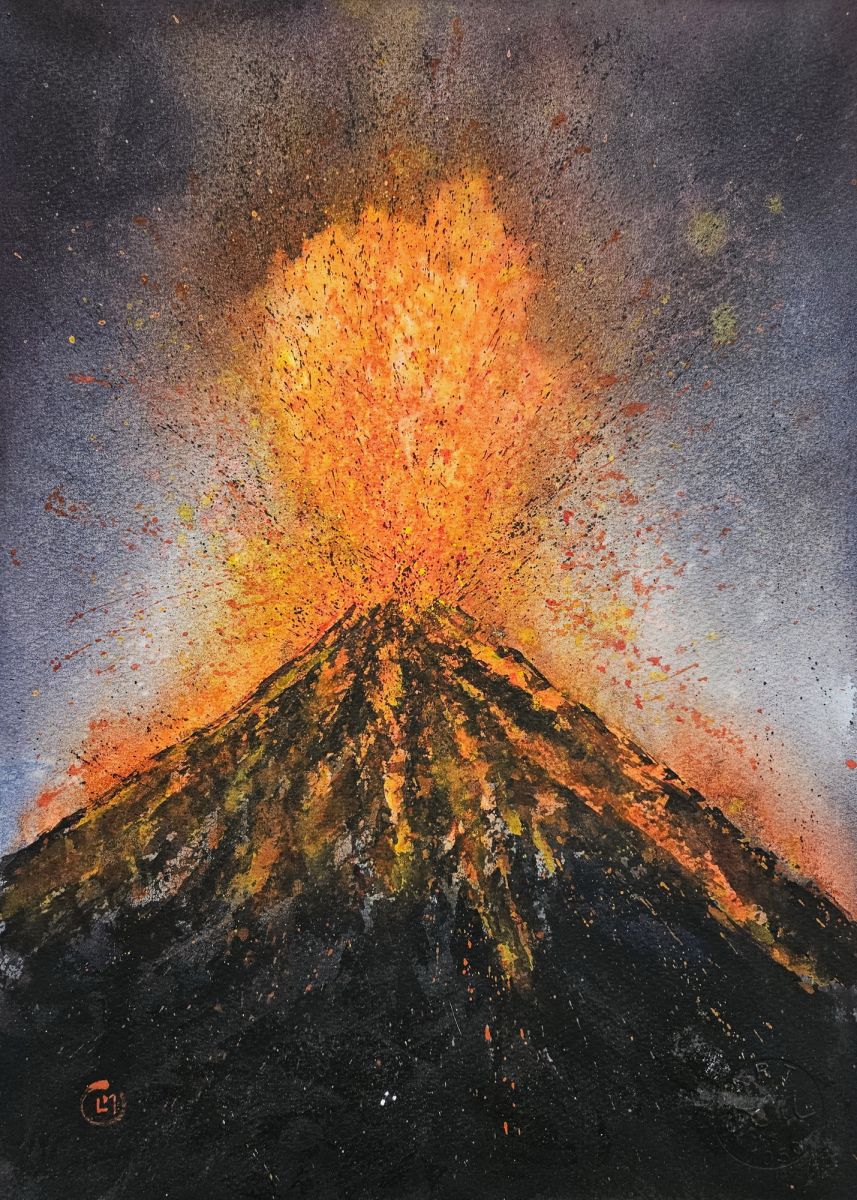
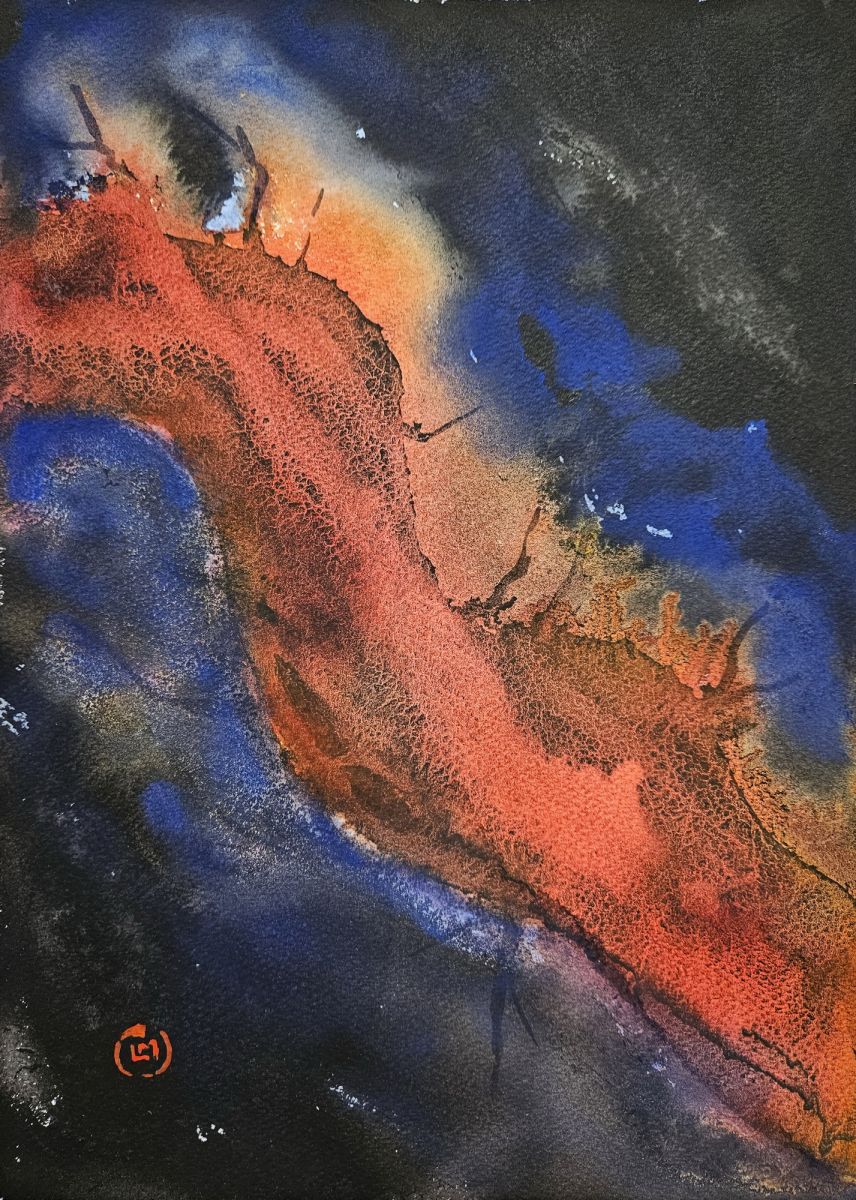
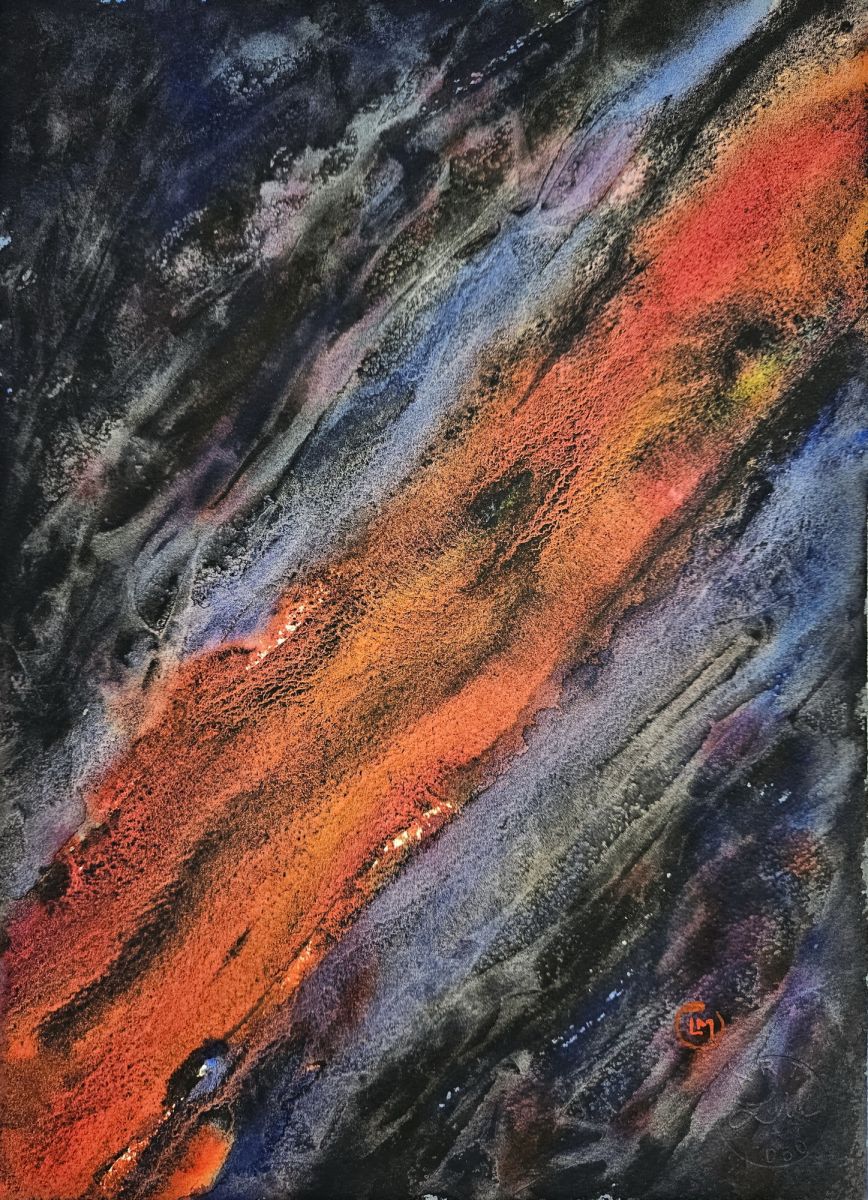
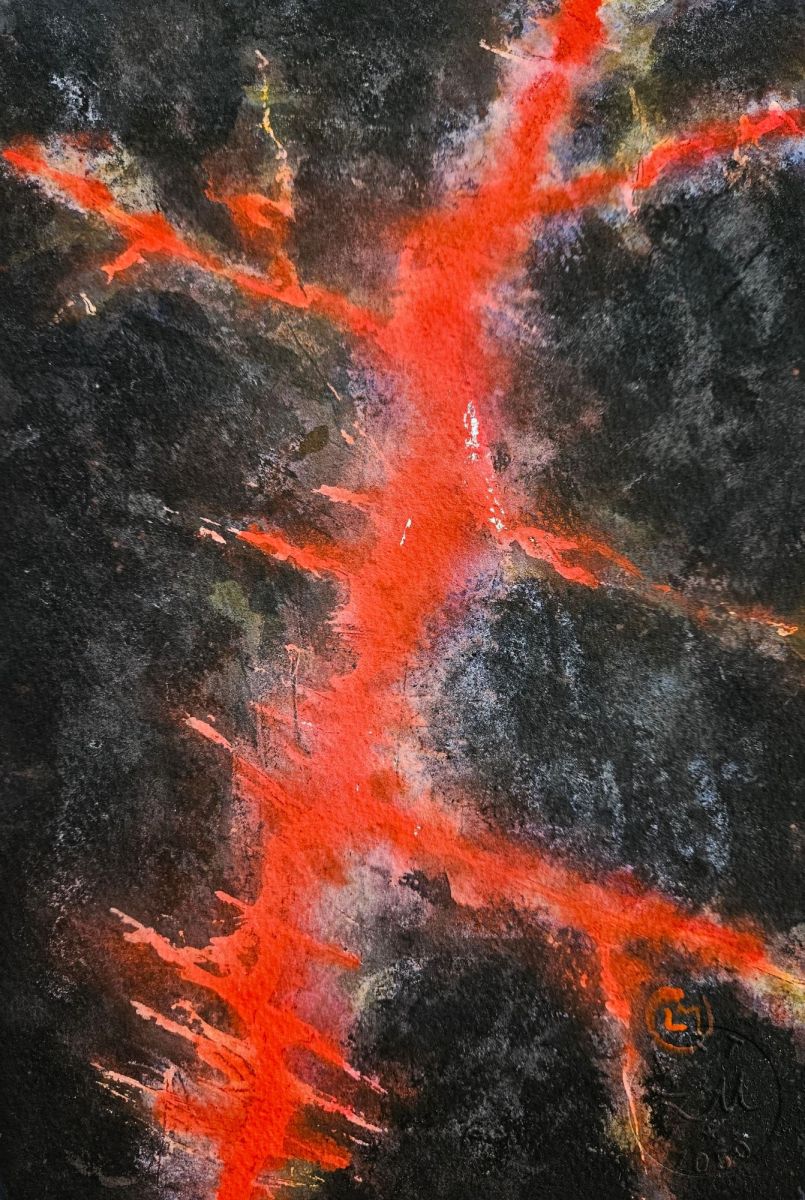
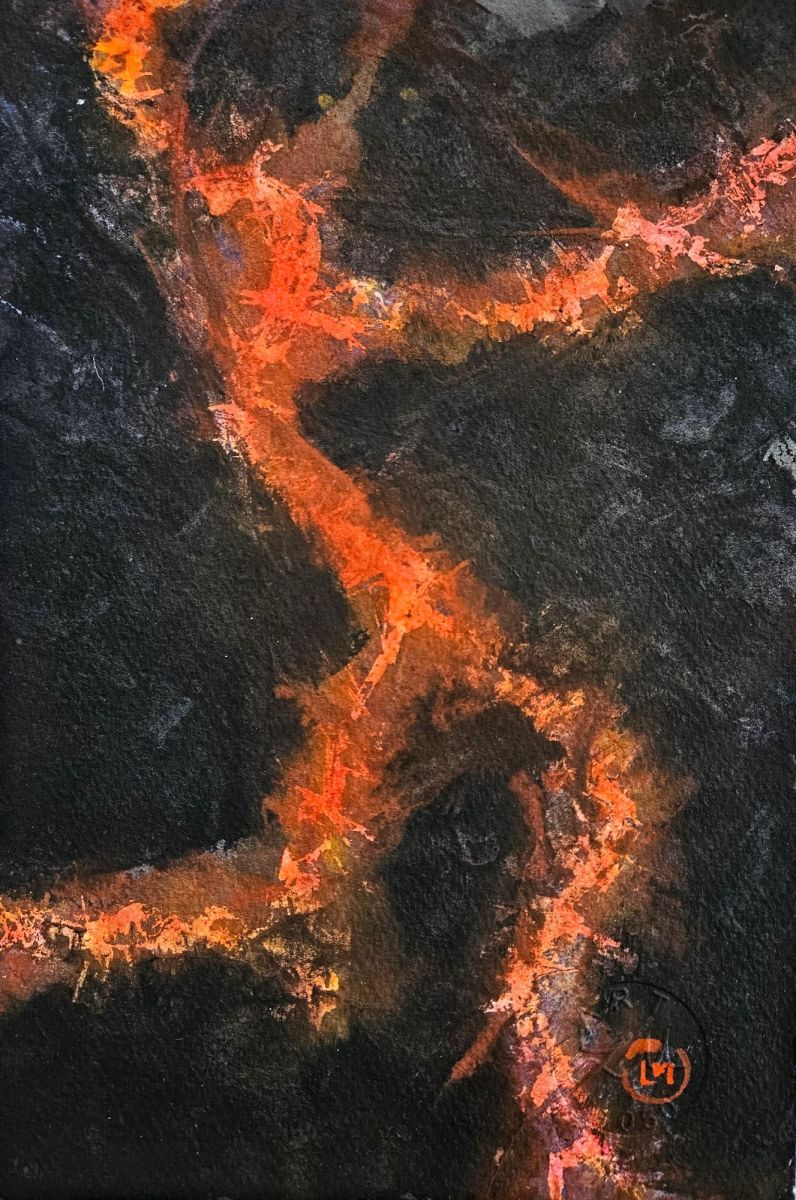
While painting this series of watercolors, I imagined what the landscape and atmosphere might be like near a volcanic cone. I sought to capture, through my own artistic interpretation, the distinctive character of these eruptions, depicting elements such as incandescent lava, the release of hot volcanic gases, and streams of basaltic lava flowing down the mountainsides.
We are accustomed to admiring idyllic landscapes with clear skies, forested mountains, lakes, or the sea. Far less often do we have the opportunity to experience landscapes as dramatic and powerful as those found in volcanic regions.
Technic details: watercolor and ink on Lanaquarelle paper 300g/m, sizes: 38×56 cm, 28×38 cm, 19×28 cm, 2026
Ro:
Pământ – Foc – Apă
În timpul studiilor de Geologie, pe care le-am făcut la Universitatea Babes Bolyai din Cluj Napoca, am avut ocazia să învăț despre diverse procese geologice inclusiv despre vulcanologie. Ulterior, am urmărit ce se întâmplă în acest domeniu și am fost atent la relatările transmise din zone cu activitate vulcanică intensă.
Ulterior, am urmărit ce se întâmplă în acest domeniu și am fost atent la relatările transmise din zone cu activitate vulcanică intensă precum Italia, Islanda, Japonia, Hawaii, etc.
Nu sunt un explorator sau aventurier, ci un călător și un observator. Contemplarea o alternez cu căutare și curiozitatea, încercând să descopăr locuri interesante.
Vulcanul Etna, Sicilia, Italia
Când am călătorit în 2015, în sudul Italiei, în Sicilia, am văzut doar din depărtate impozantul vulcan Etna.
Este cel mai înalt din Europa, cu 3357 m altitudine. Este impunător fiind vizibil din Catania, Taormina și Messina, dominând țărmul din nord-estul insulei. Timpul relativ scurt pe care l-am avut la dispoziție nu mi-a permis să fac o incursiune pe versanții conului vulcanic în acele tururi organizate. Eram curios, dar nu eram pregătit și nici echipat corespunzător…
Cum Etna este unul dintre cei mai activi vulcani din Europa, revine mereu în centrul atenției, datorită erulțiilor frecvente și spectaculoase.
Chiar în această perioadă (august 2026) Etna erupe masiv. Ministerul Afacerilor Externe din România a emis avesrizări de călătorie în zonă, iar autoritățile locale italiene au ridicat nivelul de alertă și s-a dispus închiderea totală a zonei de vârf a acestuia, considerată în prezent zonă de pericol permanent.
Imagini spectaculoase cu activitatea vulcanică sunt difuzate pe posturi TV la știri, în postări pe rețele sociale. Totul e transmis live și poți fi astfel spectator la aceste fenomene naturale cu totul impresionante.
Vulcanul Etna produce în principal lavă bazaltică. Aceasta este o lavă fluidă, având temperaturi ridicate, între 1.050°C și 1.150°C și o vâscozitate scăzută. Din craterele vulcanului se produc erupții efuzive, caracterizate de revărsare de lavă fluidă, care curge pe pante, fără explozii violente. Un alt fel de erupții sunt cele de tip strombolian, cu explozii de mică anvergură, care aruncă bucăți de lavă incandescentă și zgură. Ocazional pot avea loc și paroxisme sub formă de fântâni spectaculoase de lavă însoțite de nori de cenușă, care se pot ridica până la kilometri înălțime. Aceștia pot perturba traficul aerian și pot transporta în atmosferă o cantitate mare de gaze toxice și particule fine de cenușă vulcanică. Particulele pot ajunge înapoi la sol la distanțe mari de locul erupției și se poate acumula sub formă de strat gros.
După răcire, rocile bazaltice devin închise la culoare, au o textură poroasă sau sticloasă, cu o suprafața adesea abrazivă.
Pictând această serie de acuarele mi-am imaginat cum ar putea fi peisajul și atmosfera din proximitatea unui con vulcanic și am încercat să redau într-un mod artistic specificul acestor erupții, cu elemente precum erupția cu lava incandescentă, gazele fierbinți degajate și scurgerea lavei bazaltice pe versanți. Suntem obișnuiți să admirăm un peisaj feeric, cu cer senin, munți împăduriți, lacuri sau marea. E mai rar să avem ocazia să vedem un peisaj cu aspect așa dramatic precum cel din zonele vulcanice.
Detalii tehnice: acuarelă și tuș pe hârtie Lanaquarelle 300g/m, dimensiuni: 38×56 cm, 28×38 cm, 19×28 cm, 2026